advertisement
Whether it’s your first time or a repeat visit, this guide shares expert tips, personal experiences, and practical advice to help you make the most of your trip while staying safe and on budget.
Jump directly to the detailed itinerary and sightseeing tips. →
Your 4-Day Osaka and Kyoto Travel Blueprint
If you have just four days to explore Osaka and Kyoto, focus on iconic temples, vibrant neighborhoods, cultural landmarks, and unique experiences like food tours and immersive local markets.
I recommend starting in Kyoto to soak in its historic charm and then heading to Osaka for a lively urban experience packed with food culture and contemporary attractions.
Detailed 4-Day Itinerary: What to See and Do
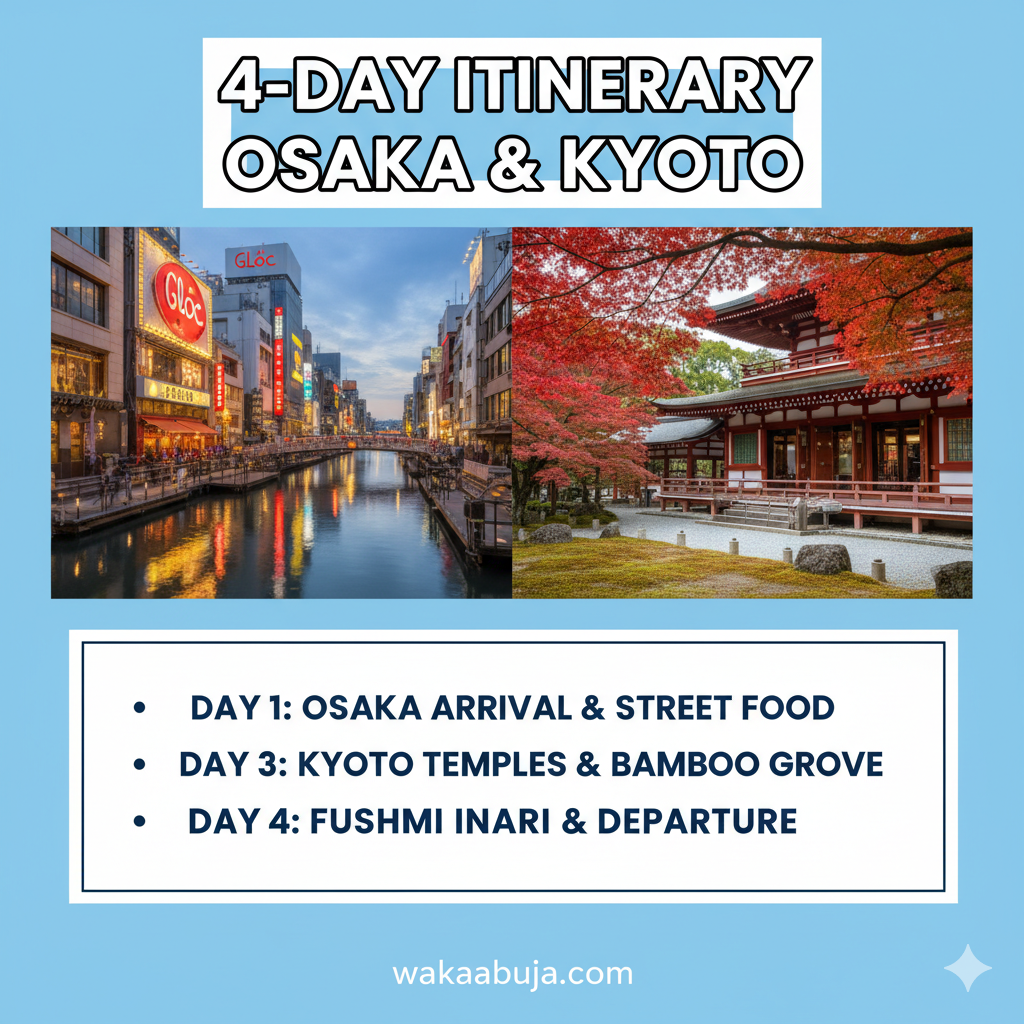
Day 1 – Kyoto: Timeless Temples & Traditional Streets
Start your day early at Kiyomizu-dera Temple, offering breathtaking views over Kyoto. Wander through the charming Higashiyama district, where narrow lanes brim with artisan shops.
Visit Kinkaku-ji (Golden Pavilion), a stunning zen temple coated in gold leaf, perfect for photos and reflection.
Lunch at Nishiki Market, known as Kyoto’s kitchen — an authentic food lover’s paradise with fresh local specialties.
Spend the afternoon exploring the Kyoto Imperial Palace and its beautiful gardens.
Evening can be spent soaking up the atmosphere in the historic Gion district, famous for its elusive Geisha culture and traditional tea houses.
Day 2 – Kyoto Insider Experiences & Nature
Visit Arashiyama Bamboo Grove early to beat the crowds, followed by a walk to the nearby Tenryu-ji Temple, a UNESCO World Heritage site.
Experience Monkey Park Iwatayama to see wild monkeys with panoramic views of Kyoto. Have lunch with views at Arashiyama Yoshimura.
In the afternoon, stroll along the Philosopher’s Path and visit Ginkaku-ji (Silver Pavilion).
Cap off the day with a traditional tea ceremony — an immersive way to connect with Kyoto’s cultural heritage.
Day 3 – Osaka: Food, Fun & Urban Views
Take the short train ride from Kyoto to Osaka in the morning.
Start by exploring the buzzing Dotonbori area—famous for street food like takoyaki (octopus balls) and okonomiyaki (savory pancakes). Don’t miss the iconic Glico Man billboard for a photo op.
Visit the historic Osaka Castle and enjoy its sprawling parkgrounds.
For panoramic city views, head to the Umeda Sky Building, a remarkable architectural landmark.
Wrap up the evening with a lively dinner in Hozenji Yokocho Alley—a hidden gem for local izakaya (pub) experiences.
Day 4 – Osaka’s Contemporary Culture & Departure
Spend the morning at Universal Studios Japan if you love theme parks—it’s an unforgettable pop-culture experience.
Alternatively, explore Shinsaibashi Shopping Arcade for last-minute souvenirs and stylish boutiques.
Before leaving, relax at the Sumiyoshi Taisha Shrine, one of Japan’s oldest shrines, offering a tranquil atmosphere away from the bustle.
Where to Stay: Best Neighborhoods and Accommodation Tips
In Kyoto, I recommend staying near Kyoto Station for easy transit access and proximity to city attractions. For a cultural touch, the Gion district offers traditional ryokan (inns) with tatami rooms and kaiseki dinners.
In Osaka, Namba and Umeda are ideal—they’re buzzing hubs connected by subway with countless dining and shopping options. Modern hotels and serviced apartments abound here for various budgets.
Navigating Osaka and Kyoto: Transport Guide
The most efficient way to travel between Osaka and Kyoto is the JR Special Rapid Service, which takes just about 30 minutes. Consider purchasing a Japan Rail Pass if you plan to explore beyond these cities.
Within the cities, subways and buses are reliable and cost-effective. For Kyoto, renting a bike is a wonderful way to explore at your pace, especially the scenic spots along the Kamo River.
Walking is also a great option for many neighborhoods; wear comfortable shoes for exploring temple grounds and shopping streets.
Budgeting Your Trip: Typical Costs and Money-Saving Tips
Accommodation
Budget travelers can find hostels and guesthouses for around ¥3,000-¥6,000 (~$20-$45) per night. Mid-range hotels average ¥10,000-¥20,000 ($75-$150), while luxury ryokans or hotels cost upwards of ¥30,000 ($220+).
Food & Dining
Enjoy street eats like takoyaki for under ¥500; casual meals at local eateries cost around ¥1,000-¥2,500 (~$7-$18). Splurge dining in Kyoto or Osaka may go up to ¥7,000-¥15,000 ($50-$110) per person.
Transportation
Daily transport budgets range between ¥800 and ¥1,500 ($6-$11), depending on the use of buses, subways, and occasional taxis.
Activities & Tours
Entrance fees for temples and museums typically range from ¥300 to ¥1,000 ($2-$7). Guided tours such as food or cultural experiences can cost ¥3,000 to ¥10,000 ($22-$75).
To save money, I always recommend using city passes like the Osaka Amazing Pass, which bundles transportation and popular attraction entries.
Best Time to Visit and Arrival Tips
Spring (March to May) and autumn (September to November) offer the most pleasant weather, vibrant foliage, and fewer rainy days. These seasons are also peak tourist times, so book accommodations early.
The easiest arrival point is Kansai International Airport (KIX), which connects directly to both Osaka and Kyoto via train and limousine buses. From there, local transit options make city access convenient.
Safety Tips and Emergency Contacts
Japan remains one of the safest countries to travel, but it’s always wise to keep an eye on your belongings, especially in crowded tourist areas. Be respectful of local customs and follow public guidelines in temples and shrines.
Emergency numbers you should remember:
- Police: 110
- Ambulance & Fire: 119
- Tourist Information (Osaka): +81 6 6343 7000
- Tourist Information (Kyoto): +81 75 213 1717
Always have a local SIM or portable Wi-Fi to stay connected, especially for navigation and emergencies.
Recommended Tours and Nearby Excursions
To dive deeper into local culture and hidden gems, consider guided tours such as
- Kyoto Temple and Tea Ceremony Tour—experience authentic Japanese tea culture in heritage settings.
- Osaka Street Food and Nightlife Tour—sample iconic dishes and explore vibrant districts.
- Day Trips to Nara — just 45 minutes from Kyoto, visit the famous deer park and giant Buddha.
Tours can be booked online or through local tourist centers; prices generally range from ¥3,000 to ¥8,000 ($22-$60).
Personal Insights, Pros, and Cons
Having traveled to Osaka and Kyoto multiple times, I cherish the contrast between Kyoto’s historical serenity and Osaka’s dynamic energy. This dual-city trip offers a perfect balance of Japan’s past and present culture.
Pros:
- Rich cultural experiences—temples, traditional districts, and tea ceremonies in Kyoto.
- Vibrant food scenes and entertainment options in Osaka.
- Easy transportation connectivity between cities.
- Safe and tourist-friendly environment.
Cons:
- Peak seasons can be crowded, impacting personal space at popular sites.
- Accommodation prices can spike during cherry blossom or autumn foliage seasons.
- Language barriers outside major tourist spots can occasionally complicate navigation.
Overall, planning ahead and prioritizing key sights can give you a fulfilling experience without the stress.
Frequently Asked Questions
What is the best season to visit Osaka and Kyoto?
Spring (March to May) and autumn (September to November) are ideal due to comfortable weather and beautiful natural scenery, including cherry blossoms and fall colors.
How can I get from Osaka to Kyoto?
The JR Special Rapid Service is the fastest and most convenient train, taking around 30 minutes. Regional trains and buses are also available for a more budget-conscious option.
Are English services widely available?
Major tourist spots, hotels, and transportation services generally provide English language support, but it helps to have a translation app or phrasebook for less touristy areas.
What is a typical daily budget for this trip?
A moderate traveler can expect to spend between $100 and $150 per day, including accommodation, food, transport, and entrance fees. Budget options can reduce costs to around $70 daily.
Final Travel Tip:
Planning is key. Book popular accommodations and tours early to secure the best rates, especially during peak seasons. Embrace local customs and stay curious, and your 4-day journey through Osaka and Kyoto will be unforgettable.