

advertisement
Italian Train Travel Tips: A Local Resident’s Guide
To travel Italy by train like a local, know your operators (Trenitalia for coverage and Italo for high-speed comfort), always check validation rules, book in advance for steep discounts, and prepare for strikes.
Download both apps, avoid tourist-trap stations, and never board without knowing your train’s exact departure platform.
My first Italian train trip ended with me sprinting through Milano Centrale because I mixed up the Trenitalia and Italo departure boards. I’m Chidi, and after six years living between Rome and Naples, I’ve learned every trick, workaround, and hard lesson.
This guide is the honest, zero-fluff advice I wish someone had handed me before I touched down.
Jump to: Trenitalia vs Italo | Booking from abroad | Ticket types & refunds | Validation rules | Popular routes | Night trains & passes | Kids & pets | Strikes | Station navigation | Luggage storage | Accessibility | Travel with baby | Apps deep dive | Missed connections | Summer vs winter | Common mistakes | Which train to pick
Key takeaways
- Trenitalia covers almost every station; Italo only high-speed routes between major cities.
- Always buy high-speed tickets early—Super Economy fares can slash prices by 60%.
- Non-EU credit cards often fail on Trenitalia’s site; use Trainline or PayPal as a backup.
- Paper regional tickets must be validated in green machines before boarding as of this year.
- Strikes (sciopero) are predictable—check the official ministry calendar and plan around guaranteed service windows.
- You have a legal right to free re-routing or compensation if you miss a connection due to a delayed Trenitalia train.
Trenitalia or Italo: Which Italian train operator should you pick?
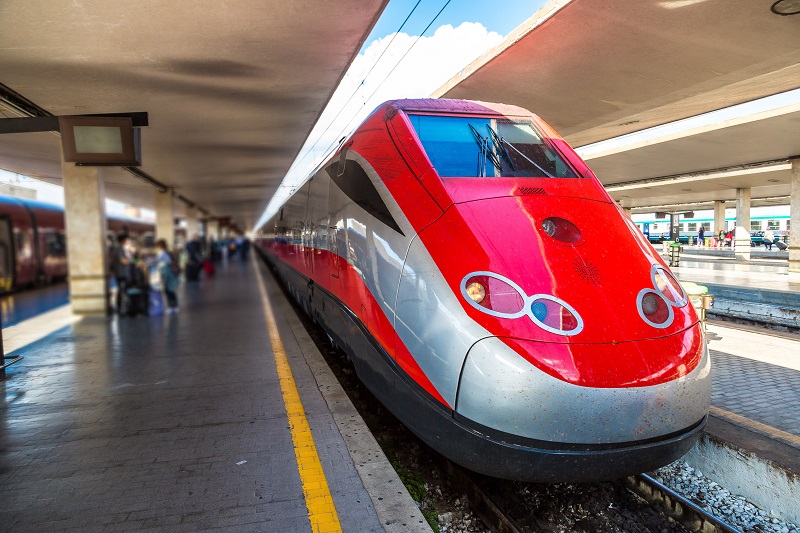
Trenitalia is the state railway, running everything from slow regional trains to high-speed Frecciarossa, Frecciargento, and Intercity. Italo is the sleek private competitor on high-speed corridors only: Turin, Milan, Venice, Bologna, Florence, Rome, Naples, and Salerno. I use both depending on the route.
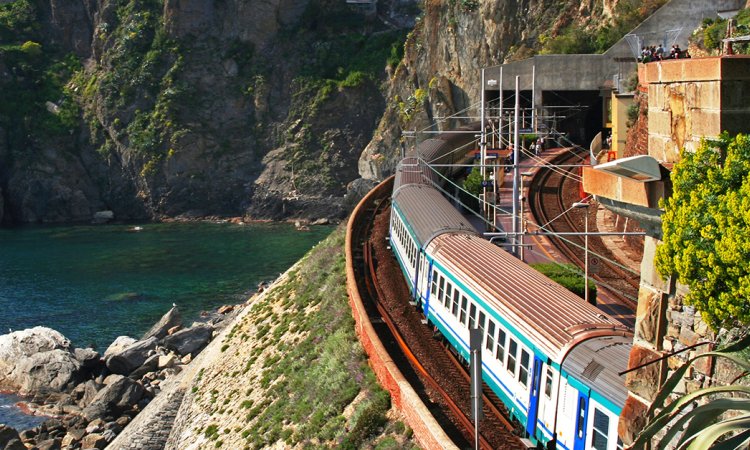
Italo often feels quieter and more modern, with better onboard vending and seat displays. But Trenitalia’s network reaches places Italo can’t touch—think Cinque Terre, Puglia’s coastal towns, or Sicilian cities. Fatima, our Lagos correspondent, swears by Trenitalia’s Regionale for day trips because of the unlimited stop flexibility with some passes.
Best for
- Village-to-village hopping: Trenitalia Regionale serves nearly every stop.
- High-speed on a budget: Italo often undercuts Frecciarossa on identical routes.
- Overnight to Sicily: Trenitalia Intercity Notte is the only option.
Worth considering
- Italo’s lounge access: Comes with some higher-tier tickets at stations like Roma Termini.
- Trenitalia’s CartaFRECCIA: Free loyalty program with points toward tickets.
Chidi’s honest take: “For Rome to Milan, I check both apps. Trenitalia has more frequent departures; Italo has better legroom in standard class. I book whoever is cheaper at that moment.”
How do I buy Italian train tickets from outside Italy?
Booking from Nigeria, the US, or the UK trips up many travelers because Trenitalia’s payment gateway often rejects non-EU cards. I’ve seen it fail with a Chase Sapphire and a GTBank Visa. The workaround: use PayPal on Trenitalia’s site, or book through Trainline or ItaliaRail, which processes international cards smoothly.
Currency conversion matters too. Trainline lets you pay in your home currency, but its exchange rate markup is about 2-3%. Sometimes it’s cheaper to let your bank handle conversion directly. Always compare the price in euros versus your home currency before clicking “pay.”
Step-by-step for international buyers
- Search schedules on Trenitalia.com or Italotreno. it first to see direct options.
- If your card fails, switch to PayPal (linked to the same card) inside Trenitalia’s checkout.
- Alternatively, use Trainline or ItaliaRail—both accept international cards and send mobile tickets.
- For Italo, the official site works more reliably with foreign cards; still, have Trainline as backup.
Once you buy, you’ll receive a PDF with a QR code or PNR. High-speed tickets are tied to a specific train, seat, and time. No validation needed. Regional tickets bought digitally (with a time-bound QR code) don’t require stamping as of this year’s policy update—but we’ll cover that in the validation section.
What ticket types, pricing tiers, and refund rules should I know?
Both Trenitalia and Italo use tiered pricing that rewards early booking. The base fare (Base/Ordinaria) is flexible—you can change or refund it with a fee. As you go down to Economy, Super Economy, or Low Cost, the price drops, but refunds become partial or zero. I never buy Super Economy unless I’m 100% set on my schedule.
Trenitalia high-speed
- Base: Full refund, changeable, sometimes pricier.
- Economy: 50% refund, one change allowed with fee.
- Super Economy: No refund, no changes.
Italo high-speed
- Low Cost: Cheap but rigid—no changes, no refund.
- Economy: One date/time change with fee.
- Flex: Fully refundable up to 3 minutes before departure.
Regional tickets
- Fixed price, no tiers.
- Unlimited changes until the departure time via app.
- Refund possible only before departure (minus small fee).
For example, a Roma Termini to Firenze SMN Frecciarossa might cost €59 Base or €19 Super Economy bought two months early. Miss that train, and you lose €19. I’d rather pay a bit more for Economy and keep flexibility. Always check the official Trenitalia site for current fares—prices shift with demand.
Do I need to validate my train ticket in Italy?
As of this year, validation rules split cleanly: any ticket with a specific seat reservation (high-speed, Intercity, most Italo) never needs validation. Paper regional tickets without a booked time still need to be stamped in the green or yellow machines at the station before boarding. Digital regional tickets with a QR code and a departure time embedded are considered self-validated—just show them to the conductor when asked.
I’ve seen tourists fined €60 on a Regionale from Naples to Sorrento because they forgot to stamp the paper ticket. The conductor has no mercy. If you buy a regional ticket at the station from a self-service machine, it comes blank; stamp it. If you buy it on the app, check if it says “validated” or shows a time-bound QR—then you’re safe.
Fatima’s rule: “If the ticket has a specific date and time printed (like 14:30), it’s validated. If it’s open, stamp it. When in doubt, find the green machine.”
What are the most popular tourist train routes in Italy?
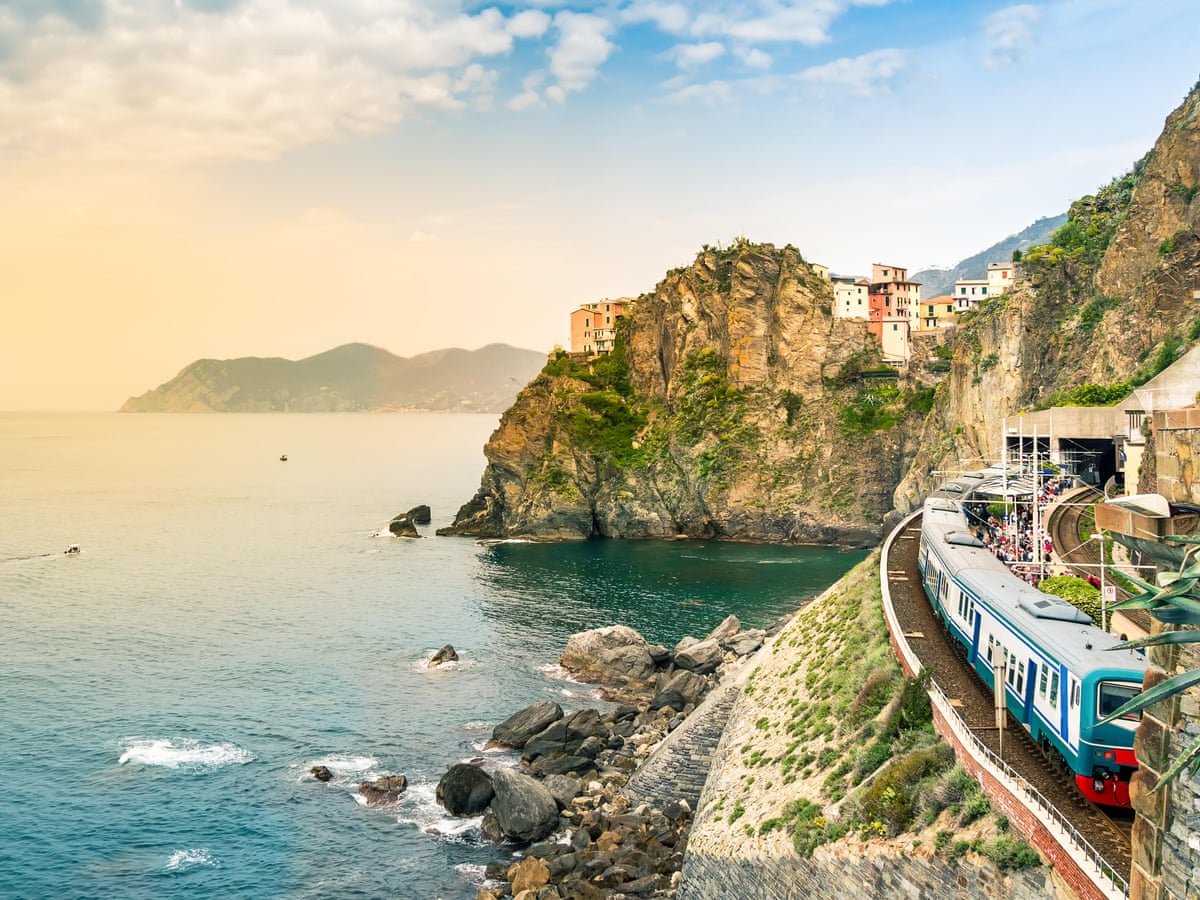
The backbone routes are Rome–Florence–Bologna–Milan–Venice on high-speed and the slower but scenic Naples–Sorrento Circumvesuviana, Florence–Pisa–Cinque Terre, and Milan–Como–Tirano for the Bernina Express connection.
@the.travel.genius Train routes in Italy #italy #train #trainroutes #fyp
I recommend booking the Cinque Terre Express during summer months only—service runs roughly from April to early November, with peak crowding in July and August.
For the Amalfi Coast, no trains reach Positano or Amalfi; the train only goes to Salerno or Sorrento, and then you switch to a ferry or bus. A common mistake is assuming a train runs directly to Amalfi—it doesn’t.
Summer hot routes
- Cinque Terre Express (La Spezia–Levanto) — packed by 9 AM.
- Circumvesuviana (Naples–Sorrento) — standing room only in August.
Year-round scenic rides
- Bolzano–Merano through apple orchards in South Tyrol.
- Messina–Palermo along the Tyrrhenian coast.
How do night trains, rail passes, and luggage rules work in Italy?
Trenitalia’s Intercity Notte connects north to south, with sleeper cabins to Sicily (train boards the ferry at Villa San Giovanni). Cabins range from basic couchette (€35 supplement) to a private Excelsior room with shower. Book these directly on Trenitalia’s site, not third-party, to secure the exact berth. I did the Rome–Syracuse overnight and saved a hotel night while waking up in Ortigia.
Rail passes like the Eurail Italy Pass or Interrail for Europeans work well on Regionale and Intercity trains but still require a seat reservation (€10) on Frecciarossa and Italo. Luggage is simple: no weight limits, but you must place items in the overhead racks or between seat backs. Larger suitcases fit in the dedicated racks near doors. There’s no checked luggage service on Italian trains, so keep valuables with you—theft does happen on overnight routes, as I learned the hard way.
Chidi’s honest take: “I use a small cable lock for my bag on night trains and loop it around the luggage rack. It’s not Fort Knox, but it deters the opportunistic pick.”
Can I travel with kids, pets, and bikes on Italian trains?
Kids under 4 travel free without a seat reservation (must sit on lap if train is full). Ages 4–14 get 50% off on Trenitalia Frecciarossa and Intercity, and even cheaper on Italo with the “Bambini” fare. For families, book seats in the open saloon car, not near the doors, and choose the quiet coach if you need calm. More on that in the baby section below.
Pets: small dogs and cats in carriers travel free on all trains. Larger dogs require a leash, muzzle, and a half-price ticket (or a single reduced fare). Bikes: on Regionale trains, you can bring a folded bike anytime free; a full-size bike needs a separate bike ticket (€3.50 for 24 hours). High-speed trains allow only folding bikes in a bag. I often see cyclists on the Bolzano–Verona line, but they book the bike slot in advance.
What happens during an Italian train strike (sciopero)?
Strikes are a fact of life in Italy. They’re announced weeks ahead on the Ministry of Infrastructure and Transport website. The key: guaranteed peak-hour service windows (6–9 AM and 6–9 PM on weekdays) are protected by law. During a 24-hour strike, many Regionale and some long-distance trains still run in those bands.
I plan around strikes by checking the Trenitalia sciopero notice and avoiding travel on strike days entirely if possible. If you must travel, buy a Base or Flex ticket—if the train is cancelled, you get re-routed or refunded. Italo rarely strikes because it’s a smaller non-unionized workforce, so it’s a good backup. Always have a bus alternative in mind; FlixBus runs most high-demand routes.
How do I navigate Italian train stations and store my luggage?
Major hubs like Roma Termini, Milano Centrale, and Firenze SMN have clear signage: platform numbers appear only 10–15 minutes before departure. Follow the electronic boards, not Google Maps, which often lags. Inside, you’ll find staffed left-luggage offices (Deposito Bagagli) and self-service lockers. I prefer lockers for speed, but they fill up fast in summer.
For stations without storage, I use Radical Storage or Stasher—these are third-party networks with partner shops and hotels. You book online, drop your bag at a nearby café or bookstore, and get insurance. They’re often cheaper than station lockers for full-day storage. More on this in the comparison section below.
Left luggage lockers vs staffed storage: which is better?
Station lockers are self-service, cost roughly €6–12 per day depending on size, and accept coins or card. Roma Termini’s locker room is near platform 24; Milano Centrale’s is on the ground floor near the side exit. Staffed Deposito Bagagli charges per bag per hour, up to a daily max of about €10–15. Lines can be long at midday.
Self-service lockers
- Fast, 24/7 access at some stations.
- Limited large sizes; two carry-ons may need separate lockers.
- Card payment not always working—carry coins.
Staffed Deposito Bagagli
- Staff handles large or awkward luggage.
- May close earlier than station hours (e.g., 8 PM).
- Bag inspection sometimes required.
Third-party apps
- Radical Storage from €5/day, insured, easy online booking.
- Stasher similar model, often in hotels.
- Coverage in smaller towns where stations lack lockers.
I use Radical Storage when I’m hopping out for a few hours in a town like Verona, where the station locker bay is tiny. Check their current rates on the official site before booking.
What accessibility services exist for wheelchair users and passengers with disabilities?
Trenitalia’s Sala Blu (Blue Room) is the dedicated assistance service at 14 major stations including Roma Termini, Milano Centrale, Napoli Centrale, and Torino Porta Nuova. Staff help with boarding, alighting, and navigating the station. You must book assistance at least 24 hours in advance via the Sala Blu phone number or online form.
Frecciarossa and Italo high-speed trains have wheelchair spaces with accessible toilets and companion seating. Regionale trains vary; some older rolling stock has steps and narrow doors. Always check the specific train’s accessibility icon when booking. I’ve seen Sala Blu staff use mobile lifts to bridge platform gaps where level boarding isn’t available—call ahead to confirm. The service is free, and passengers are entitled to bring a companion at no extra fare.
Fatima’s insight: “When I traveled with a relative in a wheelchair, Sala Blu met us at the platform with a ramp and waited until we were seated. It felt surprisingly seamless.”
Traveling Italy by train with a baby or toddler: what you need to know
High-speed trains have baby-changing tables in the accessible toilet, but Regionale trains often do not. I learned to change my infant on the seat using a portable mat when traveling from Pisa to Lucca. Strollers can be stored in the luggage racks or, if small, folded and placed between seat rows in the family coach.
Which carriages are quietest? The “Family Area” on Frecciarossa (carriage 7 or 8) has space for strollers and nearby toilets. On Italo, the “Salotto” class is less crowded, and you can request a seat far from the galley. Breastfeeding is common and accepted, but if you want privacy, the accessible toilet offers space. Pack snacks and small toys, and board early to avoid the stampede.
For a smooth trip, I always book the child’s seat even if it’s free for under-4s—having that extra space for a car seat or napping toddler is worth the nominal reservation fee. Our guide on family travel in Italy covers more kid-friendly tips.
How do I actually use the Trenitalia and Italo apps?
Download both apps before your trip. The Trenitalia app lets you buy, store, and validate tickets. To download your QR ticket, log in with your account, go to “My Journeys,” and the ticket appears with a live QR code. Even offline, the code is visible. Real-time delays show under “Train Status”—enter the train number and see updated platform and minutes late.
Changing a booking in the Trenitalia app is hidden: open the ticket, tap “Change,” pick a new time, and pay any fare difference. Italo’s app is cleaner; the “Change” button is front and center, and you can do it until 3 minutes before departure on Flex fares. A common panic: the QR code won’t show because the app logged you out—always screenshot the ticket when you first book it. I store mine in a dedicated album on my phone.
For real-world usage, I find Trenitalia’s app more functional but clunkier; Italo’s is smoother but only for its own trains. If you’re hopping between operators, keep both apps with active tickets. The “sciopero” alerts also pop up in the Trenitalia app—useful for on-the-ground adjustments.
What if I miss my connection due to a delayed train?
Under EC Regulation 1371/2007, if your first Trenitalia train is delayed and you miss a connecting Trenitalia service (on the same booking or separate regional tickets), you have the right to re-routing at no extra cost. Go to the nearest ticket counter or Sala Blu, show your tickets, and request the next available train. This applies even with Super Economy tickets if the delay is not your fault.
If the delay results in an overnight stay, Trenitalia must provide hotel accommodation. Compensation kicks in after a 60-minute delay: 25% of the fare for 60–119 minutes, 50% for 2 hours or more. Submit claims on Trenitalia’s website within 12 months. I once missed a Rome–Milan–Zurich connection due to a Frecciarossa breakdown; the staff rebooked me on a later EuroCity at no charge and gave me a meal voucher. Always keep your tickets and note the delay length in case you need to claim.
Italy train travel in summer vs winter: what’s the difference?
Summer brings sweltering heat on non-air-conditioned Regionale trains and crushing crowds on coastal routes. The Circumvesuviana in August is an oven with bodies pressed together—I avoid it between 10 AM and 4 PM. Winter, conversely, sees reduced frequency on scenic lines. The Cinque Terre Express stops running entirely from late November to mid-March, and some Dolomites rail buses go seasonal.
The best fares typically appear in mid-January to February and again in November. August is peak demand, so high-speed tickets are priciest. I love overnight trains in winter: heated sleeping compartments and arriving in Palermo at dawn with the Mediterranean view is magic, and sleeper cabins are half the summer price. Always check the latest timetable on the official operator’s site for seasonal routes, especially if you’re eyeing a trip in November or March shoulder periods.
Summer survival tips
- Book high-speed trains with seat reservations to guarantee air conditioning.
- Travel early morning or late evening on coastal routes.
Winter advantages
- Cheaper hotels near stations—great for city breaks.
- Night train sleepers feel cozy and are less booked.
Interactive: which Italian train should I take?
Use this quick decision helper. It’s not exhaustive, but it will point you in the right direction based on your priorities.
What matters most for your trip?
Top Italian train mistakes that cost travelers time and money
- 1. Boarding at the wrong station. Milan has three main stations: Centrale, Porta Garibaldi, Cadorna. Your ticket says exactly which one. I once waited at Centrale for a train that left from Garibaldi.
- 2. Not checking which operator serves the route. Searching for “train Naples to Bari” might show both Trenitalia and private bus/train combos. Buy from the operator that runs the train, or you’ll end up with a non-refundable voucher.
- 3. Mixing up QR codes. Trenitalia and Italo use different apps; scanning a Trenitalia QR at an Italo gate won’t work. Have the right app open.
- 4. Assuming you can sit anywhere. Regional trains are open seating, but high-speed tickets have assigned seats. Sitting in someone else’s spot leads to awkward confrontations.
- 5. Ignoring platform changes. Listen for announcements; platforms can switch even 3 minutes before departure. The board is gospel.
- 6. Forgetting to validate paper regional tickets. Fines start at €60, no excuses accepted.
- 7. Relying solely on Google Maps for timetables. It doesn’t update cancellations quickly. Use the operator’s app.
Frequently asked questions
Can I buy a ticket directly on the train?
On regional trains, if you board without a ticket at an unstaffed station, you can buy from the conductor with a small surcharge (around €5). On high-speed trains, you must have a ticket before boarding, or you’ll pay the full Base fare plus a penalty. It’s always cheaper to buy in advance.
What happens if I forget to validate my regional ticket?
You risk a fine of €60 or more. If you realize before the conductor arrives, find them immediately and explain—sometimes they’ll let you pay the surcharge instead. No guarantee, though.
Is Wi-Fi available on Italian trains?
Frecciarossa and Italo offer free Wi-Fi, though speeds can be patchy in tunnels. Regionale and Intercity generally have no Wi-Fi. Download offline entertainment before you go.
Can I bring my own food and drinks on board?
Yes, absolutely. There’s no restriction, and many locals bring full meals. High-speed trains have a cafe bar; regional trains might have vending machines or nothing.
Are there power outlets and USB ports?
Frecciarossa and Italo provide standard European outlets (Type F/L) at each seat pair, and often USB ports. Regionale and older Intercity trains may have only a few outlets near doors. Carry a universal adapter.
Do I need to print my e-ticket?
No, a digital QR code on your phone is accepted on all trains. But I always keep a screenshot in case the app crashes or cellular data fails.
Plan your trip: booking platforms we trust
Our team has tested and used these platforms across dozens of Italian trips. They consistently deliver reliable booking experiences and solid customer support. For train tickets, always cross-check the official operator site before finalizing.
Agoda – great for last-minute deals in Asia, also strong in Italy
Expedia – flight + hotel packages
Kayak – compare flight prices across airlines
Vrbo – family villas and holiday rentals
GetYourGuide—skip-the-line tours and activities
Hotels.com – earn free nights with loyalty stamps
TripAdvisor – reviews and restaurant recommendations