
advertisement
Quick Guide to Dodging Travel Scams
I’ve been scammed three times in my travels, from a fake cop in Barcelona to a rigged taxi meter in Bangkok. Here are the 18 most common travel scams worldwide, with exact steps to avoid them. Jump directly to key takeaways or dive into details.
- Trust your gut and verify everything.
- Use apps like Google Maps and official ride services.
- Never hand over your passport or pay upfront.
Key Takeaways to Stay Scam-Free
- Pre-book rides via Uber, Bolt, or local equivalents—saves 70% on haggling risks.
- Carry only photocopies of your passport; originals stay in hotel safes.
- Research destination-specific scams on U.S. State Department or UK FCDO sites before booking.
- Statistics show 1 in 6 travelers face scams annually, per a TripAdvisor study.
1. The Classic Taxi Overcharge Trap
![Taxi overcharge - Safety Scouts Advice - Episode 07 [HD,4K]](https://i.ytimg.com/vi/xQ5mnQ1inc8/hq720.jpg?sqp=-oaymwEhCK4FEIIDSFryq4qpAxMIARUAAAAAGAElAADIQj0AgKJD&rs=AOn4CLBLsSpkUHQJhfzCvAmMP0oeJyc9LQ "The18 Major Travel Scams to Avoid Like a Pro 1")
I’ll never forget landing in Rome at midnight, exhausted, and hopping into what I thought was an official taxi. The driver took a “shortcut” and charged me 80 euros for a 15-minute ride that should have cost 30. This scam thrives at airports worldwide because jet-lagged travelers are easy marks.
Taxi overcharges happen because unregulated cabs use rigged meters or inflated “airport surcharges.” In Bangkok, I once saw a meter “stuck” at 500 baht extra. According to the Numbeo Crime Index, cities like Mexico City and Delhi top the list for this.
How to Avoid It
- Pre-book via apps like Uber or official airport services.
- Ask for the fare upfront and confirm with airport info desks.
- Use fixed-rate vouchers from tourist offices—saves up to 50%.
2. Fake Police Demanding “Fines”
In Barcelona’s Gothic Quarter, two “police officers” stopped me, flashed fake badges, and demanded 200 euros for an alleged “passport irregularity.” I refused and walked away briskly—they didn’t follow. This scam preys on authority bias; scammers wear convincing uniforms and target solo tourists.
Real cops rarely ask for on-the-spot cash. Interpol reports this is common in Europe and Southeast Asia, with losses averaging $500 per victim. I learned to politely ask for their station and official ID numbers.
Pro Moves
- Insist on going to a police station together—scammers vanish.
- Carry passport photocopies only; say the original is “at the hotel.”
- Contact your embassy immediately via this link.
3. ATM Skimming Machines
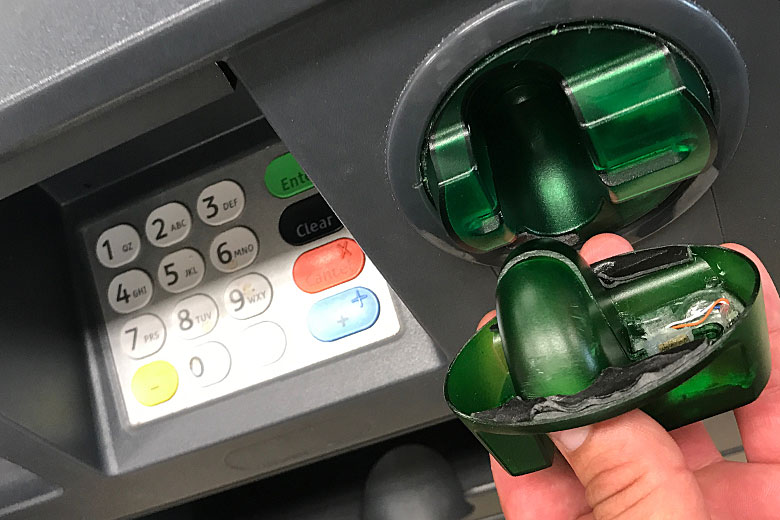
During a trip to Prague, I nearly inserted my card into a tampered ATM that looked official but had a loose card reader. Skimmers steal data via overlay devices, leading to drained accounts. An FBI report notes over $1 billion lost yearly globally.
These are prevalent in tourist hubs like Paris and Istanbul. Check for jiggling parts, tiny cameras, or unusual keypads.
Safe ATM Habits
- Use bank-affiliated ATMs inside branches.
- Cover the keypad when entering PIN.
- Monitor accounts via apps like Revolut for instant alerts.
4. Closed Attraction Diversion
“The Eiffel Tower is closed for maintenance—let me show you a better spot!” This pitch in Paris led a friend to a fake tour that cost triple. Scammers claim popular sites are shut and divert to overpriced alternatives. Common in Venice and New York.
Spot and Skip It
- Verify openings on official sites like the Eiffel Tower.
- Buy tickets online in advance.
- Say “No thanks” firmly and use Google Maps to navigate.
5. Friendship Bracelet Hustle
In Rome, a woman tied a bracelet on my wrist while chatting, then demanded 20 euros. It’s a distraction tactic for pickpockets. Prevalent in India and Morocco too.
Deflect Gracefully
- Extend your arm fully and back away—no touching.
- Never engage strangers offering “gifts.”
6. Spill Scam Distraction
Someone “accidentally” spills mustard on you in Madrid, then “helps” clean while a partner pickpockets. I dodged it by ignoring it and walking away fast.
Response Plan
- Ignore spills; check valuables later in safety.
- Use anti-theft bags like Pacsafe.
7. Overpriced Souvenir Stalls
In Marrakech markets, haggling starts at 10x the real price. I paid 5x once before learning better.
Haggle Smart
- Start at 30-50% of the asking price.
- Walk away to force better deals.
8. Fake Hotel Booking Confirmations
Scammers send phony emails mimicking Booking.com, stealing card details. Happened to a friend in Bali.
Verify Bookings
- Check directly on hotel sites.
- Use virtual cards for bookings.
9. Street Vendor Food Poisoning Ploy
Undercooked “local specialties” lead to illness, and then scammers offer “cures.” Avoided in Vietnam by sticking to busy spots.
Eat Safe
- Choose vendors with long lines.
- Avoid ice in drinks.
10. Rental Car Damage Ruse
Pre-existing “scratches” were charged post-rental in Italy. Inspect thoroughly with photos.
Document Everything
- Video of a full vehicle walkaround.
- Use reputable firms like Hertz.
11. Tour Guide Impersonators
Unofficial “guides” in Egypt overcharge for pyramids. Book via Viator.
12. Airport Wi-Fi Phishing
Fake hotspots steal logins. Use cellular data or VPNs like NordVPN.
13. Beggar Distraction Rings
Groups of kids surround you while pickpockets strike. Keep moving.
14. Fake Charity Collections
Post-disaster “donations” go nowhere. Donate via Red Cross.
15. Overloaded Boat Trips
In Thailand, unsafe boats capsize. Check capacity limits officially.
16. Jewelry Switcheroo
“Gold” sold cheap in Turkey is fake. Skip street gems.
17. Club Door Entry Scam
Free entry leads to huge “drinks minimums” in Ibiza. Research clubs first.
18. SIM Card Swaps
Tampered vending machines in airports. Buy from official carriers.
Frequently Asked Questions About Travel Scams
What is the most common travel scam?
The taxi overcharge tops lists worldwide, affecting millions yearly, per travel forums like TripAdvisor.
How can I avoid pickpockets abroad?
Wear money belts, avoid flashing valuables, and stay alert in crowds. Anti-slash bags help too.
What to do if scammed on vacation?
Report to local police, contact your embassy, and dispute charges with your bank immediately.
Are travel scams worse in certain countries?
High-risk spots include Italy, India, and Thailand, but preparation beats any location.