
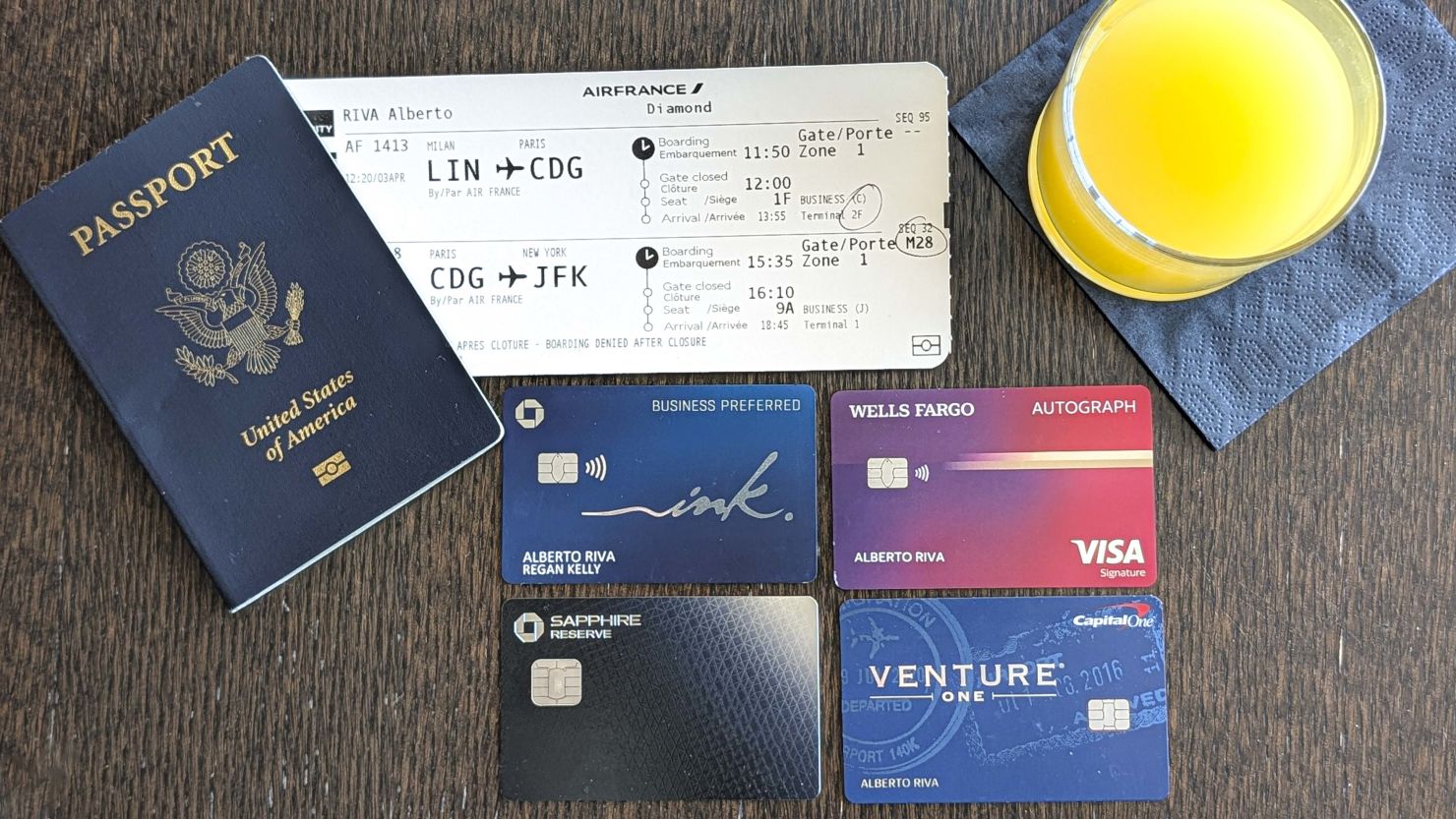
The best travel credit cards this year include the Chase Sapphire Preferred for overall value, Capital One Venture Rewards for simple flat-rate miles, and American Express Gold for dining and grocery rewards. Other top picks are the Citi Strata Premier, Wells Fargo Autograph, Discover it Miles, Bank of America Travel Rewards, U.S. Bank Altitude Connect, Hilton Honors Surpass, and Marriott Bonvoy Boundless.
Each card offers no foreign transaction fees, travel protections, and sign-up bonuses that can cover a round-trip flight or several hotel nights.
I have tested over 20 travel credit cards across 12 countries. From dodgy ATMs in Lagos to overpriced currency exchange booths at Heathrow, I learned the hard way which cards actually save you money. Fatima, our Abuja-based team member, once lost 8% of her budget to foreign transaction fees before she switched to a dedicated travel card.
This list reflects real-world use by the WakaAbuja team. We update it as of this year, based on publicly available rates, perks, and our own redemption experiences.
Jump to: Key Takeaways | Chase Sapphire Preferred | Capital One Venture Rewards | American Express Gold | Citi Strata Premier | Wells Fargo Autograph | Discover it Miles | Bank of America Travel Rewards | U.S. Bank Altitude Connect | Hilton Honors Surpass | Marriott Bonvoy Boundless | FAQ
Key takeaways
- Every card on this list has zero foreign transaction fees – that alone saves you 3% on every purchase abroad.
- Sign-up bonuses can be worth 500 to 1000 USD in travel if you meet the minimum spending requirement within three months.
- Premium cards with annual fees often include airport lounge access, Global Entry credits, and travel insurance. Check our top pick for a detailed breakdown.
- Points transferred to airline partners (like United, British Airways, or Emirates) usually give higher value than booking through the card’s portal.
- Always compare offers using sites like Kayak and Expedia before redeeming points—sometimes cash back is better.
- For Nigerian travelers, most international cards work fine in Europe and Asia, but always carry a backup local debit card for cash emergencies.
1. Chase Sapphire Preferred: Best overall for value

Chase Sapphire Preferred has been our team’s workhorse for three years. I used it to book a round-trip flight from Abuja to Dubai using points transferred to Emirates. The 60,000-point sign-up bonus covered almost the entire ticket.
You earn 5x points on travel booked through Chase Ultimate Rewards, 3x on dining, and 2x on all other travel. The annual fee is 95 USD, but you get a 50 USD hotel credit each year, which brings the effective fee down to 45 USD.
Chidi’s honest take: “The trip cancellation insurance saved me 1200 USD when my flight got cancelled during a storm in Chicago.” No other card at this price point offers primary rental car coverage and delay reimbursements.”
Pros
- Points transfer 1:1 to 14 travel partners, including United, Hyatt, and British Airways.
- No foreign transaction fees and strong travel protections (trip delay, baggage loss, primary rental car).
- Annual 50 USD hotel credit through Chase portal.
Cons
- Annual fee of 95 USD is not waived the first year.
- You need good to excellent credit (700+ score typically).
- No lounge access unless you upgrade to the Reserve version.
Best for: Travelers who want a balance of low fees, flexible points, and solid insurance. Ideal for 2 to 3 trips per year.
2. Capital One Venture Rewards: Simple flat-rate miles

Capital One Venture Rewards is Fatima’s go-to because she hates tracking bonus categories. You earn 2x miles on every purchase, no matter what. The sign-up bonus is often 75,000 miles after spending 4,000 USD in three months—worth 750 USD toward travel.
You can redeem miles to erase any travel purchase: flights, hotels, even GetYourGuide tours. There is a 95 USD annual fee, but you get a Global Entry or TSA PreCheck credit (up to 100 USD) every four years.
Fatima’s honest take: “I redeemed miles for a stay at an Agoda villa in Zanzibar. No blackout dates. Just book with the card, then use the ‘Purchase Eraser’ tool.”
Pros
- Unlimited 2x miles on everything – no categories to remember.
- Two free lounge visits per year via Capital One Lounges or Plaza Premium.
- No foreign transaction fees and transfer partners include Turkish Airlines and Air Canada.
Cons
- Miles are worth exactly 1 cent each when erasing travel—no chance for higher value.
- Travel protections are weaker than Chase (no trip cancellation insurance).
- Requires excellent credit.
Best for: Travelers who want a no-fuss earnings structure and redeem miles simply for any travel purchase.
3. American Express Gold: Top for dining and groceries
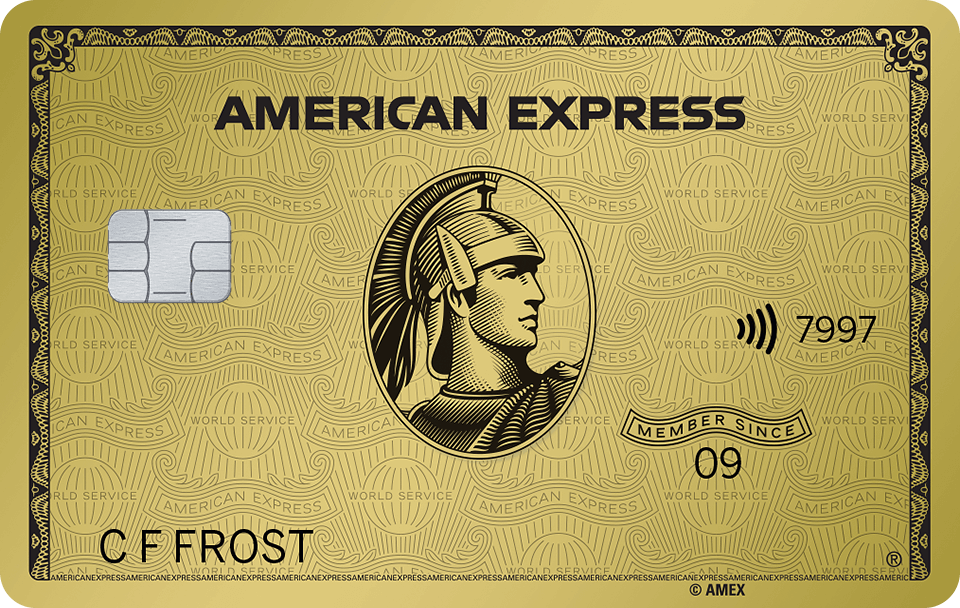
If you eat out often or cook with international ingredients, the Amex Gold Card earns 4x points at restaurants worldwide and 4x at US supermarkets. While we are based in Abuja, our team uses it heavily during trips to London, New York, and Johannesburg.
The 250 USD annual fee looks steep, but you get 120 USD in dining credits (10 USD monthly on selected partners like Grubhub) and 120 USD in Uber Cash. That effectively drops the fee to 10 USD. The sign-up bonus often reaches 60,000 to 75,000 Membership Rewards points.
Ngozi’s honest take: “I used the Uber Cash to get around Cape Town. And the 4x points on a massive grocery run for a family dinner saved me enough points for a domestic flight back to Abuja.”
Pros
- 4x on dining and groceries is among the highest earn rates.
- Points transfer to 20+ airlines including Delta, Air France, and Singapore Airlines.
- No foreign transaction fees on a charge card with no preset spending limit.
Cons
- 250 USD annual fee requires you to use the credits to justify the cost.
- Amex is not accepted as widely as Visa or Mastercard in some countries (e.g., parts of Africa and Asia).
- No lounge access included.
Best for: Foodies and frequent diners who travel to regions where Amex acceptance is high (North America, Europe, major cities).
4. Citi Strata Premier: High rewards on hotels and gas
Citi rebranded its Premier card to Strata Premier early this year. The structure stayed strong: 3x points on hotels, air travel, gas stations, and supermarkets. Plus 10x on hotels booked through the Citi Travel Portal.
The annual fee is 95 USD. You get a 100 USD annual hotel credit (spend 500 USD or more on a single hotel stay). Our Lagos correspondent Ade used this card to book a road trip across Nigeria, earning 3x on fuel and 3x on grocery stops.
Ade’s honest take: “The 100 USD hotel credit covered my last night at a Booking.com property in Accra. Then I transferred points to Turkish Airlines for a ticket to Istanbul.”
Pros
- Broad bonus categories that cover both travel and everyday spending.
- Points transfer to 15 partners including Avianca and Virgin Atlantic.
- No foreign transaction fees and a 95 USD fee that is partially offset by the hotel credit.
Cons
- The 100 USD hotel credit applies only to single stays of 500 USD or more.
- Fewer premium travel protections than Chase Sapphire Preferred.
- Citi’s customer service has mixed reviews outside the US.
Best for: Road trippers and travelers who spend heavily on gas and hotels.
5. Wells Fargo Autograph: No annual fee with strong travel categories
Wells Fargo Autograph has zero annual fee but earns unlimited 3x points on dining, travel, gas, transit, and streaming. That is rare for a no-fee card.
You also get cell phone protection if you pay your monthly bill with the card. The sign-up bonus is typically 20,000 to 30,000 points. Fatima uses this as her backup card because there is no foreign transaction fee and it’s a Visa, accepted everywhere.
Fatima’s honest take: “I keep this in my travel pouch for emergencies. The cell phone protection already covered a cracked screen in Nairobi. No annual fee means I never feel pressured to overspend.”
Pros
- Zero annual fee and no foreign transaction fees.
- 3x points on six everyday categories including transit and streaming.
- Up to 600 USD cell phone protection against damage or theft.
Cons
- Points are worth only 1 cent each when redeemed for travel through the Wells Fargo portal.
- No transfer partners – you cannot transfer points to airlines or hotels.
- Sign-up bonus is lower than premium cards.
Best for: Budget travelers and students who want solid earnings without paying annual fees.
6. Discover it Miles: Simple miles for first-timers
Discover it Miles offers 1.5x miles on every dollar spent, with no annual fee. The standout feature: Discover matches all the miles you earn at the end of your first year. So if you earn 40,000 miles, they add another 40,000. That turns the earn rate into effectively 3x in the first year. Chidi started with this card before moving to premium options.
It has no foreign transaction fees, but acceptance outside the US is limited because Discover is less common than Visa or Mastercard.
Chidi’s honest take: “I used this for six months in Southeast Asia. It worked in major hotel chains and airlines, but small street stalls and local taxis often rejected it. Great for beginners, not for remote villages.”
Pros
- No annual fee, no foreign transaction fees, and no late fee on your first missed payment.
- Discover matches all miles after 12 months—essentially 3x back the first year.
- Free FICO credit score and US-based customer service.
Cons
- Acceptance outside the US is poor compared to Visa or Mastercard.
- No transfer partners—miles are redeemed as statement credits at 1 cent each.
- No travel insurance protections.
Best for: New travelers who stay mostly in cities and major tourist hubs where Discover is accepted.
7. Bank of America Travel Rewards: Good for Preferred Rewards members
Bank of America Travel Rewards has no annual fee and earns 1.5x points on all purchases. But the real value comes if you have a Bank of America checking or savings account. Preferred Rewards members earn a 25% to 75% bonus on points. That turns 1.5x into up to 2.62x.
You also get a 25,000-point sign-up bonus after spending 1,000 USD in three months. No foreign transaction fees and points are simple: redeem for any travel purchase as a statement credit.
Ngozi’s honest take: “I didn’t expect much from a no-fee card, but with the Platinum Honors tier (100k USD across accounts), I get 2.62x on everything.” That beats many premium cards.”
Pros
- No annual fee and no foreign transaction fees.
- Preferred Rewards bonus can make this one of the highest flat-rate earners available.
- Easy redemption for any travel purchase (flights, hotels, even Vrbo rentals).
Cons
- Without a Bank of America bank account, the earn rate is just 1.5x.
- No transfer partners – points are worth fixed 1 cent each.
- Travel protections are minimal (no trip cancellation or delay insurance).
Best for: Existing Bank of America customers who maintain high balances and want a no-hassle travel card.
8. U.S. Bank Altitude Connect: Lounge passes with no annual fee for the first year
U.S. Bank Altitude Connect offers four Priority Pass lounge visits per year, plus a 100 USD credit for Global Entry or TSA PreCheck. The annual fee is 95 USD, but it is waived the first year.
You earn 4x on travel and gas and 2x on streaming and grocery stores. No foreign transaction fees. Ade used the lounge passes at Johannesburg and Dubai airports, saving over 150 USD on food and drinks.
Ade’s honest take: “Four lounge visits cover two round trips for a solo traveler. That alone justifies the 95 USD fee after the first year. Just remember to enroll in Priority Pass through the U.S. Bank portal.”
Pros
- Four Priority Pass lounge visits per year – rare at this fee level.
- 100 USD Global Entry credit and no foreign transaction fees.
- First-year annual fee waived.
Cons
- Points are worth only 1 cent each when redeemed for travel.
- No transfer partners.
- Lounge access is limited to four visits – not unlimited like premium cards.
Best for: Travelers who want occasional lounge access without paying a 400+ USD annual fee.
9. Hilton Honors Surpass: Best for hotel loyalists

The Hilton Honors Surpass Card from American Express earns 12x points at Hilton properties, 6x at US restaurants and supermarkets, and 4x on gas and travel.
The annual fee is 95 USD. You get automatic Hilton Gold status, which includes free breakfast and room upgrades. And you can earn a free night certificate after spending 15,000 USD in a calendar year. Fatima used this on a Hilton stay in London and saved over 200 GBP on breakfast alone.
Fatima’s honest take: “I would not use this for everyday spending outside Hilton because 6x on dining is lower than the Amex Gold’s 4x. Wait, 6x sounds higher? Actually, 6x Hilton points is roughly 3% back, while Amex Gold 4x Membership Rewards can be worth 6-8% if transferred. So only use Surpass for actual Hilton stays.”
Pros
- 12x points on Hilton stays plus automatic Gold status (free breakfast, late checkout).
- Free night certificate after 15k USD annual spend.
- No foreign transaction fees.
Cons
- Hilton points are worth only about 0.5 cents each, so 12x is roughly 6% back.
- Amex acceptance varies outside the US.
- Annual fee is not waived and you need to spend 15k USD to get the free night.
Best for: Travelers who stay at Hilton properties at least 10 nights per year.
10. Marriott Bonvoy Boundless: Solid for Marriott stays
The Marriott Bonvoy Boundless Card from Chase has a 95 USD annual fee. You earn 6x points at Marriott hotels, 3x on dining and gas, and 2x on everything else.
The sign-up bonus is often three free night awards (each up to 50,000 points). You also get a free night certificate every year after your account anniversary. No foreign transaction fees. Chidi redeemed his free night at a Marriott in Cape Town that would have cost 250 USD.
Chidi’s honest take: “The annual free night certificate alone justifies the 95 USD fee if you use it at a category 5 or higher property. Just do not put everyday spending on this card—the 2x base rate is terrible.”
Pros
- Free night certificate every year (worth up to 35,000 points, can top up with points).
- 6x points at Marriott and Silver Elite status.
- No foreign transaction fees and strong Chase travel protections.
Cons
- Base earn rate is just 2x on non-category spend.
- Marriott points are worth around 0.7 cents each, so 6x is about 4.2% back.
- Limited to Marriott properties for maximum value.
Best for: Marriott loyalists who want a free annual night and have other cards for everyday spending.
What you need to know before you go (with your new travel card)
Visa and documentation requirements for card applications
To apply for most US travel credit cards, you need a valid Social Security Number or Individual Taxpayer Identification Number. Non-US residents may find it easier to get cards from local Nigerian banks like GTBank, Access Bank, or Zenith Bank. Check the official bank websites for residency and income requirements. For international travel, always verify visa rules on your destination’s embassy site before booking flights.
Currency and payment tips abroad
Always pay in the local currency when a merchant offers dynamic currency conversion (converting to Naira or USD). Let your bank do the conversion – it is almost always cheaper. Use cards with no foreign transaction fees exclusively. Notify your card issuer of your travel dates online or via their app. Carry a backup debit card for cash withdrawals, as some ATMs in Africa and Asia do not accept credit cards.
Using credit cards for local transport
Ride-hailing apps like Uber, Bolt, and inDriver accept credit cards seamlessly. For local transport like matatus in Kenya or jeepneys in the Philippines, cash is still king. However, many train and metro systems in Europe and Asia now accept contactless credit cards. Check the official transport website for card acceptance before you board.
Cultural etiquette for card payments
Tipping is expected in North America and some European countries. You can add the tip on your credit card receipt. In Japan and many African nations, cash is preferred for small tips. Do not flash your card or hand it to someone who walks away with it—card skimming is a risk in tourist-heavy areas. Always keep your card in sight.
Safety tips specific to credit card use
Use RFID-blocking wallets to prevent electronic pickpocketing. Set up transaction alerts on your phone. Memorize your bank’s international call number for lost or stolen cards. Never store your card details on public computers or shared booking terminals. If a restaurant or hotel insists on taking your card to a back room, politely decline and pay cash instead.
Where are these cards reviewed?
Our team at WakaAbuja tests these credit cards while traveling from Abuja and across the globe. For an interactive view of our routes, open Google Maps or consult a local travel agent.
Frequently asked questions about travel credit cards
When is the best time to apply for a travel credit card?
The best time is 2 to 3 months before a planned big trip. That gives you enough time to meet the minimum spending requirement and receive your sign-up bonus. Many issuers launch elevated bonuses during summer (May-July) and the holiday season (November-December). Check the official bank website for current offers—bonuses can change weekly.
Do travel credit cards have annual fees? Are they worth it?
Yes, many premium travel cards charge annual fees between 95 and 695 USD. Cards with fees usually offer travel credits, lounge access, and higher point multipliers. A 95 USD fee is worth it if you use the included credits (e.g., 100 USD hotel credit or Global Entry fee waiver). For occasional travelers, a no-annual-fee card like Wells Fargo Autograph may be a better fit. Always calculate your expected rewards against the fee using the card’s official calculator.
Are travel credit cards safe to use abroad?
Generally yes. Most have EMV chips, real-time fraud monitoring, and zero-liability policies. However, you should notify your issuer of your travel dates (most allow this via mobile app). Avoid using cards at standalone ATMs in tourist zones – they are common skimming locations. Use contactless payment where possible, and keep the issuer’s international collect number saved offline. For high-risk destinations, carry two cards from different banks.
Who should get a travel credit card?
Frequent flyers, digital nomads, and anyone who takes at least two international trips per year. If you spend over 5,000 USD annually on flights and hotels, a travel card will likely save you money after fees. Infrequent travelers (one trip every two years) are better off with a simple cash-back card that has no foreign transaction fees. Students and young professionals can start with a no-annual-fee travel card to build credit.
How can I maximize my points on flights and hotels?
First, book through the card’s travel portal only if point values are fair (1.25 cents or higher). For better value, transfer points to airline or hotel partners. For example, Chase points transferred to Hyatt often yield 2 cents per point. Use comparison sites like Kayak to find cash prices, then check the partner’s award chart. Also, use shopping portals and dining programs linked to your card to earn extra points on everyday purchases.
Can Nigerian residents apply for US travel credit cards?
Most US credit card issuers require a Social Security Number or Individual Taxpayer Identification Number. Without those, approval is very difficult. However, Nigerian banks offer travel-friendly credit cards. For example, GTBank’s GTWorld Mastercard has no foreign transaction fees and lounge access. Access Bank’s Visa Gold card also waives international fees. Check each bank’s official website for current terms, income requirements, and eligible countries for point redemptions.
What is a foreign transaction fee and how do I avoid it?
A foreign transaction fee is a surcharge (usually 3% of the purchase amount) applied when you use your card in another currency. To avoid it, use a card that explicitly states “no foreign transaction fees” in its terms. All 10 cards listed above have zero foreign transaction fees. Always pay in the local currency when prompted – the dynamic currency conversion fee is another hidden cost.
Plan your trip: booking platforms we trust
Our team at WakaAbuja uses these platforms to book flights, hotels, and activities. We selected them because they offer flexible cancellation, price matching, and earning points on all the travel credit cards above. Booking through these links helps support our independent reviews.