advertisement
Trip to Coromandel Peninsula: The Complete Guide for First-Time Visitors
A trip to the Coromandel Peninsula is a stunning mix of golden beaches, geothermal hot water, and lush native forest just two and a half hours from Auckland.
Most first-timers need at least three days, but you can squeeze a weekend highlight reel or stretch it to a full week of hikes and remote DOC campsites.
I still remember the first time I drove the Kopu-Hikuai road. The bush opened up to reveal the whole Mercury Bay and I nearly pulled over right there. Chidi, our resident road-tripper from Abuja, did the same thing on his first visit and spent a good fifteen minutes just staring at the water.
This guide is built from our many laps of the peninsula, all the missed tide windows, the spade rentals, and the mud-washed gravel roads. Whether you have two days or a full week, I will give you everything you need to plan your own Coromandel trip without the guesswork.
Jump to: Itineraries | Seasonal guide | Where to base | Getting there | Hot Water Beach | Cathedral Cove access | 309 Road | Campervan tips | Food | Mistakes to avoid | FAQ
Key takeaways
- The Coromandel works for a 2-day weekend, but 3 to 5 days unlocks its best beaches, hikes, and remote camps.
- Hot Water Beach digging only works 1–2 hours either side of low tide, and you need to check the Whitianga tide timetable.
- As of early this year, the walking track to Cathedral Cove remains closed. Boat tours are the only way to reach the beach.
- The 309 Road is a brilliant inland shortcut, but many rental car policies do not cover it. Check before you drive.
- Freedom camping in a self-contained vehicle is allowed in designated spots only, and DOC campsites fill fast in summer.
- Base yourself differently depending on your travel style: Whitianga for families, Hahei for beach bums, and Coromandel Town for arts and forest.
- Always book summer accommodation months in advance; the peninsula gets overwhelmed from Christmas to Waitangi Day.
How Many Days Do You Need on the Coromandel Peninsula?
@roadynz Bucket List Places You Need to Visit on the Coromandel Peninsula 🌊🌿✨ The Coromandel is raw, coastal, and deeply untouched — wild headlands, dense native forest, long gravel roads, and beaches that feel far away from everything. Here are the must-visit spots to build your Coromandel bucket list 👇🏽 🥾 Coromandel Coastal Walk One of the most scenic coastal routes in the region. ⛰️ The Pinnacles The iconic Coromandel summit hike. The track takes around 3–4 hours one way, climbing through dense native forest to a rocky summit with panoramic views across the ranges and coastline. 🏝️ New Chums Beach One of the most beautiful beaches on the peninsula. No road access, no buildings, no development — just forest, sand, and ocean. 🌊 Colville Bay Probably one of the least known spots on the Coromandel Peninsula, but with one of the biggest payoffs. 💦 Waiau Falls One of the most well-known waterfalls in the Coromandel. Easy access via gravel road and a great stop for a scenic drive — popular, but still worth it for the scale and setting. 🪨 Cathedral Cove Iconic and well-known — massive rock arch, turquoise water, and dramatic cliffs. Especially beautiful at sunrise, before the crowds build up during the day. 🏖️ Tairua Beach Long open beach with space to explore, perfect for swimming, walks, and picnic stops. The whole area has plenty of small access points and coastal paths to explore. 🛥️ Aldermen Islands Only accessible by boat. Volcanic islands rising straight out of the ocean. In the right season, you can see dolphins and humpback whales. The landscape looks unreal — like a movie set. 🌳 Kauri Grove Track Walk through large kauri trees and native forest. Less known than Waiau Falls, less busy, and a good stop if you want forest instead of coastline. ⛰️ Mount Paku Summit Short, steep climb to one of the best viewpoints in the area. If the tide is right, you can see the light-blue river water flowing into the ocean — strong color contrast and proper Whitsundays-style vibes. 🌊 Otama Beach Long white-sand beach combined with small hidden bays and lookout points above the coastline. Which one goes on your Coromandel bucket list first? #nztravel #nzmustdo #coromandel #nzroadtrip
I have done this trip in every possible time frame, and the honest answer is three days lets you hit the big names without rushing. Two days is a punchy weekend sampler that misses the remote west coast. Five days adds the Pinnacles hike and a night in a DOC camp. Seven days turn the whole peninsula into a proper road trip loop.
2-Day Weekend Escape
Best for: Aucklanders who want sun, sand, and a hot pool in 48 hours.
Drive to Hahei early Saturday. Do the Cathedral Cove boat tour (book ahead), then dig at Hot Water Beach at the late afternoon low tide. Sunday morning walk to New Chums Beach, stop for smoked fish in Coromandel Town, and loop back via Thames. It is tight but doable.
Accommodation tip: Hahei holiday park or a Bach on Booking.com.
3-Day Classic Coromandel
Best for: First-timers who want a relaxed taste without constant packing.
@chloeandludvig I stumbled upon New Zealand’s only mountain railway in the Coromandel!! Enjoy journeying through tunnels, bridges, and New Zealand’s native forest, ending with stunning views at the top. A must-do if you’re exploring the Coromandel! @drivingcreek #DrivingCreekRailway #CoromandelNZ #ExploreNewZealand #NZMustDo #HiddenGemsNZ #ScenicRailway #AdventureAwaits #BucketListTrips
Day 1: Thames to Coromandel Town, explore Driving Creek Railway and the 309 Road waterfalls. Day 2: Whitianga and the Hahei marine reserve, plus Hot Water Beach. Day 3: Glass-bottom boat or kayak around Cathedral Cove, then home via the Kopu-Hikuai road.
Where to stay: Whitianga motels or a Coromandel Town Vrbo cottage.
5-Day Explorer (with Pinnacles)
Best for: Hikers and campervan travelers who want backcountry and coast.
Day 1: From the Thames to the Kauaeranga Valley, hike to the Pinnacles Hut overnight. Day 2: Summit sunrise and descend. Day 3: Hot Water Beach and Hahei. Day 4: 309 Road, Coromandel Town. Day 5: Northern tip to Fletcher Bay, then back via Whitianga. This is Chidi’s favorite itinerary because it balances sweat and salt.
7-Day Ultimate Road Trip
Best for: Slow travelers who want every single cove and campsite.
@aarti.thakur38 The coastal drive along the Coromandel Peninsula is honestly unreal — about 20 km of winding roads right next to the ocean, with blue views on one side and green hills on the other. Every turn makes you want to slow down, and every stop feels worth it. It’s not just a drive… it’s one of those experiences that just stays with you 💙🚗
Add the Coromandel Coastal Walkway, a night at Fantail Bay DOC camp, a day trip to Whangamata for surf, and a full day just eating your way through the peninsula’s smoked fish and mussel spots. This route makes the circular drive feel like a real expedition, not a checklist.
When Is the Best Time to Visit the Coromandel Peninsula?

Coromandel weather dictates everything. I have been sunburned in January and drenched in the Kauaeranga Valley in July. Here is the month-by-month reality, not just averages.
Summer (Dec–Feb)
Hot days around 23–28°C, sea warm enough for long swims. Pohutukawa trees bloom red in December. This is peak tourist season, and the Hahei area feels like a city beach. Book everything four months ahead. Cathedral Cove boat tours run frequently, but the walking track remains closed. Afternoon low tides can be chaotic at Hot Water Beach, but the vibe is electric.
Autumn (Mar–May)
My personal sweet spot. Water is still swimmable in March, crowds thin after Easter, and accommodation prices drop. The weather is stable, and evening light on the west coast bays is pure gold. Great for the Pinnacles hike without sweating through your shirt before sunrise.
Winter (Jun–Aug)
Expect 12–16°C days and rain. Many cafes and tours reduce hours. The advantage: you will have entire DOC campsites to yourself. Hot Water Beach feels genuinely wild when you dig a pool in the drizzle. Check road conditions for the 309 gravel sections, as slips can happen.
Spring (Sep–Nov)
Waterfalls like Waiau Falls pump hard after winter rains. Spring wildflowers pop along the coastal walkways. Prices are still lower than summer, and daylight stretches longer. Late November is a brilliant pre-Christmas window with almost summer warmth and far fewer people.
Where to Base Yourself: Coromandel Towns Decoded
Every town has a different personality. I learned this the hard way when I booked a romantic cottage in Thames for a beach holiday and had to drive forty minutes every day just to touch sand. Here is what each base actually offers.
@kahnola NZ’s Coromandel Peninsula has my heart, and Whitianga STOLE it. 🤍 #NZTravel #NewZealand #Coromandel #NZMustDo #NatureTherapy #travelbucketlist
♬ She’s A Rainbow – (Original Single Mono Version) – The Rolling Stones
Whitianga
Best for families and convenience. Large supermarket, ferry to Ferry Landing and Cathedral Cove boat departures; plenty of motels and holiday parks. The Lost Spring thermal pools are a rainy-day savior. Good central base for the eastern side.
Hahei
Best for beach lovers. Walking distance to Hahei Beach and the start of the now-closed Cathedral Cove track. Small store, a few eateries. Accommodation books out months in advance for summer. The vibe is barefoot and salty.
Coromandel Town
Best for arts, forests, and a slow pace. The 309 Road and Driving Creek Railways are right there. Smokehouses, pottery studios, and a proper local feel. Not on a swimmable beach, but the west coast bush is serene.
Thames
Best for history and budget. The gateway town with old gold rush buildings and cheaper motels. Great base for the Pinnacles hike. Has a large Pak’nSave for stocking up. Don’t base here if you want a beach holiday; the water is murky tidal flats.
Tairua & Pauanui
Best for twin-coast access. Tairua has a dramatic harbor and the Paku summit walk. Pauanui is manicured with a surf beach and canal houses. Quick drive to Hot Water Beach and the southern jewels like New Chums.
@harbin_kiwi RED ROADS! Pauanui, New Zealand #pauanui #newzealand
Whangamata
Best for surf and summer social. A classic Kiwi beach town with one of the best bar breaks in the North Island. The main street buzzes in summer. Quieter in winter but the estuary walks are lovely.
How to Get to the Coromandel from Auckland: Ferry vs Drive
Most international visitors fly into Auckland and face this decision. I have done both, and the right choice depends entirely on your trip style.
Drive (recommended for flexibility)
The drive from Auckland CBD to Thames takes 1.5 hours and to Whitianga about 2.5 hours without traffic. From Hamilton it is about 2 hours to Thames. The roads are sealed and scenic, but the Kopu-Hikuai hill can be winding. Rent a car from Auckland Airport (compare prices on Kayak). Having your own wheels lets you chase the tides, detour down gravel roads, and change plans when the weather turns.
Beat Thames traffic: Leave Auckland before 7am on a Friday or by 10am Saturday to avoid the Thames bottleneck.
Passenger Ferry (scenic, seasonal)
The Fullers360 passenger ferry runs from downtown Auckland to Coromandel Town between October and April. The journey takes about two hours across the Hauraki Gulf. It is beautiful, but you arrive without a car. You will need to book shuttles or tours to reach Hot Water Beach and Hahei, which adds cost and reduces flexibility. Check current schedules and fares on the official Fullers website.
Fatima’s honest take: “Unless you are a solo traveler who hates driving, get the rental car. The Coromandel is designed for road trips. The ferry is lovely but you will spend half your trip figuring out how to get to the beach.”
How to Dig Your Own Hot Pool at Hot Water Beach
Digging a personal spa in the sand is weird, wonderful, and entirely dependent on the moon. Here is exactly what you need to know, because the first time I arrived, it was at high tide and stood there with a useless plastic shovel.
Check the tide before you go
Hot pools only appear when the tide is out. The diggable zone is exposed roughly 1 to 2 hours either side of low tide. Outside that window, you are just digging a wet hole.
Look up the Whitianga tide times on MetService or a reliable tide app before you plan your day. Low tide at midday is the worst for crowds; early morning or late evening low tides give you more space and better hot spots.
What to bring and how it works
You do not need to pack a shovel. The shop next to the car park rents spades for about $5 each. Bring swimwear, a towel, and water shoes because the sand can get scalding near the vents. Walk down to the exposed strip of sand just south of the main beach, look for steaming water bubbling up, and start digging a pool.
Mix the hot spring water with cold sea waves to get the temperature right. The best pools are closer to the rocks, where the thermal water is most concentrated.
Safety and what to do if you miss the window
Never put your hands directly into a vent; the water can exceed 60°C. If you miss low tide entirely, don’t despair. Walk the coastal trail to the Cathedral Cove lookout or book a glass-bottom boat tour with GetYourGuide and see the marine reserve. You can always dig the next day.
For a complete tide calendar and digging tips, read our Hot Water Beach timing guide.
Can You Visit Cathedral Cove this year? Access Changes You Need to Know
As of early this year, the iconic walking track from Hahei to Cathedral Cove is still closed because of severe storm damage. The Department of Conservation has not announced a reopening date. You cannot walk down to the arch.
@the_gretaway INSAAAANE ✨ 📍 Cathedral Cove, The Coromandel
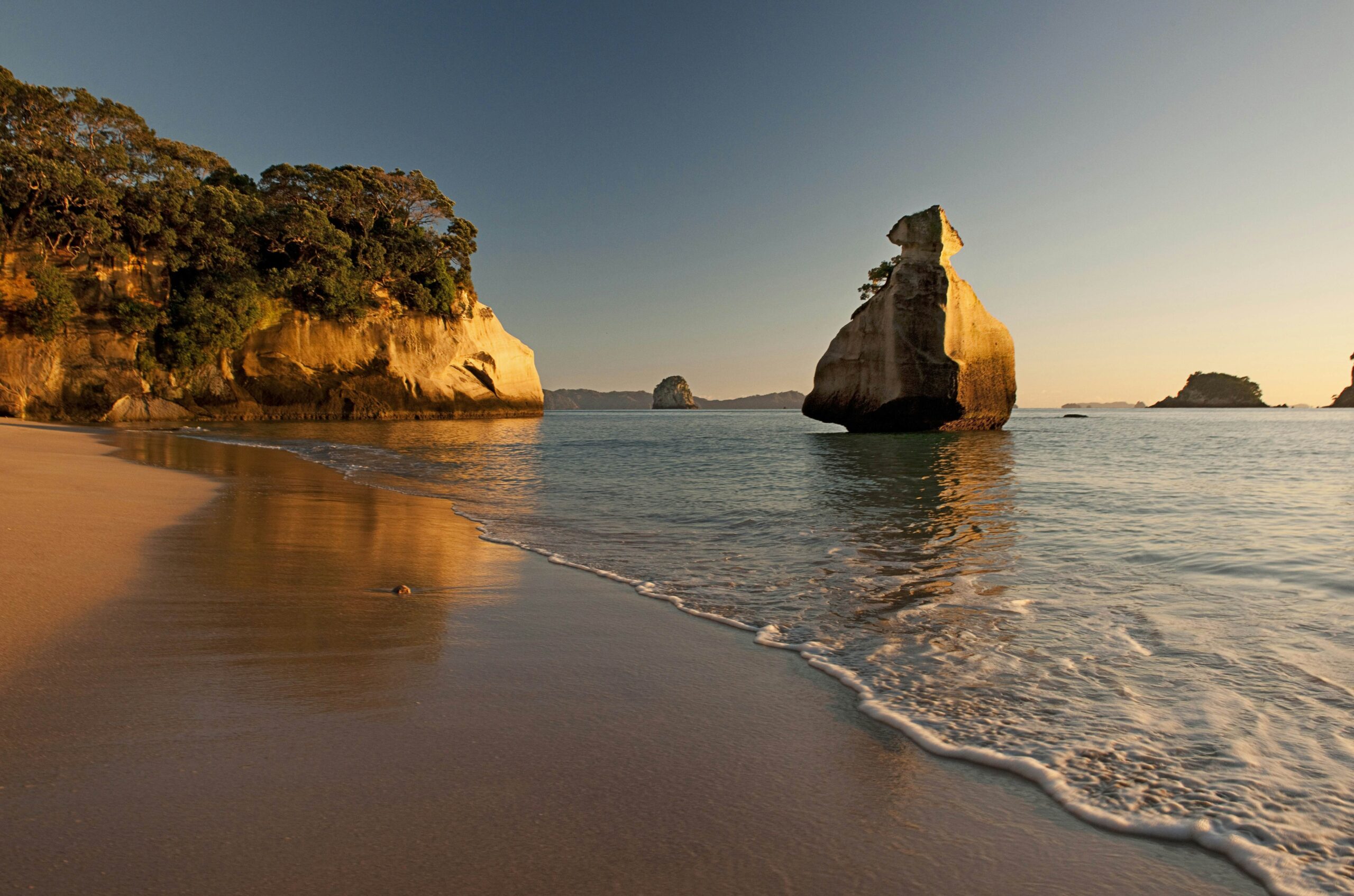
How to see Cathedral Cove now: The only way to set foot on the beach is by water. Boat tours and kayak rentals operate from Whitianga and Hahei. I have taken the kayak approach and paddled through the marine reserve, past shags and stingrays, and then landed on the empty cove, which feels even more special than walking.
Check the official DOC website for current track status before you go. The lookout at the top of the closed track still gives a classic photo, but you cannot descend.
Book a boat tour in advance during summer. Compare operators on TripAdvisor or book a kayak guide through GetYourGuide. This closure changes a lot of itineraries, so we wrote a full Cathedral Cove access guide with the latest updates.
Is the 309 Road Worth Driving? A Full Guide
The 309 Road is a 22-kilometer shortcut between Coromandel Town and Whitianga, part sealed and part gravel. It cuts through dense bush past two standout stops: Waiau Falls and the Waiau Kauri Grove. We drove it in a front-wheel-drive hatchback and it was fine in dry weather, but caution is essential.
@thegibsonsnz Waiau Falls along The 309 road of Coromandel, New Zealand #newzealand #auckland #the309 #coromandel
What you will see
Waiau Falls is a short walk from the roadside and has a deep, cold swimming hole. The Waiau Kauri Grove is a boardwalk loop through towering ancient kauri trees, including one massive specimen estimated at over 600 years old. A little further on, you might spot wild pigs or locals collecting watercress from the creek.
Rental car warning
Many rental companies explicitly exclude gravel roads from insurance. Check your contract before you take the 309. The alternative sealed route via the Kopu-Hikuai road adds about 30 minutes but keeps your insurance intact.
For detailed driving notes and a photo guide, see our 309 Road and Waiau Falls article.
Coromandel by Campervan: DOC Sites and Freedom Camping Rules
One of the best ways to see the peninsula is to sleep beside the ocean in a self-contained van. I have spent nights at Fantail Bay, watching the stars and hearing nothing but waves. But the rules are strict and rangers patrol regularly.
DOC campsites worth booking
The Department of Conservation runs several coastal campsites. Fantail Bay (northern tip) offers grass sites right by the water for about $15 per adult per night. Fletcher Bay and Stony Bay are more remote and give access to the Coromandel Coastal Walkway. Waikawau Bay on the west coast is a huge beachside camp that fills quickly in summer. Bring cash or book online via the DOC website; reception is patchy.
Freedom camping: self-contained only
In the Coromandel, you must be in a certified self-contained vehicle to freedom camp. Tents and non-self-contained vans are not allowed in designated freedom camping areas. The Thames-Coromandel District Council has maps of permitted spots, and many have a maximum two-night stay. Dump stations are located in Whitianga, Thames, and Coromandel Town. Fines for illegal camping are hefty, so do not risk it.
For a full list of campsites and booking tips, read our Coromandel campervan guide.
What to Eat on the Coromandel Peninsula
Chidi says the Coromandel is really just a food trail with beaches attached. He is not entirely wrong. Here is what you should not miss.
Green-lipped mussels
The Coromandel is mussel-farming ground zero. Stop at the Coromandel Mussel Kitchen on the 309 Road for garlic-buttered platters, or grab fresh mussels from the Coromandel Oyster Company on the waterfront. Fatima swears the smoked mussel chowder at a Whitianga cafe changed her life.
Smoked fish and artisan bakeries
Coromandel Town has a smokehouse where you can buy hot smoked snapper and kahawai straight from the smoker. Pair it with fresh sourdough from a Thames bakery. The Kopu-Hikuai road has a roadside stall selling avocadoes and feijoas in season.
First-Timer Mistakes to Avoid on the Coromandel
- Ignoring tide times at Hot Water Beach. Turn up at high tide and you will find only water. Always check the Whitianga tide table.
- Assuming the Cathedral Cove track is open. It is not. Plan for a boat tour or accept the lookout view only.
- Driving the 309 Road without insurance coverage. Gravel roads can void your rental car excess. Read the fine print.
- Trying to freedom camp in a non-self-contained vehicle. You will be fined. Book a holiday park or DOC site instead.
- Not filling up petrol in Thames or Whitianga before heading north. Fuel stations are sparse beyond Coromandel Town and Colville.
- Underestimating summer traffic. The single-lane Kopu Bridge and Thames can back up for kilometers. Leave early or travel midweek.
Frequently asked questions
Is it worth visiting the Coromandel Peninsula?
Yes, absolutely. In just a couple of hours from Auckland you get geothermal hot springs on a beach, pristine marine reserves, ancient kauri forests, and a genuinely laid-back coastal culture. It is one of the North Island’s most varied destinations.
How many days do you need in the Coromandel?
Three days covers the main highlights. A weekend hits the essentials if you are efficient. Five to seven days lets you hike the Pinnacles, explore the remote northern tip, and camp on the west coast.
Can you swim at Cathedral Cove?
Yes, the cove itself is a wonderful swimming beach, but currently you can only reach it by boat or kayak. The walking track remains closed as of this year. The water is clear and usually calm in summer.
When is low tide at Hot Water Beach?
Low tide times change daily. You need to check the Whitianga tide timetable before you go. The hot water zone is accessible roughly one to two hours on either side of low tide.
Do I need a 4WD for the 309 Road?
No, a standard car can manage the gravel sections in dry weather. However, many rental companies prohibit gravel roads, so check your rental agreement first. The sealed alternative via the Kopu-Hikuai road is also scenic.
Is Cathedral Cove open this year?
As of early this year, the walking track from Hahei to Cathedral Cove remains closed due to storm damage. Boat tours and kayak trips are operating normally. Check the DOC website for the latest status before you travel.
Plan your trip: booking platforms we trust
The WakaAbuja team uses these sites to plan our own Coromandel escapes. They cover everything from flights to campervans, and we have found them reliable for checking real traveler reviews and comparing prices.