
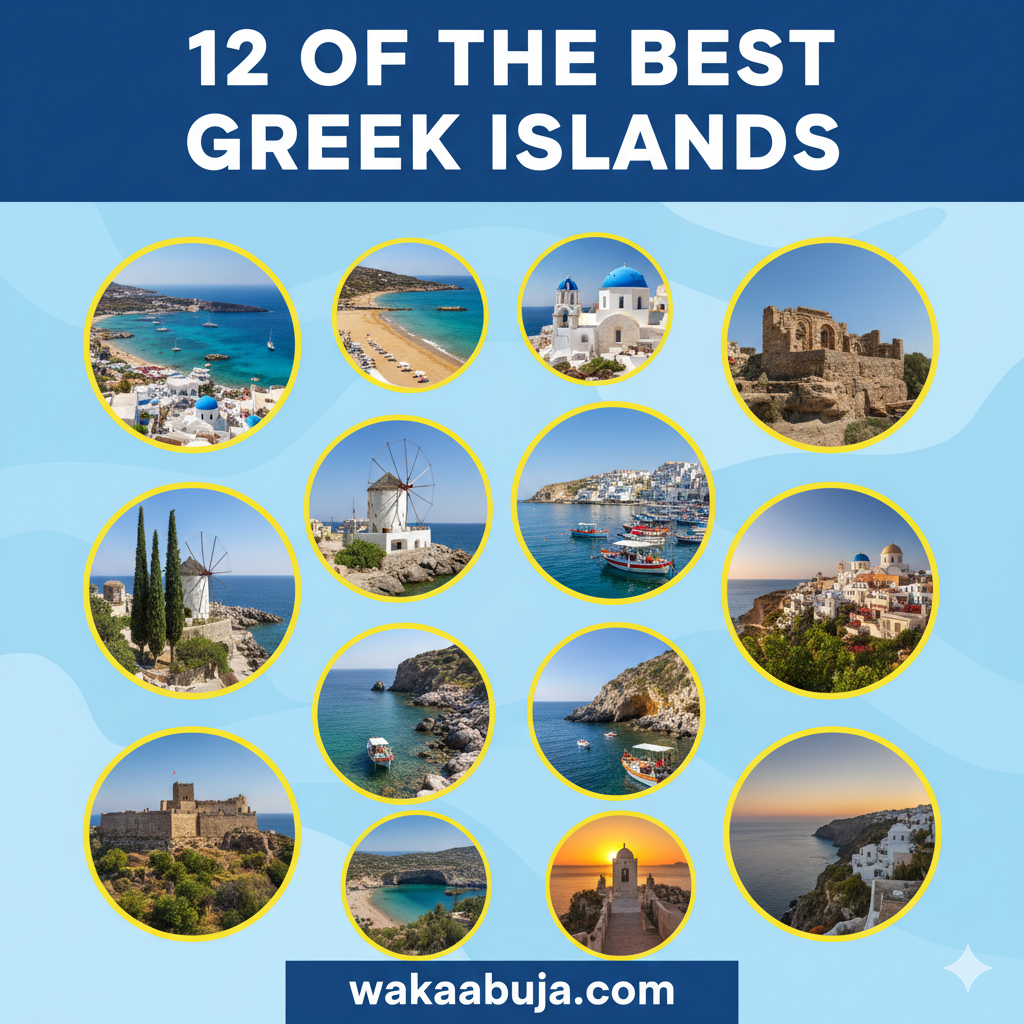
In this guide, I take you through 12 of the best Greek islands with personal insights, must-see spots, tips on when and how to visit, practical budgeting advice, safety info, transit options, and suggested lengths of stay.
Whether you want relaxation, adventure, or history, these islands have something for every traveler.
Jump directly to detailed island guides & travel tips below.
Why These 12 Greek Islands Should Be on Your Travel List
From the iconic whitewashed charm of Santorini to the lush green hills of Corfu, Greek islands enchant every kind of traveler.
I’ve explored each island in depth to share personal experiences and expert tips.
This isn’t just a list — it’s a thoughtfully
curated guide to ensure your visit is memorable, safe, and budget-smart.
Santorini – Romance, Volcano Views & Stunning Sunsets
Santorini’s breathtaking caldera views, epic sunsets from Oia, and luxurious accommodations make it an iconic destination.
I recommend staying in a cave-style villa for the authentic experience.
Must-Do: Hike from Fira to Oia, visit volcanic hot springs, and explore ancient Akrotiri.
Best Time to Go: Late April to early June or September to October for mild weather and fewer tourists.
Typical Costs: Mid to high-range; budget about €120–€200/day excluding flights.
How to Get There: Flights to Santorini (JTR) or ferries from Athens and nearby islands.
Safety Tip: Watch your step on steep paths; it gets crowded in high season.
Official Tourism Site
Mykonos – Chic Beaches, Nightlife & Cosmopolitan Vibes
Mykonos dazzles with trendy beach bars, world-class clubs, and charming old town alleys. This is for travelers looking to party and soak up the luxe side of the islands.
Must-Do: Beach hopping between Psarou, Paradise, and Super Paradise; wander Little Venice; dine seaside.
Best Time to Go: May to mid-September with peak nightlife in July/August.
Typical Costs: High-end pricing; budget €150+ daily.
How to Get There: Flights to Mykonos Airport (JMK) or ferries from Athens and surrounding islands.
Safety Tip: Watch your belongings in crowded venues.
Mykonos Municipality Info
Crete – History, Mountains & Authentic Local Culture
As Greece’s largest island, Crete mixes ancient Minoan sites, vibrant cities, and rugged nature. I loved the laid-back villages and fresh local cuisine.
Must-Do: Visit Knossos palace, hike Samaria Gorge, and feast in Chania’s old harbor.
Best Time to Go: April to early June or September to October for pleasant weather.
Typical Costs: Moderate budget travelers can enjoy Crete on €70–€120/day.
How to Get There: Flights to Heraklion (HER) or Chania (CHQ), plus ferries.
Safety Tip: Roads can be challenging; renting a car requires confident driving.
Destination Crete Official Site
Rhodes – Medieval Charm, Beaches & Vibrant Nightlife
Rhodes loads up on history with its impressive medieval town and ancient ruins, paired with stunning beaches and lively summer festivals.
Must-Do: Explore the Old Town fortress, visit Lindos, and relax at Tsambika beach.
Best Time to Go: May to September, with July and August bringing festivals
Typical Costs: Moderate; around €80–€130 daily.
How to Get There: Flights to Rhodes International Airport (RHO) and ferries.
Safety Tip: Be cautious with swimming conditions in open beaches.
Rhodes Official Tourism
Corfu – Lush Landscapes, Venetian Architecture & Relaxed Beaches
Corfu’s verdant hills and elegant Venetian-inspired towns offer a less crowded but culturally rich experience.
I found the Old Fortress and Paleokastritsa beach incredibly photogenic.
Must-Do: Walk through Corfu Old Town, visit Achilleion Palace, and boat around nearby islets.
Best Time to Go: Mid-May through early October.
Typical Costs: Moderate; €70–€120 per day.
How to Get There: Corfu International Airport (CFU) and frequent ferries.
Safety Tip: Some walking tours include steep paths.
Corfu Tourism Authority
More Greek Island Gems Worth Exploring
The next six islands each offer unique vibes:
Naxos: Family-friendly beaches and traditional villages.
Paros: Windsurfing, nightlife, and charming towns.
Milos: Surreal landscapes and quiet coves.
Skiathos: Lush pine forests and lively beaches.
Hydra: No cars, perfect for calm walks and art lovers.
Zakynthos: Famous for Navagio Beach and turtle spotting.
Karpathos: Authentic rural Greece, great for hiking.
Each ranges from budget to moderate costs and has great ferry and flight connections.
Essential Travel Tips: Getting There, Getting Around & Safety
How to Get to the Greek Islands
Major hubs like Athens and Thessaloniki offer international flights with connections to island airports. Ferries are the lifeline between islands and the mainland, with high-speed catamarans cutting down travel times. Booking tickets in advance is key, especially for summer.
Local Transportation
Most islands have local buses, taxis, and scooter or car rentals. For remote areas, scooters are convenient but be mindful of road conditions and your experience riding them.
Staying Safe While Traveling
Greece is generally safe, but typical travel vigilance applies—keep personal belongings secure, especially in crowded areas. Beware of strong summer sun and swim safely, as some beaches have strong currents.
Where to Stay and Budgeting for Your Island Adventure
Typical Costs Overview
- – Budget Travelers: €40–€70/day (hostels, local eateries, public transport)
- – Mid-range Travelers: €80–€140/day (boutique hotels, mix of dining)
- – Luxury Seekers: €150+ daily (private villas, fine dining, tours)
“On Santorini, I paid around €180 a day including my villa rental and dining out, whereas in Crete, you can enjoy an authentic meal for under €10.”
Where to Stay by Island
Each island offers a variety of lodging options:
- Santorini: Oia or Fira villages for views and atmosphere
- Mykonos: Near beaches like Psarou or in Mykonos Town
- Crete: Chania or Heraklion for culture and access
- Rhodes: Rhodes Old Town or Faliraki for nightlife
- Corfu: Near Old Town or rural guesthouses
- Others: Town centers or beachside resorts depending on preference
Money-Saving Tips
- Travel off-peak or shoulder season for better prices and quieter spots.
- Use local tavernas for authentic meals at lower costs.
- Book ferries and accommodation early to avoid last-minute premiums.
- Consider shared taxis or local bus services rather than private cars.
How Long to Stay on Each Island
Here is my suggested itinerary guide to enjoy each island fully:
- Santorini: 3-4 days to explore the caldera, villages, and beaches.
- Mykonos: 2-3 days for nightlife and beaches.
- Crete: 5-7 days to cover historic sites, nature trails, and beaches.
- Rhodes: 3-4 days to balance history and seaside fun.
- Corfu: 3-4 days for Old Town and nature.
- Others: 2-3 days each depending on interests.
Personal Insights, Pro Tips & Local Emergency Contacts
Arriving early and walking gave a more peaceful vantage than the busy Oia streets.”
For safety, keep emergency numbers handy:
- General emergency: 112
- Tourist Police: +30 210 5289900
- Medical emergencies vary by island; check local hospital contacts on official sites.
Pros and cons of these islands vary: some are bustling and expensive (Mykonos), others serene but less accessible (Karpathos). Choose based on your travel style.
Frequently Asked Questions About Greek Islands Travel
What is the best time to visit the Greek islands?
I recommend late spring (May to June) and early autumn (September to October) for pleasant weather, fewer crowds, and better prices.
Are the Greek islands safe for solo travelers?
Yes, they are generally safe with friendly locals and well-traveled tourist areas. Usual travel caution applies, especially at night and in crowded places.
How do I get between islands?
You can use the extensive ferry network or take short domestic flights. Ferries are scenic and popular during summer.
What currency is used and can I use credit cards?
Greece uses the Euro (€). Most tourist spots accept credit cards, but small shops and taxis may require cash.
Is it necessary to rent a car?
If you want to explore rural or less accessible parts, renting a car or scooter is ideal. In towns, walking or public transport often suffice.
Final Travel Tip
Embrace the slower pace and local rhythms of each island. Talk to locals, try homemade Greek delights, and explore beyond tourist hotspots
for the most authentic experience. Greek islands reward curiosity and openness — I’ve found some of my most treasured memories this way.