Kofa National Wildlife Refuge
Kofa National Wildlife Refuge spans 665,400 acres of raw Sonoran Desert in western Arizona, where free primitive camping, world-class bighorn sheep watching, and sheer emptiness lure adventurers who want no crowds.
The refuge has no entrance fee, no water, and almost no pavement. Come with a high-clearance vehicle, plenty of supplies, and a deep respect for desert silence.
I still remember Chidi, from our Abuja team, stepping out of the truck at Palm Canyon trailhead before sunrise. He whispered, “This feels like northern Nigeria’s Sahel, just with saguaros instead of acacias.”
He wasn’t wrong. That dry, electric silence before the heat hits, the crunch of gravel underfoot, the sense that the land will test you if you get careless. Kofa is not a zoo. It’s a sanctuary that demands you pay attention, and that’s exactly why we keep returning.
Jump to: Getting There | Wildlife Watching | Best Hikes | When to Visit | Permits & Fees | Top Activities | Rules & Regulations | Where to Stay | Safety & Planning | What to Avoid | FAQ
Key takeaways
- The refuge is open 24 hours a day, year-round, with zero entrance or camping fees—but you pack out everything you pack in.
- Desert bighorn sheep are the headline act. Palm Canyon holds Arizona’s only native palm population.
- A high-clearance, preferably 4WD vehicle opens up the backcountry roads; low-clearance sedans severely limit your options.
- October through April is the sweet spot. Summer heat regularly kills people who underestimate it.
- No water, no fuel, no cell service across most of the refuge — treat every trip as a self-sufficient expedition.
- Drones, geocaching, and collecting rocks or artifacts are prohibited. Read the official rules before you go.
- Nearby Quartzsite and Yuma offer the closest lodging, but primitive camping inside Kofa is an experience you shouldn’t miss.
Where is Kofa National Wildlife Refuge and how do you get there?
@dogtor.chasity During my first couple of days of break, I had the opportunity to work alongside Arizona Game and Fish at Kofa Wildlife Refuge, helping process Sonoran pronghorn, one of the most endangered mammals. We captured and processed animals in bomas, collected blood🩸 and fecal samples, updated vaccines and medications, and selected four bucks for release to support population recovery. Grateful to be back in the field with one of my former doctors and to play a small role in conservation efforts that truly matter. 🦌 #veterinarymedicine #sonoranpronghorn #veterinarystudent #conservation #wildliferescue
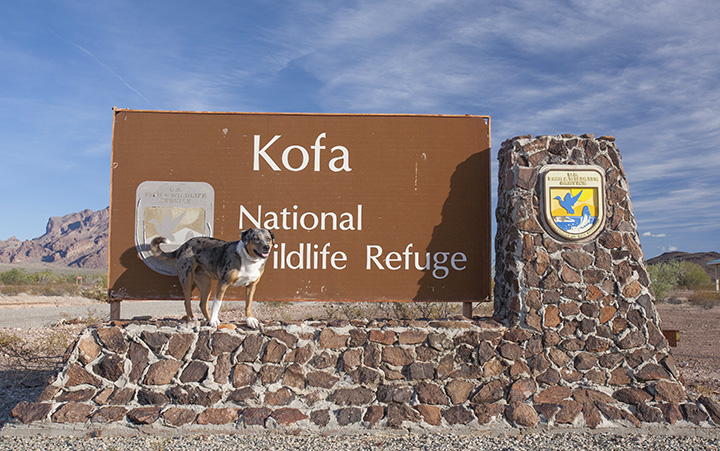
Kofa sits in the desert between Quartzsite and Yuma, Arizona, roughly two and a half hours east of San Diego and three hours west of Phoenix. The main access artery is U.S. Highway 95, which flanks the western edge of the refuge. From Phoenix, you take I-10 west to Quartzsite, then head south. From Yuma, it’s a straight shot north on 95. There is no main entrance sign or gate that screams “refuge.” A few brown signs and a grid of unpaved roads mark the boundary.
The refuge’s dirt road network is extensive but rarely graded. Chidi and I once took a 2WD rental crossover up Palm Canyon Road, and the washboard rattled our fillings loose by mile three. That road is generally passable for careful drivers in dry conditions, but beyond that, you want a true high-clearance vehicle. Roads like the King Valley Road or the drive into Hoodoo Wash demand 4WD and tire patch kits. Always check current conditions at the U.S. Fish & Wildlife Service Kofa page before heading out.
Chidi’s honest take: “The most important piece of navigation gear is a paper map or offline GPS. Your phone will turn into a useless slab the moment you leave Quartzsite. I downloaded the refuge’s official motor vehicle use map as a PDF and it saved us twice when side roads disappeared into sand.”
Best for
- Phoenix arrivals: Rent a 4WD SUV from Phoenix Sky Harbor, compare rates on Kayak and then book through Expedia for package deals.
- Road trip loop: Pair Kofa with a Joshua Tree or Organ Pipe Cactus visit; see our guide to southern Arizona desert parks.
- Entry points: Palm Canyon Road (east of 95 at milepost 85) and King Valley Road (milepost 76) are the most reliable.
Worth considering
- Yuma as a base: Closer to the southern sectors, with more amenities and reliable lodging via Booking.com.
- El Camino del Diablo: A historic 4WD trail just south of the refuge; for experienced overlanders only.
What wildlife can you see at Kofa National Wildlife Refuge?

The charismatic star of Kofa is the desert bighorn sheep. The refuge was originally established in 1939 largely to protect them, and today an estimated 400 to 800 animals roam the rocky peaks and bajadas. Dawn and dusk in the canyons near Palm Canyon or the Kofa Mountains are your best bet. Bring a spotting scope; these sheep blend into the cliffsides with uncanny precision. We once watched a ewe and her lamb traverse a near-vertical face while Chidi muttered, “That’s not walking, that’s witchcraft.”
Beyond bighorn, the refuge hosts Sonoran pronghorn (a critically endangered subspecies, with fewer than 200 left in the wild), desert mule deer, kit foxes, and ringtails. Birders get their money’s worth too — Gila woodpeckers, phainopepla, and the occasional golden eagle.
Reptiles like the chuckwalla and desert tortoise emerge in spring. While seeing a mountain lion is rare, their tracks are common in sandy washes. Always remember: these animals rely on the refuge’s strict protection. Harassing or approaching wildlife is a federal offense.
Best for
- Bighorn spotting: Palm Canyon mouth, just before the trail narrows, in the first hour after sunrise.
- Pronghorn viewing: The grasslands in the King Valley area, early mornings October to March.
- Birding hotspots: The date palm groves at the old Kofa Cabin site and the bajadas near Big Eye Mine.
Worth considering
- Night drives: Kit foxes and kangaroo rats are best seen by careful spotlighting along the washes.
- Endangered species: Reporting Sonoran pronghorn sightings to refuge staff helps conservation efforts.
What are the best hiking trails at Kofa National Wildlife Refuge?
Designated trails are rare here, and that’s part of the appeal. Most hiking is cross-country or along wash bottoms. The iconic exception is Palm Canyon Trail, a half-mile scramble into a hidden side canyon where California fan palms cling to a sheer rock cleft. It’s Arizona’s only native palm population, and the sight of those shaggy trunks against the granite feels prehistoric. The trailhead is off Palm Canyon Road, and the scramble section requires some hand-over-foot climbing; it’s short but not for anyone with a fear of heights.
For something more strenuous, Crystal Hill offers a 2-mile round-trip scramble up a quartz-studded peak with 360-degree views of the desert floor. No official trail exists, just a cairned route. Signal Peak, the refuge’s high point at 4,877 feet, is a full-day off-trail adventure only for experienced desert hikers. Chidi attempted it in April and turned back after running out of water. “Respect the sun,” he told us. “It’s a bully.” Other areas like Big Eye Mine combine history with hiking, the remains of a 1920s gold operation accessible by a rugged 4WD road then a half-mile walk.
@memphis_onthe_move Come with me to Kofa National Wildlife Refuge to hike Palm Canyon in search of the hidden palm trees growing deep within a crevice the canyon. Down a 7 mile washboard road is the beautiful Palm Canyon trail. It’s a short hike to get a glimpse at the palm trees, but that doesn’t mean it’s an easy trail. It’s just under a half a mile to the marker but it does have some elevation gain and the trail is a rocky terrain. Once you have located the trees, the trail begins to fizzle out as the dense foliage begins to take over. Take your time with this trail ! If you’re quiet, often times you can find longhorn sheep and birds flying in and out. This is an especially magical hike if you time it just right to watch sunset on your way out of the canyon. 🫶🏼 For the full hike, check out my YouTube channel in my bio!!! #hiking #exploremore #wildliferefuge #travel #palmtrees
Fatima, our Lagos correspondent, on desert hiking: “I didn’t understand why everyone kept telling me to wear long sleeves in the heat until a prickly pear snagged my ankle. Protect your skin from sun and spines, and carry at least a gallon of water per person, per hike.”
When is the best time to visit Kofa National Wildlife Refuge?

The refuge is technically open every day, but July and August are dangerous. Temperatures routinely exceed 115 degrees Fahrenheit, and emergency response can take hours. The sweet spot is November through March, when highs hover between 65 and 80 degrees Fahrenheit and nights are crisp. This is also when bighorn sheep are most active, and wildflowers can start peeking out in February after winter rains. Early this year, a superbloom in the King Valley drew photographers from across the country.
Spring and fall are transitional but still pleasant if you watch the forecast. April can bring sudden heat waves, and October still has lingering 100-degree days. The North American monsoon, typically July through September, causes flash flooding in the washes. We got caught in a storm near Hoodoo Wash once, and within minutes the road became a river. Always check the National Weather Service before entering remote areas. If you find cheap flights into Phoenix on Kayak, aim for a winter long weekend, you’ll escape snow elsewhere and have the desert practically to yourself.
Do you need a permit or pass to visit Kofa National Wildlife Refuge?
No entrance fee, no day-use permit, and no camping fee are required for general refuge access or primitive camping. This is one of the biggest draws for budget travelers. However, if you plan to use the designated Kofa Cabin (near the old Kofa Mine), you do need to reserve it in advance through the refuge office, and a small nightly fee applies. Commercial filming and large group events require special use permits. Hunting is permitted in certain areas with a valid Arizona hunting license and refuge permit; check the U.S. Fish & Wildlife Service website for season dates and quotas.
Even though it’s free, the refuge still enforces a 14-day camping limit within any 28-day period. Camping is allowed only in previously disturbed areas or along established road corridors, not in virgin desert. I’ve seen rangers check on this. The free nature of the refuge makes it an incredible value, but it also means no services: no trash collection, no toilets, no water. Carry wag bags or a portable toilet, and pack out every scrap.
What are the top things to do at Kofa National Wildlife Refuge besides hiking?
Stargazing here is world-class. With zero light pollution and a designation as an International Dark Sky Sanctuary being lobbied for, the Milky Way arcs overhead with stunning clarity. On a moonless February night, we lay on a tarp near Saguaro Canyon and counted 15 satellites in an hour. Bring a red headlamp and a star chart, and you’ll forget the cold.
Overlanding and primitive camping define the Kofa experience for many. The backcountry roads like the pipeline road and Hoodoo Wash offer dispersed campsites tucked among ironwood trees. Photography is another major draw. The contrast of blooming ocotillo against black volcanic rock creates surreal compositions.
Historical exploration at sites like the King of Arizona Mine (where the refuge gets its name) reveals rusted equipment and crumbling cabins. Always stay on designated routes; collecting artifacts or disturbing historical sites is prohibited. For gear and tour packages that combine desert photography workshops, you might find options on GetYourGuide departing from Yuma or Phoenix.
Chidi’s field tip: “I stumbled on a 1930s stamp mill half-buried in a wash. It was incredible, but I didn’t touch a thing. The dark patina on the metal is priceless archaeological data. Take pictures, leave everything as you found it.”
What are the rules and regulations at Kofa National Wildlife Refuge?

Kofa is not a free-for-all. Drones are completely banned across the entire refuge to protect wildlife from harassment. Target shooting is prohibited except in two very specific designated areas near Quartzsite, and even then, only during certain seasons. You cannot collect rocks, minerals, plants, or historical artifacts. The rockhounding dreams you might have heard about apply to surrounding BLM land, not inside Kofa’s boundaries.
Motorized vehicles must stay on open, designated roads as shown on the refuge’s motor vehicle use map. Cross-country driving destroys fragile cryptobiotic soil crusts and can carry a fine of up to $500. Pack out all trash, including toilet paper. Ground fires are allowed only in established fire rings, and you must bring your own wood; collecting deadfall is illegal. Fire restrictions often go into effect by May. Chidi once reminded me, “If it feels like a rule you might bend, the desert already has a plan to punish you.” The complete list is on the official Kofa NWR site.
Where to stay near Kofa National Wildlife Refuge?
Inside the refuge, primitive camping is the only option. No developed campgrounds, no hookups. You carry in everything. For those who prefer a hot shower and a real bed, Quartzsite, 15 miles north, is the closest town. It’s a winter snowbird hub with RV parks and basic motels. We’ve had good luck finding last-minute rooms on Booking.com and Hotels.com in Quartzsite, though they fill up fast during the January gem shows and February RV show. Prices spike, so book early if you can.
Yuma, about 45 minutes south, offers chain hotels, restaurants, and more amenities. For a unique stay, look for vacation rentals on Vrbo, some of which are historic miners’ cabins on the outskirts. If you’re flying in, compare Yuma International and Phoenix Sky Harbor on Kayak and then bundle with hotels via Expedia. Check TripAdvisor for recent reviews of any place you’re considering, desert motels can be hit or miss.
Best for
- Campers: Dispersed sites along Palm Canyon Road or near King Valley; no reservations, first-come.
- RV travelers: Long-term visitor areas (LTVAs) in Quartzsite, though they are outside the refuge boundary.
- Comfort seekers: Yuma hotels with pools, perfect after a dusty day, book with Booking.com loyalty discounts.
Worth considering
- El Prado Cabin: A historic rental just outside the refuge, bookable through private owners on Vrbo.
- Camp at the old Kofa Cabin: Reservations required, limited availability, brings a rustic historic experience.
How to plan a safe and memorable trip to Kofa National Wildlife Refuge
Water and supplies
Carry a minimum of one gallon of water per person per day, and double that if you’re hiking. We stash a 5-gallon jug in the vehicle and refill personal bottles from it. Electrolyte packets are non-negotiable. Food should be non-perishable and require no cooking if fire restrictions are active. Pack a well-stocked first-aid kit; the nearest hospital is in Parker or Yuma, over an hour away.
Navigation and communication
Cell service is absent in most of the refuge except some high ridges. A Garmin inReach or satellite phone is a lifesaving investment. The U.S. Fish & Wildlife Service provides a downloadable motor vehicle use map that is legally required for driving off pavement. Use a GPS unit preloaded with those tracks. Paper backups are essential.
Weather extremes and flash floods
Check the forecast for the specific GPS coordinates, not just Quartzsite. Summer monsoons can drop an inch of rain in an hour, turning dry washes into deadly torrents. Never camp in a wash bottom, even if the sky is clear. The soil here is hydrophobic; water sheets off, catching campers by surprise. We learned this the hard way during a September scouting trip when Chidi’s tent site became a creek.
Vehicle preparation
All-terrain tires, a full-size spare, jack, and tire repair kit are baseline. Sand mats or traction boards help in soft gravel. Let someone know your planned route and return time. The refuge’s remote character means self-recovery is usually your only option. We recommend checking Expedia for SUVs with high ground clearance when booking flights and car bundles.
What common mistakes should you avoid at Kofa National Wildlife Refuge?
- Relying on GPS routing apps. Google Maps will direct you down nonexistent or closed roads. Use the official refuge map and offline GPS tracks.
- Underestimating the sun. Heat exhaustion kills. Hike only at dawn and dusk in warm months, wear a wide-brim hat, and sip water constantly.
- Driving a sedan down deep sandy roads. We’ve seen countless stuck vehicles, and tows can cost over $1,500. A high-clearance vehicle is not a suggestion.
- Approaching or feeding wildlife. Bighorn sheep may seem calm, but habituation leads to their demise. Keep a distance of at least 100 yards.
- Camping in a wash. Flash floods travel from storms miles away. A clear sky above you means nothing.
- Leaving trash or toilet paper. The desert preserves everything. Burying waste is not allowed; use wag bags and pack them out.
- Missing the gunfire rules. Target shooting outside the two designated areas is a federal violation that comes with heavy fines. Check the official refuge page for current boundaries.
Frequently asked questions
Is Kofa National Wildlife Refuge free?
Yes. There are no entrance fees, day-use fees, or camping fees for primitive stays. Only the historic Kofa Cabin requires a reservation and small nightly fee. Commercial permits and hunting fees apply separately.
Can you camp anywhere in Kofa?
Dispersed camping is allowed in previously disturbed areas and along open roads, with a 14-day limit per 28-day period. Camping in pristine desert or in washes is prohibited. Always pack out all waste.
When can you see desert bighorn sheep?
Year-round, but the best viewing is during cooler months, particularly early mornings near Palm Canyon and the Kofa Mountains. During summer, sheep retreat to high, shaded ledges and are harder to spot.
Is cell phone service available in the refuge?
Almost none. A few high peaks may catch a signal, but you should not count on it. Carry a satellite communicator for emergencies.
Can you drive an RV into Kofa?
Small RVs and truck campers can handle Palm Canyon Road to the trailhead with care. Larger rigs are not advised beyond that. There are no dump stations, hookups, or developed sites. Most RVers stay in Quartzsite and day-trip in a smaller vehicle.
Are dogs allowed in Kofa National Wildlife Refuge?
Yes, but they must be leashed at all times to protect wildlife and the dog itself from cactus spines, snakes, and extreme heat. Never leave a dog unattended outside; coyotes and mountain lions are present.
What is the Kofa NWR name origin?
“Kofa” comes from the King of Arizona gold mine, active in the early 1900s. The mine’s stamp mill and remnants are still visible, though entering shafts is extremely dangerous and prohibited.
Plan your trip: booking platforms we trust
The WakaAbuja team has used these platforms across multiple desert trips. We handpick them because they offer reliable booking, clear cancellation policies, and real reviews that help you avoid surprises. For Kofa specifically, you’ll need flights, a rental vehicle with clearance, and possibly a town hotel for buffer nights.
Best for flight price comparison to Phoenix or Yuma.
Great for bundling a flight, SUV rental, and hotel.
Reliable for Quartzsite and Yuma motel inventory.
Loyalty rewards add up for desert road warriors.
Quirky historic cabins and whole-home rentals near the refuge.
Desert tours and photography workshops out of Yuma.
Read recent reviews for motels and local diners.
Occasional hidden deals on Southwest U.S. properties.