advertisement
Mount Fuji: Everything You Need to Know Before Going
Mount Fuji is Japan’s tallest summit at 3,776 meters, an active stratovolcano and UNESCO World Heritage site.
The climbing window opens each July and August, while the most reliable views come on crisp winter mornings from the Fuji Five Lakes region.
I’ll never forget my first Shinkansen ride west from Tokyo. My friend Chidi, who later joined our WakaAbuja Japan team, had insisted on seat E, right-hand side, and a clear January morning delivered a perfect floating cone of white and indigo.
That one glimpse sparked a years-long obsession with getting every practical detail right for our readers, whether you want to climb the volcano or simply photograph it with morning mist across Lake Kawaguchi.
Jump to: Visibility calendar | Climbing routes compared | Photo spots & timing | Culture & history | Geology & eruptions | Transport, costs & bases | FAQs
Key takeaways
- The official climbing season runs early July to early September, with all four trails only fully open during that window.
- Yoshida Trail now has a daily cap of 4,000 climbers and a mandatory ¥2,000 toll, as of the regulations introduced in 2024.
- December to February gives you the highest chance of cloud-free views, especially in the early morning.
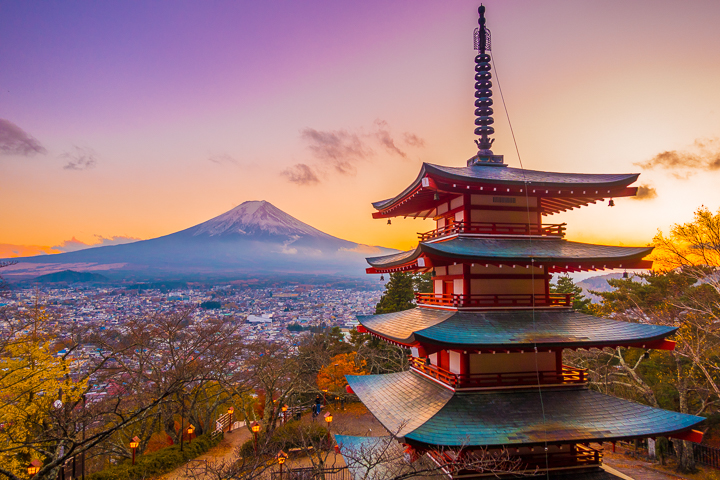
- Chureito Pagoda, Oshino Hakkai and Lake Kawaguchi’s north shore are the top photography spots we keep returning to.
- Round-trip transport from Tokyo can cost as little as ¥4,000 by highway bus, while a full climb with a hut stay runs ¥15,000–¥25,000.
- Mount Fuji is an active volcano with three distinct geological layers; the last eruption was in 1707.
- Accessible viewpoints exist at the Yoshida Trail 5th Station and around Lake Kawaguchi, but the summit climb is not wheelchair-friendly.
When is the best time to see Mount Fuji?
Morning visibility is everything. Fatima, our Lagos correspondent who now lives for Japanese winters, taught me that the mountain disappears by midday more often than not, no matter the season. Cloud probability peaks in summer, while winter delivers the sharpest silhouettes.
Winter (Dec–Feb)
- Visibility: excellent, often above 80% in early morning.
- Cold, dry air keeps haze away; the Diamond Fuji phenomenon occurs at sunrise.
- Lake Kawaguchi freezes partially, creating mirror surfaces at dawn.
Spring (Mar–May)
- Cherry blossom season in April adds foreground color.
- Morning clarity still good; afternoons become cloudier.
- Snow cap begins to melt, revealing the classic blue-grey cone.
Summer (Jun–Aug)
- Worst visibility: rainy season until mid-July, then humid haze.
- Climbing season open, but summit often obscured after 9 a.m.
- If you climb, start before dawn to see the sunrise above clouds.
Autumn (Sep–Nov)
- Typhoon risk in September, then sharp improvement in October.
- Autumn foliage around the lakes peaks in late October.
- November mornings rival winter for clarity.
Chidi’s honest take: “Forget sleeping in. I set my alarm for 5 a.m. every day I’m near Fuji, because after 10 a.m. you’re gambling with clouds. Even in peak summer, a pre-dawn start gives you a solid two-hour window of clear views.”
How to climb Mount Fuji: the four routes compared
All ascents begin from a 5th Station, but the character of each trail differs dramatically. The new rules brought in during 2024 tightened the experience on Yoshida, while the other three paths remain less regulated, quieter, and, in my view, more rewarding if you have the legs. I’ve outlined what each route demands below.
Yoshida Trail
- Difficulty: Moderate; most popular, best for first-timers.
- Duration: 5–7 hours up, 3–4 hours down.
- Scenery: Sunrise from the summit ridge; many huts.
- Crowds: Heaviest; daily cap of 4,000 people, ¥2,000 toll.
- Access: Bus from Kawaguchiko to Subaru Line 5th Station.
Subashiri Trail
- Difficulty: Moderate; forested start, joins Yoshida at 8th station.
- Duration: 5–8 hours up, 3–4 hours down.
- Scenery: Woodland, then volcanic scree; quieter ascent.
- Crowds: Much lower than Yoshida, no daily cap as of this season.
- Access: Bus from Gotemba Station to Subashiri 5th Station.
Gotemba Trail
- Difficulty: Hardest; longest, steepest, and lowest starting point.
- Duration: 7–10 hours up, 4–5 hours down.
- Scenery: Stark volcanic landscape, few huts, Osawa rockslide.
- Crowds: Fewest climbers; recommended for experienced only.
- Access: Bus from Gotemba Station to Gotemba 5th Station.
Fujinomiya Trail
- Difficulty: Moderate-strenuous; shortest ascent, very steep.
- Duration: 4–7 hours up, 2–3 hours down.
- Scenery: Direct route up the south side; views of Suruga Bay.
- Crowds: Moderate; popular with Shizuoka-based climbers.
- Access: Bus from Fujinomiya Station to Fujinomiya 5th Station.
All routes converge near the summit, so the final push to the crater rim is shared. Altitude sickness is real regardless of the trail; I saw a fit hiker turn back at the 8th station because he had skipped an acclimatization night.
If you book a mountain hut, I’ve had good luck finding availability on Booking.com for the Fuji Five Lakes area, though huts on the mountain itself must be reserved directly through the official Mt. Fuji 登山 website. For guided summit treks that handle logistics, check GetYourGuide.
Fatima’s honest take: “I chose Subashiri for my second climb and had the forest section almost to myself. The trailhead is less convenient, but you trade that for a peaceful, meditative walk before the lunarscape begins.”
Where are the best photography locations around Mount Fuji?
After a dozen trips chasing the perfect frame, I’ve narrowed the essential spots to five. Exact coordinates and timing are what separate a postcard shot from a crowded car park disappointment.
@wheretofindme 8 of the best Mount Fuji photo spots 🇯🇵 If you want the best 2-day Mount Fuji itinerary with even more photo spot locations, check out my recent Mount Fuji Youtube video at the link in bio 📸 Mount Fuji travel guide | Best things to do in Mount Fuji | Places to visit in Mount Fuji | Japan itinerary | Japan travel tips | Japan destinations #mountfuji #mountfujijapan #creatorsearchinsights #japantravel
Remember that Fuji’s light changes fast: Red Fuji happens only at dawn from the west, and Diamond Fuji lasts minutes.
Chureito Pagoda
- GPS: 35.5015° N, 138.8012° E
- Best time: Sunrise, mid-April for cherry blossoms, or late October for autumn leaves.
- Notes: Climb 400 steps; arrive 45 minutes before sunrise to secure front-row position.
Oshino Hakkai
- GPS: 35.4601° N, 138.8312° E
- Best time: Early morning when spring-fed ponds are still, reflecting Fuji.
- Notes: Free entry; small village with thatched roofs. Framing with the pond and carp works beautifully.
Lake Kawaguchi North Shore
- GPS: 35.5170° N, 138.7658° E
- Best time: Winter dawn for Diamond Fuji (sun rising behind the summit) or late April for cherry blossoms and Fuji across the lake.
- Notes: The Popular Lawson viewpoint now has a barrier; walk 200 meters east for a quieter angle.
Lake Motosu (Red Fuji)
- GPS: 35.4619° N, 138.6087° E
- Best time: Early morning from late autumn to winter, when snow cap glows crimson in first light.
- Notes: The view that appears on the ¥1,000 note. Arrive before dawn and use a telephoto lens.
Shinkansen window view
- GPS: Look right (seat E) when traveling west from Tokyo, approximately 40–45 minutes into the journey, near Shin-Fuji Station.
- Best time: Morning departures in winter and early spring; the mountain appears suddenly beside the train.
- Notes: The view lasts about 3–4 minutes. Avoid window glare by pressing the lens against the glass. A Japan Rail Pass covers this route.
Chidi’s honest take: “I’ve shot the mountain from ten different lakes, but Oshino Hakkai on a January morning with mist rising off the ponds gave me the most haunting reflections.” No crowds at 7 a.m., just carp and the mountain.”
Why is Mount Fuji sacred and a UNESCO World Heritage site?
Mount Fuji isn’t just a geological landmark; it’s a living deity in Shinto belief. The mountain has been venerated for over a millennium, with the first recorded ascent by a monk in 663 CE. During the Edo period, the Fujiko confraternity turned climbing into a widespread pilgrimage, and today, shrines like Kitaguchi Hongu Fuji Sengen Jinja still mark the spiritual start of the Yoshida ascent.
The mountain’s cultural footprint exploded through Katsushika Hokusai’s woodblock series “Thirty-Six Views of Mount Fuji” published in the 1830s. Those prints, including the iconic Great Wave off Kanagawa with Fuji in the distance, shaped Western perceptions of Japan. UNESCO inscribed Mount Fuji as a World Heritage site in 2013 under the “cultural” category, citing the mountain as an “object of worship” and a “wellspring of art.”
Today, the pilgrimage spirit lives on, though with GORE-TEX instead of straw sandals. I’ve hiked past weathered stone torii at the 5th Station and seen tiny family-run shrines at the 8th station, reminders that this peak has been a bridge between earth and sky for centuries. For a deeper dive into Hokusai’s work, take a look at our analysis of Hokusai’s 36 Views of Mount Fuji.
Is Mount Fuji an active volcano, and will it erupt again?
https://www.goodmorningamerica.com/news/story/mount-fuji-finally-snow-peak-record-breaking-absence-115568277
Mount Fuji is classified as an active stratovolcano built from three successive volcanoes: Komitake, Ko-Fuji (Old Fuji), and Shin-Fuji (New Fuji). The current cone, Shin-Fuji, formed atop the older structures around 10,000 years ago. Its last eruption, the Hōei eruption of 1707, blasted ash over Edo (now Tokyo) and created a secondary crater on the southeast flank.
Japan’s Meteorological Agency monitors the volcano around the clock. Seismic swarms and minor steam emissions have occurred, but no eruption is imminent, according to the latest hazard assessments. Still, an updated evacuation plan covers surrounding municipalities, and scientists warn that a future eruption could shut down Tokyo with ashfall.
The mountain is far from dormant, which adds to its brooding presence. I’ve stood on the rim and peered into the silent crater; it’s a sobering reminder that this beauty is also a threat.
How to get to Mount Fuji, where to stay, and what will it cost?
Most visitors base themselves in the Fuji Five Lakes area, with Lake Kawaguchi the most connected. I alternate between Kawaguchi-ko for first-timers and the quieter Lake Motosu when I want solitude. From Tokyo, the highway bus from Shinjuku Bus Terminal to Kawaguchiko Station takes around 2 hours and costs approximately ¥2,000 one-way.
The Fuji Excursion limited express train, bookable with a Japan Rail Pass, takes about 1 hour 50 minutes and often costs around ¥4,130 each way. Always confirm current timetables on the official Fujikyu Railway website.
Lake Kawaguchi
- Best for: first-time visitors, transport hubs, ryokans with Fuji views.
- Plenty of restaurants, bicycle rentals, and the ropeway to the Tenjoyama observation deck.
- Search accommodations on Agoda or Booking.com.
Hakone
- Best for: hot springs, volcanic valley scenery, and a classic Fuji panorama from Lake Ashinoko.
- Combine with the Hakone Free Pass; view Fuji from the pirate ship cruise.
- Check ryokan packages on Hotels.com or TripAdvisor.
Cost breakdown for a standard 2-day climb:
- Round-trip bus from Shinjuku: ¥4,000–¥5,000
- Climbing toll (Yoshida Trail): ¥2,000 (as of the 2024 regulation, still in effect)
- Mountain hut overnight (with two meals): ¥7,000–¥9,500 per person
- Basic gear rental (boots, poles, headlamp, rainwear): ¥10,000–¥15,000 total from shops near the 5th Station. I recommend reserving online ahead of time; prices vary.
All fees mentioned should be double-checked on the official Mt. Fuji 登山 official site, as they can change between seasons.
Fatima’s honest take: “I blew nearly ¥5,000 on a last-minute bento and oxygen canister at the 5th Station shop. Pack your own high-calorie snacks and a reusable water bottle to keep costs sane.”
What local food should I try near Mount Fuji?
Fuji’s foothills hide a robust food culture that most guides overlook. Hoto noodles, thick wheat udon simmered in miso with pumpkin and root vegetables, are the regional soul food, especially in Yamanashi prefecture.
@frishnhamz Everyone needs to try the food market in Mount Fuji atleast once! 😍😍😍Save this for your next trip!!! We don’t know the exact location or name 🥲🥲🥲 #japan #fuji #streetfood #foodtok #couple
Yoshida udon, a chewier, denser version, is served cold with a soy-based dipping sauce, and you’ll find tiny shops near Kawaguchiko Station that have been perfecting it for decades. In Fujinomiya city, try Fujinomiya yakisoba, a fried noodle dish made with pork fat and local cabbage that has its own fanatical following.
Don’t skip the sake. Fujinomiya is home to several breweries using Mount Fuji spring water. I once walked into a nondescript brewery and tasted a junmai daiginjo so crisp it rivaled Niigata’s finest. For a full list of our favorite bowls and brews, read our guide to the best foods around Mount Fuji.
Is Mount Fuji accessible for wheelchairs, seniors, or families with young children?
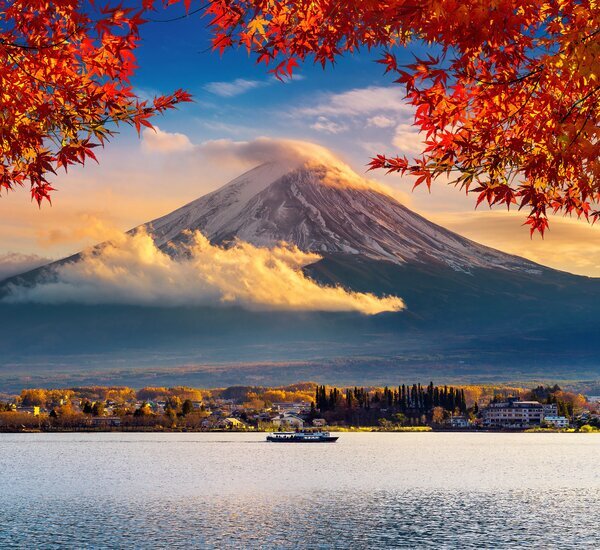
The summit climb itself is not accessible, but several 5th Stations offer wheelchair-friendly facilities. The Yoshida Trail’s Fuji Subaru Line 5th Station (2,305 meters) has paved paths, accessible restrooms, and large viewing decks with clear Fuji panoramas. Lake Kawaguchi’s northern shore promenade is flat and stroller-friendly, and the Kachi Kachi ropeway provides an accessible upper station with Fuji views.
For families, I recommend basing yourselves at an onsen hotel in Kawaguchiko and taking short nature walks instead of attempting the climb with young children. Many ryokans have private family baths and kid-friendly meal options. Search family-friendly stays on Vrbo or Expedia.
How can I visit Mount Fuji on a budget?
Use highway buses instead of trains
The direct express bus from Shinjuku to Kawaguchiko is the cheapest option and often has early-morning departures that position you perfectly for sunrise photography. Book round-trip tickets online in advance to lock in the lowest fare; walk-up prices can be higher.
Skip the climbing season if you only want views
Winter lodging around the lakes drops in price, and the mountain is statistically most visible. A ryokan that costs ¥30,000 per person in August might drop to ¥12,000 in February. I’ve stayed at a quiet onsen inn with a private Fuji-facing bath for less than a premium Tokyo business hotel.
Self-cater and pack a picnic
Convenience stores near Kawaguchiko Station stock excellent onigiri, salads, and local products. Eating out for every meal adds up fast; I often grab breakfast and lunch supplies and splurge only on a hot bowl of Hoto noodles at dinner.
Use a regional pass if exploring widely
The Fuji Hakone Pass covers buses, trains, and even pirate ships in Hakone. For longer stays, the Japan Rail Pass can cover Shinkansen views of Fuji and limited express trains to Kawaguchiko. Read our complete guide to the Japan Rail Pass to see if it fits your itinerary.
Compare flight options to Tokyo
Tokyo is the main gateway, and flight prices vary sharply by season. I always start my search on Kayak to scan multiple airlines at once before booking.
What are the biggest mistakes travelers make when visiting Mount Fuji?
- Attempting a day climb without acclimatization. Altitude sickness hits many who rush from Tokyo to the summit in one go. Spend a night at the 5th Station or a nearby lake to adjust.
- Expecting clear views in July. The rainy season overlaps with early climbing season, so summit views are rare. If photography is your goal, pick winter.
- Arriving at Chureito Pagoda at noon. By then the light is harsh, and the car park is packed. Pre-dawn arrival is non-negotiable for the iconic shot.
- Ignoring the new climbing regulations. The Yoshida Trail now requires a ¥2,000 toll and may be restricted if the daily cap is reached. Register online before you go.
- Underestimating the cold at the summit. Even in August, pre-dawn temperatures hover around 5°C. I’ve seen shivering tourists in shorts while I was snug in a down jacket.
- Relying solely on credit cards at mountain huts. Many huts and small shops around the 5th Station are cash-only. Carry at least ¥10,000 in small notes.
- Taking the Shinkansen without knowing the seat. Seat E, right-hand side heading west, is the only spot to reliably see Fuji. A left-side seat means you miss it entirely.
For more on climbing pitfalls, the official Japan National Tourism Organization’s Mount Fuji page is an authority I check before every trip.
Frequently asked questions
Is Mount Fuji still active?
Yes, it is classified as an active stratovolcano. The last eruption, the Hōei eruption, occurred in 1707, and the Japan Meteorological Agency continuously monitors seismic activity. A future eruption is possible and could affect the greater Tokyo area with ashfall.
Can you climb Mount Fuji year-round?
The official climbing season runs from early July to early September, when the trails, mountain huts, and rescue services are operational. Outside this window, extreme weather, snow, and closed facilities make the ascent dangerous for non-professionals. Winter climbing requires technical mountaineering skills and permits.
What is the best month to see Mount Fuji?
December and January offer the highest probability of cloud-free skies, especially in the early morning. Autumn months, particularly November, also deliver excellent visibility combined with fall colors. The worst visibility is typically in June and July during the rainy season.
How much does it cost to climb Mount Fuji?
Budget roughly ¥15,000–¥25,000 for a standard two-day climb, including transport from Tokyo, the ¥2,000 Yoshida Trail toll, one night in a mountain hut, and basic meals. Gear rental can add another ¥10,000–¥15,000. Always verify current fees on official websites before planning.
How do I get from Tokyo to Mount Fuji?
The fastest budget option is the highway bus from Shinjuku Bus Terminal to Kawaguchiko Station, taking about 2 hours. The Fuji Excursion limited express train is a pricier but more scenic alternative. Both connect to the Fuji Five Lakes area, the most convenient base for views and the Yoshida Trail.
Do I need a guide to climb Mount Fuji?
A guide is not mandatory on the standard trails, but first-time climbers may benefit from one, especially to manage altitude sickness and navigate the descent at night. Several reputable tour operators offer guided day or overnight climbs that you can book via GetYourGuide.
What are the Fuji Five Lakes?
These are five lakes (Kawaguchi, Yamanaka, Sai, Shoji, and Motosu) that arc around the northern base of Mount Fuji, formed by volcanic eruptions damming rivers. Lake Kawaguchi is the most developed and accessible, offering the best hotels, restaurants, and direct bus connections, while Lake Motosu is famous for the Red Fuji view on the ¥1,000 note.
Why did Mount Fuji become a UNESCO World Heritage site?
UNESCO inscribed Mount Fuji in 2013 as a cultural site, not a natural one, recognizing its deep spiritual significance in Shinto and Buddhism, its role as a pilgrimage destination, and its profound influence on Japanese art, notably Hokusai’s prints. The sacred shrines, pilgrimage routes, and natural volcanic features together form the designated property.
Plan your trip: booking platforms we trust
Our WakaAbuja team has used these platforms over multiple Japan trips. We’ve handpicked them because they reliably cover transport, stays, and experiences around Mount Fuji, and they often have flexible cancellation policies worth having when mountain weather shifts.
Best for Asian hotel deals, especially ryokans near Kawaguchiko.
Wide selection of hotels and mountain huts with free cancellation options.
Flight and hotel packages from international departure cities.
Multi-airline flight comparison to find the cheapest Tokyo fares.
Family-sized vacation rentals with kitchens near the lakes.
Guided Fuji climbs, Hakone tours, and photo excursions.
Collect reward nights on multi-stop Japan trips.
Honest restaurant and ryokan reviews near Fuji Five Lakes.