
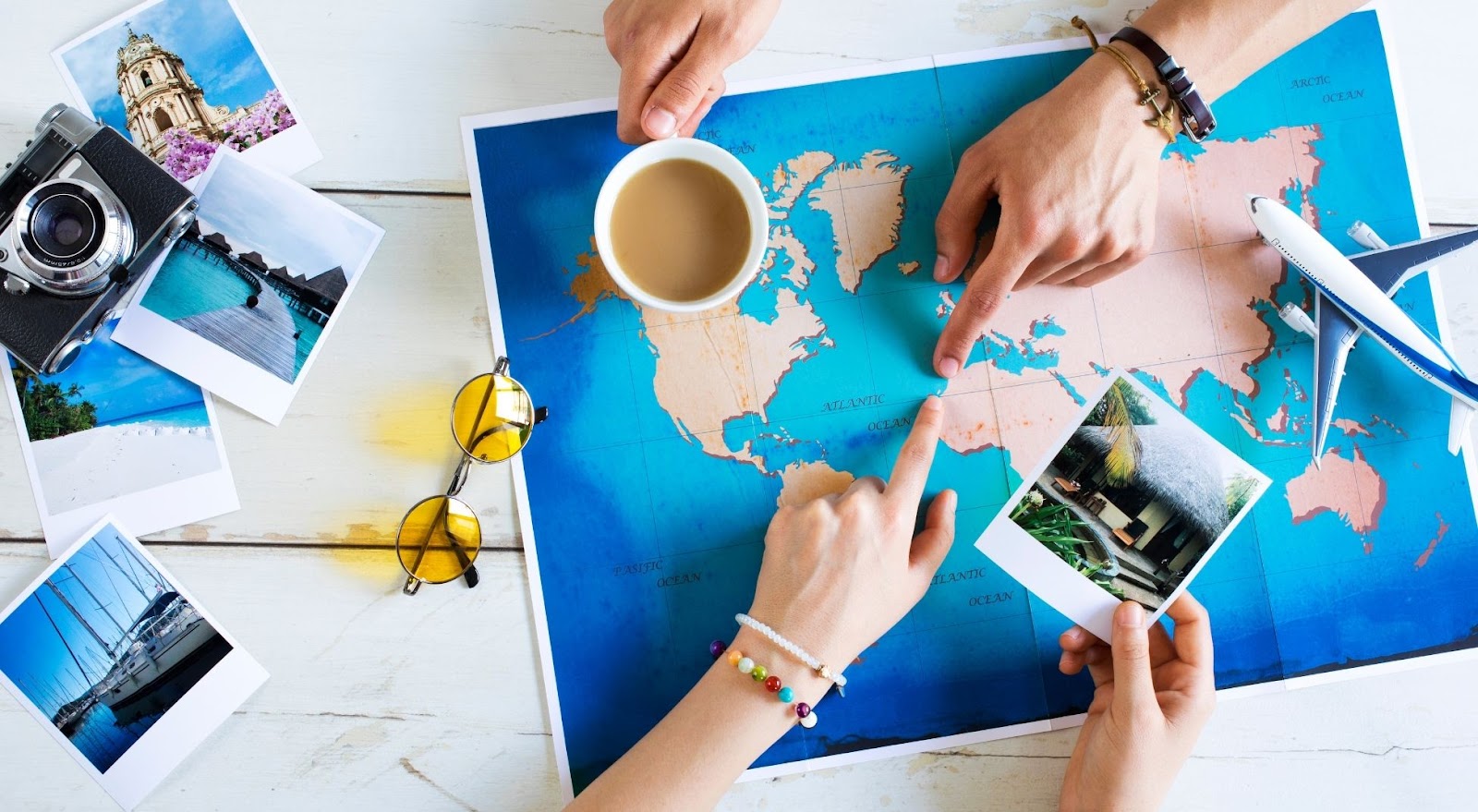
Follow these 15 in-depth steps I’ve refined from over a decade of globe-trotting solo and with friends, and you’ll craft an unforgettable adventure without the stress.
- Define your dream destination and timeframe first.
- Set a realistic budget covering flights, stays, and surprises.
- Book flights 2-8 months out for the best deals via Kayak or Expedia.
- Build a day-by-day itinerary with buffers for spontaneity.
Key Takeaways for Stress-Free Trip Planning
- Start with why: Your motivation shapes every choice, from beach relaxation to city exploration.
- Budget 20-30% extra for unexpected delights like local festivals or impulse upgrades.
- Book flights midweek and hotels via Booking.com or Hotels.com for up to 40% savings.
- Leave 20% of your itinerary open for serendipity, as I learned during my rainy Paris detour to cozy bistros.
- Pack light: One carry-on changed my travel game forever.
Step 1: Dream Up Your Destination and Spark of Adventure

Every great trip starts with a spark. I remember staring at my corkboard of postcards from Bali beaches and Tokyo neon, asking myself, “What pulls at my heart right now?” Relaxation under palm trees or urban hustle? For me, it was Iceland’s Northern Lights after a tough year.
Pinpoint your why, whether it’s foodie heaven in Italy or hiking Machu Picchu. Research via TripAdvisor reviews from real travelers, not just glossy ads. Consider seasons: Europe’s shoulder months (April-May, September-October) slash crowds by 50% while keeping mild weather, per my multiple Euro jaunts.
Pro Tip from My Travels
“I once skipped my ‘dream’ beach spot for a last-minute Vietnam whim. Best decision: cheaper flights and zero jet lag regrets.” Use Agoda for Asia deals.
Step 2: Nail Down Dates That Fit Your Life
Dates dictate deals. I block my calendar a year out, eyeing holidays or work lulls. Tools like Google Flights’ calendar view reveal the cheapest windows: Tuesdays are often 15% less than weekends.
Factor in personal rhythms, too; I thrive post-winter for summer escapes. Check school calendars if traveling with kids, and visa timelines—three months minimum for Schengen areas.
Step 3: Craft a Budget That Covers the Thrills

Budgets keep dreams real. I start with flights (30-50% of total), then lodging (20-30%), food (15%), activities (10%), and misc. (20%).
For a week in Thailand, mine was $1,200 including $400 roundtrip via Kayak. Track with apps like Trail Wallet. Add buffers: My Kenya safari balloon ride, an unplanned $450 splurge, made the memories priceless.
Budget Breakdown Card
- Flights: Search Expedia for bundles.
- Lodging: Aim for mid-range, $80-150/night.
- Food: Street eats save 60% over restaurants.
- Buffer: 25% for magic moments.
Step 4: Hunt Flights Like a Pro
Book 2-8 months ahead: Domestic 47 days, international 3-5 months out saves 25%, per CheapAir data.
I set alerts on Booking.com and Hotels.com bundles. Flexibility wins: My redeye to New York shaved $200. Skip bags to save $60 each way.
Step 5: Secure Accommodations That Feel Like Home

Match stays to vibe: Hostels for social buzz, Airbnbs for kitchens. I scored a Paris apartment for $90/night via Vrbo; cooking crepes saved $300.
Read recent reviews on TripAdvisor, filtering for 4.5+ stars. Location trumps luxury: Central spots cut transit time 70%.
Step 6: Map Your Must-Do Activities
List top sights, then layer backups. Google My Maps lets me cluster Day 1: Rome Colosseum zone. Book tickets early for skips like the Eiffel Tower via GetYourGuide.
I missed Stonehenge tickets once; lesson learned.
Step 7: Arrange Ground Transport Smartly
Rentals via Discover Cars and trains on Rail Europe. Ubers for cities. My Amalfi bus pass was $20 for a week of coastal hops. Public over taxis saves 40-60%.
Step 8: Buy Travel Insurance Without Regrets
World Nomads covers my adventures for $50/week. It reimbursed my canceled flight fully. Essential for health, theft, and cancellations.
Step 9: Handle Visas and Entry Rules
Check travel.state.gov six months out. My India e-visa took 4 days and cost $25. Print everything.
Step 10: Plan Your Packing Strategy
One carry-on rule: Versatile layers, adapters, and meds. My Japan trip: Merino wool tees for 10 days, no wash. Laundry apps like Laundrapp save space.
Packing Essentials Card
- Clothes: 5 outfits, mix/match.
- Toiletries: Travel sizes.
- Tech: Power bank, universal adapter.
- Docs: Copies in cloud.
Step 11: Build a Flexible Daily Itinerary
Google Sheets: Mornings active, afternoons free. Buffer 2 hours daily. My flexible Florence plan caught a free opera.
Step 12: Prep Health and Safety Nets

Vaccines via CDC site, meds list. Apps like TripIt organize. Offline Google Maps saved my Morocco maze walk.
Step 13: Inform Loved Ones and Set Check-Ins
Share the itinerary via WhatsApp. My family’s peace came from daily pings during solo treks.
Step 14: Download Must-Have Apps
XE Currency, Duolingo basics, and Rome2Rio routes. Google Translate offline voices bridged my Greek island chats.
Step 15: Embrace Flexibility and Go
Print backups, charge devices. My best trips bent plans: Stormy Santorini led to wine cave feasts. Travel is living boldly.
Frequently Asked Questions on Trip Planning
How far in advance should I book flights?
International: 3-5 months for 20-30% savings. Domestic: 1-2 months. Use Agoda alerts.
What is the best travel insurance?
World Nomads for adventurers, $4-10/day. Covers 150+ sports.
How do I plan a trip on a tight budget?
Off-season, hostels via Hostelworld, street food. My $800 Europe week worked.
Should I book everything in advance?
Flights, yes; activities, sometimes; daily plans loosely for magic.