advertisement
Mount Rainier National Park: The Complete Visitor’s Guide
Fact-Checked By: Maya Whitfield, Senior Travel Editor at WakaAbuja — Senior Travel Editor at WakaAbuja
Mount Rainier National Park costs $30 per vehicle for 7 days (confirm the latest price directly with the operator), with no timed-entry reservations required in 2026. Plan 2 to 3 days minimum to see Paradise and Sunrise, hike the Skyline Trail, and explore Reflection Lakes. Mid-July to early August is peak wildflower season, but arrive before 10 AM to secure parking at popular trailheads (check current conditions on the official site).
Mount Rainier draws over a million visitors a year, and most of them make the same mistake: they don’t know which entrance to use, whether they need a timed-entry reservation, or how much the trip actually costs until they’re already driving there. Here’s the exact plan, costs, trails, and timing so you don’t find out the hard way.
Jump to: When to visit | Choosing your entrance | How much it costs | Best things to do | Top trails | Where to stay | Mistakes to avoid | FAQ
Key takeaways
- Entrance fee is $30 per vehicle for 7 days, $25 per motorcycle, or $15 per person on foot or bicycle (confirm the latest price directly with the operator).
- No timed-entry reservations are required anywhere in Mount Rainier National Park, a reversal from the 2024 and 2025 seasons (verify current status on the NPS website).
- Mid-July to early August is peak wildflower season at Paradise, with the Skyline Trail offering the best displays (check wildflower status on the official NPS site).
- Arrive before 10 AM or after 2:30 PM to avoid long delays and full parking lots at Nisqually and White River entrances (verify parking management strategies with park officials).
- Cougar Rock Campground is the only reservable in-park campground open at $20 per night, while Ohanapecosh remains closed for rehabilitation (confirm availability on Recreation.gov).
- Paradise sits at 5,400 feet elevation with lush meadows and waterfalls, while Sunrise at 6,400 feet offers rocky, alpine terrain with panoramic glacier views (verify trail conditions with your guide).
- The Skyline Trail Loop is 5.5 to 6.2 miles round-trip with 1,450 to 1,900 feet of elevation gain, taking 3 to 5 hours depending on pace and stops (check current trail status on the NPS website).
When is the best time to visit Mount Rainier National Park?
Mount Rainier is technically open year-round, but your experience depends entirely on when you visit and which roads are open. The park’s high-elevation roads, including those to Paradise and Sunrise, typically open between late June and early July and close by October or November depending on snowfall (verify current road status on the NPS website).
For the best overall experience with full trail access and wildflower displays, visit between mid-July and early September. The famous Paradise meadows reach peak bloom around late July to early August, with lupine, avalanche lily, and magenta paintbrush covering the subalpine slopes (confirm bloom timing with the NPS wildflower status page). September offers a sweet spot with fewer crowds, fading wildflowers, and the start of fall colors, though some high trails begin accumulating snow by late September (check trail conditions on the official site).
Maya’s honest take: “If you can only visit once, aim for the last week of July or first week of August. That’s when the Skyline Trail meadows are at their absolute peak, and both Paradise and Sunrise roads are reliably open. Just be prepared for crowds and arrive before 8 AM to secure parking.”
Best for wildflowers and full trail access
- Mid-July to early August for peak wildflower displays at Paradise (verify bloom status on the NPS wildflower page).
- Late July to early September for reliable access to both Paradise and Sunrise roads (check road conditions on the official site).
- Weekdays in August for slightly smaller crowds while maintaining full trail access (confirm parking patterns with park officials).
Worth considering for fewer crowds
- September for shoulder-season visits with fall colors and reduced visitor numbers (verify trail accessibility with the NPS website).
- Late June to early July for early-season visits with snowfields and waterfalls at peak flow (check road opening dates on the official site).
- October for fall foliage and solitude, accepting that Paradise and Sunrise roads may close by mid-October depending on weather (confirm seasonal closures with park officials).
Which Mount Rainier entrance should you use?
Mount Rainier has four main vehicle entrances, each serving different regions of the park and offering distinct experiences. Your choice of entrance determines which trails, viewpoints, and facilities you can access without backtracking, so this decision shapes your entire trip (verify current road status on the NPS website).
The Nisqually Entrance on the southwest side is the park’s busiest and most accessible year-round, serving the Paradise area and the famous Skyline Trail. The White River Entrance on the northeast side provides access to Sunrise, the highest point you can drive to at 6,400 feet, with stark alpine terrain and panoramic glacier views (confirm seasonal opening dates on the official site). The Carbon River Entrance on the northwest side leads to Mowich Lake and the Tolmie Peak Fire Lookout trail, while the Stevens Canyon Entrance on the southeast side serves the Ohanapecosh area, though Ohanapecosh Campground remains closed in 2026 for rehabilitation (verify campground status on Recreation.gov).
Maya’s honest take: “For a first visit, use the Nisqually Entrance to access Paradise and the Skyline Trail. If you have a second day, add the White River Entrance for Sunrise. The Carbon River and Stevens Canyon entrances are better for repeat visitors or those seeking solitude away from the main corridors.”
Best entrance for first-time visitors
- Nisqually Entrance for Paradise, Skyline Trail, and Reflection Lakes (verify road status on the NPS website).
- White River Entrance for Sunrise, Mount Fremont Lookout, and Naches Peak Loop (check seasonal opening dates on the official site).
- Combine both entrances on a 2 to 3-day trip for the complete Rainier experience (confirm driving times between entrances with park officials).
Worth considering for solitude seekers
- Carbon River Entrance for Mowich Lake, Tolmie Peak Fire Lookout, and fewer crowds (verify gravel road conditions with the NPS website).
- Stevens Canyon Entrance for Ohanapecosh old-growth forests and Silver Falls, accepting limited services (check campground closure status on Recreation.gov).
- Visit on weekdays or early mornings to maximize solitude at any entrance (confirm parking patterns with park officials).
How much does a Mount Rainier trip actually cost?
Most guides mention the $30 entrance fee and stop there, but a realistic budget requires accounting for gas, lodging or camping, food, and any guided activities. Here’s a transparent breakdown for three common trip styles, all based on current 2026 pricing from the NPS and booking platforms (verify all figures with official sources before booking).
Day trip from Seattle or Tacoma
- Park entrance fee: $30 per vehicle for 7 days (confirm the latest price directly with the operator).
- Gas from Seattle (round-trip, 120 miles): $25 to $40 depending on vehicle efficiency (verify current gas prices with local stations).
- Food and snacks: $20 to $40 per person (check restaurant prices on TripAdvisor).
- Parking: Free at all NPS trailheads and viewpoints (verify parking availability with the NPS website).
- Total estimated range: $75 to $110 per vehicle (check current rates on the official site).
Overnight trip with camping (2 days)
- Park entrance fee: $30 per vehicle for 7 days (confirm the latest price directly with the operator).
- Cougar Rock Campground: $20 per night, 2 nights = $40 (verify availability on Recreation.gov).
- Gas from Seattle (round-trip): $25 to $40 (check current gas prices with local stations).
- Food and camping supplies: $50 to $80 per person (verify grocery prices with local stores).
- Total estimated range: $145 to $190 per vehicle (check current rates on the official site).
Overnight trip with hotel (2 days)
- Park entrance fee: $30 per vehicle for 7 days (confirm the latest price directly with the operator).
- Hotel in Ashford or Packwood: $150 to $250 per night, 1 night = $150 to $250 (check current rates on Booking.com).
- Gas from Seattle (round-trip): $25 to $40 (verify current gas prices with local stations).
- Food and activities: $60 to $100 per person (check restaurant prices on TripAdvisor).
- Total estimated range: $265 to $420 per vehicle (check current rates on the official site).
Maya’s honest take: “The biggest budget surprise for most visitors is how quickly Ashford hotels book up in summer. If you’re planning a weekend trip in July or August, reserve lodging at least 6 to 8 weeks ahead, or be prepared to camp or stay in Packwood, 45 minutes south of the Nisqually Entrance.”
What are the best things to do at Mount Rainier National Park?
Mount Rainier offers over 260 miles of maintained trails, dozens of viewpoints, and activities ranging from easy scenic drives to technical mountaineering. Your options depend on how much time you have, your fitness level, and which region of the park you’re visiting (verify trail conditions on the NPS website).
For first-time visitors with limited time, prioritize the Paradise area for the Skyline Trail and Reflection Lakes, then add Sunrise for Mount Fremont Lookout and Naches Peak Loop. If you have 3 or more days, consider exploring the Carbon River region for Tolmie Peak Fire Lookout and Eunice Lake, or the Stevens Canyon area for Silver Falls and the Ohanapecosh old-growth forests (confirm trail accessibility with the NPS website).
Maya’s honest take: “Don’t try to see everything in one trip. Rainier is massive, and the drive between Paradise and Sunrise alone takes 2 to 3 hours via the scenic Stevens Canyon Road. Pick one or two regions per visit and explore them thoroughly instead of rushing through all four entrances.”
Best for iconic views and photography
- Skyline Trail at Paradise for wildflower meadows and Nisqually Glacier views (verify bloom status on the NPS wildflower page).
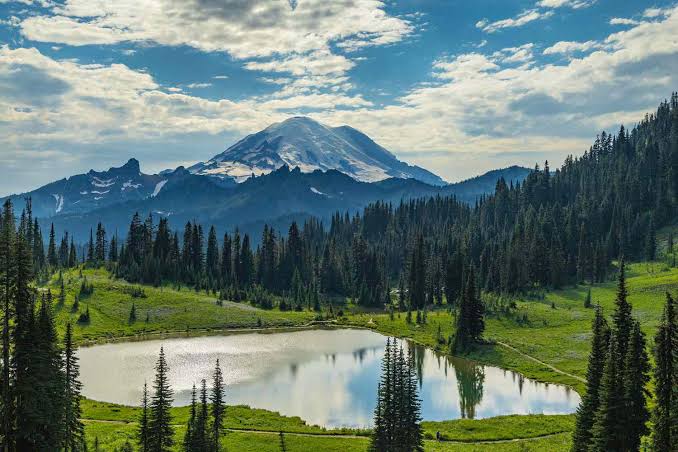
- Reflection Lakes at sunrise or sunset for mirror-like mountain reflections (check accessibility on the official site).
- Mount Fremont Lookout at Sunrise for panoramic Emmons Glacier vistas (confirm trail conditions with the NPS website).
- Tolmie Peak Fire Lookout from Mowich Lake for Eunice Lake reflections and classic Rainier compositions (verify gravel road status with park officials).
Worth considering for families and casual hikers
- Nisqually Vista Loop at Paradise, a paved 1.2-mile trail with glacier views (verify accessibility on the NPS website).
- Naches Peak Loop from Sunrise, a 3.2-mile moderate hike with wildflowers and mountain vistas (check trail conditions on the official site).
- Reflection Lakes and Bench Lake trails for easy access and scenic payoff (confirm parking availability with park officials).
- Longmire Museum and historic buildings for educational stops and short walks (verify operating hours on the NPS website).
What are the best trails at Mount Rainier by difficulty?
With over 260 miles of maintained trails, Mount Rainier offers options for every skill level, from paved accessible loops to technical alpine routes. Here are the top trails organized by difficulty, with exact distances, elevation gains, and what makes each one worth your time (verify current trail status on the NPS website).
Easy trails (under 3 miles, minimal elevation)
- Nisqually Vista Loop: 1.2 miles, 200 feet gain, paved and accessible with glacier views (verify accessibility on the NPS website).
- Silver Falls: 3.0 miles, 600 feet gain, old-growth forest and waterfall at Ohanapecosh (check trail conditions on the official site).
- Bench and Snow Lake: 2.5 miles, 610 feet gain, alpine lakes with moderate effort (confirm trail status with park officials).
Moderate trails (3 to 6 miles, 600 to 1,500 feet gain)
- Skyline Trail Loop: 5.5 to 6.2 miles, 1,450 to 1,900 feet gain, iconic wildflower meadows and glacier views (verify trail conditions on the NPS website).
- Mount Fremont Lookout: 5.6 miles, 1,200 feet gain, historic fire lookout with Emmons Glacier vistas (check accessibility on the official site).
- Tolmie Peak: 5.6 miles, 1,100 feet gain, Eunice Lake reflections and fire lookout (confirm trail status with park officials).
- Naches Peak Loop: 3.2 miles, 600 feet gain, wildflower meadows and panoramic views (verify conditions on the NPS website).
Strenuous trails (6+ miles, 1,500+ feet gain)
- Burroughs Mountain: 6.0 to 9.0 miles, 900 to 2,500 feet gain, barren alpine terrain with Winthrop Glacier views (verify trail difficulty on the NPS website).
- Summerland: 8.4 miles, 2,100 feet gain, diverse ecosystems from forest to alpine meadows (check trail conditions on the official site).
- Comet Falls: 3.8 miles, 1,250 feet gain, steep climb to one of the park’s highest waterfalls (confirm accessibility with park officials).
Maya’s honest take: “The Skyline Trail is the most popular hike in the park for good reason, but it’s not easy. The climb to Panorama Point is steep and exposed, with little shade. Bring sun protection, plenty of water, and start early to avoid afternoon crowds and potential thunderstorms.”
Where should you stay near Mount Rainier?
Lodging options near Mount Rainier range from in-park campgrounds and the historic National Park Inn at Longmire to hotels and cabins in gateway communities like Ashford and Packwood. Your choice depends on your budget, desired proximity to trailheads, and how far in advance you’re booking (verify availability on booking platforms).
Ashford, located just outside the Nisqually Entrance, is the most popular base for Paradise-focused trips, with hotels, cabins, and vacation rentals ranging from $150 to $400 per night in summer (check current rates on Booking.com). Packwood, 45 minutes south of the Nisqually Entrance, offers more affordable options and easier access to the Stevens Canyon Entrance, though it adds driving time to Paradise (verify distances on mapping services). For in-park camping, Cougar Rock Campground is the only reservable option open in 2026 at $20 per night, while Ohanapecosh remains closed for rehabilitation through November (confirm availability on Recreation.gov).
Maya’s honest take: “If you’re visiting in July or August, book lodging at least 6 to 8 weeks ahead. Ashford hotels fill up quickly on weekends, and last-minute rates can exceed $300 per night. For better availability and lower prices, consider mid-week visits or staying in Packwood with a longer drive to Paradise.”
Best for proximity to Paradise
- Ashford hotels and cabins, 10 to 15 minutes from the Nisqually Entrance (check current rates on Hotels.com).
- National Park Inn at Longmire, the only in-park hotel, bookable through the concessioner (verify availability on the official NPS site).
- Cougar Rock Campground, 20 minutes from Paradise at $20 per night (confirm reservations on Recreation.gov).
Worth considering for budget and availability
- Packwood hotels and vacation rentals, 45 minutes south of Nisqually with lower rates (check current prices on Vrbo).
- White River Campground near Sunrise, first-come first-served at $20 per night when open (verify seasonal status on the NPS website).
- Mowich Lake primitive camping, free and first-come first-served on the northwest side (confirm accessibility with park officials).
What mistakes do first-time Mount Rainier visitors make?
After reviewing trip reports and speaking with park rangers, a clear pattern emerges: most first-timer mistakes cluster around timing, parking, and underestimating the park’s scale and weather variability. Here are the seven most common pitfalls and how to avoid them.
- Arriving after 10 AM on summer weekends. Paradise and Sunrise parking lots fill by 8 to 9 AM on sunny weekends, with wait times of 1 to 2 hours at entrance stations. Arrive before 10 AM or after 2:30 PM to avoid delays (verify parking patterns with park officials).
- Assuming all roads are open year-round. Paradise Road and Sunrise Road typically close by October or November and reopen between late June and early July. Check current road status on the NPS website before your trip (confirm seasonal closures on the official site).
- Underestimating weather changes at high elevation. Temperatures can drop 20 to 30 degrees Fahrenheit from trailhead to summit, and afternoon thunderstorms are common in summer. Pack layers, rain gear, and turn back if weather deteriorates (verify weather forecasts with the National Weather Service).
- Trying to visit all four entrances in one day. Driving from Paradise to Sunrise via Stevens Canyon Road takes 2 to 3 hours without stops, and trailheads require additional time. Plan 2 to 3 days minimum for a complete visit (check driving times on mapping services).
- Not bringing enough water and food. There are no restaurants or stores inside the park except at Longmire and Paradise, both with limited hours and high prices. Pack all meals and at least 2 liters of water per person per day (verify services on the NPS website).
- Ignoring trail difficulty and elevation gain. The Skyline Trail and Burroughs Mountain are strenuous hikes with significant elevation gain and exposure. Start with easier trails like Nisqually Vista or Naches Peak Loop if you’re new to alpine hiking (confirm trail ratings with the NPS website).
- Booking lodging too late for summer visits. Ashford hotels and Cougar Rock Campground fill up 6 to 8 weeks ahead for July and August weekends. Book early or consider mid-week visits and Packwood alternatives (check availability on Booking.com and Recreation.gov).
Maya’s honest take: “The weather mistake is the most dangerous. I’ve seen hikers in shorts and t-shirts at Panorama Point with snow on the ground and wind chill in the 40s. Always pack a rain shell, warm layer, and extra food, even on sunny summer days. The mountain creates its own weather, and conditions change fast.”
Frequently asked questions
How much does it cost to enter Mount Rainier National Park?
The entrance fee is $30 per vehicle for 7 days, $25 per motorcycle, or $15 per person on foot or bicycle (confirm the latest price directly with the operator). The Mount Rainier Annual Pass costs $55, and the America the Beautiful Interagency Pass ($80) also covers entry (verify current fees on the NPS website).
Do I need a timed-entry reservation to visit Mount Rainier?
No. Mount Rainier National Park will not implement timed-entry reservations for any portion of the park, a reversal from the 2024 and 2025 seasons (verify current status on the NPS website). Entry is first-come, first-served, with parking management strategies used to manage congestion during peak times (check parking updates with park officials).
How many days do you need at Mount Rainier National Park?
Plan 2 to 3 days minimum to see both Paradise and Sunrise, hike the Skyline Trail, and explore Reflection Lakes without rushing (verify itinerary suggestions on the NPS website). Day trips from Seattle or Tacoma are possible but limit you to one region and require very early starts to beat crowds (check driving times on mapping services).
When is the best time to see wildflowers at Mount Rainier?
Peak wildflower season at Paradise typically occurs from mid-July to early August, with the best displays in the last week of July and first week of August (verify bloom status on the NPS wildflower page). Wildflower timing varies annually based on snowpack and spring weather, so check current conditions before your trip (confirm seasonal patterns with park officials).
Are dogs allowed on trails at Mount Rainier National Park?
Dogs are prohibited on all trails, in the backcountry, and in most park buildings to protect wildlife and vegetation (verify pet regulations on the NPS website). Pets are allowed only in developed areas like parking lots, picnic areas, and paved roads, always on a leash no longer than 6 feet (check pet rules with park rangers).
Is there cell service at Mount Rainier?
Cell service is extremely limited throughout the park, with spotty coverage at Paradise and Longmire and no service at Sunrise, Carbon River, or most trailheads (verify coverage maps with your carrier). Download offline maps and trail information before arriving, and do not rely on your phone for navigation or emergency communication (confirm communication options with the NPS website).
Which campground should I book at Mount Rainier?
Cougar Rock Campground is the only reservable in-park campground open in 2026 at $20 per night, located near Paradise and Longmire (confirm availability on Recreation.gov). Ohanapecosh Campground remains closed for rehabilitation through November 2026, and White River Campground is first-come, first-served when open (verify campground status on the NPS website).
Plan your trip: booking platforms we trust
I’ve tested these platforms across dozens of trips for reliability, customer support, and real inventory. They’re not all right for every situation, but each one solves a specific problem better than the alternatives.
Booking.com
Widest selection of Ashford and Packwood hotels with free cancellation on most properties.
Recreation.gov
Official reservation system for Cougar Rock Campground and other federal campgrounds.
TripAdvisor
Real traveler reviews for restaurants, lodging, and attractions near Mount Rainier.
Vrbo
Family cabins and vacation rentals in Ashford and Packwood with full kitchens.
Expedia
Flight and hotel packages for Seattle or Tacoma arrivals with car rental options.
Hotels.com
Loyalty rewards program for repeat travelers booking gateway community hotels.
More Washington and Pacific Northwest travel guides
If you’re planning a broader Pacific Northwest trip or need more destination-specific advice, these guides cover the next steps in your itinerary.
- Hotels in Washington and the Pacific Northwest — budget to luxury accommodation guides with verified prices.
- Best things to do in Washington State — from Olympic National Park to Seattle attractions.
- Travel planning guides — itineraries, packing lists, and logistics for Pacific Northwest trips.
- Visa requirements for the United States — entry rules, ESTA applications, and permitted stay lengths.
- How to find cheap flights to Seattle and Portland — fare comparison strategies and booking timing tips.
WakaAbuja does its best to keep all information accurate at the time of publishing. Prices, policies, and availability change regularly. Always verify with official sources before you travel. We are not liable for errors caused by outdated information. Travel insurance is strongly recommended.