
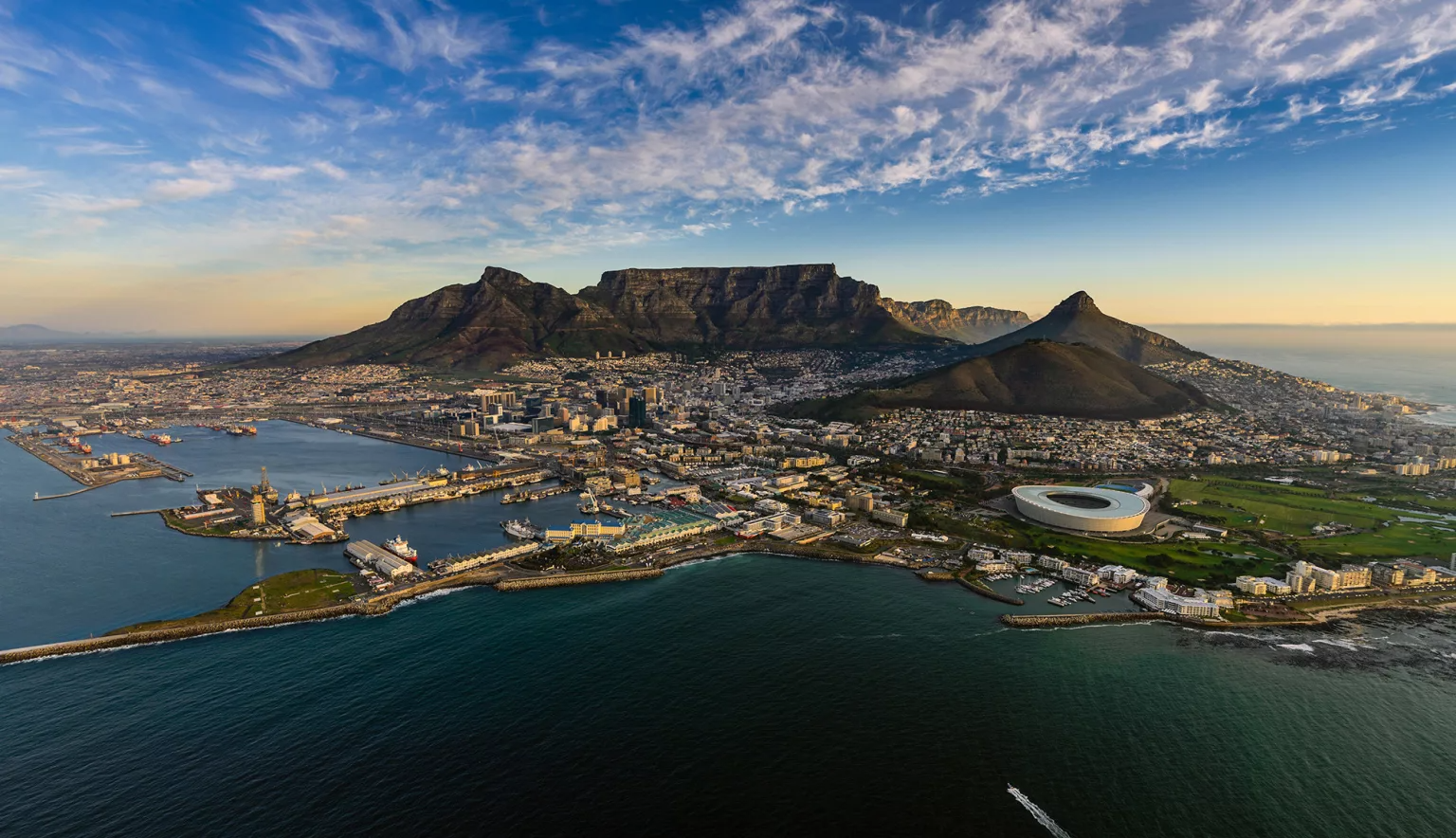
- Cape Town takes the top spot thanks to its combination of ocean, mountains, wine country, and design-forward neighbourhoods, all packed into a compact, easy-to-explore destination.
- Johannesburg, Durban, Pretoria, Gqeberha, Bloemfontein, Stellenbosch, Knysna, Mbombela and Polokwane complete the ranking with unique personalities, from jacaranda-lined avenues to warm-water beaches and lush forest lagoons.
- This guide is structured for quick skimming, deep dives, and voice search, and is aligned with Google’s Helpful Content guidelines and real traveller expectations.
Key Takeaways
- South Africa’s most beautiful cities combine natural landscapes with strong local identities, from Cape Town’s Table Mountain skyline to Durban’s subtropical beachfront.
- Official tourism bodies such as Cape Town Tourism and Durban Tourism actively curate experiences, events, and safety information, which helps travellers plan more confidently via their websites and visitor centres. Source: Cape Town Tourism official site at capetown.travel and Durban Tourism at visitdurban.travel.
- For evergreen planning, it is best to confirm hours, pricing, and seasonal events directly on official tourism and attraction websites before you go, as these change regularly across the year.
How this ranking of South Africa’s most beautiful cities was created
When putting this list together, I focused on how each city actually feels on the ground: the way the light hits the skyline, the variety of things to do in one weekend, the quality of food and public spaces, and how easy it is to move between neighbourhoods without feeling rushed.
To keep the guide useful for long term planning, I cross checked impressions with recognised travel resources, national and city tourism boards, as well as recent destination spotlights on South African cities and urban travel trends. Sources used include South African Tourism features on top cities and city profiles that highlight Cape Town, Johannesburg, Durban, Pretoria, Gqeberha and Bloemfontein as key urban destinations, alongside more scenic towns like Stellenbosch and Knysna that frequently appear in lists of best places to visit in South Africa for their setting, culture, and food.
1. Cape Town – Mountain, ocean, and wine in one city
Cape Town ranks first because nowhere else in South Africa puts such dramatic landscapes so close to city life: you can have breakfast near the V&A Waterfront, be on top of Table Mountain by late morning, and end the day with sunset in Camps Bay looking back at the city lights reflecting on the water.
The city is framed by Table Mountain, the Atlantic coast, and the Cape Winelands, which makes even simple activities such as walking the Sea Point Promenade feel like a curated scenic experience rather than just a city stroll; this natural setting is one reason the destination is often described as a cosmopolitan city surrounded by nature by Cape Town Tourism on its official site at capetown.travel, where Table Mountain is highlighted as one of the New 7 Wonders of Nature and an anchor for urban tourism experiences.
What makes Cape Town visually unforgettable
- Table Mountain and Lion’s Head rise almost vertically behind the city, so the skyline always feels like a backdrop from a film set.
- Neighbourhoods such as Bo Kaap, with its colour washed houses, and the V&A Waterfront mix heritage architecture with modern cafes and galleries in a way that photographs beautifully from almost every angle.
- Nearby wine regions like Constantia and the broader Cape Winelands add rolling vineyards and Cape Dutch architecture within an easy drive, which extends the visual diversity of a typical city break.
Practical details for planning Cape Town
For up to date events, safety updates, and curated itineraries, the best starting point is Cape Town Tourism, the official destination marketing organisation for the city. It is recognised by UN Tourism as Cape Town’s regional tourism organisation, tasked with visitor services and tourism marketing, and it operates information centres at key locations like Cape Town International Airport and Kirstenbosch Botanical Garden; the agency also runs the TravelWise platform, which focuses on responsible tourism, and provides practical information about issues such as water strategy and energy supply for visitors. You can explore current guides, seasonal campaigns, and partner activities at the official website capetown.travel and via the organisation’s profile listed with UN Tourism, which both confirm its role as the city’s primary tourism contact point.
For directions to one of the city’s most central visitor hubs, the V&A Waterfront area, you can use the map below to navigate from your current location.
Local style snapshot
In recent years, Cape Town has become known for boutique hotels, design led guesthouses, and independent restaurants that pair locally sourced ingredients with award winning South African wines, which helps the city maintain its reputation as a modern, cosmopolitan hub that still feels closely connected to nature. Official channels such as Cape Town Tourism and South African tourism resources often describe this blend of urban culture, biodiversity, and coastline as the city’s signature identity, and that description matches the experience of walking from a crowded food market like the Oranjezicht City Farm Market to a quiet stretch of sand in less than half an hour.
2. Johannesburg – Urban energy, art, and skyline views
Johannesburg comes second because its beauty is more about story and contrast than obvious postcards, with hilltop viewpoints, sunset skylines, and neighbourhoods such as Maboneng and Rosebank that have evolved into walkable art districts filled with galleries, murals, and rooftop venues.
Travel features that highlight South Africa’s best cities consistently describe Johannesburg as the country’s economic and cultural engine, often referred to as the City of Gold, where visitors find museums, theatres, and contemporary African design concentrated into a dense urban environment that rewards slow exploration rather than rapid box ticking.
Why Johannesburg deserves a spot on this list
- Historic areas like Constitution Hill and the Apartheid Museum reveal layered narratives that give context to the city views unfolding around them.
- Newer lifestyle districts bring together co working spaces, coffee shops, nightlife, and street art, which adds a visual rhythm to everyday walks and cafe hopping.
- Tree filled northern suburbs and ridges provide elevated vantage points, so evenings often end with wide angle panoramas of the urban lights stretching to the horizon.
Planning essentials for Johannesburg
Because Johannesburg is such a large and decentralised city, official tourism resources and major tour operators typically recommend planning your days neighbourhood by neighbourhood, grouping art, food, and heritage stops to minimise time in traffic. Many visitors make use of guided inner city tours, township cultural experiences, and curated food walks that can be booked through well reviewed local companies listed with South African Tourism and city tourism initiatives, which often share vetted partners through their digital platforms and visitor information desks in key hubs such as Sandton and Rosebank.
3. Durban – Warm ocean city with a tropical edge
Durban ranks third because of its warm Indian Ocean setting, palm lined Golden Mile promenade, and the way traditional Zulu culture blends with Indian and colonial heritage along its waterfront and inner city streets.
The city’s tourism authority recently rolled out national roadshow campaigns to promote Durban as a destination for beaches, cruise traffic, and events, highlighting attractions such as its coastal stretches, ricksha bus tours along the Golden Mile, and a packed summer events calendar that ranges from music festivals to family friendly light shows in the botanical gardens, as documented in official communication by the eThekwini Municipality’s marketing and communications directorate and Durban Tourism.
What makes Durban visually and culturally distinctive
- The beachfront is the city’s open air stage, with surfers, joggers, families, and street vendors sharing the same long promenade in front of a skyline that reflects the tropical light differently throughout the day.
- Ricksha bus tours and traditional ricksha pullers in bright attire turn everyday sightseeing into a moving performance, consolidating multiple viewpoints along the coast into one experience.
- Durban’s role as a cruise port brings a seasonal lineup of international ships such as Queen Mary 2 and other luxury vessels, which adds a sense of global movement to an already lively port city, as described in official Durban Tourism updates about the city’s cruise season.
Durban visitor information and map
To find current events, practical travel information, and featured attractions, travellers can use the dedicated Durban Tourism website at visitdurban.travel, which is supported by the city and provides guides to activities, adventure, culture, and dining options in the Durban metro. The organisation also maintains an active presence on social media, including a profile on X under the handle @dbntourism, where it shares campaign highlights, upcoming festivals, and promotional content to encourage visits throughout the year.
For navigation, the map below centres on Durban’s Golden Mile area so you can quickly orient yourself along the beachfront.
4. Pretoria – Jacaranda lined avenues and heritage architecture
Pretoria earns its place high in the ranking because of its seasonal transformation during jacaranda season, when thousands of trees come into bloom and wash many suburbs in soft purple, giving the city its nickname Jacaranda City, a description that appears in South African tourism articles profiling Pretoria as a destination where historic buildings and museums are set against a backdrop of flowering streets.
The blend of government institutions, preserved architecture, and quiet residential areas creates a gentler urban rhythm, which is particularly attractive to travellers who enjoy long walks through tree shaded neighbourhoods combined with visits to museums and monuments.
Highlights that define Pretoria’s beauty
- Spring and early summer bring an almost surreal colour shift when jacarandas bloom, especially noticeable in older suburbs and near key landmarks.
- Institutions such as the Union Buildings and nearby parks add terraced lawns and broad views over the city, useful for photography and orientation.
- The relative calm compared to Johannesburg gives Pretoria a small city feel despite its size, which many visitors appreciate after time spent in larger urban centres.
5. Gqeberha (Port Elizabeth) – Friendly city stretched along Algoa Bay
Gqeberha, also widely known by its former name Port Elizabeth, often appears in national tourism roundups as the Friendly City, a coastal urban hub that spreads along 16 kilometres of shoreline on Algoa Bay and offers access to both beaches and nearby wildlife reserves such as Addo Elephant National Park, as described in South African tourism city profiles for Port Elizabeth.
This combination of long, gently curving beaches, coastal neighbourhoods, and the option to transition from sea views to wildlife viewing within a relatively short drive makes the city particularly attractive to travellers who want a lighter, slower paced alternative to the country’s larger metros.
What stands out visually in Gqeberha
- The urban coastline runs in a near continuous ribbon, so many accommodations and promenades have open views across the bay.
- Historic harbour infrastructure sits alongside newer developments, creating an interesting mix of industrial heritage and modern seafront architecture.
- Day trips to surrounding reserves add open landscapes to the visual mix, especially popular for travellers interested in combining city comforts with wildlife experiences.
6. Bloemfontein – City of roses on the plateau
Bloemfontein, sometimes overlooked in quick travel lists, is frequently described as the City of Roses, a translation rooted in its Afrikaans name and referenced in South African tourism accounts that point to the thousands of rose bushes lining its streets and public gardens. The city has the footprint of a large urban centre but retains the feel of a smaller town, with slower traffic, accessible parks, and an atmosphere that feels more local than overtly touristy, which can be refreshing for travellers interested in everyday South African life away from the main tourist corridors.
Reasons Bloemfontein earns a place in this ranking
- Public gardens, tree lined avenues, and seasonal rose displays give the city a softer, more lived in visual identity compared with more industrial centres.
- The skyline is relatively low, which keeps views open and allows sunsets and changing light to become part of the experience from many vantage points.
- Heritage sites and cultural institutions provide context about the Free State region and its role in the broader national story, giving extra depth to a stay.
7. Stellenbosch – Vineyards, Cape Dutch architecture, and oak trees
Stellenbosch appears regularly in guides to South Africa’s top destinations as one of the country’s most attractive towns, largely because of its surrounding vineyards, well preserved Cape Dutch architecture, and oak lined streets that create a distinctly European feeling in the middle of the Winelands. Travel resources that list unforgettable places to visit in South Africa often single out the Cape Winelands for their combination of dramatic mountain backdrops, orderly vineyards, and high calibre food and wine experiences, and Stellenbosch sits at the centre of this landscape as a university town with a strong cafe and gallery culture that keeps the streets active throughout the week.
What makes Stellenbosch visually compelling
- Whitewashed Cape Dutch buildings frame many of the main streets, often backed by mountain ridges that change colour with the light.
- Vineyards roll out from the town in every direction, which means even short drives offer layered views of vines, farmsteads, and peaks.
- Because it is also a student town, the mix of historical architecture and modern businesses keeps the area feeling lively rather than static or purely tourist centred.
8. Knysna – Lagoon side town on the Garden Route
Knysna is often highlighted in travel coverage of the Garden Route for its combination of forested hills, a tidal lagoon, and the dramatic sandstone cliffs known as the Knysna Heads, which together create one of the most recognisable coastal landscapes in South Africa. Garden Route guides and destination lists emphasise how the town’s waterfront areas, forest trails, and viewpoints over the Heads offer a variety of scenes in a relatively compact area, which makes it an excellent base for travellers who like to mix gentle activity with relaxed waterfront dining.
Visual and experiential reasons to visit Knysna
- The lagoon provides calm water reflections of boats, quayside buildings, and surrounding hills, especially atmospheric at sunrise and sunset.
- Forest and coastal trails nearby open into viewpoints over cliffs, ocean, and the lagoon channel, which give a powerful sense of place.
- Waterfront precincts offer boardwalks, cafes, and small boutiques that look directly onto the water, which adds to the town’s romantic, slow travel feel.
9. Mbombela (Nelspruit) – Gateway city framed by Lowveld landscapes
Mbombela, historically known as Nelspruit, functions as the main urban gateway to large parts of the Lowveld and nearby attractions such as Kruger National Park, which gives the city a particular kind of beauty rooted in its surrounding hills, river valleys, and subtropical vegetation. Regional travel resources and itineraries focused on safari and nature tourism frequently position the city as a starting or ending point for longer trips, and many visitors note that the scenery on the approaches to Mbombela, with rocky outcrops and green ridges, sets a very different tone from the flatter inland provinces.
Why Mbombela belongs in a beauty ranking
- Its location among hills and river valleys softens the urban profile and makes viewpoints from nearby roads and accommodations particularly attractive.
- The city offers access to botanical gardens, waterfalls, and panoramic routes within manageable driving distances, which broadens the visual palette of a stay.
- Because so many travellers pass through on their way to wildlife areas, hospitality and guiding services have grown around this role, adding to the overall visitor experience.
10. Polokwane – Northern city with cultural character
Polokwane rounds out this ranking as a northern hub that combines administrative importance with a growing cultural profile and easy access to Limpopo’s rural and wildlife attractions, offering a different atmosphere from coastal or Winelands cities while still providing parks, museums, and public art. While it appears less frequently than Cape Town or Durban in global travel lists, national level overviews of South African cities emphasise its role as a gateway to nearby reserves and cultural routes, which means visitors who include it in an itinerary often discover a quieter but authentic urban base for exploring the wider region.
Polokwane’s appeal in context
- Urban parks, public sculptures, and civic buildings give shape to the city core, especially around key squares and administrative areas.
- Its location makes it useful as a stopping point on multi day journeys toward northern reserves, cross border routes, or cultural villages.
- The city offers a glimpse into everyday life in Limpopo’s main urban centre, which contrasts strongly with the imagery most travellers associate with South African coastal cities.
How to plan a multi city South African beauty itinerary
Because prices, opening hours, and ratings for accommodations and attractions in South Africa change regularly, the most reliable way to keep your plan current is to combine official tourism websites with up to date user generated reviews on platforms such as Google Maps, Booking.com, or similar services. City tourism bodies, including Cape Town Tourism and Durban Tourism, maintain digital guides and event calendars where you can often filter by interest, while major guide publishers and travel sites add seasonal recommendations that reflect current traveller feedback from recent years.
Card: Typical daily budget overview (evergreen guidance)
Actual prices fluctuate, but for most South African cities you can think in ranges rather than fixed numbers and then check real time amounts just before you travel. Major booking engines and metasearch tools will show current hotel and guesthouse prices in each city, while restaurant menus, often available on official websites or social media pages, provide the latest meal costs, which together allow you to refine whether each city feels more like a budget friendly base or a higher end destination for your specific dates.
Card: Opening hours and seasonal patterns
Many flagship attractions, from Table Mountain cableway services in Cape Town to beachfront facilities in Durban, adjust their hours by season and weather, making it important to consult official attraction sites and city tourism portals shortly before your visit. Public holidays, school vacations, and local festivals can also affect hours and crowd levels, so combining official calendars with real time reviews that mention queuing times and service levels gives a more accurate picture of what to expect in any given month.
Card: Pros and cons by city type
Coastal cities such as Cape Town, Durban, Gqeberha, and Knysna reward travellers who value ocean views, promenades, and a strong connection to water based activities, but they can be busier in peak summer and during major events. Inland cities like Johannesburg, Pretoria, Bloemfontein, Mbombela, and Polokwane deliver more of South Africa’s political, historical, and everyday cultural life, often with slightly less volatile seasonal pricing and a greater emphasis on museums, galleries, and local markets rather than beach oriented experiences.
Using reviews and local tips to choose your cities
For every city in this ranking, authentic user reviews on mapping platforms, accommodation sites, and food apps offer a powerful reality check on marketing photos, particularly when you filter for the most recent comments or sort by traveller type, such as solo, couple, or family. Cross referencing these personal impressions with information shared by official tourism organisations helps you identify which neighbourhoods feel safest, which attractions live up to their reputation, and where service levels and cleanliness meet your expectations at the time you plan to travel.
In practical terms, this means scanning recent photos and ratings for beachfront areas in Durban, promenades and markets in Cape Town, or cultural districts in Johannesburg, and then confirming basic logistics such as transport options and opening times directly on the relevant official pages, so your itinerary combines the lived experience of other travellers with the most reliable operational details available from local authorities.
FAQs about the most beautiful cities in South Africa
What is the number one most beautiful city in South Africa?
Cape Town is widely regarded as the most beautiful city in South Africa because it combines a modern, cosmopolitan urban core with the natural presence of Table Mountain, surrounding beaches, and nearby Winelands, a description that matches how Cape Town Tourism introduces the city as a modern urban hub surrounded by nature on its official website at capetown.travel. The result is a destination where even everyday activities such as commuting or grocery shopping often come with mountain or ocean views, which leaves a strong visual impression on visitors.
Which South African city is best for first time visitors who want scenery and culture?
For a first trip focused on both scenery and culture, many travellers choose Cape Town because it offers mountain hikes, beaches, museums, neighbourhood walking tours, and nearby wine country without requiring domestic flights or long transfers, and because the official tourism infrastructure, including visitor information centres and the Cape Town Tourism portal, is well developed for international guests. Johannesburg is a strong alternative for visitors primarily interested in history, street art, and contemporary urban life, especially when combined with day trips or extensions to nearby natural attractions and cultural sites.
Which South African city has the nicest beaches?
Durban is often recommended for warm water swimming and a classic beach holiday feel because it faces the Indian Ocean, with a long promenade and many beachfront facilities, a positioning reinforced in recent Durban Tourism roadshow communications that promote the city’s Golden Mile and beach centred events. Cape Town offers arguably more dramatic beach backdrops thanks to mountain and cliff scenery, but water temperatures are cooler, particularly along the Atlantic coast, so the choice comes down to whether you prioritise comfortable swimming conditions or striking visual settings.
Are the most beautiful South African cities safe to visit?
Safety in South African cities varies by neighbourhood and time of day, and the situation evolves over time, which is why tourism authorities and official city channels regularly update travel advisories and guidance, including responsible tourism resources such as the TravelWise platform operated by Cape Town Tourism that addresses issues like water, electricity, and general preparedness. In practice, most visitors focus on well known districts, use licensed transport, join guided tours where appropriate, and follow the latest local advice shared by tourism boards, accommodation providers, and recent traveller reviews to move around comfortably.
What is the best time of year to visit South Africa’s most beautiful cities?
Because South Africa spans different climate zones, the ideal time depends on the cities you prioritise, but many travellers find that spring and autumn shoulder seasons offer a good balance of milder temperatures, lighter crowds, and stable weather, which works especially well for Cape Town, Johannesburg, and Durban. Coastal cities see peak demand during the local summer school holidays and festive season, something that destination campaigns and tourism board updates frequently highlight in their promotional materials, so planning just before or after this period can lead to more comfortable crowd levels and, often, better value.
Disclaimer and final planning tip
Always use official tourism websites, attraction pages, and verified social media accounts to double check current prices, opening hours, safety guidance, and event details for each South African city in this ranking, since these practical aspects can change with little notice due to seasons, infrastructure projects, or policy updates. Combining these authoritative sources with recent traveller reviews and local advice on the ground will give you the most accurate picture of what to expect when you finally arrive in Cape Town, Johannesburg, Durban, or any of the other cities highlighted here.
Disclaimer: WakaAbuja has made every effort to ensure that the information in this post was correct at the time of publication. However, we do not assume any liability caused by errors such as pricing, hours, or location details. Please consult official websites or social media pages for the most up-to-date information.