
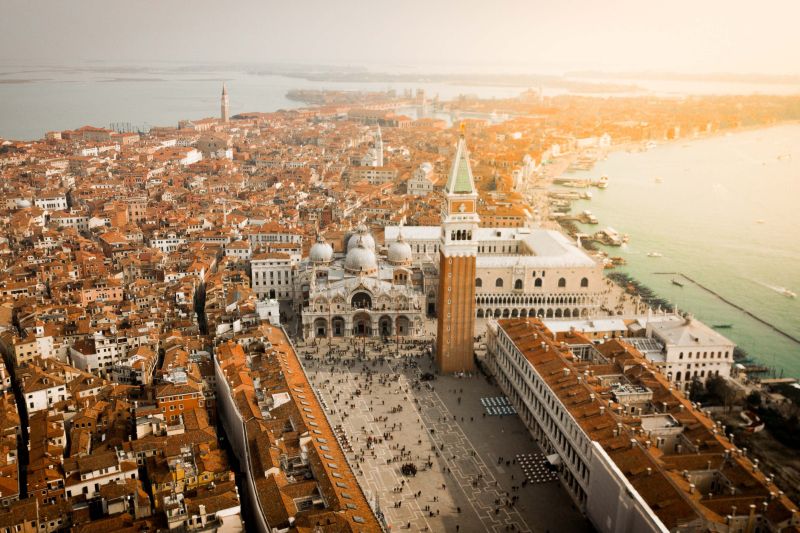
Travel to Venice: How to Plan Your Trip, Costs, Timing, and Getting There
You need three full days in Venice to see the main sights without rushing: St. Mark’s Square, the Doge’s Palace, the Grand Canal, and the Rialto Bridge. Budget travelers spend about 90 to 130 euros per person per day, mid-range travelers 180 to 260 euros, and comfort travelers 350 euros or more, covering hotels, food, vaporetto passes, and one paid attraction (confirm current rates on Booking.com). The best months to visit are April, May, September, and October. Citizens of the US, UK, Canada, Australia, and most EU countries can stay visa-free for up to 90 days within any 180-day period under Schengen rules.
I have been to Venice six times, once in August, which I do not recommend, and five times in spring or autumn, which I do. The city is not the fragile museum some travelers expect. It is a working neighborhood of about 50,000 residents, with schools, hardware stores, and a morning fish market. The trick is planning around the crowds so you can see the neighborhood underneath.
Most Venice guides are either listicles of “things to know” or breathless romance. Fewer actually help you plan: which airport to fly into, whether to stay in Mestre or Venice proper, how the vaporetto passes work, and what the trip actually costs. This guide covers all of it, with current figures, a three-day walking plan, and a five-day version if you have more time.
Jump to: Key Takeaways | Best Time to Visit | Getting There | Where to Stay | Sample Itinerary | What It Costs | Etiquette & Rules | Mistakes to Avoid | FAQ
Key takeaways
- Three full days is the minimum for Venice. Five days lets you add Murano, Burano, and Torcello without cutting the city short.
- The Venice Access Fee applies to day-trippers on selected dates this year. It runs 5 to 10 euros per person depending on how far ahead you book (check current dates and rates on the official Comune di Venezia site).
- A one-way vaporetto ticket costs 9.50 euros, so a multi-day pass is essential. A 24-hour pass is 25 euros, and a 72-hour pass is 45 euros (confirm current fares on the official ACTV site).
- A water taxi from Marco Polo Airport to the city center runs about 110 to 130 euros (confirm current rates with the official water taxi cooperative). The Alilaguna water bus costs 15 euros and takes about an hour.
- Mid-range travelers spend about 180 to 260 euros per person per day, including a 3-star hotel, meals, transport, and one attraction (confirm current rates with your hotel and tour operators).
- April, May, September, and October offer the best weather and manageable crowds. Avoid July and August for heat, humidity, and cruise-ship traffic.
- Venice enforces fines for sitting on bridges, picnicking on monument steps, and swimming in canals. The fine runs 25 to 500 euros (confirm current penalty amounts with local authorities).
When is the best time to travel to Venice?
April, May, September, and October are the best months to visit Venice. Temperatures sit between 15 and 25 degrees Celsius, the light is soft, and the crowds are thinner than the summer peak. These are also the months when the Venice Biennale and the Film Festival add cultural events, though they also raise hotel prices.
July and August are hot and crowded. Temperatures reach 30 degrees Celsius with high humidity, and cruise ships add tens of thousands of day visitors to the historic center. Hotel prices peak, and the vaporetti are packed at all hours.
Winter, December through February, is cold and damp but cheap. Acqua alta, the seasonal high tide that floods parts of the city, is most common between October and December. The upside is empty streets, lower hotel rates, and the misty atmosphere that has drawn painters to the city for centuries.
Best months by priority
- Best weather: April, May, September, October.
- Best for budget: January, February, November.
- Best for culture: April to November during the Biennale.
- Avoid if heat-sensitive: July and August.
Seasonal notes
- Carnevale: Usually February, spectacular but crowded, and hotel prices jump.
- Redentore Festival: Usually July, with fireworks over the Bacino di San Marco.
- Acqua alta: October through December, but the raised walkways make most of the city navigable.
Maya Whitfield’s honest take: “I visited once in August because a friend was getting married in the Veneto. The city was beautiful and miserable at the same time. Between the humidity, the cruise crowds, and the vaporettis that could not fit another passenger, I spent half the trip dreaming of April. Do not go in August.”
How do you get to Venice and get around?
Venice has two main airports. Marco Polo (VCE) is the closest, 12 kilometers from the historic center, and handles most international and intercontinental flights. Treviso (TSF) is 40 kilometers away and serves mostly budget airlines. From Marco Polo, the Alilaguna water bus costs 15 euros and takes about an hour to St. Mark’s (confirm current fares on the official Alilaguna site). A water taxi runs 110 to 130 euros and takes 20 minutes (confirm current rates with the official water taxi cooperative).
If you fly into Treviso, the ATVO express bus to Piazzale Roma costs about 12 euros and takes 40 minutes (confirm current fares on the official ATVO site). From Piazzale Roma, you walk or take a vaporetto into the historic center. Note that Piazzale Roma and the train station at Santa Lucia are the only places in Venice where you can arrive by car or train and walk into the city without a boat.
Once you are in Venice, you walk, take a vaporetto, or take a water taxi. A single vaporetto ticket costs 9.50 euros, which is expensive enough that a multi-day pass is almost always worth it (confirm current fares on the official ACTV site). A 24-hour pass is 25 euros, a 48-hour pass is 35 euros, and a 72-hour pass is 45 euros. The pass covers all the main lines, including to Murano and Burano.
Best for budget
- Alilaguna water bus: 15 euros from Marco Polo to St. Mark’s (confirm current fares on the official Alilaguna site).
- ATVO bus: 12 euros from Treviso (confirm current fares on the official ATVO site).
- Walking: the historic center is small enough to cover on foot.
Worth considering
- Water taxi: 110 to 130 euros, worth it if you split with 4 to 6 people (confirm current rates with the official water taxi cooperative).
- Vaporetto pass: essential for anyone staying 2 days or more.
Where should you stay in Venice?
Venice has six historic neighborhoods, and the right base makes a big difference. San Marco is the center and the most touristy. San Polo is quieter and close to the Rialto. Dorsoduro is popular with students and locals, with good cafes and a lively evening scene. Cannaregio is the largest residential neighborhood and the best for a local feel. Santa Croce is the closest to Piazzale Roma and convenient for early departures. Castello is the eastern edge, quiet and residential, with good access to the Biennale grounds.
Best neighborhoods for first-timers
- San Polo: close to the Rialto, quieter than San Marco.
- Dorsoduro: lively, excellent food, art museums.
- Cannaregio: local feel, good restaurants, and easy access to the train station.
Worth considering
- Castello: quiet, close to the Biennale and the Arsenale.
- Santa Croce: closest to Piazzale Roma for early departures.
Hotel prices vary from about 60 euros per night for a budget guesthouse to 500 euros or more for a 5-star hotel on the Grand Canal (confirm current rates on Booking.com). Staying in Mestre, the mainland city connected by train and bus, cuts costs by 40 to 60 percent but adds 20 minutes of transit each way (confirm current rates on Booking.com). For families or longer stays, Vrbo has apartments in Cannaregio and Castello with kitchens that often cost less than two hotel rooms.
What does a sample Venice itinerary look like?
Here is a walking plan for three days, plus an extension for a longer trip. It covers the essential sights without rushing and includes one vaporetto ride per day for the views and one water taxi ride for the arrival or departure experience.
Day 1: San Marco and the Rialto
Start early at St. Mark’s Square before the crowds arrive. Visit the Basilica, which is free but requires a timed entry reservation (check current reservation rules on the official Basilica site). Tour the Doge’s Palace and cross the Bridge of Sighs. Lunch at a Bacaro (small wine bar) in the Rialto area. After lunch, walk across the Rialto Bridge, browse the Rialto Market, and take a vaporetto down the Grand Canal to see the palazzi from the water. Dinner in San Polo.
Day 2: Dorsoduro and the Peggy Guggenheim
Spend the morning at the Gallerie dell’Accademia, the city’s premier art museum. Walk to the Punta della Dogana for the best view of the Grand Canal mouth. Visit the Peggy Guggenheim Collection, one of the best modern art museums in Italy. Lunch in Campo Santa Margherita, which has some of the best cafes in Venice. In the afternoon, walk to the Zattere and take a vaporetto to the Giudecca for a quieter look at the city. Dinner in Dorsoduro.
Day 3: Cannaregio and Murano
Start at the Jewish Ghetto in Cannaregio, the oldest Jewish quarter in the world, with five historic synagogues. Walk the Fondamenta della Misericordia for canal views. Take a vaporetto to Murano for the glass workshops. Most factories offer free tours, and the Museo del Vetro explains the craft. Return to Venice for a final dinner in Cannaregio, ideally at a restaurant with a canal view.
5-day extension: Burano and Torcello
If you have two extra days, add Burano and Torcello on day four. Burano is known for its brightly colored fishermen’s houses and lace workshops. Torcello has a basilica with some of the oldest mosaics in the Veneto, dating to the 11th century. Both are reachable by vaporetto from Fondamente Nove. Use day five for a slower day in Venice, revisiting your favorite campo, or taking a cooking class.
Maya Whitfield’s honest take: “Do not try to see everything on day one. Venice’s charm is in the empty campi, the neighborhood bakeries, and the second glass of wine at a bacaro where no one speaks English. Leave time to get lost. The best moments on every trip I have taken here were unplanned.”
What does a trip to Venice actually cost?
Venice is expensive by Italian standards, but the costs are manageable if you plan. A budget traveler spends about 90 to 130 euros per person per day, including a hostel or simple guesthouse, meals at bacari and pizzerias, a vaporetto pass, and one paid attraction. Mid-range travelers spend 180 to 260 euros, and comfort travelers spend 350 euros or more (confirm current rates with your hotel and tour operators).
Budget tier (hostels, bacari, walking)
- Daily: 90 to 130 euros per person (confirm current rates on Booking.com).
- Lodging: Hostels or guesthouses in Mestre, 30 to 60 euros per night.
- Food: Bacari and pizzerias, 25 to 40 euros per day.
- Transport: Vaporetto pass, 25 euros for 24 hours.
Mid-range tier (3-star hotels, mix of dining)
- Daily: 180 to 260 euros per person (confirm current rates on Booking.com).
- Lodging: 3-star hotels in Venice proper, 120 to 200 euros per night.
- Food: Mix of trattorias and mid-tier restaurants, 50 to 80 euros per day.
- Attractions: One paid sight per day, 15 to 30 euros.
Comfort tier (4 to 5-star hotels, finer dining)
- Daily: 350 euros or more per person (confirm current rates with the hotel directly).
- Lodging: 4 to 5-star hotels, 250 to 500 euros per night.
- Food: Fine dining and wine bars, 100 to 150 euros per day.
- Transport: Water taxis and vaporetto passes.
Airfare from the US or Canada to Venice runs about 700 to 1,200 US dollars round trip in economy, depending on origin and season (check current fares on Kayak). From within Europe, budget airlines often fly to Treviso for under 100 euros each way (confirm current fares on Kayak).
What local rules and etiquette should you know?
Venice has become stricter in recent years about behavior in public spaces. The city enforces fines for sitting on bridges, picnicking on monument steps, and swimming in canals. The fine runs 25 to 500 euros (confirm current penalty amounts with local authorities). The city also bans large cruise ships from the Giudecca Canal, and the Venice Access Fee applies to day-trippers on selected dates this year (check current dates and rates on the official Comune di Venezia site).
Dress and behavior in churches
St. Mark’s Basilica and most other churches require covered shoulders and knees. Bring a light scarf or shawl in summer. Do not eat or drink inside churches, and keep your voice low. Photography is allowed in most churches but not in the Basilica’s inner sanctum.
Eating and drinking
Sitting down at a cafe in St. Mark’s Square costs significantly more than standing at the bar. A coffee at Caffe Florian can run 10 to 15 euros if you sit at a table, versus 2 euros standing (confirm current prices at the cafe). This is not a scam, it is a cover charge for the table and the view. If you want the view without the price, buy a coffee at the bar and drink it standing.
Water and waste
Tap water in Venice is drinkable and free at the public fountains (fontanelle) around the city. Bring a refillable bottle. Venice has also banned single-use plastics in some public areas, and the city’s waste collection is complicated by the canals, so try to minimize packaging. Do not feed the pigeons in St. Mark’s Square, which has been illegal for years.
What mistakes do first-time visitors make in Venice?
I have made most of these so you do not have to. Here are the ones that cost money, time, or goodwill with locals.
Visiting as a day trip from a cruise ship
Venice is not a day-trip city. Cruise passengers who arrive at 8 AM and leave at 5 PM see the most crowded version of the city and none of its quieter moments. If you are cruising, consider extending your stay by a night or two on land before or after the cruise.
Staying in Mestre to save money without doing the math
Mestre is cheaper, but the train and bus fares into Venice add up. If you are staying three or more nights and visiting daily, staying in Venice proper is often only marginally more expensive and much more enjoyable.
Buying single vaporetto tickets
A single vaporetto ticket costs 9.50 euros. Two one-way trips cost more than a 24-hour pass, which is 25 euros (confirm current fares on the official ACTV site). If you plan to use the vaporetto more than twice in a day, buy the pass.
Sitting at cafes in St. Mark’s Square without checking prices
The orchestras at Caffe Florian and Quadri charge a music cover on top of the drink price. A coffee can run 15 euros or more if you sit outside (confirm current prices at the cafe). This is legal and disclosed, but it surprises first-timers. Stand at the bar or choose a cafe off the square.
Assuming you can walk everywhere with luggage
Venice has more than 400 bridges, many with steps. If you are arriving with heavy luggage, plan your route to minimize bridges or take a water taxi to your hotel’s nearest dock. The walk from Piazzale Roma to a hotel in San Marco with two suitcases is not fun.
Not booking the Doge’s Palace and St. Mark’s Basilica in advance
Both sites have long lines in peak season. Book timed entry online before you arrive. The Basilica is free but requires a reservation, and the Doge’s Palace charges about 30 euros (confirm current prices on the official Basilica and Doge’s Palace sites).
Swimming in canals or sitting on bridges
Both are illegal and fined. The canals are not clean, and the bridges are working infrastructure. Find a campo (small square) with benches, which are freely available throughout the city.
Frequently asked questions
How many days do you need in Venice?
Three full days is the minimum for a first visit covering St. Mark’s, the Doge’s Palace, the Rialto, and the Grand Canal. Five days lets you add Murano, Burano, and Torcello without rushing.
What is the Venice Access Fee and do I have to pay it?
The Venice Access Fee applies to day-trippers on selected dates this year, and runs 5 to 10 euros per person depending on how far ahead you book. Overnight visitors are exempt but must register. Check the official Comune di Venezia site for the current date list and rules.
How much does a trip to Venice cost per day?
Budget travelers spend 90 to 130 euros per person per day, mid-range 180 to 260 euros, and comfort travelers 350 euros or more, excluding international airfare (confirm current rates with your hotel and tour operators).
Do I need a visa for Venice?
Citizens of the US, UK, Canada, Australia, and most EU countries can stay in Italy and the Schengen area visa-free for up to 90 days within any 180-day period. Check the official Italian Ministry of Foreign Affairs site for your specific nationality .
Is Venice worth visiting in summer?
Venice is hot, humid, and crowded in July and August, and hotel prices peak. It is still beautiful, but spring and autumn offer a much more comfortable experience. If summer is your only option, plan to sightsee early morning and late evening and rest during the hottest part of the day.
Should I stay in Mestre or Venice proper?
Venice proper is more expensive but gives you the full experience, especially in the mornings and evenings when day-trippers leave. Mestre is cheaper by 40 to 60 percent but adds 20 minutes of transit each way (confirm current rates on Booking.com). If you are staying three or more nights, staying in Venice is usually worth the difference.
How do I get from Marco Polo airport to Venice?
The Alilaguna water bus costs 15 euros and takes about an hour to St. Mark’s. A water taxi runs 110 to 130 euros and takes 20 minutes (confirm current rates with the official water taxi cooperative). The cheapest option is the ATVO or ACTV bus to Piazzale Roma for about 8 to 12 euros, followed by a short walk or vaporetto ride (confirm current fares on the official ATVO or ACTV sites).
Plan your trip: booking platforms we trust
I use these platforms myself. They are the ones that consistently surface the best rates for Venice hotels, apartments, and tours, and the ones I recommend to friends planning a first trip to the city.
Booking.com
Best for Venice hotels, guesthouses, and apartments across all neighborhoods.
Kayak
Compare flight prices to Marco Polo and Treviso airports.
GetYourGuide
Book Doge’s Palace tours, gondola rides, and Murano glass tours.
Agoda
Useful for stopover hotels en route to Venice.
Expedia
Bundle flights and hotels for package pricing.
TripAdvisor
Reviews and restaurant recommendations across the city.
WakaAbuja does its best to keep all information accurate at the time of publishing. Prices, policies, and availability change regularly. Always verify with official sources before you travel. We are not liable for errors caused by outdated information. Travel insurance is strongly recommended.