advertisement
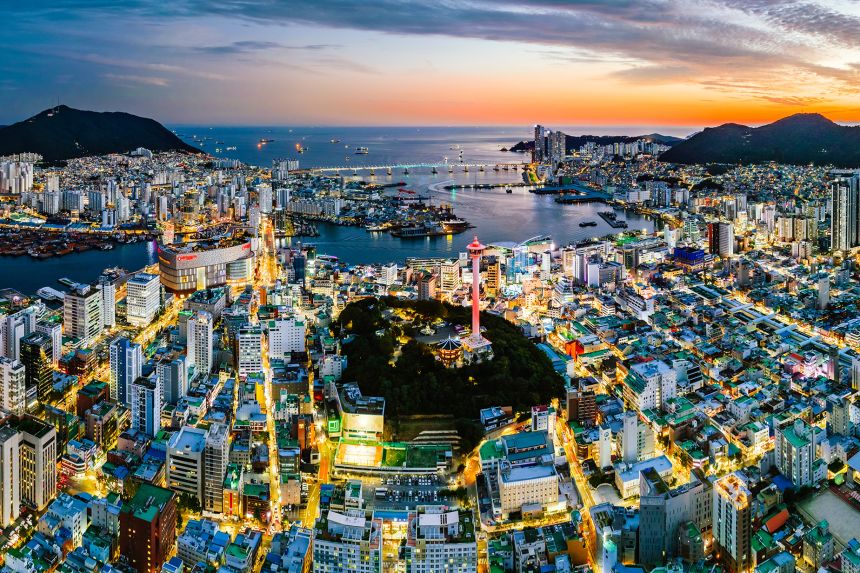
A trip to Busan combines seaside temples, raw seafood markets, and some of the best urban hiking in Asia. The city demands at least three full days to cover its core neighborhoods, and the KTX from Seoul puts it within a 2.5-hour reach. Skip the generic observation decks in favor of the alleyways of Gamcheon and the sunrise at Haedong Yonggungsa.
I am Chidi, and my first trip to Busan involved a disastrously mistimed arrival at Jagalchi Market and a plate of sannakji that moved more than I expected. Our WakaAbuja team has since returned multiple times to refine this guide. Fatima, our Lagos correspondent, joined me on the last trip and nearly got us kicked off a bus for using a T-money card incorrectly.
This guide spells out the mistakes we made, the itinerary we perfected, and the moments that made us fall hard for this city.
Jump to: Itinerary | Real Costs | Food Guide | Getting Around | What to Skip | FAQ
Key takeaways
- Three full days is the minimum. Two days forces you to cut either the eastern temples or the western cultural villages. Four days lets you add a Gyeongju day trip comfortably.
- Naver Maps is non-negotiable. Google Maps gives walking directions but refuses driving or public transit routing in South Korea. Download Naver before you land.
- Arrive at Haedong Yonggungsa before 8:30 AM. After 9:30 AM, tour buses disgorge crowds, and the temple grounds become a slow-moving queue.
- Busan’s Gwangalli drone show happens every Saturday evening. Arrive by 6 PM to secure a spot on the beach. The show is free and spectacular.
- Cash is rarely needed. A T-money card covers transit and most convenience stores. International credit cards work at nearly all restaurants and malls.
What Is the Best 3-Day Itinerary for a Trip to Busan?
This itinerary assumes you start early each morning and move at a pace that lets you stop for photos and snacks without rushing. I have run this exact schedule twice with visiting friends, and it holds up.
@seeyousanny How to spend 3 days in Busan with an evening trip to Gyeongju 🇰🇷 Welcome to day 7, 8 + 9 of my solo South Korea trip🫰🏽 . – See the cable cars in Busan in Haeundae (best view is from Dongbaek Cafe) – Take the bus to Haedong Yonggungsa Temple which is a free entry temple on the ocean – Take the high speed train from Busan to Gyeongju in the evening and see the Daereungwon Tomb Complex, the free light show at the Cheomseongdae Observatory and walk around the Donggung Palace and Wolji Pond – Spend a sunny day on Jagalchi Fish Market and check out Thrill on the Mug (when it reopens) and Having Moment – Eat fresh sashimi upstairs at Jagalchi Fish Market . Things to do in Busan / Things to do in Gyeongju / South Korea travel diaries . #southkorea #busan #gyeongju #travel #solotravel
Day 1: East Busan — Temples and Sky Capsules
- 7:00 AM: Take Bus 1001 or a taxi to Haedong Yonggungsa. Walk the temple grounds before the crowds hit.
- 9:30 AM: Coffee at one of the cliffside cafes overlooking the sea near the temple exit.
- 11:00 AM: Head to Haeundae Beach. Walk the strip to Dongbaekseom Island and the APEC House for the coastal trail views.
- 1:00 PM: Lunch of dwaeji gukbap at a backstreet restaurant behind Haeundae market.
- 3:00 PM: Ride the Haeundae Sky Capsule from Mipo to Cheongsapo. Book tickets online in advance to avoid the on-site queue.
- 6:00 PM: Move to Gwangalli Beach for the Saturday drone show, or settle into a craft beer bar with bridge views on any other night.
Day 2: Central & West — Culture Villages and Markets
- 8:00 AM: Arrive at Gamcheon Culture Village before the souvenir stalls open. Walk the main alley loop counterclockwise.
- 10:30 AM: Take a taxi down to Jagalchi Market. Tour the fish auction floor, then eat sliced raw fish on the second floor.
- 12:30 PM: Walk through BIFF Square for ssiat hotteok and into Gukje Market for vintage shopping.
- 3:00 PM: Songdo Marine Cable Car. Ride to the park station, walk the suspension bridge trail, then ride back.
- 7:00 PM: Dinner in Seomyeon. BBQ at a back-alley galbi house, then explore the underground shopping arcade.
Day 3: Nature or Gyeongju Day Trip
- Option A — Stay in Busan: Hike the Igidae Coastal Walk in the morning. Lunch at a milmyeon shop near Suyeong. Afternoon at Spaland jimjilbang in Centum City.
- Option B — Gyeongju: Catch the 8:00 AM KTX to Singyeongju Station. Visit Bulguksa Temple, Seokguram Grotto, and the Daereungwon tomb complex. Return by evening.
Chidi’s honest take: “If you only have 48 hours, cut Day 3 and merge the temple morning from Day 1 with the Gamcheon-Jagalchi afternoon from Day 2. You will be exhausted, but you will see the essentials.”
How Much Does a Trip to Busan Really Cost?
Fatima tracked every single won we spent over four days this spring. Her spreadsheet obsession gave us real numbers, not estimated ranges. Prices below reflect the current year’s mid-season rates.
Budget Traveler (₩80,000–100,000/day)
- Accommodation: Guesthouse dorm bed, ₩20,000–30,000.
- Food: Gukbap, kimbap, street snacks, ₩20,000–25,000.
- Transport: Subway and bus with T-money, ₩6,000–8,000.
- Activities: Free beaches, Gamcheon Village (free entry), temple grounds, ₩0–5,000.
Mid-Range (₩150,000–200,000/day)
- Accommodation: Private hotel room, ₩70,000–100,000. Check Booking.com for Haeundae area options.
- Food: BBQ dinner, cafe coffee, casual lunch, ₩50,000–60,000.
- Transport: One taxi ride plus transit, ₩15,000.
- Activities: Sky Capsule, Songdo Cable Car, ₩30,000–40,000.
The single biggest cost variable is accommodation. A seafront Haeundae hotel in July will triple the price of a comparable room in Seomyeon in March. Use Kayak to set price alerts for your travel window.
How Do You Actually Get to Busan?
Gimhae International Airport sits roughly 40 minutes west of Haeundae by taxi. The airport light rail connects to the subway network at Sasang Station and takes about an hour to reach the beach zone. I prefer the airport limousine bus for the direct Haeundae route because it spares me a subway transfer with luggage. Tickets cost around ₩8,500 as of this year. Confirm the current fare on the Gimhae Airport website.
The KTX from Seoul Station to Busan Station remains the backbone of domestic access. The journey takes 2 hours 15 minutes and deposits you directly in the central Jung-gu district. Tickets run roughly ₩60,000 for a standard seat. I book through the Korail app because the English interface has improved significantly. If you are flying internationally, compare the cost of a direct flight into Gimhae versus flying into Incheon and taking the KTX. A direct flight often saves half a day of transit.
@jinabaobina Everything you need to know about taking the bus to Busan #bus #korea #koreatravel #koreatrip #travelkorea #seoul #busan #busantravel I booked my ticket through Klook so everything was in one app—super convenient. Code: Jinabaobina Tickets range from $30 to $50 depending on the type of bus. I meant to book the “luxury” one I kept seeing in videos… but accidentally booked the excellent tier instead 😅 In the video, you’ll see how to get to the tracks—go down the escalator, follow the signs toward bus tracks 1 & 2 (the ones that go to Busan), then head down the hallway past some shops. Eventually, you’ll go up another set of escalators (you’ll see this at the 10-second mark). We actually got a little lost, but a kind man helped us find our way. Honestly, the excellent bus was still super comfy. The seats recline really far back and there’s a leg rest that pops up too. It’s about a 4-hour ride, and the best part (besides the price) is how easy it is to load your bags—way simpler than the train. Tips: – Get there early so you can check out the shops – Grab food/snacks beforehand – Use the bathroom! There’s no restroom on the bus 😅
What Dishes Define a Trip to Busan?
Busan’s cuisine runs saltier and richer than Seoul’s. The port city identity shapes every dish. Dwaeji gukbap, a milky pork bone soup, is the essential local lunch. I eat mine at a shop in the alley behind Haeundae Traditional Market where the pork slices come thick and the kimchi is ferociously sour. The broth costs around ₩9,000 a bowl.
Milmyeon, cold wheat noodles in an icy, vinegary broth, defines Busan summers. The noodles are chewier than naengmyeon and cut differently. Ganjang gejang, raw crab marinated in soy sauce, is the splurge item. A full crab with banchan costs ₩35,000–50,000 at a specialist restaurant near Jagalchi. Ssiat hotteok, the BIFF Square seed-stuffed fried pancake, tastes best when the brown sugar filling has just started to blister the dough.
Fatima’s honest take: “The tent bars along Gwangalli Beach sell grilled shellfish platters that cost less than ₩30,000 for two people. Sit on a plastic stool, order soju, and watch the bridge light up. That is my definition of a perfect Busan evening.”
Where Do K-Pop and K-Drama Fans Go in Busan?
Busan carries deep BTS ties. Jimin and Jungkook both attended school in the city, and the Busan Asiad Main Stadium hosted the group’s massive “Yet to Come” concert. Fans frequently visit Jimin’s father’s cafe, Magnate, in the Nam-gu district. The exterior is unassuming, but the interior walls are covered in fan art, and the coffee cups bear the cafe’s branded logo.
Several key K-drama scenes were filmed along Busan’s coastline. The Haedong Yonggungsa approach road appears in multiple historical dramas. Hocheon Village, a hillside neighborhood with a long staircase leading down to a tiny harbor, served as a backdrop for the drama “Reply 1997.” The Gamcheon Culture Village doubled as a whimsical set for countless variety shows. For current filming location maps, the Visit Busan official site maintains a K-Culture tour section that updates with new drama releases.
@michtravel BUSAN !! 부산 !! Can This Love Be Translated ? [ 이 사랑 통역 되나요 ?] Filming Location in BUSAN , SOUTH KOREA . ➡️ Joo Ho-jin ( Kim Seonho ) house in the drama 📍Oncheon-dong ,Dongnae-gu , Busan ❌ The house is a private property ➡️ EPISODE 1 : The place where Dorami ( Cha Moo-hee ) accidentally fell and got comatosed 📍 Busan Seo-gu Chungmu-dong 1(il)-ga 23-1 ( Taepyeong Building ) ➡️ 부산 서구 충무동 1가 23-1 #busankorea #canthislovebetranslated? #filminglocationinbusan #이사랑통역되나요? #부산촬영지
Do You Need a Visa or K-ETA for a Trip to Busan?
Most foreign visitors entering visa-free South Korea must apply for K-ETA (Korea Electronic Travel Authorization) before departure. The application is online, costs roughly ₩10,000, and generally receives a decision within 72 hours. The official K-ETA government portal is the only place to apply. Fraudulent third-party sites charging inflated fees are common, so double-check the URL before submitting passport details.
As of this year, the list of 22 K-ETA exempt nationalities has expanded, but the exemption is temporary and reviewed annually. Always verify your eligibility status four weeks before your flight. Immigration officers at Gimhae Airport process arrivals efficiently, but the K-ETA confirmation email prints out easily, and it saved me a verbal exchange when the officer’s scanner lagged.
Where Should You Shop in Busan?
Seomyeon Underground Shopping Mall is a labyrinth of affordable clothing, accessories, and K-beauty stalls. The pricing is lower than Seoul’s Myeongdong for comparable skincare products, and bargaining is more accepted here than in department stores. I buy my sheet masks in bulk from a specific stall near Exit 7 because the ajumma owner tosses in free samples when she recognizes me.
Gukje Market offers vintage clothing, antiques, and camera equipment spread across a dense grid of alleyways. The market connects to Bupyeong Kkangtong Market, where the night food stalls open around 5 PM. For a modern contrast, Shinsegae Centum City holds the Guinness World Record as the world’s largest department store. Its basement food hall is a destination in itself, and the rooftop park provides a free view over the Marine City skyline.
Fatima’s honest take: “Nampodong’s underground arcade has better shoe selections than the tourist-facing shops above ground. I found leather loafers for ₩30,000 that have outlasted far more expensive pairs.”
How Do You Get Around Busan Without a Car?
The subway system covers the major arteries. Lines 1 and 2 form a cross that connects Seomyeon, Haeundae, Nampo, and Busan Station. Trains run clean and on time, with announcements in Korean, English, Japanese, and Mandarin. A T-money card, which you can purchase and recharge at any convenience store, works across all buses and subway lines.
The Naver Maps Reality
Google Maps is deliberately limited in South Korea due to local data laws. It will give you walking directions but blocks driving and transit routing. Download Naver Map and set it to English. The app provides door-to-door transit directions, bus arrival times, and even taxi fare estimates. I nearly missed a Gyeongju KTX because I tried to navigate with Google on my first trip. Learn from my error.
Taxis and Buses
Kakao T is the ride-hailing app that works. It functions like Uber but interfaces with local taxis. Fares start at ₩4,800, and cross-city trips rarely exceed ₩25,000. City buses are more aggressive than I expected. Hold the handrail firmly, and tap your T-money card on the sensor as you exit to qualify for transfer discounts.
What Should You Skip on a Trip to Busan?
- Busan X the Sky (LCT Tower Observatory). The ticket costs ₩27,000 for a view that Gwangalli Bridge’s public beach provides for free, minus the elevation. The glass-floor section is small and often crowded.
- Oryukdo Skywalk. A glass ledge over a rocky cliff. The walkway is short, and the view does not differ significantly from the free coastal trail next to it.
- Jagalchi Market’s ground-floor intimidation rush. The wet floor and persistent ajummas selling live octopus overwhelm many first-timers. Go straight to the second-floor dining hall, order a set platter, and skip the sensory overload below unless you want the experience.
- Haeundae Beach in peak August afternoon heat. The sand becomes a dense carpet of rented parasols. Go before 9 AM or after 5 PM, or walk to the far eastern end near the Westin Chosun for breathing room.
- The overpriced cafes inside Gamcheon Culture Village. The coffee is mediocre and costs twice what an identical cup costs five minutes downhill. Grab a drink before ascending.
When Is the Best Season to Visit Busan?
Late April through early June and late September through mid-November offer clear skies and temperatures that hover between 18°C and 25°C (64°F to 77°F). The humidity stays manageable. Cherry blossoms peak in the last week of March through the first week of April, with Dalmaji Hill offering the most famous tunnel of blooming trees.
July and August bring monsoon rains and thick, wet heat that clings to your skin. The beaches fill with domestic vacationers. September brings the Busan International Film Festival, which dominates the Haeundae area and pushes hotel prices up sharply. Winter is quiet and cold, with daytime highs around 6°C (43°F), but the clear winter light makes for excellent photography at Haedong Yonggungsa with far fewer crowds.
Frequently asked questions
Is Busan better to visit than Seoul?
Neither is better. Seoul is a sprawling, high-energy capital with deeper historical layers and more extensive nightlife. Busan is more relaxed, coastal, and easier to navigate in a short trip. I prefer Busan for a slower, more sensorial experience focused on food and sea views.
How many days do you need in Busan?
Three full days covers the major neighborhoods. Four days allows a Gyeongju day trip or a deeper exploration of the eastern coastal trails. Two days forces painful cuts. I strongly recommend a minimum of three.
Can you use Google Maps in Busan?
Walking directions work. Transit and driving directions are blocked. Naver Map is the essential navigation app. Download it before your trip and set the language to English in the settings menu.
What is the best area to stay in Busan?
Seomyeon offers the best transit connections, central location, and nightlife. Haeundae puts the beach on your doorstep but adds travel time to the western districts. Nampo places you near the markets and Gamcheon Village. Choose based on your priorities. Check hotel locations on Hotels.com for neighborhood filtering.
Is Busan expensive compared to Seoul?
Busan runs slightly cheaper for food and accommodation, particularly for fresh seafood. Public transit costs are comparable. Street food and local restaurants in Busan often undercut equivalent Seoul spots by 10 to 20 percent.
Do you need to book the Haeundae Sky Capsule in advance?
Yes. Weekend afternoon slots sell out days ahead during peak season. Book through the official Haeundae Blueline Park website. The Mipo to Cheongsapo direction offers the better ocean view from the capsule.
Plan your trip: booking platforms we trust
The WakaAbuja team books through these platforms because they consistently offer flexible cancellation terms and competitive pricing for South Korea travel, from guesthouses to KTX tickets and guided tours.
GetYourGuide — Reliable for skip-the-line Sky Capsule tickets and Gyeongju day tours.
Kayak — Price alerts for flights into Gimhae International Airport.
TripAdvisor — Restaurant reviews for Jagalchi Market and Seomyeon BBQ spots.
Expedia — Bundled flight and hotel packages for shorter booking windows.