Trip to Grand Teton National Park: The Ultimate Guide for First-Time Visitors
A trip to Grand Teton National Park requires a $35 vehicle entrance fee, a strategy for beating summer trailhead crowds by 7:00 AM, and at least two full days to see the essential viewpoints. The park is open year-round, but road access, accommodation, and wildlife viewing change dramatically with each season.
Chidi from our Abuja team still talks about the first time he crested the rise on Highway 191 and the Tetons just appeared: no foothills, no warning, just granite spires punching straight out of the sagebrush flat. He pulled over, stared, and immediately understood why this place needs a different approach than most national parks.
This guide distills everything we learned across multiple visits, from the exact parking strategy that saves you an hour of frustration at Jenny Lake to the budget breakdown nobody else publishes.
Jump to: First-Timer Priorities | Season-by-Season Guide | Wildlife Viewing | Photography Locations | Crowd Strategy | Budget Breakdown | Sample Itineraries | FAQ
Key takeaways
- Arrive at Jenny Lake and popular trailheads before 7:00 AM in July and August or you will not find parking.
- A $35 vehicle pass is valid for seven consecutive days. The America the Beautiful annual pass pays for itself on this trip alone if you also visit Yellowstone.
- Moose are most active at dawn in Willow Flats and along Moose-Wilson Road. Bring binoculars, not just a phone camera.
- The park has almost no cell service. Download offline maps on Google Maps or AllTrails before you leave Jackson.
- Grand Teton and Yellowstone share a border. Combining both in a single trip is logistically easy and common.
I’m Visiting Grand Teton for the First Time. What Should I Prioritize?
If you only have one shot at this park, focus on four experiences that define the Tetons. These are non-negotiable. Start with sunrise at Mormon Row. The Moulton Barns with the cathedral group of peaks behind them in alpenglow is the photograph you have seen a thousand times. Arrive 45 minutes before sunrise to claim a tripod spot.
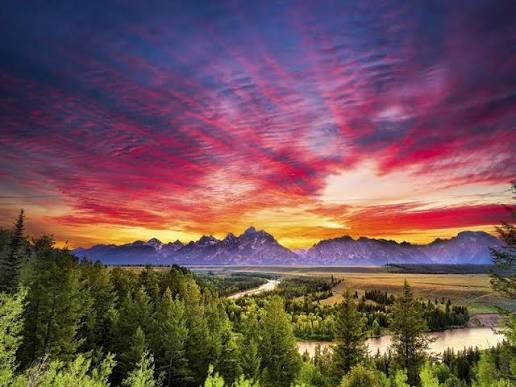
Next, drive the Teton Park Road from Moose Junction north to Jackson Lake Junction. Stop at every pullout. Snake River Overlook, where Ansel Adams made his famous image, is the second stop. Continue to Jenny Lake and either hike the Inspiration Point loop or take the boat shuttle across to cut the distance. In the afternoon, drive the Moose-Wilson Road slowly for wildlife spotting. End your day at Oxbow Bend as the sun sets behind Mount Moran.
Fatima, our Lagos correspondent, did this exact circuit on her first visit and told me afterward, “I felt like I had seen the entire park in a day, but I also knew I needed to come back for the backcountry.” That is the right feeling. You get the iconic views, and you leave understanding the scale of what lies beyond the road.
Chidi’s honest take: “Skip the gift shops. Skip the lodges. Drive the inner road, park at every overlook, and just stand there. The mountains do the work.”
When Is the Best Time for a Trip to Grand Teton National Park?
@james_and_meg one of the most underrated times to visit Jackson Hole, WY & Grand Teton National Park 🏔️🐴🍂 end of September is the perfect time to visit with cooler weather, less crowds, & beautiful fall foliage! 📆 Sept 28 – Oct 1st of last year 📌 SAVE this & add it to your Fall Bucketlist 🫶🏼 #jacksonhole #visitwyoming #visitjacksonhole #grandtetons #grandtetonnationalpark
The park delivers something distinct every season. There is no single “best” time, only the right time for what you want to do. We break it down by what actually matters: access, crowds, wildlife, and photography conditions.
Summer, from mid-June through early September, offers full access to all roads, trails, and visitor services. It also brings peak crowds, afternoon thunderstorms, and trailhead parking lot battles. Spring, in May and early June, brings wildflowers, newborn bison calves, and lingering snow closures on high-elevation trails like the Teton Crest. Fall, from mid-September through mid-October, delivers elk bugling, aspen gold, and dramatically thinner crowds. Winter, which runs November through April, closes the Teton Park Road to vehicles but opens it to cross-country skiers and snowshoers.
Summer (Jul–Aug)
- All roads, trails, and visitor centers are open.
- Afternoon thunderstorms build fast; start hikes before 7:00 AM.
- Parking at Jenny Lake fills by 8:00 AM on weekdays, earlier on weekends.
- Wildflowers peak in mid-July at higher elevations.
Fall (Sep–Oct)
- Elk rut peaks in late September. Listen for bugling at dawn.
- Aspen trees turn gold in late September, lasting into early October.
- Moose activity increases as bulls compete for mating rights.
- Services and lodges begin seasonal closures in October.
Winter (Nov–Apr)
- Teton Park Road closes to vehicles; groomed for cross-country skiing.
- Sleigh rides operate at the National Elk Refuge in Jackson.
- Wildlife concentrates in the valley floor; bison and elk are easily spotted.
- Accommodation in Jackson is significantly cheaper than summer rates.
Where Can I See Moose, Bears, and Bison in Grand Teton?
The Teton valley floor is one of the richest wildlife corridors in North America. Moose are the park’s signature animal. For the best chance of seeing them, drive Moose-Wilson Road at dawn or visit Willow Flats between Jackson Lake Lodge and the dam. Chidi spotted a bull moose with full velvet antlers crossing the road at Schwabacher Landing one September morning. “He was so close I could hear him breathing. I put the camera down and just watched.”
Bison herds roam Antelope Flats almost constantly from spring through fall. You will often find them blocking the road, which is why park speed limits are low and strictly enforced. For bears, both black bears and grizzlies, focus on the area between Signal Mountain and Colter Bay in early morning and late evening. Carry bear spray and know how to use it. The park requires it for backcountry travel, and many local outfitters rent canisters if you do not want to buy one. Pronghorn antelope gather in large groups on the sagebrush flats south of the airport. Trumpeter swans and osprey are reliable at Oxbow Bend.
What Are the Best Photography Locations in Grand Teton?
Morning and evening light transform the Tetons. The mountains face east, so they catch first light. Sunrise is the prime shooting window. Schwabacher Landing is the top sunrise location. Arrive 45 minutes before sunrise to claim a spot on the beaver pond edge. On a calm morning, the reflection of the peaks in the still water creates a mirror image that fills your frame. Use a polarizing filter to cut glare on the water surface.
Oxbow Bend works for both sunrise and sunset. At sunrise, Mount Moran glows orange; at sunset, the sky behind the peaks intensifies. Mormon Row is strictly a sunrise location. The barns sit in shadow by late afternoon. Snake River Overlook, the Ansel Adams vantage point, is best in mid-morning when the river catches light. For wildlife photography, the Moose-Wilson Road in the early morning requires a telephoto lens of at least 200mm, ideally 400mm. Fatima advises renting a lens in Jackson at one of the camera shops before entering the park. “My 24-70mm was nearly useless for the grizzly we saw at 200 yards.”
How Do I Avoid Crowds at Grand Teton’s Popular Spots?
Jenny Lake is the most congested area in the park. By 9:00 AM in summer, the main parking lot is full, and overflow parking stretches along the road. The solution is simple and non-negotiable: arrive before 7:00 AM. If you miss the window, skip it until after 4:00 PM when the morning crowd thins. Better yet, visit String Lake or Leigh Lake instead. They share the same mountain views with a fraction of the people.
For every crowded spot, an alternative exists. Instead of Inspiration Point, hike to Taggart Lake. Instead of Mormon Row at 7:00 AM with fifty other photographers, shoot from the less-visited Antelope Flats Road viewpoint a half-mile west. The park’s 42-mile Multi-Use Pathway offers a car-free way to move between viewpoints, and bike rentals in Jackson make this accessible even if you fly in. Chidi’s rule: “If a parking lot has tour buses, keep driving. The Tetons look the same from the next pullout, and you will be alone.”
Crowd-beating alternatives: Swap Jenny Lake for String Lake. Swap Inspiration Point for Taggart Lake Loop. Swap Mormon Row for the Antelope Flats Road viewpoint. Start all hikes before 7:00 AM or after 4:00 PM.
How Much Does a Trip to Grand Teton National Park Cost?
Nobody else publishes this breakdown, so we built one from actual receipts. Costs vary wildly depending on whether you camp, stay in Jackson, or book a park lodge. Here is what you can expect.
Entrance Fees
A seven-day vehicle pass costs $35 and covers everyone in the car. A motorcycle pass is $30, and a pedestrian or bicycle entry costs $20 per person. International visitors who do not qualify for the America the Beautiful pass should budget this exact amount. The $80 annual America the Beautiful pass covers entry to all federal lands and is the better value if you visit Yellowstone, which is only 10 miles north.
Accommodation and Food
Park campgrounds range from $25 to $40 per night. Signal Mountain and Colter Bay fill months ahead. Jackson Hole lodging averages $250 to $400 per night in summer. Budget motels in Jackson can still run $180. Groceries in Jackson are expensive; a cooler packed with supplies from Salt Lake City or Idaho Falls saves real money. The Jenny Lake boat shuttle costs $18 round trip, and we consider it essential for first-timers. You can browse lodge pricing and check summer availability through Expedia or Booking.com, though in-park lodges are often best booked directly.
What Visitor Logistics Should I Know Before I Go?
The park has four entrance gates. Moose Entrance, just north of Teton Village, is the busiest and the one most visitors use. Moran Entrance, near Jackson Lake, is better if you are coming from Yellowstone or the east. Granite Canyon Entrance serves those driving up from Salt Lake City. The fourth, smaller entrance handles local traffic and requires no separate fee station.
Cell service inside the park is almost nonexistent. Download offline maps on Google Maps or your preferred hiking app before leaving Jackson. The NPS app also has an offline mode. Park roads are well-maintained two-lane asphalt, but the Moose-Wilson Road is gravel for part of its length and closes to vehicles during heavy snow. Parking at trailheads is free but limited. Overflow parking along roads is legal only where signs explicitly permit it. Oversized vehicle parking exists at the Craig Thomas Discovery Center and Colter Bay.
Accessible facilities are more extensive than many visitors realize. The Multi-Use Pathway is paved and wheelchair-friendly from Jenny Lake to Moose. The Craig Thomas Discovery Center is fully accessible, and several campgrounds, including Colter Bay and Signal Mountain, offer accessible sites. For a detailed accessibility map, check the official park website before your visit.
What Should I Pack for Grand Teton National Park?
The altitude at the valley floor sits around 6,400 feet. Temperatures swing 30 degrees between dawn and afternoon. Layers are not optional; they are the difference between a comfortable hike and a shivering retreat. A moisture-wicking base layer, a fleece mid-layer, and a waterproof shell cover almost every situation from May through October.
Bear spray is required for backcountry travel and strongly recommended for any hike away from paved paths. You cannot fly with bear spray. Rent it in Jackson or buy it at the Craig Thomas Discovery Center bookstore. Hiking boots with ankle support outperform trail runners on the rocky, uneven trails around the lakes. The sun at this elevation burns faster than you expect. A wide-brimmed hat, sunglasses, and SPF 50 sunscreen belong in your daypack. For backcountry water sources, a filter or purification tablets are mandatory; giardia is present in Teton streams.
Sample Itineraries for Your Grand Teton Trip
We built these routes from actual trips, accounting for driving times, meal breaks, and the fact that you will stop to photograph wildlife more often than you plan to.
1 Day (Passing Through)
Mormon Row at sunrise, Teton Park Road with all pullouts, Jenny Lake boat shuttle to Inspiration Point, Oxbow Bend at sunset. Skip the long hikes. Pack lunch to avoid losing time finding food.
3 Days (First-Timer Essentials)
Day 1 covers the scenic drive and Mormon Row. Day 2 tackles a full morning hike at Taggart Lake or Cascade Canyon, followed by an afternoon wildlife drive on Moose-Wilson Road. Day 3 visits String Lake and Signal Mountain for panoramic views before a sunset at Schwabacher Landing.
5 Days (Plus Yellowstone)
Spend two days in Grand Teton following the three-day plan condensed, then drive north to Yellowstone’s South Entrance. Combine the Old Faithful geyser basin and Grand Canyon of the Yellowstone into a three-day loop. The parks share a border; the drive from Jackson Lake Lodge to Old Faithful takes under two hours.
Frequently asked questions
Do I need reservations for Grand Teton National Park?
As of this year, no timed entry reservation is required to drive into the park. Campgrounds and in-park lodges require reservations and book months ahead. Backcountry camping permits are required and obtained at the Craig Thomas Discovery Center.
Is Grand Teton better than Yellowstone?
Neither is objectively better. Grand Teton offers more dramatic mountain scenery, easier wildlife viewing, and fewer crowds. Yellowstone offers geothermal features, a larger landscape, and more developed visitor infrastructure. Combining both is standard practice.
Can you see bears at Grand Teton?
Yes, both black bears and grizzly bears inhabit the park. Dawn and dusk along the Signal Mountain summit road and in the Willow Flats area offer the best chances. Always carry bear spray and maintain at least 100 yards of distance.
What is the best beginner hike in Grand Teton?
Taggart Lake Loop is the best beginner hike. It covers 3.3 miles round trip with minimal elevation gain and delivers a classic Teton reflection view at the lake. The trail is well-maintained and accessible for most fitness levels.
How far is Grand Teton from Yellowstone?
Grand Teton’s north boundary touches Yellowstone’s south boundary. The drive from Jackson Lake Lodge to Old Faithful takes approximately 90 minutes. No additional entry fee is required if you hold a valid pass for either park.
Can I visit Grand Teton in winter?
Yes, the park is open year-round. The Teton Park Road closes to vehicles but is groomed for cross-country skiing and snowshoeing. Jackson Hole offers winter lodging, and the National Elk Refuge sleigh rides operate daily from December through early April.
Plan your trip: booking platforms we trust
The WakaAbuja team has relied on these platforms for years of North American national park trips. They offer transparent pricing, verified reviews, and cancellation policies that matter when itineraries shift due to weather or road closures.
Best for bundling flights into Jackson Hole with lodging.
Best for comparing Jackson motels and Teton Village stays.
Ideal for family cabins near Jackson or Driggs, Idaho.
Compare car rental rates at Jackson Hole Airport.
Wildlife tours and float trips on the Snake River.