advertisement
Travel to Budapest Hungary: The Ultimate First-Time Visitor Guide
Budapest splits into two distinct halves, hilly Buda and flat Pest, connected by the Chain Bridge. A comfortable mid-range trip costs 35,000 to 50,000 HUF per day, covering a private room, three good meals, thermal bath entry, and public transport. As of this year, the city’s main airport connects to the center via a fixed-price 100E bus for 2,200 HUF, and non-Schengen travelers must still secure a visa before arrival.
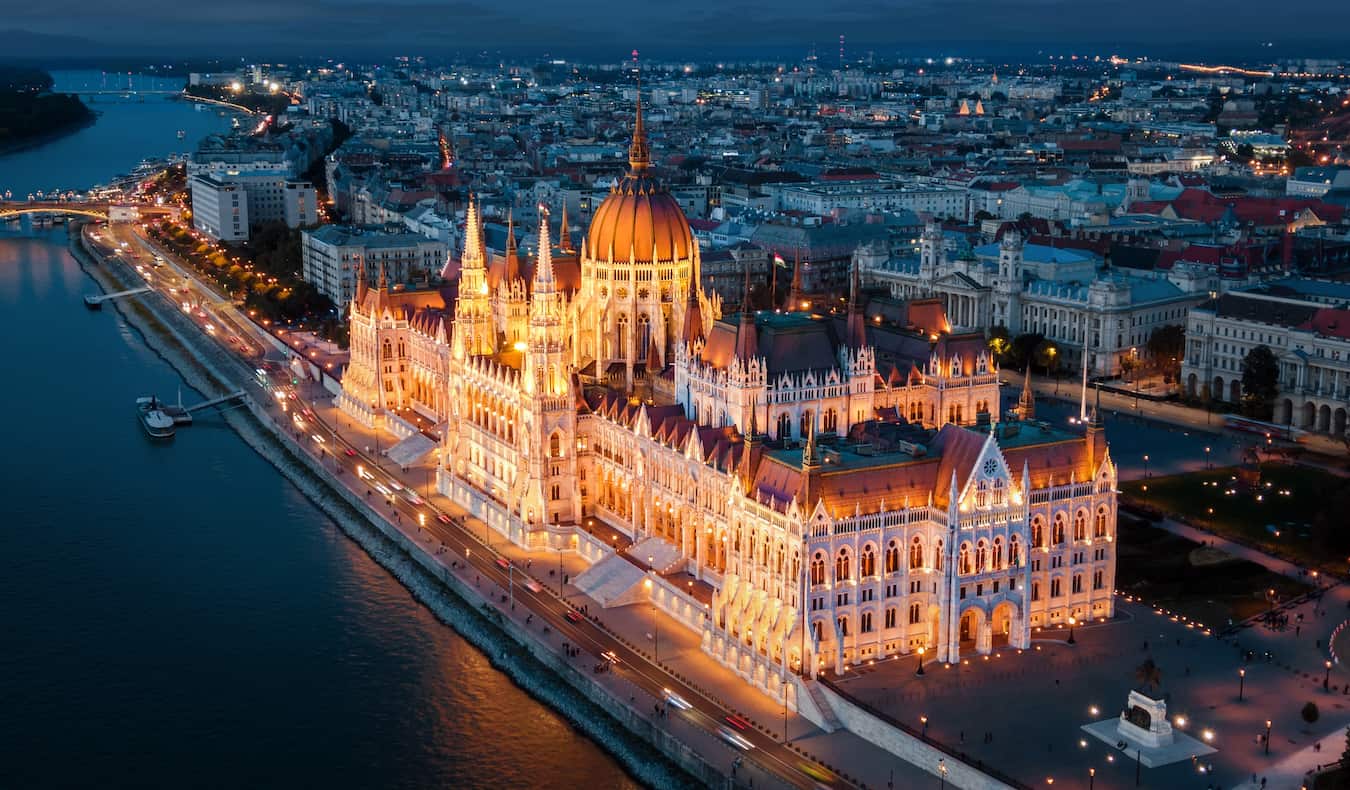
I landed in Budapest for the first time on a late-November evening with no hotel booked, fresh off the train from Vienna. The fog hung low over the Danube, the Parliament building glowed amber across the water, and the tram screeched past with its windows fogged from the cold. I knew nothing about the city except that it had baths, a ruin bar I had seen in a magazine, and a currency I could not mentally convert. By the end of that week, I was telling everyone it was the best city in Central Europe.
Chidi from our Abuja team repeated the same phrase to me after his trip early this year: “I went in expecting a cheaper Prague and left wondering why Budapest is not everyone’s first European stop.” This guide is what we both wish we had before that first walk across the Széchenyi Chain Bridge.
Jump to: Entry rules and visa | Real daily costs | Where to stay by neighborhood | Thermal baths compared | 48-hour and 3-day plans | What and where to eat | Getting around | FAQs
Key takeaways
- The currency is the Hungarian Forint (HUF). Rough mental math: 1,000 HUF is about 3 USD. Carry cash for market halls and smaller ruin bars.
- Budapest is a city of thermal water. You do not need to be a spa person to enjoy the baths. Széchenyi is the iconic party pick; Rudas is for a quieter, more local soak.
- District VII (the Jewish Quarter) is the nightlife hub but noisy past midnight. District V (Belváros) puts you closer to the Danube and is quieter for sleeping.
- The 72-hour Budapest Card is rarely good value. Buy a 72-hour travel pass from a BKK machine for 5,500 HUF instead, and pay for attractions separately.
- The first thing a scammer will offer you at a taxi stand is a ride without a meter. Use the Bolt app or hail a Főtaxi with a yellow license plate and a visible meter.
- Ruin bars are worth seeing once. Szimpla Kert is the original and still the best. Go at 4 p.m. on a weekday to see it without the crush of bachelor parties.
Do I need a visa to travel to Budapest, Hungary, from the USA?
Hungary is a Schengen Area member. US and UK passport holders can enter visa-free for up to 90 days within a 180-day period. As of this year, the ETIAS authorization system for visa-free travelers has not yet launched, despite years of announced dates. Keep checking the official EU ETIAS portal for the real start date. Nigerian passport holders, like our WakaAbuja team, need a Schengen visa stamped before travel. The Hungarian embassy in Abuja processes applications through VFS Global. Book your biometric appointment at least six weeks ahead of your planned flight.
Your travel insurance must explicitly cover at least 30,000 EUR in medical expenses. I watched a traveler at the VFS center in Lagos get turned away because their insurance certificate only listed coverage in “Europe” without specifying Schengen. The letter matters as much as the policy. Your flight reservation should be a hold-the-ticket PNR, not a screenshot. Proof of accommodation must show every night of your stay. Hungary is strict on these details. Always confirm the latest document checklist on the official Hungarian consulate page before your appointment, because requirements shift without fanfare.
Fatima’s visa tip: “For the bank statement requirement, print three months of statements stamped by your bank. I also included a cover letter explaining my itinerary day by day. The consular officer told me it made the decision faster.”
What does a trip to Budapest really cost right now?
Budapest is no longer dirt cheap, but it remains 25 to 30% more affordable than Vienna or Paris for equivalent quality. I tracked every forint on my last two trips. Here is what the numbers look like as of early this year. A dorm bed in a well-rated hostel costs 5,000 to 8,000 HUF per night. A private double room in a mid-range hotel or a well-reviewed apartment on Booking.com runs 18,000 to 35,000 HUF. A filling meal at a traditional Hungarian restaurant like Gettó Gulyás or Kék Rózsa costs 3,500 to 6,000 HUF for a main dish. Street food like a lángos from the Central Market Hall costs around 1,800 HUF.
Thermal bath entry is a line item worth budgeting. A weekday ticket at Széchenyi costs 9,400 HUF with a cabin. Rudas is slightly cheaper at 7,200 HUF for the thermal section. A single public transport ticket costs 450 HUF if bought from a machine and 600 HUF if bought from the driver. A 72-hour travel pass costs 5,500 HUF and pays for itself after 12 trips. A daily budget of 25,000 HUF covers a hostel bed, three inexpensive meals, one attraction, and transport. A comfortable mid-range day with a private room, two sit-down meals, a bath entry, and a few drinks lands at 45,000 to 55,000 HUF per person. Use Kayak to track flight prices into Budapest Ferenc Liszt International Airport (BUD) well ahead, and check bundle deals on Expedia for hotel plus flight savings.
Best for budget travelers
- Book a hostel or guesthouse in District VII for 5,000-10,000 HUF per night.
- Eat lunch at the market hall and dinner at a self-service étkezde.
- Buy the 5,500 HUF 72-hour travel pass, not single tickets.
- Skip the river cruise. Ride the public ferry (BKK boat) for the cost of a standard transport ticket.
- Visit Rudas on a weekday morning when admission drops slightly.
Worth considering for comfort
- Book a Danube-view room on Hotels.com and earn a free night after ten stays.
- An evening Danube dinner cruise runs 15,000 to 25,000 HUF and the Parliament lit up is worth it once.
- Use Agoda for last-minute apartment deals in District V.
Which Budapest neighborhood should I stay in as a first-timer?
@thedonnellyedit Where to stay in Budapest 🇭🇺 District I for the best views & calm District V for first-time visitors District VI for location + balance District VII for nightlife District VIII for value & local vibes Save this before booking and follow for more helpful travel advice ✨️ #budapest #district #citybreak #Europe
Budapest is a city of distinct micro-districts, and your choice of neighborhood defines the rhythm of your trip. District V (Belváros-Lipótváros) is the central downtown, anchored by the Parliament and St. Stephen’s Basilica. It is the most walkable, the most expensive, and the quietest at night. I stayed here on my second trip and loved the morning walk to the Danube with a coffee in hand. District VII (Erzsébetváros), the old Jewish Quarter, is the pulse of the ruin bar scene. It is loud, dense, and packed with great cheap eats, but if your hotel is on Kertész or Akácfa Street, expect bass thumps until 2 a.m. on weekends. Pack earplugs and you will be fine.
For something calmer, cross to the Buda side. District I (Castle District) and District II around Széll Kálmán tér feel residential and leafy, but they require a tram or bus to reach most nightlife and restaurants. Chidi rented a family apartment through Vrbo in District II and said the neighborhood was beautiful and silent at night, but he underestimated the 25-minute tram ride back every evening. For a first trip of three to four days, stay on the Pest side. District V if you value sleep and a central location. District VII if you want to stumble from a bar to your bed in four minutes. Use TripAdvisor to filter hotel reviews by “Couples” or “Solo” to match the vibe you want.
Chidi’s honest take: “I booked a cheap place in District VIII near Orczy tér because the photos looked fine. The apartment was okay, but the street felt sketchy after dark. Pay the extra 5,000 HUF a night to stay in District V or VII. You will walk more and worry less.”
Which thermal bath should I visit: Széchenyi, Gellért, Rudas, or Veli Bej?
This is the question that consumes Budapest group chats. There is no single right answer, only the right bath for your mood. I have now soaked in all four major ones, and here is the honest, unglamorous breakdown. Széchenyi Baths in City Park is the postcard: a massive neo-Baroque yellow complex with three outdoor pools and a whirlpool corridor that spins you in a circle. It is the largest, the most social, and the most crowded. A weekday morning ticket costs 9,400 HUF with a private cabin. On a Saturday afternoon, the outdoor pool feels like a water park with beer. Go at 9 a.m. on a Tuesday, or skip it for somewhere quieter.
Gellért Baths, attached to the Hotel Gellért on the Buda side, has an Art Nouveau main hall with stained glass and mosaic tiles that makes you feel like you are swimming inside a cathedral. It is beautiful, but parts of the changing area feel dated. Entry runs around 9,800 HUF on weekdays. Rudas Baths, beneath Gellért Hill, is a 16th-century Ottoman bath with an octagonal pool under a domed roof pierced by colored glass. The thermal section feels ancient and intimate. On Friday and Saturday nights, Rudas opens for late mixed-gender bathing until 4 a.m., a unique experience that is quieter and more atmospheric than Széchenyi’s Sparty. Veli Bej is the smallest and least known, tucked inside a hospital complex. It has five thermal pools and almost no tourists. If you want quiet, go here. Admission is around 5,000 HUF. Book any of these through GetYourGuide for skip-the-line entry during peak hours.
Best for iconic experience
- Széchenyi: outdoor chess players, social atmosphere, largest pools.
- Gellért: stunning architecture, Art Nouveau tiles, grand indoor hall.
Best for quiet authenticity
- Rudas: Ottoman-era dome, quiet weekdays, late-night weekend bathing.
- Veli Bej: five intimate pools, almost no tourists, lowest entry price.
What is a realistic Budapest itinerary for 48 hours or 3 days?
If you only have 48 hours, fight the urge to cram. Budapest rewards walking slowly between coffee and a soak. Here is the plan I give friends who message me from the airport.
Day 1: Pest Foundations. Start at the Central Market Hall (Nagy Vásárcsarnok) at 9 a.m., before the crowds. Eat a lángos upstairs, then walk north along Váci Street, cross the Danube at the Liberty Bridge, and walk up Gellért Hill for the Citadella view. Descend to Gellért Baths for a soak, or continue along the river. Late afternoon, walk the Danube promenade on the Pest side to see the Shoes on the Danube Bank memorial, then find dinner in the Jewish Quarter. End the night at Szimpla Kert with a palinka shot.
Day 2: Buda Heights. Cross the Chain Bridge on foot and take the Buda Castle Funicular up (1,200 HUF one-way, worth it once). Explore the Fisherman’s Bastion and Matthias Church before the tour buses arrive at 10 a.m. The view of Parliament across the river from the Fisherman’s Bastion terrace is the single best photo in the city. After lunch in the Castle District, take bus 16 back down and spend the afternoon at Rudas Baths. Evening: book a Danube dinner cruise. The Parliament lit up from the water at 9 p.m. and is genuinely emotional.
Day 3: (If you have it) The Margit Island and Andrássy. Rent a bike or pedal cart and loop car-free Margit Island. Visit the musical fountain and the small zoo. Afternoon, walk Andrássy Avenue from Heroes’ Square down to the Opera House, stopping for coffee and pastry at a sidewalk cafe. This avenue is a UNESCO World Heritage site and feels like a quieter, greener Champs-Élysées. End your trip with a final bowl of goulash and a beer at a garden courtyard in District VII.
What should I actually eat in Budapest, and where?
Hungarian food is paprika-heavy, meat-rich, and deeply satisfying in cold weather. The trinity you must try: goulash (gulyásleves), a soup, not a stew here, with tender beef and root vegetables; chicken paprikash (paprikás csirke) in a sour cream sauce with nokedli dumplings; and lángos, a disc of fried dough smeared with sour cream and grated cheese. Eat lángos at the Central Market Hall or at Retró Lángos on Arany János Street. For a proper sit-down meal, Gettó Gulyás in the Jewish Quarter does a superb goulash for around 2,800 HUF and the rabbit paprikash is worth ordering even if you think you do not like rabbit.
Budapest also has a serious specialty coffee scene. My two favorites are My Little Melbourne Coffee on Madách Imre út and Madal Café on Ferenciek tere. Both pull flat whites that would hold up in London or Melbourne. For a sweet finish, try chimney cake (kürtőskalács) from a street vendor; avoid the ones with soft-serve ice cream stuffed inside unless you want a sugar bomb designed for Instagram. For something uniquely Hungarian, order a slice of Dobos torte or a poppy seed strudel at Café Gerbeaud on Vörösmarty tér. It is expensive and touristy, but the interior is Belle Époque gorgeous and one coffee and cake there is worth the splurge once.
Fatima’s honest take: “I am not a big meat eater, and Hungarian menus can feel like a pork parade. Order the vegetarian töltött paprika (stuffed peppers) or the mushroom paprikash. Every traditional restaurant has at least one vegetable option; it just is not always on the English menu. Ask for ‘vegetáriánus étel’ and they will point you to it.”
How do I get from Budapest airport to the city and around once I am there?
Budapest Ferenc Liszt International Airport (BUD) sits about 16 km southeast of the center. The 100E airport express bus is the best balance of speed and cost: 2,200 HUF for a direct ride to Deák Ferenc tér, the central transport hub, in about 35 minutes. Buy the ticket from the purple BKK machine at the bus stop or on the BudapestGO app. Do not board without a valid ticket. Inspectors check the 100E frequently and the fine is steep. Bolt and Főtaxi cost 10,000 to 13,000 HUF from the airport to the center. Use the taxi app or the official Főtaxi booth inside the terminal. Never accept a ride from someone offering a “cheap taxi” in the arrivals hall.
Trams, metro, and the BKK system
Budapest’s public transport is excellent. Trams 2 and 4/6 run frequently and cover most tourist routes. Tram 2 along the Pest embankment is a sightseeing ride for the price of a transport ticket. The M1 yellow line is the oldest metro on the European continent and worth riding just for the tiny, wood-paneled stations. Buy a 72-hour travel pass for 5,500 HUF from any purple BKK machine and validate it at the start of your first journey. The pass covers all trams, buses, metro lines, and the public BKK riverboat services on weekdays. The Budapest Card bundles transport with discounts, but I have done the math: it almost never pays off unless you plan to visit four museums a day. Stick with the standalone BKK pass.
What are the worst tourist traps and mistakes in Budapest?
Budapest has well-known scams and pitfalls. Knowing them ahead of time saves you real money and aggravation.
- Currency exchange booths on Váci Street. The rate boards show a high buy rate for euros, but the fine print reveals a 20% commission. Change money at a bank ATM attached to a branch, and always reject the ATM’s conversion rate (choose “charge in HUF”). Better yet, use a Wise or Revolut card and pay contactless.
- Taxi drivers who “have no meter.” A legal Budapest taxi must have a yellow license plate, a meter, and a printed receipt. If the driver quotes a flat price, walk away. Bolt and Főtaxi solve this entirely.
- The Sparty at Széchenyi. The Saturday night spa party sells out to visitors. The pools get crowded and the water turns questionable. If you want a late-night thermal experience, Rudas Friday/Saturday night bathing is far more atmospheric and costs less.
- Restaurant service charges misunderstood. A 12.5% or 15% service charge is often included on the bill automatically. Check the bottom of the receipt for “szervizdíj. ” You do not need to add a large tip on top. Round up by 5 to 10% if service was excellent.
- The Danube bend day-trip sprint. Tours that promise Szentendre, Visegrád, and Esztergom in one day leave you with 45 minutes in each town. Pick one, take the suburban train, and spend the day there. Szentendre is the easiest for a half-day escape.
- Buying paprika from the first souvenir shop. The “Hungarian paprika” in tubes on Váci Street is often low-quality. Buy loose sweet or hot paprika by the gram at the Central Market Hall from a spice vendor upstairs. It costs less and tastes like it.
Frequently asked questions
How do you pronounce “Budapest” correctly?
It is pronounced “Boo-da-PESHT.” The “s” is a “sh” sound, and the stress falls on the first syllable of “Pest.” Saying “Boo-da-pest” with a hard “t” marks you as a first-timer.
Is Budapest safe for solo female travelers at night?
Yes, Budapest is generally safe for solo women. I have walked alone through District V and VII after 11 p.m. without incident. The main annoyance is catcalling near busy ruin bars on weekends. Ignore it, keep walking, and stay on well-lit streets. The Bolt app is your friend for late-night returns.
Can I drink the tap water in Budapest?
Yes, Budapest tap water is safe and clean. The city’s water comes from natural springs and wells. I refill my bottle at public fountains throughout the city. No need to buy plastic bottles unless you prefer the taste of filtered water.
How many days are enough for a first Budapest trip?
Three full days covers the major sights, a thermal bath, a ruin bar evening, and a relaxed pace. Four days lets you add a half-day trip to Szentendre or a full morning at the baths without rushing. Two days works if you are on a tight schedule, but you will miss either Buda Castle or a proper bath experience.
Do I need to book thermal baths in advance?
Booking ahead is smart for Széchenyi on weekends, especially in summer and December. For Rudas, Gellért, or Veli Bej on a weekday morning, you can buy tickets at the door with minimal waiting. Use the official bath website or GetYourGuide for advance tickets.
What is the best month to visit Budapest?
May, June, and September offer warm days, outdoor terraces, and manageable tourist numbers. December has Christmas markets and a magical atmosphere but comes with short days and near-freezing temperatures. July and August are hot and crowded. November is grey and wet, the single month I would avoid.
Plan your trip: booking platforms we trust
Our WakaAbuja team uses these platforms for Budapest trips. Each one has pulled through with solid results, good cancellation policies, and real customer support when things went sideways.
Agoda
Best for last-minute Budapest apartment and hotel deals.
Booking.com
Largest Budapest inventory, especially guesthouses and boutique hotels.
Expedia
Flight plus hotel packages to Budapest Ferenc Liszt Airport.
Kayak
Set price alerts for Budapest flights from your home city.
Vrbo
Whole apartments with kitchens, ideal for families in Buda.
GetYourGuide
Skip-the-line bath tickets and Danube evening cruises.
Hotels.com
Earn free nights on longer Budapest stays.
TripAdvisor
Filter restaurant reviews by “solo” or “couples” to match your trip style.