Yosemite National Park Trip Planner: What to Book, What to Skip, and What It Costs
Some links on this page are affiliate links. We may earn a commission at no extra cost to you.
Yosemite National Park is a 1,200-square-mile protected area in California’s Sierra Nevada, first protected in 1864. A standard private vehicle pass costs $35 for seven days, and non-US residents aged 16 and over pay an additional $100 per person unless they hold an America the Beautiful pass (confirm current fees on the NPS fees page). No entrance reservation is required for this year, but Half Dome cables require a permit won by lottery.
I have read the official NPS pages so you do not have to cross-check five government tabs before breakfast. This guide is for the first-timer who wants a decision order, not another list of viewpoints. It is not for someone seeking solitude in July or a car-free escape from a distant city with no YARTS connection.
The difference here is arithmetic: which pass actually saves money, which entrance matches your hotel, and what you must verify the week you travel.
Jump to: Entrance cost | Reservation check | Which entrance | Best time | How many days | Must-see places | Where to stay | Mistakes | FAQ
Key takeaways
- Private vehicle entrance is $35 for seven days; non-US residents 16+ add $100 each (verify before travel).
- The $250 Non-Resident America the Beautiful pass beats paying the $100 fee for groups of three or more non-resident adults in one car.
- No entrance reservation is required for 2026, per NPS; check the reservations page again before your dates.
- Half Dome cables require a permit from the March preseason lottery or a daily lottery two days before.
- Tioga Road and Glacier Point Road are closed seasonally, typically from November through late May or June; check conditions.
- Fresno-Yosemite (FAT) is about 1.5 hours from Wawona and 2.5 hours from Yosemite Valley; Merced (MCE) has year-round YARTS.
- Entrance stations are cashless; buy a digital pass on Recreation.gov before arrival to save time.
How much does it cost to enter Yosemite National Park?
A standard private vehicle pass costs $35 and covers the car and all passengers for seven consecutive days; non-US residents aged 16 and over pay an extra $100 per person at the gate. The NPS fees page lists a per-person rate of $20 for walk-ins and cyclists and a motorcycle pass at $30, but the vehicle pass is what most first-timers pay.
The number that changes trip math is the non-resident fee. One non-resident adult in a car pays $135 total. Two pay $235. Three pay $335. The $250 The Non-Resident America the Beautiful annual pass waives the $100 fee for the passholder and up to three additional adults in a private vehicle, which means the pass wins at three non-resident adults in one car or if you will visit other federal lands within twelve months (confirm current pass pricing on the NPS site).
Maya’s honest take: The mistake I see most is a family of four non-residents paying at the gate without doing the $250 pass math. At four adults, the pass saves $185 before you even leave Yosemite. Buy it on Recreation.gov before you fly.
Best for
- Standard vehicle pass: one car, one visit, US residents, or a single non-resident adult
- Non-resident annual pass: three or more non-resident adults in one car, or a multi-park trip
- America the Beautiful (US resident): $80 annual pass for repeat visits and other federal lands
- Digital pass on Recreation.gov: anyone who wants to skip the cashier line [citation:6]
Worth considering
- Free entrance days exist but apply only to US citizens and residents; non-residents still owe the $100 fee
- An annual Yosemite pass at $70 is for US citizens and residents only
- Downside: the $250 non-resident pass does not cover reservation fees if any are reinstated, so check the NPS reservations page
Do you need a reservation to enter Yosemite this year?
No, Yosemite does not require an entrance reservation in 2026, according to the NPS announcement in February 2026. The park dropped the timed-entry system after finding that most weekdays maintained available parking and stable traffic flow during the 2025 season. Check the NPS reservations page again before your travel dates, because this policy can change between seasons.
What still requires a reservation or permit
Campgrounds and lodging inside the park require bookings through Recreation.gov or the concessioner, and those sell out months ahead for summer weekends. Half Dome day hikers need a permit when the cables are up, normally late. May through mid-October; the preseason lottery runs March 1 to 31, and a daily lottery opens two days before each hiking date. Wilderness permits are separate and required year-round for overnight backpacking.
Choose your booking path.
Choose the digital entrance pass on Recreation.gov if you want to skip the fee booth and possibly use a priority lane. Choose a printed or digital America the Beautiful pass if you qualify for a discounted rate as a senior, military member, permanent disability holder, or fourth-grader family. Choose neither if you are a non-resident group of three or more adults, where the $250 non-resident pass is the better purchase (verify current pricing on the official site).
Which entrance should you use for Yosemite National Park?
Use the South Entrance (Highway 41) if you are coming from Fresno, Oakhurst, or Mariposa Grove; use Big Oak Flat (Highway 120 West) from San Francisco or the Bay Area; use Arch Rock (Highway 140) from Merced or Mariposa; use Tioga Pass (Highway 120 East) only when the road is open, typically late May or June through November; and use Hetch Hetchy for that specific reservoir area.
The entrance choice changes your day more than most guides admit. South Entrance puts you closest to Mariposa Grove’s giant sequoias and Wawona but adds a winding mountain road before Yosemite Valley. Arch Rock on Highway 140 is the most reliable year-round route from Merced and the San Joaquin Valley, and it feeds you along the Merced River into the Valley. Big Oak Flat is the Bay Area default, but it can back up on summer weekends.

Maya’s honest take: If your hotel is in Mariposa, do not drive to Big Oak Flat just because a blog called it the main entrance. Arch Rock on Highway 140 is your line, and it keeps you off the worst of the Wawona Road traffic.
Best for
- South Entrance: Fresno-Yosemite (FAT), Oakhurst, Mariposa Grove, Wawona
- Arch Rock (Hwy 140): Merced (MCE), Mariposa, year-round access
- Big Oak Flat (Hwy 120 W): San Francisco, Oakland, Sacramento
- Tioga Pass (Hwy 120 E): Mammoth Lakes (MMH) and the Eastern Sierra when open
Worth considering
- The Hetch Hetchy entrance is remote and serves the reservoir area, not Yosemite Valley
- Downside: Tioga Pass adds about seven hours to Yosemite Valley when closed, so do not route through it in winter
- All entrances except Hetch Hetchy are open 24 hours, but arrive before 8 a.m. on summer weekends to avoid queueing
When is the best time to visit Yosemite National Park?
The best time for waterfalls is May and June, when snowmelt feeds Yosemite Falls and Bridalveil Fall at full volume; the best time for high-country access is July through October, when Tioga Road and Glacier Point Road are typically open; and the best time for fewer crowds is weekdays in late September and early October.
Yosemite Valley stays open year-round, and the South Entrance on Highway 41 and Arch Rock on Highway 140 are the most reliable winter routes. Tioga Road usually closes by early November and reopens in late May or June, depending on snowpack; Glacier Point Road follows a similar pattern. Check the NPS current conditions page before any winter or spring trip, because a temporary snow closure can appear with a day’s notice.
Choose your season.
Choose spring if waterfalls are the priority and you accept wet trails and possible Mist Trail spray. Choose summer if you want Tuolumne Meadows, Tenaya Lake, and Olmsted Point, and you are willing to start before sunrise for Valley parking. Choose fall if you want cooler hiking and thinner crowds but accept that waterfalls may trickle. Choose winter if you want snowshoeing and silence, and you have checked chain requirements.
How many days do you need in Yosemite National Park?
Two full days cover Yosemite Valley and one high-country or sequoia add-on; three days let you add Glacier Point or Mariposa Grove without rushing; one day is enough for Tunnel View, a Valley loop, and one short walk, but not for Half Dome or Tioga Road.
One day: the honest version
Enter early, stop at Tunnel View, walk the Cook’s Meadow loop for Yosemite Falls views, and choose one longer walk such as the Mist Trail to Vernal Fall footbridge. Skip Tioga Road and Mariposa Grove; the driving eats the day. This plan is not for you if you want to see Half Dome up close or stand on Glacier Point.
Two days: Valley plus one
Day one for the Valley and Tunnel View. Day two for either Glacier Point Road (Sentinel Dome and Taft Point are a strong half-day) or Mariposa Grove’s Grizzly Giant Loop, depending on whether you entered from the south or west. Book a room near your chosen entrance the night before.
Three days: the comfortable minimum
Three days let you do Valley, Glacier Point, and a Tioga Road drive to Tuolumne Meadows and Tenaya Lake when the road is open. If Tioga Road is closed, substitute Hetch Hetchy or a Wawona history day. Three days is the shortest trip I would recommend for a first-time international visitor flying into FAT or MCE.
What are the must-see places in Yosemite National Park?
The must-see places for a first-timer are Tunnel View for the classic Valley panorama, Yosemite Valley for El Capitan and Yosemite Falls, Glacier Point for the high-angle view of Half Dome, Mariposa Grove for giant sequoias, and Tioga Road for Tenaya Lake and Olmsted Point when it is open.
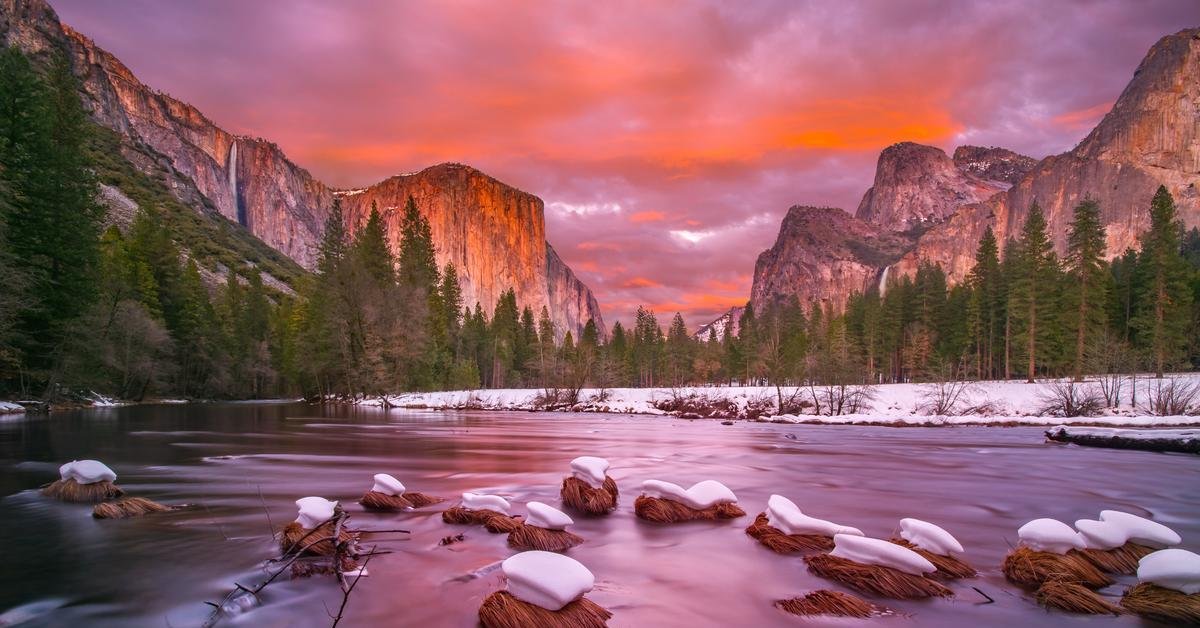
Tunnel View is on Highway 41 just east of the Wawona Tunnel, and it frames Bridalveil Fall, El Capitan, and Half Dome in one stop. Glacier Point Road leads 16 miles to Glacier Point, where you look down on the valley from roughly 3,200 feet above; Sentinel Dome adds a 2.2-mile round trip with a 360-degree view. Mariposa Grove has about 500 mature giant sequoias, and the Grizzly Giant Loop is a moderate 2-mile walk. Tioga Road is a seasonal drive, not a year-round shortcut, so check conditions before committing.
Maya’s honest take: Skip Tioga Road if you only have one day. The drive is beautiful, but you will spend three hours in the car for every hour on trail, and the Valley’s best short walks deserve that time more.
Best for
- Tunnel View: first photo, no hiking required, open year-round
- Glacier Point: Half Dome panorama, sunset, Sentinel Dome add-on
- Mariposa Grove: giant sequoias, family-friendly loop, South Entrance access
- Tioga Road: Tenaya Lake, Olmsted Point, Tuolumne Meadows in summer and fall
Worth considering
- Hetch Hetchy for a quieter reservoir hike, but it is a detour from the Valley
- Wawona for history and the Meadow Loop Trail, not a headline viewpoint
- Downside: Glacier Point Road and Tioga Road close in winter, and summer parking at Glacier Point fills early
Where should you stay for Yosemite National Park?
Stay inside Yosemite Valley if you want to walk to trailheads and accept high prices and months-ahead booking; stay in El Portal or Mariposa on Highway 140 for the most reliable year-round access; stay in Oakhurst or Fish Camp for the South Entrance and Mariposa Grove; and stay in Groveland for Big Oak Flat and Highway 120.
In-park lodging and campgrounds are the only way to avoid a daily entrance queue, but they are limited and expensive. For a first-timer, the trade-off is simple: pay more to sleep close, or drive 30 to 60 minutes each way and start earlier. Mariposa is a practical base for Arch Rock and the Merced River corridor, and it has more restaurant choice than El Portal.
If you are booking a room near Yosemite, compare hotel rates on Booking.com for gateway towns and check Agoda for West Coast inventory. For family or group stays, Vrbo rentals can beat hotel rooms on space, but verify the drive time to your chosen entrance.
Maya’s honest take: The mistake I see most is booking a “Yosemite” hotel that is actually 90 minutes from the Arch Rock entrance. Check the drive time to your specific entrance, not the distance to the park boundary on a map.
Best for
- Yosemite Valley: zero commute, walk to trails, book 6 to 12 months ahead
- El Portal / Mariposa: Arch Rock access, year-round reliability, restaurant choice
- Oakhurst / Fish Camp: South Entrance, Mariposa Grove, Fresno airport access
- Groveland: Big Oak Flat and Highway 120 West, Bay Area approach
Worth considering
- Wawona inside the park’s south side for Mariposa Grove proximity, but check current hotel status
- Lee Vining on the east side only when Tioga Pass is open; otherwise the drive is hours longer
- Downside: gateway-town motels can cost as much as city hotels in summer, and quality varies; read recent reviews on TripAdvisor before booking
What mistakes do first-timers make in Yosemite National Park?
The most common first-timer mistakes are arriving after 9 a.m. on a summer weekend, assuming Tioga Road is open in winter, forgetting that entrance stations are cashless, skipping the non-resident fee math, and treating Half Dome as a casual hike.
Mistake 1: Arriving late and circling for parking
Yosemite Valley parking fills early, especially at trailheads and major viewpoints. Fix: enter before 8 a.m., or visit on a weekday. The park’s own guidance encourages weekday visits for lower congestion.
Mistake 2: Assuming cash works at the gate
Yosemite does not accept cash at entrance stations. Fix: buy a digital pass on Recreation.gov before you arrive, or bring a credit card. Digital passholders may sometimes get a priority lane.
Mistake 3: Driving Tioga Road in winter
Tioga Road typically closes by early November and reopens in late May or June. Fix: check the NPS current conditions page the morning you plan to drive it, and do not route from Mammoth Lakes to the Valley without confirming it is open.
Mistake 4: Paying the non-resident fee without doing the pass math
Three or more non-resident adults in one car usually save money with the $250 Non-Resident America the Beautiful pass. Fix: calculate the total before you leave home and buy the pass online if it wins (verify current pricing on the official site).
Mistake 5: Treating Half Dome as a walk-up hike
Half Dome cables require a permit, and day-hiker permits come from a March preseason lottery or a two-days-ahead daily lottery. Fix: apply in March if you know your dates, or set a reminder for the daily lottery and have a backup hike.
Mistake 6: Expecting waterfalls in late summer
Yosemite Falls and Bridalveil Fall are strongest in spring and may trickle by late summer. Fix: if waterfalls are the priority, book May or June, and check recent visitor reports before you commit.
Mistake 7: Booking a hotel without checking the entrance drive
A hotel can be inside the park boundary and still be an hour from the Valley. Fix: map the drive time to your specific entrance and to your first planned stop, not to the park’s center point.
Frequently asked questions
How much does it cost to enter Yosemite National Park?
A private vehicle pass is $35 for seven days, and non-US residents aged 16 and over pay an extra $100 per person. A motorcycle pass is $30, and a walk-in or cyclist pass is $20 (confirm current fees on the NPS fees page).
Do I need a reservation to enter Yosemite this year?
No, Yosemite does not require an entrance reservation in 2026, according to the NPS. Check the NPS reservations page again close to your travel dates, because the policy can change between seasons.
Is the $250 Non-Resident America the Beautiful pass worth it?
It is worth it for three or more non-resident adults in one vehicle, or for a trip that includes other federal recreation sites within twelve months. One non-resident adult pays $135 at the gate; the pass is $250 and waives the $100 fee (verify current pass pricing on the official site).
Which airport is closest to Yosemite National Park?
Fresno-Yosemite International (FAT) is about 1.5 hours from Wawona and 2.5 hours from Yosemite Valley. Merced (MCE) is about 2 hours from the Valley and has year-round YARTS bus service. Mammoth Yosemite (MMH) is close only when Tioga Road is open.
Can you see Yosemite in one day?
You can see Tunnel View, a Valley loop, and one short walk in one day, but not Tioga Road, Glacier Point, and Mariposa Grove together. One day is not enough for Half Dome or a relaxed high-country visit.
When is Tioga Road open in Yosemite?
Tioga Road typically opens in late May or June and closes by early November, depending on snowpack. It is a seasonal route, not a year-round shortcut, so check the NPS current conditions page before relying on it.
Do you need a permit for Half Dome?
Yes, when the cables are up, normally late May through mid-October. Day hikers apply in the March preseason lottery or a daily lottery two days before the hike. The permit costs a $10 application fee plus a per-person fee (confirm current fees on Recreation.gov).
Are there free entrance days at Yosemite?
The NPS lists fee-free days, but they apply to US citizens and residents. Non-US residents still pay the $100 per-person fee on those days unless they hold a qualifying pass (confirm the current fee-free day list and non-resident rules on the NPS site).
Can you enter Yosemite without a car?
Yes, YARTS buses connect Merced, Fresno, and Mammoth Lakes to Yosemite, with year-round service from Merced and seasonal service on other routes. Once inside, the Valley shuttle covers major stops, but reaching Glacier Point or Tioga Road without a car is difficult.
Plan your trip: booking platforms we trust
I use different platforms for different jobs on a Yosemite trip. Hotels in gateway towns are best compared on Booking.com or Agoda, flights into FAT or MCE should be price-checked on Kayak, and packages that bundle flight and car sometimes win on Expedia.
Start with our hotels near Yosemite guide, check cheap flights to Fresno or Merced, and read the US national parks trip planning hub before you book anything nonrefundable. If you are visiting from outside the US, confirm US visa requirements early.
WakaAbuja does its best to keep all information accurate at the time of publishing. Prices, policies, and availability change regularly. Always verify with official sources before you travel. We are not liable for errors caused by outdated information. Travel insurance is strongly recommended.