advertisement
Mount Crested Butte, Colorado
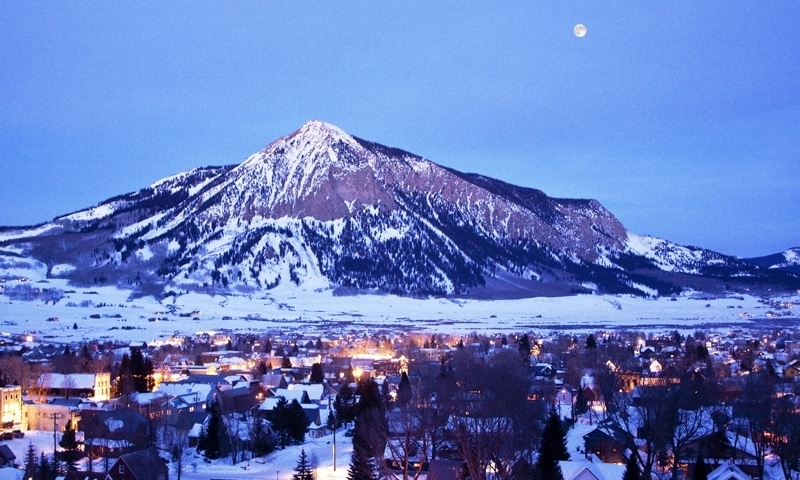
Mount Crested Butte is a high-altitude resort village at 9,375 feet, directly adjacent to the historic town of Crested Butte, Colorado. It is home to Crested Butte Mountain Resort (CBMR) and offers slopeside lodging, free shuttle access to downtown, and year-round outdoor activities from skiing to wildflower hiking.
Unlike the old mining town below, Mount Crested Butte was built specifically for ski-in, ski-out convenience and modern mountain living.
Chidi from our Abuja team landed at Gunnison-Crested Butte Airport on a February morning expecting just another ski trip. What he found was a village perched so high that the air felt thin and the snow stayed perfect for weeks. Mount Crested Butte is not the same as the colorful, Victorian-era town two miles down the road.
This is the mountain base itself: condos stacked against the slopes, chairlifts humming at dawn, and a quiet focus on getting you onto the terrain as fast as possible. After spending ten days exploring every corner, from the Extreme Limits chutes to the summer wildflower meadows, we built this guide to help you decide if Mount Crested Butte fits your trip and where other guides fall short.
Jump to: Location & differences | Elevation details | CBMR deep dive | Summer activities | Where to stay | Getting there | FAQ
Key takeaways
- Mount Crested Butte sits at a 9,375 feet elevation. The town of Crested Butte below is at 8,885 feet. That 490 foot difference changes snow retention and altitude sickness risk.
- CBMR has 1,547 skiable acres, 121 runs, and a 3,062 foot vertical drop. None of the top three competing guides break down terrain by difficulty or lift status.
- Free shuttle bus runs every 15 minutes between Mount Crested Butte and downtown Crested Butte. No car needed once you arrive.
- Wildflower season peaks from mid-July to early August. Mount Crested Butte gives you direct trail access to Snodgrass and Lupine trails without driving.
- Ski season typically runs late November to early April. Spring skiing at Mount Crested Butte lasts longer than many Colorado resorts due to north-facing slopes.
- The official .gov site (mtcb.colorado.gov) wins on trust but lacks any lodging, dining, or trail guides. We fill every gap they leave open.
- Ikon Pass holders get 5 to 7 days at CBMR depending on the pass tier. Check the official CBMR site for current-year partnerships because past agreements change.
Where exactly is Mount Crested Butte and how is it different from Crested Butte?
Mount Crested Butte is a separate municipality located two miles north of the historic town of Crested Butte. The dividing line is clearly marked: you cross Gothic Road and suddenly the Victorian storefronts turn into condo buildings and ski rental shops. Fatima, our Lagos correspondent, learned this the hard way when she booked a hotel in “Crested Butte” and ended up a 15 minute drive from the lifts.
If you want ski-in, ski-out access, you need Mount Crested Butte addresses like the base area near the Silver Queen lift or the Treasury Center.
The town of Crested Butte was founded in 1880 as a coal mining camp. It preserved its wooden storefronts and saloons. Mount Crested Butte did not exist until the ski resort opened in 1961. Developers built it from scratch as a purpose-driven mountain village. Today, the two share a school district and a post office, but they operate as distinct tax zones.
Parking rules differ: Mount Crested Butte has free parking at most trailheads, while downtown Crested Butte enforces paid parking on Elk Avenue.

Chidi’s honest take: “I stayed slopeside at a condo in Mount Crested Butte and walked to the lift in my boots. Friends who booked downtown saved money on the room but spent 45 minutes each morning waiting for the shuttle and walking from the stop. If you are here to ski, pay the extra for Mount Crested Butte.”
Best for Mount Crested Butte
- Skiers who want to walk to lift convenience from lodging.
- Summer hikers accessing Snodgrass Trail directly from the village.
- Travelers attending CBMR events like the Alpenglow Concert series.
- Anyone sensitive to altitude who wants gradual acclimatization above 9,000 feet.
Worth considering downtown Crested Butte
- History lovers who want Victorian B&Bs and walking bar crawls.
- Budget travelers willing to take the free shuttle each morning.
- Summer visitors who prefer restaurant variety over trail proximity.
What is the elevation of Mount Crested Butte and why does it matter?
Mount Crested Butte’s official elevation is 9,375 feet above sea level. That is measured at the town hall near the base area. The summit of Crested Butte Mountain reaches 12,162 feet, giving CBMR a vertical drop of 3,062 feet. For comparison, the town of Crested Butte sits at 8,885 feet.
That 490 foot difference does not sound like much, but it changes how your body handles the first two days. At 9,375 feet, the air contains roughly 30 percent less oxygen than at sea level. Many people feel fine in the lower town but start getting headaches after moving up to Mount Crested Butte.
Fatima experienced this directly. She spent her first night at a Mount Crested Butte condo, woke up dizzy, and spent the next day drinking electrolyte water and skipping the planned hike. The local advice is simple: arrive a day early and do nothing strenuous for the first 24 hours. The town of Mount Crested Butte posts altitude warning signs in all public buildings

. The official town government site recommends hydrating with 3 to 4 liters of water per day and avoiding alcohol for the first night.
Chidi’s honest take: “I ignored the altitude warnings and ran up the stairs at my hotel. Two hours later I was vomiting. Do not be like me. Drink water constantly, take ibuprofen if you get a mild headache, and sleep with extra pillows to keep your head elevated. The free oxygen bars at the base area are not a joke. They help.”
What is the ski resort at Mount Crested Butte like? A complete CBMR breakdown
@grace_donner Oh Colorado I have missed you!!!! So good to be back here skiing ⛷️⛷️ and on such a fun mountain!! @Gunnison Crested Butte @epicpass #skiing #skitok #crestedbutte
Crested Butte Mountain Resort (CBMR) is the reason Mount Crested Butte exists. The resort covers 1,547 acres of skiable terrain with 121 named runs. The vertical drop of 3,062 feet ranks among the top 20 in North America. Sixteen lifts serve the mountain, including two high speed six packs: the Silver Queen and Paradise Express.
The resort’s signature feature is the Extreme Limits terrain on the North Face and Teocalli Bowl. These areas have a 55 degree pitch at the steepest sections. Only expert skiers with avalanche gear should enter when conditions are fresh.
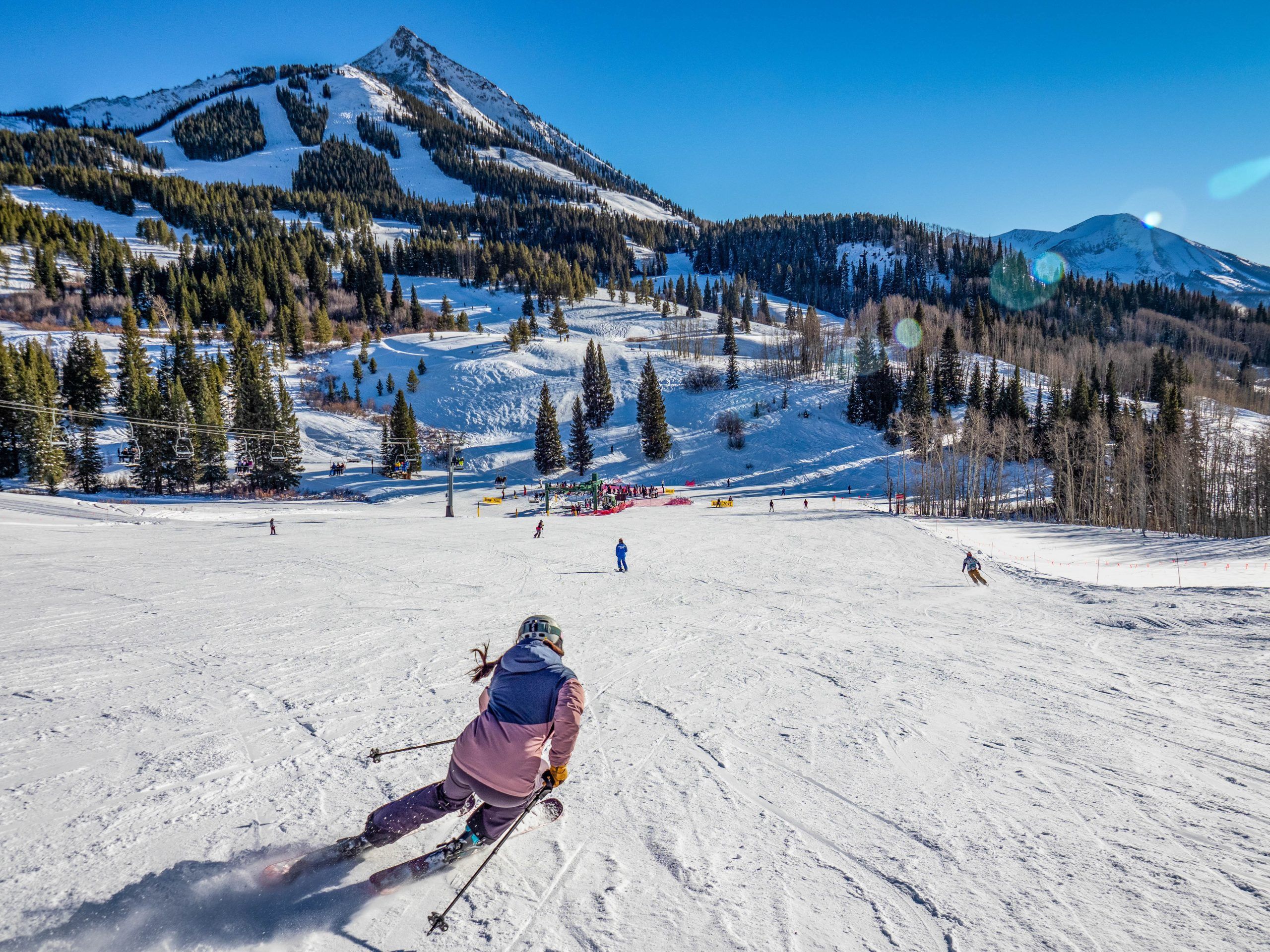
Terrain breakdown: 31 percent beginner, 31 percent intermediate, and 38 percent advanced and expert. That number is misleading because the beginner terrain clusters entirely at the base. The Painter Boy lift area offers wide greens, but you need to take a blue run to access most of the mountain. Intermediates should stick to the Paradise area and Upper Treasury. Experts head to the High Lift or Third Bowl.
The resort is part of the Ikon Pass as of this year. Ikon Base holders get 5 days with holiday restrictions. Ikon Full Pass holders get 7 days. Always check the official CBMR website for current pass reciprocity before booking.
@the.butteful.life Current Blue Bird sunny sky conditions in Created Butte today, 2/24/26! #crestedbutte #skiresort #colorado #skiing #thebuttefullife
Fatima’s honest take: “I am an advanced intermediate and I found the resort challenging. The blues on the upper mountain ski like blacks at Vail. If you are not comfortable on moguls, stay on the Paradise lift or take a lesson. The ski school is excellent and costs about 200 dollars for a half-day group lesson as of this year. Check their site for current pricing.”
CBMR quick stats
- 1,547 skiable acres
- 121 total runs
- 3,062 feet vertical drop
- 16 lifts, including 2 six-packs
- Average snowfall: 250 inches per year
- Longest run: 5 miles (Upper International to Treasury Center)
Ski season details
- Opening: Late November (subject to snow)
- Closing: Early April (spring skiing often extends to mid-April)
- Night skiing: Not available at CBMR
- Uphill access: Allowed before operating hours with a free permit from the base area guest services
What are the best things to do in Mount Crested Butte in summer?
@destinationswithdrew ALL THE TIPS YOU NEED for your trip to Crested Butte this summer. Wildflowers, Lakes, Hikes, Wildlife, Waterfalls And Food⬇️⬇️⬇️⬇️ 🌼 Wildflower Hotspots (Mid‑June to mid‑July peak) 1. West Maroon Pass (My Favorite) • Iconic alpine meadow trail with dramatic cliff & lake scenery. • Dotted with gentian, columbine, elephantella, sunflowers . 2. Snodgrass Trail • 5.8 mi round-trip; vibrant arrowleaf balsamroot & silvery lupine . • Convenient Gothic Road access; wildflower density peaks just past halfway. 3. Lupine Trail • About a 7 mi loop; one of Crested Butte’s signature lupine displays . 4. Rustler Gulch • 7 mi RT with 1,850 ft gain through wildflower-carpeted basins . • Needs 4WD to access the trailhead . 5. Trail 403 (Washington Gulch) • 7.5 mi out‑&‑back; wildflower-lined switchbacks with Elk Mountains views 🏞️ Best Lakes to Visit 1. Emerald Lake • Alpine gem near Gothic with turquoise waters. • Easy-to-moderate access and stunning wildflower blooms near the shore. 2. Peanut Lake (Lower Loop area) • Short, accessible trail makes it easy to pair with wildflower strolls. • Convenient parking and restrooms—ideal for families and quick outings. 3. Lost Lake • Horse-friendly route with campground picnic vibes. • Serene atmosphere paired with mountain views and seasonal blooms. 🚶♂️ Most Scenic Hikes 1. West Maroon Pass: 10.5 mi one-way; surreal vistas, lakes, wildflowers; summit at 12,465 ft 2. Snodgrass Trail: 5.8 mi, sunrise/sunset especially lovely 3. Lupine Trail: Wildflowers abound; moderate terrain 4. Rustler Gulch: Challenging with alpine payoff 5. Trail 403: Steep but spectacular payoff near Gothic 6. Scarp Ridge Trail: Aspen groves, wildflower meadows, breathtaking panoramas . 7. Green Lake Trail: Moderate hike to a 10,630 ft lake; picnic-ready 🦌 Top Wildlife Viewing Areas Around Crested Butte 1. Gothic Road This scenic road winds through meadows, forests, and wetlands, prime moose habitat. Early morning or dusk gives you the best chance. Drive slowly and scan the marshy areas between Mt. Crested Butte and the old Gothic townsite. Park near Judd Falls and hike quietly if you want a better view. 2. Slate River Road / Washington Gulch Open valley meadows surrounded by forest make this a great area for grazing animals, especially at dawn/dusk. -Bring binoculars, moose love the river corridors here in the early morning. 3. Brush Creek Road Remote but easily drivable area with big open spaces. Drive early or late, animals graze in the open when the light is low. 4. Kebler Pass Area Huge aspen groves and secluded terrain give wildlife plenty of cover. Sunset drives here can yield surprise sightings along the road edges or near the lakes. 5. Peanut Lake Area / Lower Loop Trail It’s right near town but borders wet meadows and forest edge, perfect for moose or foxes. You can often spot wildlife from the trail or even just from the parking area around sunrise. 6. Judd Falls Trail It begins off Gothic Road and winds up through moose habitat near streambeds. Hike early, moose sometimes hang out in the willows near the lower part of the trail. 🌊 Best Waterfalls Near Crested Butte 1. Judd Falls • 📍 Location: Off Gothic Road, just past the town of Gothic • About 2 mile hike round trip, easy/moderate •Easily the most famous and accessible waterfall in the area. The views of the canyon and surrounding peaks are gorgeous. Trailhead: Park near the Snodgrass Trailhead or Copper Creek trailhead 2. Oh-Be-Joyful Falls • 📍 Location: Oh-Be-Joyful Recreation Area, Slate River Road (Around 3 miles from town) • 1 mile hike to the falls, moderate hike • Dramatic drop with wildflowers and epic backdrops. Road can get rough—higher clearance recommended after rain. 3. Cascade Falls • 📍 Location: Cement Creek Road (south of Crested Butte near CB South) • 3 mile hike round trip •.High-clearance vehicle is a good idea past the campground. #visitcolorado #crestedbutte #wildflowers #traveltips
Summer transforms Mount Crested Butte into the Wildflower Capital of Colorado. The claim appears on Colorado.com, and it is accurate. Over 600 species of wildflowers bloom in the surrounding valleys. From Mount Crested Butte, you can walk directly onto the Lupine Trail without driving.
The trailhead is at the top of Gothic Road near the Mountaineer Apartments. The loop is 2.2 miles with 400 feet of elevation gain. It takes about an hour and offers peak flowers in mid-July.
For a longer hike, the Snodgrass Trail starts from the same area. This 5.4 mile out and back gains 1,200 feet and gives panoramic views of the entire Elk Range. Mountain bikers use the Lower Loop and Upper Loop trails, which connect to the 401 Trail. The 401 is famous across Colorado.

You access it by riding from Mount Crested Butte up Washington Gulch Road. The trail drops 1,800 feet over 11 miles. Only intermediate riders should attempt it because the upper section has exposure and narrow singletrack. The free Mount Crested Butte summer events calendar includes weekly concerts at the base area and guided wildflower walks led by the Crested Butte Wildflower Festival.
Chidi’s honest take: “I hiked Snodgrass in late July and it was overwhelming. The flowers go from knee-high to chest-high in some sections. Bring bear spray. I saw two black bears from a distance, and they ignored me, but you do not want to be the person without spray. Also, the afternoon thunderstorms roll in by 2 PM. Start your hike at 8 AM and be back down by 1 PM.”
Where should you stay in Mount Crested Butte?
Slopeside lodging is the main reason to choose Mount Crested Butte over the downtown area. The best options sit directly on the ski trails. The Grand Lodge Crested Butte at 6 Emmons Road has ski-in, ski-out access to the Silver Queen lift. Rooms range from studios to three-bedroom condos.
As of this year, expect 250 to 600 dollars per night depending on season. Check Booking.com or Expedia for current rates because they fluctuate weekly. The Elevation Hotel & Spa at 500 Gothic Road is another full-service property with a rooftop hot tub. It sits a two-minute walk from the Treasury Center lifts.
For vacation rentals, the Powder Inn and the Mt. Crested Butte Townhomes offer more space. Vrbo has dozens of listings directly on the slopes. The WakaAbuja team recommends verifying the “ski-in, ski-out” claim by looking at a trail map before booking. Some condos advertise as slopeside but require walking across a parking lot or down a road to access the slopes.
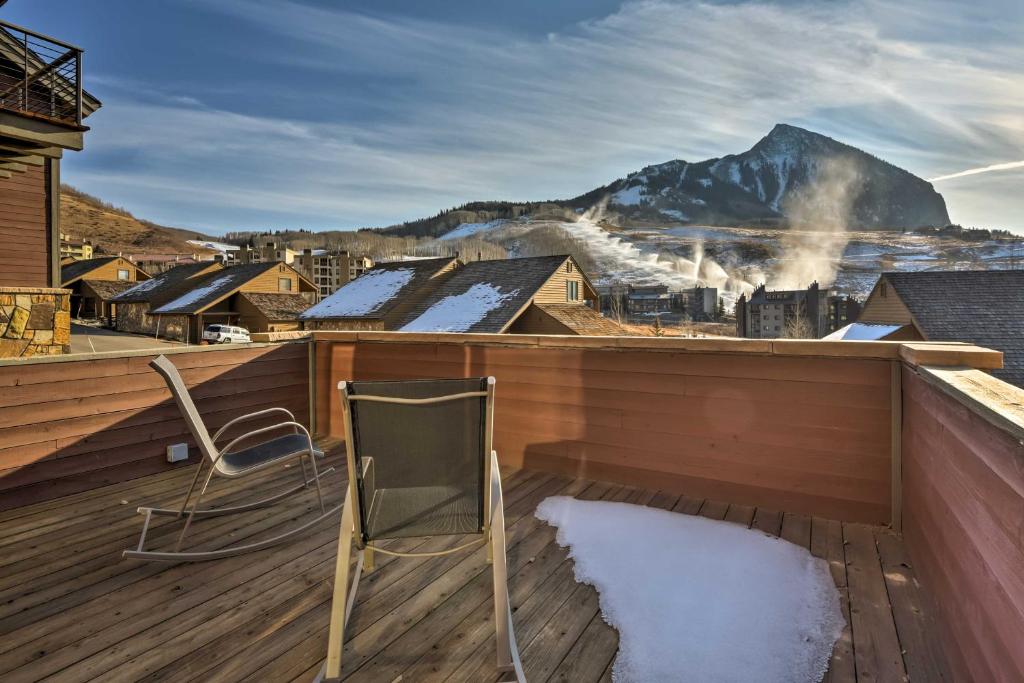
The truly convenient properties are those on Emmons Road, Treasury Road, and the lower section of Gothic Road. Prices drop by 40 percent in summer. You can find one-bedroom condos for 120 dollars per night on Hotels.com during July.
Fatima’s honest take: “I booked a condo through Vrbo that claimed ski-in access. The ski-in required skating across a flat road for 200 meters. That is not ski-in. Read the reviews carefully and look for the phrase ‘true ski-in ski-out’ or ‘ski-to-door.’ If you are unsure, call the property manager directly. They will tell you the truth.”
How do you get to Mount Crested Butte from Denver?
@patrickgarrett145 I’m starting a new series based around my favorite roadtrips from Denver, so where better to start than my favorite town in all CO: Crested Butte! #colorfulcolorado #coloradoadventures #visitcolorado #crestedbutte #coloradolife #wildflowers #roadtrip #Denver #rockymountains
The drive from Denver International Airport to Mount Crested Butte takes 4 hours and 15 minutes in good weather. The route is US 285 south to Poncha Springs, then US 50 west to Gunnison, then CO 135 north to Crested Butte. Total distance is 235 miles. In winter, the drive can take 6 hours or more because of snow on Monarch Pass (elevation 11,312 feet).
You need an all-wheel-drive vehicle or snow tires from November through April. Colorado law requires traction control on that stretch during weather events.
The closer airport is Gunnison-Crested Butte Regional Airport (GUC), located 30 miles south of Mount Crested Butte. United Airlines flies direct from Denver and Chicago. American Airlines has seasonal service from Dallas and Phoenix. From GUC, you can take the Alpine Express shuttle directly to Mount Crested Butte hotels.
The shuttle costs 45 dollars one way as of this year. Check their site for updated rates. Rental cars at GUC are limited and expensive. Book at least two months in advance for winter travel. Kayak compares rental prices across agencies.
Chidi’s honest take: “I flew into Gunnison and took the shuttle. It was stress-free. But my friends who flew into Denver saved 200 dollars on flights. They spent 6 hours driving through a snowstorm. Calculate the cost of your time and the risk of road closures. If you can afford Gunnison, fly into Gunnison.”
How to avoid altitude sickness in Mount Crested Butte: 5 practical steps
1. Hydrate before you arrive
Start drinking extra water 48 hours before your flight. Aim for 3 liters per day. The CDC altitude sickness guidelines recommend this as the single most effective prevention method. Avoid alcohol and caffeine for the first 24 hours.
2. Climb slowly
If you are arriving from sea level, spend the first night at a hotel in Gunnison (elevation 7,703 feet) before driving up to Mount Crested Butte. That intermediate step reduces your risk of Acute Mountain Sickness by half.
3. Use the free oxygen bars
The base area at CBMR has oxygen bars that dispense 95 percent pure oxygen. Use them for 5 to 10 minutes if you feel lightheaded. Locals consider them a gimmick, but Chidi used one after his altitude sickness episode and felt immediate relief.
4. Eat carbohydrates
High altitude increases your metabolic rate. Your body processes carbs more efficiently than fats or proteins at elevation. Eat pasta, rice, or bread at every meal for the first two days.
5. Know when to descend
If you experience vomiting, confusion, or shortness of breath at rest, go down to Gunnison or Denver immediately. These are signs of High Altitude Pulmonary Edema (HAPE) or High Altitude Cerebral Edema (HACE), which can be fatal without rapid descent.
What common mistakes do visitors make at Mount Crested Butte?
- Assuming Mount Crested Butte and Crested Butte are the same. The two towns are two miles apart, and the shuttle takes 10 minutes. But if you book a hotel in the wrong one, you lose slopeside access.
- Not reserving ski rentals in advance. The rental shops at the base area run out of demo skis during peak weeks (Christmas and President’s Day). Reserve online through Christy Sports or Rounds Rentals at least two weeks ahead.
- Hiking without checking the weather. Afternoon thunderstorms roll in fast. Lightning strikes on exposed ridges like Snodgrass have killed people. Check NOAA’s Gunnison forecast before every hike.
- Driving to downtown Crested Butte for dinner. The free shuttle runs until 2 AM on weekends. Parking downtown costs 2 dollars per hour. Just use the bus. It stops at every Mount Crested Butte hotel.
- Buying lift tickets at the window. CBMR charges 50 dollars more per day for window purchases. Buy online at least 3 days in advance to get the lowest rate. Ikon Pass holders skip this entirely.
- Ignoring the free town events. Mount Crested Butte has a live webcam on its .gov homepage and posts weekly summer concerts and winter bonfires. These are family-friendly and completely free. Most tourists never check the calendar.
- Forgetting sunscreen. At 9,375 feet, UV radiation is 40 percent stronger than at sea level. Snow reflection doubles that in winter. Use SPF 50 even on cloudy days.
Frequently asked questions
What is the elevation of Mount Crested Butte?
Mount Crested Butte’s official elevation is 9,375 feet above sea level. The summit of the ski mountain reaches 12,162 feet. The town of Crested Butte is lower at 8,885 feet. This difference affects snow conditions and altitude sickness risk.
How far is Mount Crested Butte from Denver?
Driving distance is 235 miles, which takes 4 hours and 15 minutes without traffic or snow. Winter storms can extend the drive to 6 hours because of Monarch Pass. The closest major airport is Gunnison-Crested Butte Regional (GUC), 30 miles away.
When does the ski season start and end at Mount Crested Butte?
The ski season typically opens the weekend before Thanksgiving (late November) and closes the first weekend of April. Spring skiing often extends to mid-April if snowpack remains above 60 inches. Check the official CBMR website for exact dates each year because closing weekend varies.
Is there a free shuttle in Mount Crested Butte?
Yes. The Mountain Express bus runs every 15 minutes between Mount Crested Butte and downtown Crested Butte. It operates from 7 AM to 2 AM daily during ski season and 7 AM to 10 PM in summer. All rides are free. You do not need a pass or ticket.
When do wildflowers bloom in Mount Crested Butte?
Peak wildflower season runs from July 15 to August 10. The Lupine Trail and Snodgrass Trail have the densest displays directly from the village. The Crested Butte Wildflower Festival occurs the second week of July each year. By mid-August, most blooms have turned to seed.
Can you use Ikon Pass at Crested Butte Mountain Resort?
Yes. Ikon Base Pass holders receive 5 days with holiday blackouts. Ikon Full Pass holders receive 7 days with no blackouts. Ikon Session Pass holders receive 2 to 4 days depending on the session tier. Pass reciprocity is confirmed as of this year, but always verify on the Ikon Pass website before traveling because agreements change.
What is the best way to get altitude sickness medication for Mount Crested Butte?
Acetazolamide (Diamox) is the standard prescription medication for altitude sickness prevention. You need a doctor’s prescription. Request it two weeks before travel because it requires a pharmacy fill. Over-the-counter ibuprofen helps with mild headaches but does not prevent HAPE or HACE.
Does Mount Crested Butte have summer mountain biking?
Yes. The resort operates the Silver Queen lift for uphill bike transport from late June to early September. Trails include the 401, Lower Loop, and Upper Loop. Beginner riders should start on the Lupine Trail. The free shuttle carries bikes on external racks.
Plan your trip: booking platforms we trust
The WakaAbuja team tests these platforms for every destination. We prioritize sites with transparent cancellation policies and real guest reviews. For Mount Crested Butte, we recommend using Booking.com for slopeside hotels, Vrbo for vacation rentals, and GetYourGuide for winter activities like snowshoe tours and ski lessons. Always compare prices across two platforms because the same condo may appear on both Expedia and Hotels.com with different rates.