advertisement
Trip to Scottish Borders: All You Must Know Before You Go
A trip to the Scottish Borders rewards you with ruined abbeys, rolling hills, and the wild North Sea coast, all just an hour south of Edinburgh.
You will need at least three full days to explore Melrose, Kelso, and the Tweed Valley, ideally by car, though the Borders Railway links Edinburgh to Tweedbank in under an hour. Pack layers and a waterproof jacket no matter the season; the weather can flip from sunshine to sideways rain in ten minutes.
When I first searched for a proper plan for a trip to the Scottish Borders, the official tourism page gave me just a handful of photos and a few hotel links. It was frustrating.
That is exactly why we built this guide. I am Chidi, part of the WakaAbuja team, and after three separate trips exploring every abbey ruin, coastal path, and forest track, I can promise you there is a lot more to the Borders than a quick day trip from Edinburgh. This article gives you an actual day-by-day itinerary, honest logistics, and the practical details none of the top-ranking pages bother to include.
Jump to: When to go | How to get around | Where to base yourself | 3-day itinerary | Top sites & landmarks | Mistakes to avoid | Budget guide | FAQs | Plan your trip
Key takeaways
- A rental car is close to essential. Public buses exist but Sunday services are threadbare.
- Melrose is the perfect base for abbey-hoppers; Kelso works best for castle lovers and foodies.
- The Borders Railway from Edinburgh to Tweedbank is a scenic, low-hassle alternative for car-free travelers willing to mix rail with bikes or taxis.
- Do not skip the Berwickshire coast. St Abb’s Head feels more like the Isle of Skye than the Scottish mainland and you will have it nearly to yourself outside August.
- Historic Environment Scotland sites (Melrose, Jedburgh, Dryburgh) close earlier in winter, often by 4 p.m. Time your visits or you will be locked out.
- Common Ridings festivals swallow up accommodation in towns like Hawick and Selkirk from May to July. Book months ahead.
- A three-day itinerary lets you taste the abbeys, one grand castle, a forest walk, and the coast without rushing. Five days is the real sweet spot.
When is the best time to visit the Scottish Borders?
The sweet spot is late May through early July and September. Days are long, the heather is starting to color the hills, and you beat the worst of the Edinburgh Festival overflow. I have had whole sections of Melrose Abbey to myself on a weekday in early June. Late autumn brings fiery beech woods along the River Tweed but also reliable wetness.
According to Met Office averages, the eastern Borders get roughly 140 rainy days a year, with October typically the wettest month. Expect temperatures of 14 to 19 °C in summer, dipping to near freezing overnight in winter.
Winter is not a write-off. The abbeys in frost and low sun are spectacular, and hotel prices tumble. Fatima, our Lagos correspondent, visited in February and swore by the dramatic light at Dryburgh Abbey, but she also warned that many small cafés in places like Jedburgh shut entirely for the season. If you plan to eat in market towns, always phone ahead between November and March.
Chidi’s honest take: “I will never again try to drive the A68 over the Cheviots in a hailstorm. The weather can flip in 15 minutes. Keep a puffer jacket and waterproof trousers in the boot even in August.”
Best months
- June: Long daylight, abbey gardens in bloom, Common Ridings season kicks off.
- September: Harvest colors, quieter trails, still mild enough for coastal walks.
- Early May: Bluebells in woodlands, cheaper room rates, very few midges.
Worth considering
- October: Best autumn color but highest rainfall. Pack two pairs of boots.
- December-February: Crisp ruins, low prices, but many attractions close early.
How do you get to the Scottish Borders and get around?
The quickest way in is the Borders Railway from Edinburgh Waverley to Tweedbank. Trains run roughly every half-hour on weekdays, and the journey takes just under an hour. From Tweedbank you can reach Melrose on foot in 25 minutes or hop on a Borders Bus. However, the railway stops dead at Tweedbank.
For anywhere else, you will need wheels or patience. I tried a bus-only trip once and spent half a day waiting for the 51 from Kelso to Jedburgh on a Sunday. Never again.
A rental car gives you the freedom to chase light to Scott’s View at dawn or detour up the B709 to Traquair without looking at a timetable. The main roads, the A68 north-south spine and the A7 through Galashiels and Hawick, are straightforward. Smaller lanes around St Mary’s Loch can be single-track with passing places.
Compare car hire deals on Kayak before you land to lock in a compact SUV; the extra clearance helps on potholed farm tracks. Borders Buses covers 30+ routes, but Sunday services operate at a fraction of the weekday timetable. You can plan journeys on the Borders Buses app; just do not trust it if the bar shows a tiny phone signal icon next to a hill symbol.
@simion.pisten Driving thru the historical Scottish Borders routes is a very unique experience for which I’m super grateful 🏴
Best for flexibility
- Hire car: Essential for the coast and rural abbeys. Book via Expedia packages that bundle flight and car.
- Rail plus cycle: The Borders Railway allows bikes. Ride from Tweedbank to Melrose and along the Tweed cycle route.
Worth considering
- Borders Buses: Maxi day ticket gives unlimited travel on most routes, but the network is sparse beyond town corridors.
- Taxi services: Local firms like A1 Taxis in Galashiels cover transfer gaps. Agree on a fare before you get in.
Where should you base yourself for a trip to the Scottish Borders?
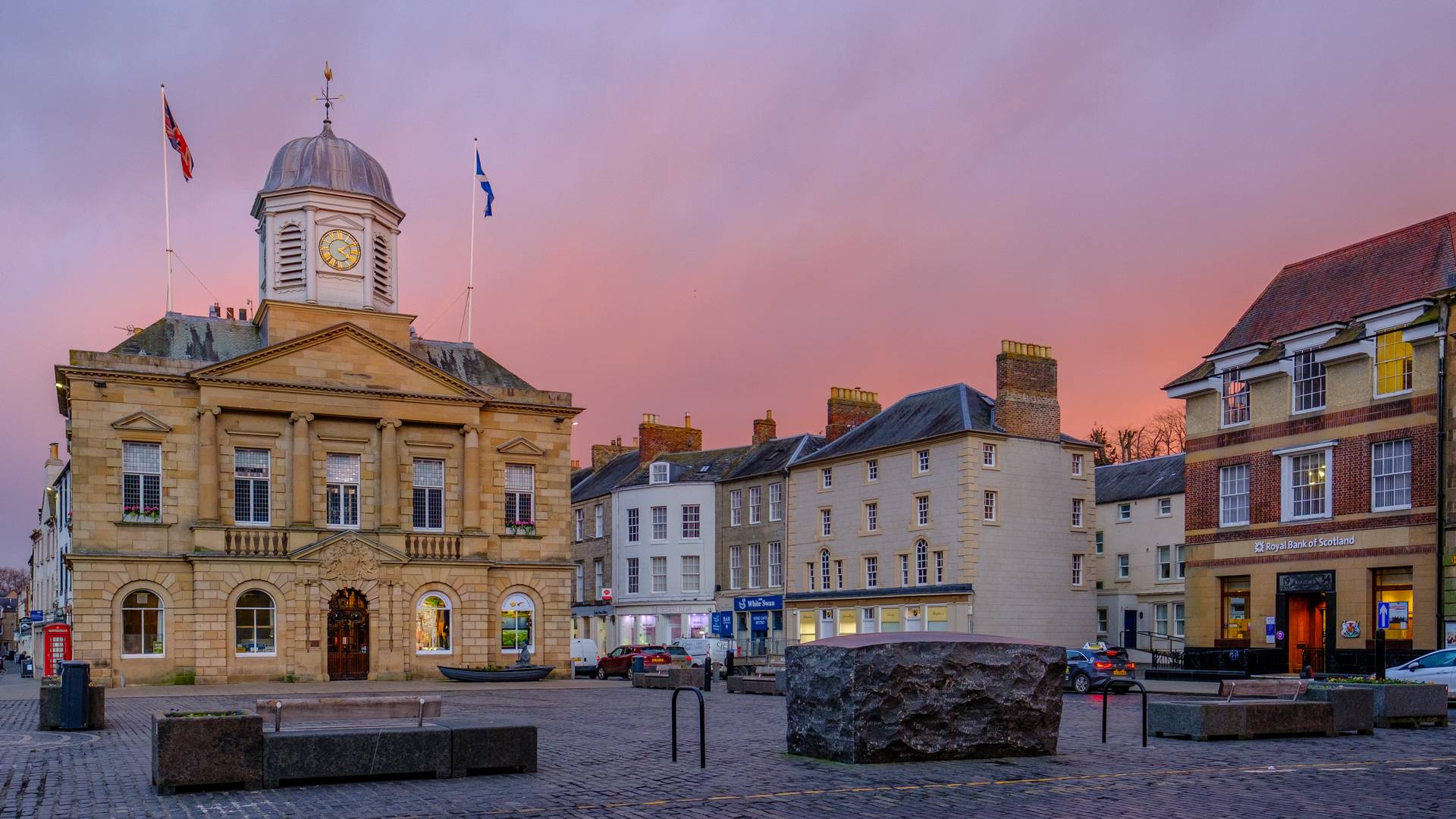
Melrose is the natural hub. It sits on the Tweed, has the finest abbey in the region, and has a cluster of decent independent cafés, and you can walk up the Eildon Hills straight from your B&B. Kelso, 20 minutes east, is the foodie and castle base with the magnificent Floors Castle on its doorstep.
Peebles, further west, suits mountain bikers and families heading to Glentress Forest and is a favorite weekend escape for Edinburgh locals. I have stayed in all three. Melrose won my heart because I could start the day at the abbey gates the moment they opened, then grab a flat white at a café on the square.
Fatima booked a Georgian guesthouse in Melrose on Booking.com and told me she walked to Scott’s View in the golden hour on her first evening; it cost her nothing but a bit of mud on her trainers. For families or groups wanting self-catering cottages with a garden, we consistently find well-priced options on Vrbo. Check the exact location on a map; a remote farmhouse sounds romantic until you realize the nearest pub is a 25-minute drive along an unlit lane.
@helpfulhistory 📍Scott’s view, Melrose/ Scottish Boarders slays #scotland #view #nature
Best bases
- Melrose: Abbey, Eildon Hills, cafés, easy rail access at Tweedbank.
- Kelso: Floors Castle, cobbled square, excellent butcher and deli.
- Peebles: Glentress Forest, River Tweed walks, family friendly.
Worth considering
- Jedburgh: Grand abbey, quieter town, good stopover for the coast route.
- Hawick: Textile heritage, but limited tourist infrastructure.
What does a perfect 3-day Scottish Borders itinerary look like?
This is the plan no other page gives you. Chidi drove this exact loop on a crisp May weekend and it balanced history, scenery, and food without feeling like a checklist. Adjust the pace to your own energy; the driving legs are short, never more than 40 minutes between stops.
Day 1: Abbeys, Scott’s View, and the Tweed
Start at Melrose Abbey as soon as it opens (check Historic Environment Scotland for seasonal hours). The carved stonework and the heart burial of Robert the Bruce are the highlights. Walk from the abbey through the village to Harmony Garden, a tiny National Trust for Scotland oasis with a view back to the ruins.
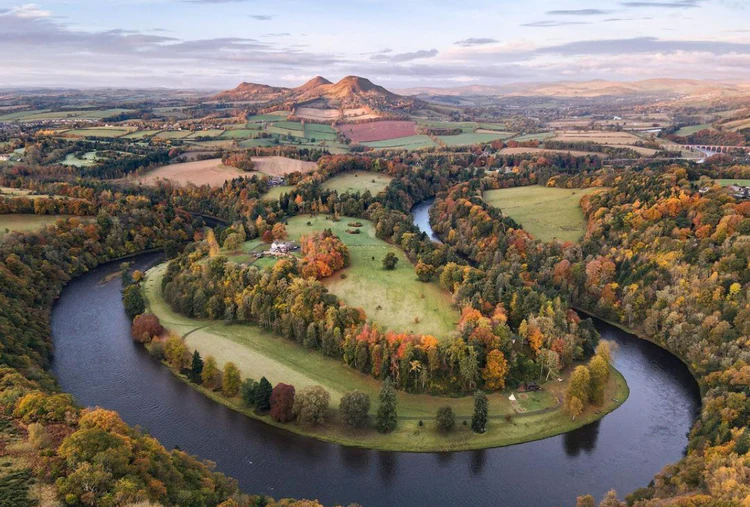
Then drive 10 minutes up to Scott’s View, the panoramic viewpoint over the Tweed valley that Sir Walter Scott loved. On a clear day you will see the three peaks of the Eildon Hills.
For lunch, pick up a sandwich and a bottle of ginger beer at a local deli in Melrose or drive to St. Boswells for the bookshop-café The Mainstreet Trading Company. In the afternoon, visit Dryburgh Abbey, just five minutes away. It is less crowded than Melrose and sits in a tranquil wooded loop of the river. End the day with a short walk across the Leaderfoot Viaduct viewpoint; the old railway bridge arches look stunning in low sun.
Day 2: Jedburgh, Kelso, and Floors Castle
Drive south on the A68 to Jedburgh Abbey, another Augustinian ruin right on the main street. The visitor center gives a good 15-minute overview. Continue to Kelso for a wander around the Flemish-influenced market square, then head into Floors Castle. This is the largest inhabited castle in Scotland and the tapestry collection inside is world-class. The grounds run down to the Tweed and make a lovely picnic spot.
After a late lunch at a Kelso café, drive 35 minutes east to the coast at St Abbs Head. The cliff-top walk to the lighthouse is a short but dramatic loop with seabird colonies. Chidi still talks about the smoked haddock chowder he had afterwards at The Craw Inn in nearby Auchencrow. In summer, book dinner ahead; the place is tiny.
Day 3: Forests, a historic house, and the Borders Railway
Devote the morning to Glentress Forest near Peebles. Even if you are not a mountain biker, the marked walking trails wind through towering Douglas firs and have excellent wayfinding. Hire a bike on-site if you feel adventurous. Afterwards, drive 20 minutes to Traquair House, Scotland’s oldest inhabited house.
@goapepeebles Movin’ and groovin’ our way through the forest with the spring vibes😎 #goapepeebles #goapetribe #scottishborders #tweedvalley #goape #adventure #outdoors #scotland #glentressforest
The brewery in the wing produces a strong ale you can taste in the courtyard. From there it is a straightforward hour back to Edinburgh on the A703, or return to Tweedbank station and take the train in to avoid city parking.
Fatima’s tip: “I grabbed a return train ticket from Edinburgh to Tweedbank on Trainline for less than £15, then used a local taxi for Dryburgh and Scott’s View. It worked perfectly for a long day.”
What are the must-see historical sites and natural landmarks?
The Borders packs four major ruined abbeys into a compact area. Together they tell the story of medieval border warfare and the Wars of Independence.
@castlesofscotland Floors Castle is the largest inhabited house in Scotland and is home to the Duke of Roxburghe. It was opened to the public by the 10th Duke in 1977. The house, as it stands today, is the product of two main phases of construction. The first, constructed between 1721 and 1726 for the 1st Duke, was from architect William Adam, and was perhaps inspired by an original design from Sir John Vanbrugh. Though Broxmouth Park, near Dunbar, seems to have been the main family residence, Floors took precedence after 1730, with the 1st Duke’s mother leading the way by moving here permanently. The stately Georgian house was constructed on a natural terrace overlooking the Tweed, looking directly south across the river to the ruins of the once mighty Roxburgh Castle on its mound, dominating the local landscape. Floors is clearly visible from the main river crossing into the town of Kelso, its distinctive sandstone façade making it stand out. The grandeur of the house and its setting prompted Sir Walter Scott to declare Floors, ‘a kingdom fit for Oberon and Titania to dwell in’. During the time of the 6th Duke, between 1836 and 1847, the Edinburgh architect William Playfair brought the original building into harmony with its landscaped park by grafting on a silhouette, as well as a number of extensions, interior redevelopments and the coach port, allowing visitors to alight from their conveyances sheltered from the elements. Following the marriage of the 8th Duke to wealthy American real estate heiress, Mary Goelet, in 1903, the castle underwent another transformation, with its Victorian interiors being lavishly remodelled. A treasure trove of artwork, tapestries, porcelain and furniture followed, with many of the state rooms being transformed to suit their new contents. #scotland #castle #scottish #fyp #visitscotland #scotlandtiktok #scottishtiktok #scotlandtravel #lovescotland #explorescotland #history #castlesofscotland #explore #beautifuldestinations #scottishborders #fy #scotlandforever #castles
Add one grand castle and one signature viewpoint, and you have the region’s core. Most visitors miss the coast entirely, but St Abb’s Head is the wild card that feels nothing like the green inland valleys.
Essential abbeys
- Melrose Abbey: The most complete and ornate. Gothic architecture with a macabre pig gargoyle playing bagpipes.
- Jedburgh Abbey: Towering nave, Romanesque roots, right in the town center.
- Dryburgh Abbey: Peaceful river setting, Sir Walter Scott’s tomb, less busy.
Worth the detour
- Floors Castle: Stately home with incredible views and a garden café.
- Scott’s View: The classic photo stop. Go at sunrise for mist in the valley.
- St Abb’s Head: Cliff walks, guillemots, and a 19th-century lighthouse.
You can book combined-entry tours on GetYourGuide that bundle Melrose and Jedburgh with a driver-guide if you would rather leave the car behind. I used one last autumn and the guide’s stories about border reivers gave the ruins far more meaning than any information panel.
What should you avoid on a trip to the Scottish Borders?
- Relying on phone signal. The valleys around the Tweed and the lanes up to St. Mary’s Loch swallow mobile data. Download offline maps in Google Maps before you leave Edinburgh.
- Ignoring abbey closing times. Most Historic Environment Scotland sites close at 4 p.m. from October to March. In summer it is 5 p.m. Double-check on their official site; I have watched families arrive at 3:45 p.m. and get turned away.
- Underestimating driving times. A 25-mile rural route can take 50 minutes behind a tractor or a caravan. Add a 20% buffer to any Google Maps estimate.
- Skipping the coast. Many visitors stick to the abbeys and miss the Berwickshire cliffs completely. The coastal path from Eyemouth to St Abbs is a highlight, and the harborside seafood shacks in Eyemouth are outstanding.
- Booking accommodation late during Common Ridings. Towns like Hawick, Selkirk, and Langholm celebrate summer ridings that fill every B&B months in advance. Check local event calendars early.
- Assuming the Borders are a quick Edinburgh day trip. You can tick Melrose and Scott’s View in a long day, but you will spend most of it in the car. Give it three nights minimum.
- Visiting with only credit cards. Small farm shops, honesty boxes, and some village bakeries still prefer cash.
How much does a trip to the Scottish Borders cost?
As of this year, a mid-range B&B double room in Melrose or Kelso runs from about £90 to £140 per night in summer, dipping to £70 in the quieter months.
A simple pub lunch with a drink will be around £16 per person, while a three-course dinner at a gastropub might reach £35. Historic Scotland explorer passes can save serious money if you plan to visit three or more abbeys and castles; check the latest pass prices on their site.
Fatima budgets roughly £120 per day for two people, staying in a modest guesthouse, eating one main meal out, and self-catering breakfast from a local farm shop. If you want a room inside a castle hotel, prices climb to £200 plus.
We use Hotels.com when we want to stack loyalty rewards on multiple stays across Scotland. For the most accurate, real-time prices, always compare across Booking.com and the property’s own website; direct booking sometimes throws in free breakfast.
How can you travel the Borders like a local?
Embrace the farm shop culture
The Borders is dotted with honesty-box stalls selling eggs, honey, and seasonal berries. Keep a few coins in the glovebox. The Philiphaugh Estate near Selkirk has a superb farm shop and café that I return to every trip.
Walk the river paths, not just the viewpoints
The Tweed Valley Forest Park has miles of waymarked trails along the riverbank that barely register on tourist maps. Pick up the free leaflet at the Glentress visitor centre. The walk from Peebles to Neidpath Castle along the old railway line is flat, shaded, and takes under two hours round trip.
Time your visit to a farmers’ market
Kelso Farmers’ Market runs on the fourth Saturday of the month, and Melrose holds a monthly market on the square. These are the places to buy Borders lamb, handmade pies, and local honey. The official Scotland Food and Drink website lists dates and vendors.
Know the sunset advantage
Scotland’s summer twilight stretches past 10 p.m. You can visit the abbeys in the late golden hour; even after they close, the external viewpoints and graveyards are often still accessible. The lighting on Melrose Abbey’s stonework at 9 p.m. in June is worth rearranging dinner for.
Frequently asked questions
Is the Scottish Borders worth visiting?
Yes, absolutely, especially if you love history, empty landscapes, and coastal walks without the crowds of the Highlands. The abbey ruins rival anything in England, and the valley of the River Tweed has a soft, pastoral beauty that surprises first-time visitors. Plus, you can be here in under an hour from Edinburgh.
How many days do you need in the Scottish Borders?
Three full days is the minimum to cover the abbeys, one castle, a forest walk, and the coast. Five days let you slow down, add a hill walk in the Eildons, and explore the western Borders around Traquair and Dawyck Botanic Garden.
Do I need a car to explore the Borders?
A car is highly recommended. You can reach Melrose by train and use local buses for a couple of days, but rural abbeys, the coast, and forest parks are poorly served. If you avoid a car, plan to mix the Borders Railway with pre-booked taxis or cycling.
What is the Borders Railway and where does it go?
The Borders Railway runs from Edinburgh Waverley to Tweedbank, with stops at Galashiels, Stow, and a handful of smaller stations. The journey takes 50 to 60 minutes and is the easiest way to reach the heart of the Borders without a car. The line ends at Tweedbank, about 1.5 miles from Melrose.
Are there any beaches in the Scottish Borders?
Yes, the Berwickshire coast has sandy coves and rocky bays around Eyemouth and Coldingham. Coldingham Bay is a favorite for families and cold-water swimmers, while the cliffs at St. Abb’s Head feel like a mini version of the Isle of Skye on a windy day.
What is the best time of year to see the heather in bloom?
Heather typically peaks in the Cheviot and Lammermuir Hills from late July through August. The slopes around the Eildon Hills take on a purple tint by early August, and you can catch it well into September in sheltered valleys if the weather stays mild.
Can you visit the Scottish Borders as a day trip from Edinburgh?
You can, but it will be a rushed highlight reel. A long day by car can squeeze in Melrose Abbey, Scott’s View, and a quick lunch in Kelso. By train to Tweedbank you can comfortably do Melrose and the Tweed path, but you will miss the broader region’s character completely.
Plan your trip: booking platforms we trust
Our WakaAbuja team has tested these platforms on multiple Scotland trips. They cover different needs, from last-minute city hotels to remote cottages and guided tours. If you are joining us from Nigeria, compare prices across a couple of them; sometimes the same room appears cheaper on one site simply due to currency conversion rates.
Best all-rounder for B&Bs and guesthouses in Melrose and Kelso.
Flight + hotel + car bundles for Nigerian travelers flying into Edinburgh.
Abbey and castle day tours with knowledgeable local guides.
Self-catering cottages and riverside rentals for families.
Honest restaurant and pub reviews, especially handy in small towns.
Worth checking for competitive rates if you are booking from outside the UK.
Loyalty rewards that stack up fast if you are touring Scotland for more than a week.