advertisement
Banff National Park: The Complete Visitor’s Guide (Costs, Itineraries & When to Go)
Banff National Park is Canada’s oldest national park, located in the Alberta Rockies roughly 130 kilometers west of Calgary. A trip here costs more than you likely expect: budget at least CAD 300 per day for a couple, including entry fees, accommodation, food, and fuel.
You need a minimum of three days to see Lake Louise and Moraine Lake, but five to seven days lets you actually hike the trails without rushing.
I stood in a queue of cars at the Lake Louise exit at 7:15 a.m. on a Tuesday in August a few summers ago. The parking lot had filled before sunrise, and the shuttle line snaked back past the visitor center. A family from Germany beside me looked genuinely stunned. They had assumed a Thursday in late summer would be quiet. It was not. That moment taught me that Banff punishes the unprepared. Lena, our logistics lead who grew up taking road trips from Vancouver to the Rockies, told me later: “You don’t just show up here.
You book shuttles weeks ahead, you budget for the park pass, and you accept that Moraine Lake is basically a reservation, not a spontaneous stop. “This guide is the resource I wish that family had read on the flight over. It covers exactly what to budget, when to go, and a day-by-day itinerary you can steal outright.
Jump to: What Is Banff? | How Much It Costs | Best Time to Visit | Itineraries | Top Things to Do | Banff vs. Lake Louise vs. Jasper | Mistakes to Avoid | FAQs
Key takeaways
- Budget at least CAD 300 per day for two people; park entry, accommodation, food, and fuel add up fast.
- July and August deliver turquoise lakes and open trails but heavy crowds; late September offers fall colors and thinner visitor numbers.
- A three-day itinerary covers the highlights; five to seven days lets you hike beyond the roadside viewpoints.
- Moraine Lake Road is closed to private vehicles year-round as of this year; you must book a Parks Canada shuttle or a commercial bus.
- Lake Louise is inside Banff National Park; it is not a separate destination, which confuses many first-time visitors.
- Wildlife safety is not optional: carry bear spray, keep 100 meters from bears, and never feed any animal.
What Is Banff National Park?
Banff is Canada’s first national park, established in 1885, and a UNESCO World Heritage Site. It spans 6,641 square kilometers of the Canadian Rockies in Alberta, with the Trans-Canada Highway running through its southern edge and the Icefields Parkway climbing north toward Jasper. The park contains two famous lakes (Louise and Moraine), the town of Banff itself, and a network of trails that range from accessible boardwalks to serious alpine scrambles.
The park is not a wilderness island. The town of Banff has grocery stores, restaurants, and thousands of hotel rooms. You can get a flat white and a slice of pizza within sight of elk grazing on the main street. That mix of convenience and raw mountain terrain is what defines the experience.
How Much Does It Cost to Visit Banff National Park?
The entry fee is the smallest line item. A daily adult pass costs CAD 11, and an annual Discovery Pass covering all national parks is roughly CAD 75 per person. For a limited window this year, Parks Canada offered free admission on specific dates, but these promos apply only to entry, not to camping, shuttles, or tours.
The real cost comes from accommodation and shuttles. A mid-range hotel in Banff town during July can run CAD 400 to CAD 600 per night. A campsite at Tunnel Mountain books out months in advance and costs CAD 30 to CAD 40. The Lake Louise and Moraine Lake shuttle system charges roughly CAD 8 per adult. Fuel for a week of driving between Banff, Lake Louise, and the Icefields Parkway will add another CAD 150 to CAD 200. We use Kayak to track flight prices into Calgary because a cheaper flight can offset a big chunk of the accommodation bill.
Chidi’s honest take: “I budgeted CAD 1,800 for a five-day Banff trip for two people and overshot it by CAD 400. The surprise was eating out. A basic burger and fries in Banff town easily hits CAD 28 per person. Pack a cooler and buy groceries in Canmore or Calgary before you drive in.”
Budget trip (per couple, per day)
- Park pass: CAD 22
- Campsite: CAD 35
- Groceries & fuel: CAD 60
- Total: ~CAD 120
Mid-range (per couple, per day)
- Park pass: CAD 22
- Hotel/lodge: CAD 450
- Restaurants & fuel: CAD 120
- Total: ~CAD 600
Best Time to Visit Banff National Park
July and August offer the most reliable weather and fully thawed lakes, but you will share those lakes with thousands of other visitors. September brings cooler nights, golden larch trees, and noticeably thinner crowds. June gives you roaring waterfalls from snowmelt, but Moraine Lake might still be half-frozen in the first two weeks.
Summer (July–August)
Warm days, turquoise lakes, and all trails open. Crowds peak. Lake Louise parking fills before 6 a.m. Book shuttles months ahead.
Fall (September–October)
Larch trees turn gold. Crowds thin after Labor Day. Moraine Lake Road closes in mid-October. Temperatures drop quickly at night.
Winter (November–April)
Ski season at Sunshine and Lake Louise. Frozen waterfalls at Johnston Canyon. Many trails and roads are snowbound. Expect icy highways.
How Many Days Do You Need? Sample Itineraries
You cannot “do” Banff in a day. The distances between the town, Lake Louise, and the Icefields Parkway consume hours of driving. A three-day trip hits the postcard locations. A five-day trip adds a serious hike and a day on the parkway. A week lets you slow down and explore the less crowded corners.
Lena’s honest take: “On my last five-day trip, I skipped the Banff Gondola and hiked up Sulphur Mountain instead. The trail took two hours uphill and saved me CAD 70. The view from the summit boardwalk is identical whether you hike or ride. Bring water and start before 8 a.m. to beat the heat.”
3 days: the highlights
- Day 1: Arrive in Banff town, hike Johnston Canyon, and soak in the Banff Upper Hot Springs.
- Day 2: Sunrise at Moraine Lake (shuttle), afternoon at Lake Louise, tea at the Fairmont.
- Day 3: Drive the Bow Valley Parkway, stop at Morant’s Curve, depart via Canmore.
5 days: the classic trip
- Add to the 3-day plan: a full day on the Icefields Parkway to the Columbia Icefield and a half-day hike like the Plain of Six Glaciers trail at Lake Louise.
Top Things to Do in Banff National Park
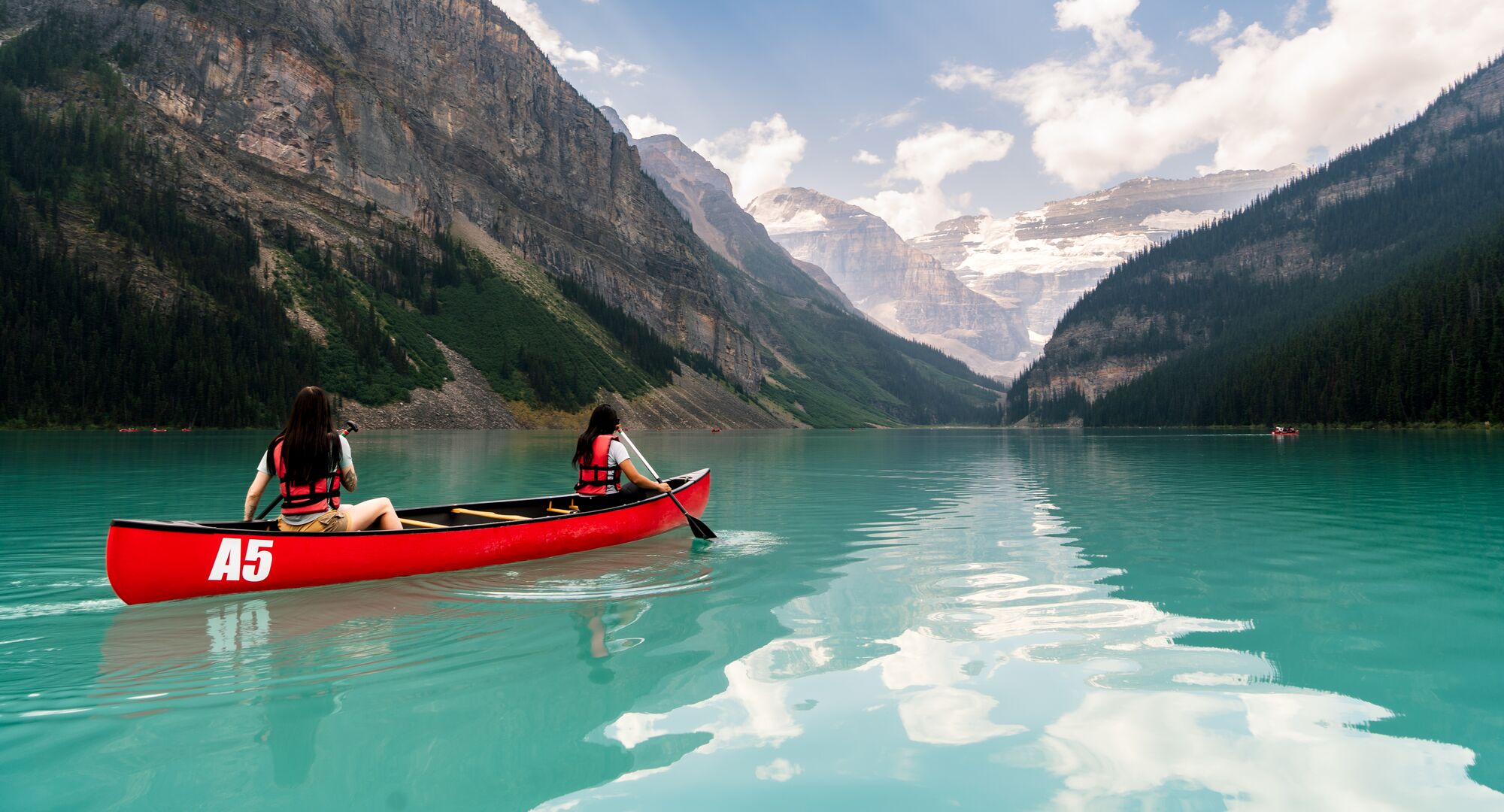
Ranked not by beauty, but by how much effort you must invest to earn the experience.
- Moraine Lake (shuttle required): The view from the Rockpile is the single most photographed scene in the Rockies. Go for sunrise.
- Lake Louise: Crowded but essential. Rent a canoe or walk the lakeshore trail to escape the immediate beach area.
- Johnston Canyon: A paved catwalk trail to two waterfalls. Accessible for most fitness levels. Go before 9 a.m. or after 6 p.m.
- Icefields Parkway: The 230-kilometre drive to Jasper is itself the attraction. Stop at Peyto Lake and the Columbia Icefield.
- Sulphur Mountain Trail: A steady uphill hike that saves you a gondola ticket. The summit has a restaurant and interpretive centre.
For booking tours, airport shuttles, and guided ice walks, we check GetYourGuide for verified operator reviews. Accommodation inside the park fills fast, so we monitor Booking.com six months out for the best lodge rates.
Banff vs. Lake Louise vs. Jasper: What’s the Difference?
A common point of confusion: Lake Louise is not a separate national park. It is a hamlet inside Banff National Park. Banff town is the busy commercial hub. Lake Louise is a quieter village focused on the lake and ski resort. Jasper lies north on the Icefields Parkway and is a separate, wilder park with fewer crowds and more wildlife.
Banff town
Restaurants, shops, hot springs, and the most accommodation options. Crowded, but a practical base.
Lake Louise
Quiet, focused on the lake and ski hill. Limited dining. Book the Fairmont for a splurge, or stay in a hostel.
Jasper
A rougher-edged, less polished mountain town. Better for wildlife sightings and a slower pace. A longer drive, but worth it.
Getting There and Getting Around
Calgary International Airport is the closest major airport, roughly 130 kilometres east of Banff town. Rent a car there; public transit inside the park is limited to shuttles to the major lakes. The Roam Transit bus connects Banff town to Lake Louise and Canmore, but you need a vehicle for the Icefields Parkway or any trailhead without a shuttle stop.
Fuel stations exist in Banff town, Lake Louise village, and Saskatchewan River Crossing, but prices are significantly higher than in Calgary or Canmore. Fill your tank before you enter the park. For car rental comparison, Expedia bundles flights and SUV rentals, which often saves money on a week-long Rockies trip.
Mistakes First-Timers Make (That Cost Time and Money)
- Driving to Moraine Lake. The road has been closed to private vehicles year-round since 2024. You must book a shuttle seat weeks in advance. Showing up without one means you will not see the lake.
- Assuming Lake Louise parking is easy. The lot fills before dawn in summer. Book the shuttle or arrive before 5:30 a.m.
- Ignoring the altitude. Banff town sits at 1,383 meters. Simple hikes like the Plain of Six Glaciers feel harder if you flew in from sea level the day before.
- Getting too close to wildlife. Parks Canada mandates 100 meters from bears and 30 meters from elk. A selfie with a bull elk can earn you a fine and a trip to the hospital.
- Flying a drone. Drones are illegal inside all national park boundaries. The fine is up to CAD 25,000. Leave it at home.
- Forgetting to check road conditions. The Icefields Parkway can close for avalanche control even in late spring. Check the Parks Canada road report each morning.
Frequently asked questions
Is Banff National Park free to enter?
No. Every visitor must purchase a park pass. A daily adult pass costs CAD 11. Parks Canada occasionally runs free admission days, but these do not cover camping, shuttles, or tours. The official fee schedule is available on the Parks Canada website.
How many days do you need in Banff National Park?
A minimum of three days to see Lake Louise and Moraine Lake without rushing. Five days allows for a hike and a drive on the Icefields Parkway. Seven days gives you time to explore Jasper as well.
What is Banff National Park known for?
Turquoise glacial lakes, notably Lake Louise and Moraine Lake, framed by the Canadian Rockies. It is also known for the Icefields Parkway, the town of Banff, and being Canada’s first national park and a UNESCO World Heritage Site.
Is Lake Louise part of Banff National Park?
Yes. Lake Louise is a hamlet and a lake located entirely inside Banff National Park. It is not a separate park. Many visitors mistakenly think Lake Louise is a different destination, but the same park pass covers both the town of Banff and Lake Louise.
Can you visit Banff National Park in one day?
You can drive through the park in a day from Calgary, stopping at Lake Louise and Banff town, but you will spend most of the daylight hours in the car. One day is not enough to hike, see Moraine Lake, or drive the Icefields Parkway. Treat a day trip as a preview, not a full visit.
When is the best month to see wildlife in Banff?
Spring (May and June) and autumn (September and October) offer the best wildlife viewing. Bears are active and visible on lower slopes. The rutting season for elk in September brings large herds into the valley bottoms. Always remain in your vehicle when observing wildlife near the road.
Plan your Banff trip: resources we use
Our team has tested these platforms across multiple Rockies road trips. Early booking is the common thread; summer availability vanishes months ahead.
Lodges and hotels inside the park.
Flight and SUV rental bundles.
Tracks Calgary flight price drops.
Shuttles, ice walks, and guided tours.
Recent trail and wildlife reports.
Cabins and chalets near Canmore.