
advertisement
Trip to the Lake District: The Complete US & UK Travel Planning Guide
A well-planned trip to the Lake District requires a minimum of 3 full days, a clear choice of base town suited to your travel style, and a decision on whether to rent a car or rely on public transport. This guide gives you the exact itineraries, real costs in USD and GBP, and the honest logistical detail that glossy tourism homepages skip.
If you are searching for “trip to Lake District,” you have probably seen the postcards. They are real. But those images do not answer the three practical questions that actually determine whether your holiday works: How many days do you genuinely need, which of the dozen or so tempting towns should you actually sleep in, and how do you get there from London, Manchester, or a US arrival airport without losing a full day to confusion?
I have made the drive up the M6 more times than I can count, and I have also done it car-free with just a rucksack and a train ticket. This guide answers all three questions, with real numbers in dollars and pounds, before you book anything.
Jump to: How Many Days | Getting There | Where to Stay | Sample Itineraries | What It Costs | Best Time to Visit | Things to Do | What to Pack | Mistakes to Avoid | FAQs
Key takeaways
- Four days is the sweet spot for first-timers, letting you see two major areas without feeling rushed.
- Keswick is the best all-around base for walkers and independent travelers; Windermere is better for first-timers who want tourist infrastructure.
- A car is not mandatory, but it saves hours each day. Without one, base yourself in Windermere or Keswick for bus and boat connections.
- Budget around £120–£180 per person per day (roughly $150–$225 USD) for a comfortable mid-range trip including accommodation, meals, and activities.
- Pack waterproofs even in July. Cumbrian weather dismisses forecasts with a shrug.
- Book accommodation and popular restaurants ahead, especially between May and September.
- American visitors need to take narrow, single-track fell roads seriously. Passing places are not optional courtesy; they are the system.
How Many Days Do You Need in the Lake District?
Most first-time visitors need a minimum of 3 full days. That gives you one day for a major lake and fell walk, one day for a second area or a tourist attraction like a Beatrix Potter site, and one day for a longer hike or a relaxed village-hopping drive. You can do a highlights reel in 2 days if you are coming from Manchester or London for a weekend, but you will leave knowing you missed more than you saw. Four to five days is the honest sweet spot that lets you settle into the rhythm of the place without clock-watching.
@jesslouiseellis How to spend a 48 hours in the Lake District 🏞️ Less than 3 hours from London by train, here’s how to spend a relaxing long weekend in one of the loveliest corners of the UK. → Stay — @rothaymanor, a regency manor turned boutique hotel just outside Ambleside (previous press invite). Cosy rooms, garden views, and an on-site restaurant you have to try at least once. → Eat — @theschellyambleside for a lazy late lunch, @homegroundcafe in Windermere for coffee and @lovinglyartisankendal for beautiful baked goods. → Do — Walk the Rannerdale Knotts trail or the scenic Tarn Hows loop. Pop into Grasmere for gingerbread, Hawkshead for gelato @thelittleicecreamshop, and potter through Ambleside, Windermere and Bowness-on-Windermere for lakeside views. Save this one for your Lake District escape 🤍 #lakedistrictuk #lakedistrict #cumbria #visitlakedistrict #visitcumbria
Maya’s honest take: “I have done the 2-day weekend dash from London. It works, barely, but only if you pick one small area and refuse to try to see it all. The Lake District punishes box-tickers with traffic jams in Bowness.”
2 Days (Weekend Trip)
- Best for: UK residents doing a quick escape.
- Stick to one base: Windermere or Keswick.
- Day 1: lake cruise and short walk.
- Day 2: one main paid attraction, then drive home.
- Reality check: you will spend a chunk of both days traveling to and from the region.
4 Days (The Sweet Spot)
- Best for: US visitors and UK holidaymakers wanting a proper break.
- Base yourself in one town and do two major walks and one tourist day.
- Room for a rainy-day backup plan without losing the trip.
- Enough time to visit two distinct lake areas.
7 Days (Full Exploration)
- Best for: hikers and slow travelers.
- Split your stay between two bases (north and south lakes).
- Tackle higher fells like Helvellyn or Scafell Pike.
- Day trip to the western valleys or the Cumbrian coast.
Getting to the Lake District: Trains, Cars, and Transatlantic Logistics
Reaching the Lake District is straightforward in theory, but the final hour can feel slow regardless of your approach. The national park sits in Cumbria in northwest England. The M6 motorway runs along its eastern edge, and the West Coast Main Line railway connects London to the gateway towns. Distances are not vast in American terms, but the roads narrow considerably once you leave the motorway.
Your point of arrival shapes the whole trip. A US visitor landing at Manchester Airport has a completely different first day from a Londoner hopping a Friday evening train. I break both down below, with honest timings that include bathroom stops and the inevitable 10 minutes spent figuring out a rural petrol pump.
From London
- Train: Avanti West Coast from London Euston to Oxenholme Lake District takes roughly 2.5 hours. Change there for Windermere (20 minutes). Book tickets on the National Rail site.
- Car: M1 to M6, roughly 5 hours to Windermere in typical traffic. Add an hour on Friday afternoons or bank holiday weekends.
From Manchester Airport (MAN)
- Car: The simplest US arrival strategy. Direct car hire from the terminal, M6 north, is roughly 1 hour and 40 minutes to Windermere.
- Train: Direct train from Manchester Airport to Oxenholme or Windermere takes about 2 hours with one change. Manageable with luggage if you are not carrying hiking gear for a family of four.
From Other US Arrival Airports
- London Heathrow (LHR): Heathrow Express to Paddington, tube to Euston, then train north. Total journey time to Windermere is 4.5 to 5 hours. Do not attempt this after an overnight flight without a night’s sleep in London first.
- Edinburgh (EDI): A scenic 2.5-hour drive south via the M74 and M6. A viable one-way itinerary if you combine Scotland with the Lakes.
Do You Need a Car?
You do not strictly need a car, but having one saves you roughly 90 minutes of logistical friction per day compared to relying solely on buses. The Central Lakes have a decent bus network (Stagecoach routes 555 and 599 cover the Windermere–Keswick corridor) and regular lake cruises. If you are an American unfamiliar with UK roads, know that single-track lanes with dry-stone walls and sudden passing places are normal here. Drive at a speed that lets you react, use the passing places assertively but cooperatively, and accept that a 20-mile drive can honestly take an hour. The official Lake District National Park website has a detailed car-free travel page worth reading before you decide.
Where to Stay: Comparing the Best Lake District Base Towns
Choosing where to sleep each night is the single decision that most shapes your trip to the Lake District. Pick wrong and you spend your holiday in the car. The best town for you depends entirely on whether you want pubs and bookshops on your doorstep, instant fell-walking access, or a quiet lakeshore at dawn. I have stayed in all five of the towns below. They are genuinely different propositions, not just differently named dots on a map.
Maya’s honest take: “Windermere is prettier for photos and has the most hotel choice, but I sleep in Keswick when I want to walk from the door. Ambleside splits the difference but is chaotic in August.”
Windermere/Bowness
Best for first-timers and families. The largest tourist center with the most accommodation, restaurants, and boat cruise departures. Feels busy. Excellent transport links make it the easiest base without a car.
Check accommodation options on Booking.com or for loyalty perks on Hotels.com.
Keswick
Best for walkers and independent travelers. A proper market town on Derwentwater’s shore. Quieter than Windermere in the evenings. You can start serious hikes from the town center. Good for a 4-day or longer stay.
Ambleside
Best for a central location with a lively evening scene. Sits at the head of Windermere. Compact, walkable, and full of outdoor gear shops and solid pubs. Parking is a genuine problem; book a hotel with a space.
Ullswater (Pooley Bridge/Glenridding)
Best for a quieter, dramatic landscape. Often cited as the most beautiful lake. Fewer hotels and restaurants means more peace. A car is near-essential here. For a self-catering cottage stay, look at options on Vrbo.
Grasmere
Best for a romantic, village-atmosphere base. Famous for Wordsworth and gingerbread. Very small, very picturesque, very busy with day-trippers between 11 a.m. and 4 p.m. Before and after, you have it almost to yourself.
Sample Lake District Itineraries by Trip Length
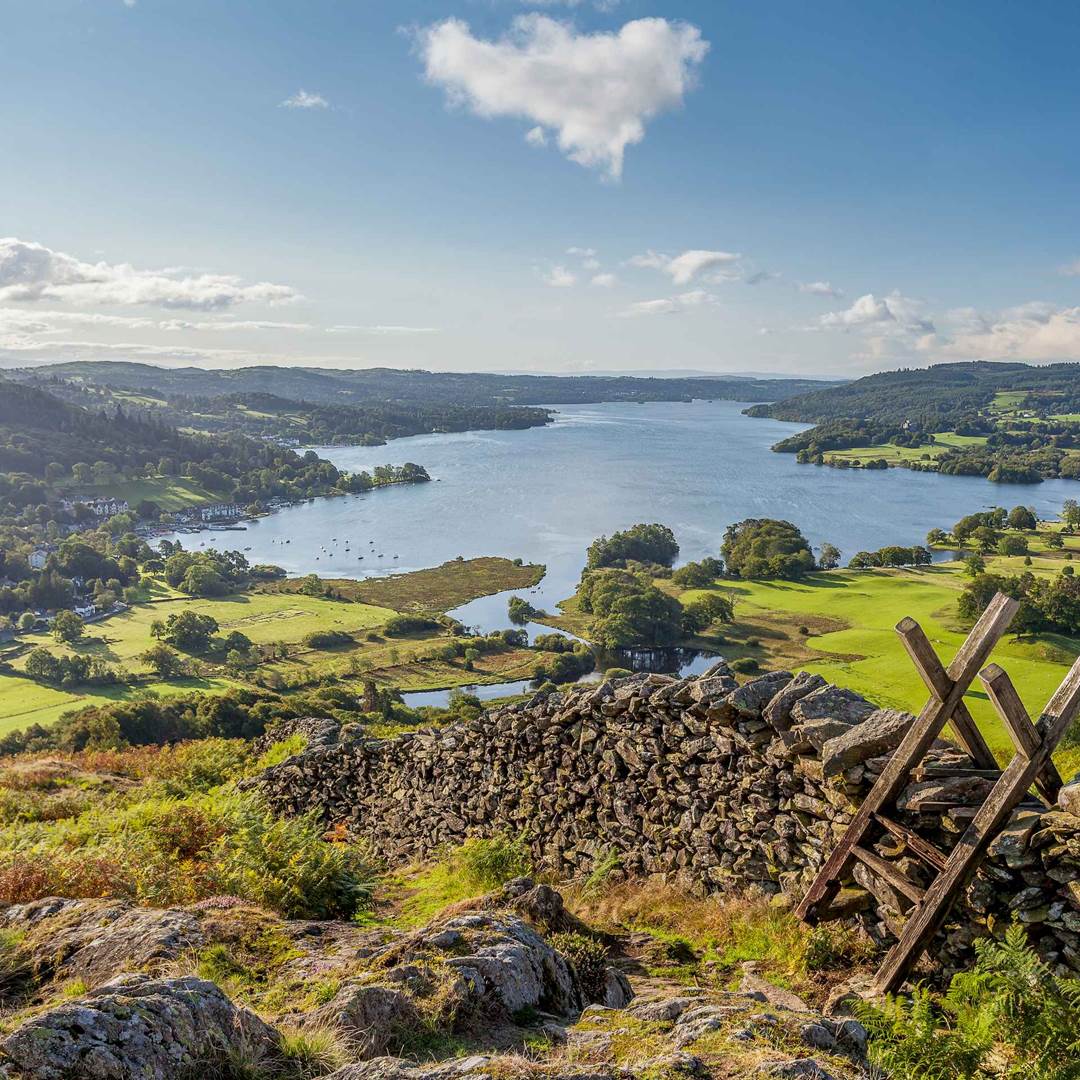
These are the actual day plans I have sketched for friends visiting from the US and from down south. They assume you have a car unless stated. Adapt the walking days to your fitness level; the fells will still be there tomorrow if you fancy a shorter loop.
2-Day Weekend Itinerary
Base: Windermere (no car needed).
Day 1: Arrive, take a Windermere Lake cruise to Ambleside, have lunch at a pier-side cafe, and walk back along the lakeshore path.
Day 2: Morning bus to Grasmere for the Wordsworth sites and gingerbread shop, afternoon bus to Bowness for the World of Beatrix Potter before heading home.
4-Day Classic Itinerary
Base: Keswick.
Day 1: Settle in, walk the easy Derwentwater shoreline to Friar’s Crag.
Day 2: Hike Catbells Ridge. Lunch in Keswick market square.
Day 3: Drive over Honister Pass to Buttermere for the level lake loop walk.
Day 4: Morning at Castlerigg Stone Circle, afternoon drive to Ullswater for the Aira Force waterfall walk.
7-Day Full Exploration Itinerary
Bases: 3 nights in Keswick, 3 nights in Ambleside.
Days 1–3: As the 4-day plan above, adding a full-day hike to Helvellyn via Striding Edge on Day 3.
Day 4: Move bases, stopping at the Kirkstone Pass Inn.
Days 5–6: Ambleside-based. Coniston Old Man walk, Tarn Hows loop, and Wray Castle.
Day 7: Relaxed morning, Hill Top Farm (book ahead), and depart.
What a Trip to the Lake District Actually Costs (GBP + USD)
The Lake District is not a budget destination in the way parts of northern England can be, but neither is it London-expensive. A comfortable mid-range trip for two people sharing a room typically costs £240–£360 per day total, or roughly $300–$450 USD at current exchange rates. Solo travelers should budget a bit more per person, as the room cost does not split.
Maya’s honest take: “The single cost that shocks American visitors is the fuel price. A gallon of petrol works out to significantly more than US averages. Budget £70–£100 for a week’s fuel if you drive daily, and pre-book your rental car for Manchester Airport collection to avoid walk-up rates.”
Accommodation (per night)
- Budget B&B or hostel: £60–£90 / $75–$110
- Mid-range hotel or pub inn: £110–£160 / $140–$200
- Lakeside spa hotel: £200+ / $250+
Daily Spending (per person)
- Pub lunch with a drink: £15–£20 / $19–$25
- Three-course evening meal: £30–£50 / $38–$63
- Lake cruise ticket (Windermere): £12–£20 / $15–$25
- Attraction entry (e.g., Beatrix Potter): £9–£15 / $11–$19
Parking costs add up. Many car parks use the PayByPhone app. Have it downloaded and set up before you go. National Trust car parks are free for members; joining is worth it if you plan to visit multiple properties and use their parking heavily. Check current membership prices on the official National Trust website.
Best Time of Year to Visit the Lake District
The Lake District works in all four seasons, but they are not equal for travelers. Summer (June to August) brings the most reliable temperatures and the longest daylight, with sunset after 9 p.m. It also brings the crowds, fully booked hotels, and stop-start traffic through Ambleside. Spring (April to May) and early autumn (September to mid-October) are my strong recommendations. The daffodils in Grasmere and Ullswater in spring are the real-life version of Wordsworth’s poem, and September often delivers crisp, clear walking days with children back in school.
Winter visits (November to March) are a gamble. You might get a sparkling frosty day with the fells in snow and empty trails. You might get five days of sideways rain and closed mountain passes. Do not attempt high fell walks in winter unless you have proper navigation skills and winter gear. The Lake District National Park Authority issues regular fell-top condition reports in winter; check them.
Things to Do in the Lake District Beyond the Obvious
The tourist-board brochures list museums and galleries; I am listing the specific experiences that have stuck with me. You can find the full calendar of local events and activities on GetYourGuide or TripAdvisor if you want a bookable tour.
Walks Worth the Effort
- Catbells (moderate, 3–4 hours): The best effort-to-view ratio in the Lakes. Busy for good reason.
- Helvellyn via Striding Edge (strenuous, 6–7 hours): A serious mountain day with scrambling. Not a casual stroll.
- Buttermere circuit (easy, 2–3 hours): Flat, stunning, accessible for most fitness levels.
- Tarn Hows (easy, 1–2 hours): A gentle loop owned by the National Trust, ideal for a family leg stretch.
Cultural and Literary Stops
- Dove Cottage and the Wordsworth Museum, Grasmere: The poet’s home. The guided tour brings the damp-walled reality of 1800s Lakeland life into focus.
- Hill Top, Near Sawrey: Beatrix Potter’s farmhouse. You must book a timed entry slot online in advance.
- Castlerigg Stone Circle, Keswick: A Neolithic circle with a 360-degree fell panorama. Free to visit, best at sunrise or sunset.
What to Pack for the Lake District
Cumbrian weather is a conversational cliché for a reason. You can experience sun, rain, and wind chill on a single fell walk in June. Packing right is not about fashion; it is about not having your day ruined by a soggy sock at the halfway point of a 6-mile hike.
Maya’s honest take: “I once started a walk in Windermere in a t-shirt and finished it 4 hours later in a hailstorm. The waterproof jacket lives in my daypack even when the sky is cloudless at breakfast. Do not pack cotton socks for walking days.”
Non-Negotiables
- Proper waterproof jacket with a hood.
- Waterproof overtrousers.
- Sturdy walking boots or shoes with ankle support and grippy soles.
- Multiple thin layers (fleece and base layer) rather than one thick jumper.
- A paper OS map (OL4 or OL7) or a fully charged phone with offline maps downloaded.
Easily Forgotten
- Midgie repellent (essential May to September, especially near water in still air).
- A power bank for your phone if you use digital mapping.
- Cash for village honesty boxes and some rural car parks.
- Sunglasses and sunscreen; the sun does appear, and the glare off the lakes is strong.
7 Mistakes First-Time Visitors Make in the Lake District
These are the avoidable errors I see it repeated in tearooms and car parks every season. None of them will ruin a trip, but fixing them will make yours run notably smoother.
- 1. Trying to cover too much ground in one day. The map looks small, but 50 miles of Lakeland roads is a full morning. Pick two locations max per day.
- 2. Not booking a table for dinner. Good pubs in Ambleside, Grasmere, and Keswick fill up by 6 p.m. in high season. Call ahead that morning.
- 3. Underestimating fell walks. A “short 4-mile walk” from a guidebook can take 3 hours if it involves 600 meters of ascent. Start early.
- 4. Wearing jeans on a rainy walk. Wet denim is heavy, cold, and chafing. Wear quick-dry trousers or walking leggings.
- 5. Ignoring the left side of the road. American visitors, this is the one that needs conscious brain space. Repeat “left side, narrow lanes, passing places” to yourself.
- 6. Skipping the boat. A lake cruise on Windermere, Ullswater, or Derwentwater is not a tourist trap. It is the best angle on the landscape.
- 7. Not checking mountain weather separately. The village forecast and the fell-top forecast are different things. Use the Met Office mountain area forecast for the Lake District.
Frequently asked questions
How many days do you need for a first trip to the Lake District?
A minimum of 3 full days lets you see two major areas and do a proper fell walk. Four to five days is the honest sweet spot that gives you a relaxed pace with room for a rainy backup day.
Is the Lake District worth visiting from London?
Yes, for a 3-day weekend or longer. A 2-day round trip from London is doable but rushed. The train journey from Euston is roughly 2.5 hours, making it a viable short break.
What is the best month to visit the Lake District?
May and September offer the best balance of decent weather, open attractions, and manageable crowd levels. June and July have the longest daylight hours and peak visitor numbers.
Which is better: Windermere or Keswick?
Windermere is better for first-time visitors wanting hotel choice, boat trips, and easy rail access. Keswick is better for walkers and travelers who prefer a market-town feel with fell hikes starting from the doorstep.
Can you visit the Lake District without a car?
Yes. Base yourself in Windermere or Keswick and use the Stagecoach bus network, lake cruises, and local taxis. You will move more slowly and need to plan routes around timetables, but it is a genuine option for a 3 to 4-day trip.
What currency and payment methods are used in the Lake District?
The currency is the British pound sterling (£). Contactless card payments and Apple Pay are near-universal in shops, restaurants, and hotels. Carry a small amount of cash for village honesty boxes, rural car parks, and some bus services.
How far is the Lake District from Manchester Airport?
The drive from Manchester Airport to Windermere takes roughly 1 hour and 40 minutes via the M6 motorway. The train journey with one change takes about 2 hours.
Is it expensive to visit the Lake District?
It is moderately expensive by UK regional standards. Budget roughly £120–£180 per person per day ($150–$225 USD) for a comfortable mid-range trip, including accommodation, meals, and activities. Costs rise significantly in July and August.
Plan your trip: booking platforms we trust
I have booked Lake District trips across all of these platforms at different times, depending on what I needed. None of them are perfect for every situation, so I listed what each one does best. Using the right tool for the right job saves you money and wasted scrolling.
Best for overall hotel and B&B availability across the Lake District.
Best for comparing flight prices into Manchester and London for transatlantic travelers.
Best for bundling US-to-UK flights with a hire car for a single itinerary.
Best for self-catering cottages for families or groups in quieter valleys like Ullswater.
Best for bookable guided walking tours and lake cruise tickets.
Best for honest recent reviews of pubs and restaurants before you reserve.