
advertisement
Trip to the Cotswolds: A Complete Planning Guide (Itinerary, Costs & Best Villages)
A meaningful trip to the Cotswolds needs at least 2 full days with a car, but 4 days lets you slow down enough to enjoy the villages rather than just photograph them. This guide gives you real itineraries, honest costs in GBP and USD, and a straight comparison of the best villages to base yourself in, all written from actual visits rather than a tourism board brochure.
You have decided you are going. The images of honey-colored stone cottages and dry-stone walls sold you. Now you face the practical questions the postcards do not answer: how many days do you actually need, which of the dozens of villages should you sleep in, can you manage without a car, and what does this whole thing honestly cost? I have driven the narrow lanes between Chipping Campden and Castle Combe enough times to know which villages justify the parking hassle and which ones you visit for 45 minutes and then quietly leave. This guide answers all of it, with real numbers and no marketing fluff.
Jump to: How Many Days | Sample Itineraries | Where to Base Yourself | Getting There | What It Costs | Best Time to Visit | What to See and Do | Mistakes to Avoid | FAQs
Key takeaways
- Four full days is the sweet spot for a first trip, giving you time for both the northern and southern villages without rushing.
- Stow-on-the-Wold or Bourton-on-the-Water are the best bases for a first-time visitor with a car; Moreton-in-Marsh works best if you are arriving by train.
- You genuinely need a car unless you are happy sticking to two villages and organized tours. Bus connections between villages are sparse and slow.
- Budget £150–£220 per person per day (roughly $190–$280 USD) for a comfortable mid-range trip with a nice B&B, pub dinners, and attraction entries.
- Book restaurants ahead, even for lunch. The best pubs in popular villages fill tables by 12:30 p.m. on weekends year-round.
- Visit the headline villages early or late. Bourton-on-the-Water at 9 a.m. is a different experience from Bourton at 1 p.m. on a Saturday.
- Sunday opening hours are shorter. Plan your big attraction visits for other days and save Sunday for walking and village wandering.
How Many Days Do You Need for a Trip to the Cotswolds?
The Cotswolds covers roughly 800 square miles across five counties. You cannot see all of it in a weekend. A 2-day trip lets you do a northern loop or a southern loop, not both. A 4-day trip lets you cover the greatest-hits villages in both halves with a proper walk or a castle visit. A full week gives you the Cotswolds at the pace it actually deserves: slow mornings, long pub lunches, and the freedom to follow an unsigned lane because it looks promising.
Maya’s honest take: “I have done the 2-day weekend dash. It works if you pick four villages max and accept you will not see Sudeley Castle or walk the Cotswold Way. The region rewards slowness more than most destinations. Four days is the minimum I recommend to friends.”
2 Days (Weekend Trip)
- Best for: UK residents doing a quick countryside escape.
- Pick one sub-region: north (Stow, Chipping Campden, Broadway) or south (Bibury, Bourton, Burford).
- Day 1: two villages and a pub lunch.
- Day 2: one attraction, one village, head home by late afternoon.
- Reality check: you will spend a lot of time in the car relative to time spent exploring.
4 Days (The Sweet Spot)
- Best for: US visitors and UK holidaymakers wanting a proper break.
- Base in one central location (Stow or Bourton).
- Covers the northern and southern highlights without feeling frantic.
- Room for one major attraction and a half-day walk.
7 Days (Full Week)
- Best for: Slow travelers and walkers.
- Split your stay between two bases (north and south Cotswolds).
- Walk a section of the Cotswold Way.
- Visit Bath or Stratford-upon-Avon as a day trip.
Sample Cotswolds Itineraries by Trip Length

These are the actual plans I have written for friends visiting from the US and from London. They assume you have a rental car. I have noted where a train-only version is possible, though it requires compromises.
3-Day Cotswolds Itinerary
Base: Bourton-on-the-Water.
Day 1: Arrive, wander Bourton (Model Village, the river bridges), dinner at a pub.
Day 2: Drive north to Stow-on-the-Wold for the market square and antique shops, Chipping Campden for the high street, and Broadway Tower for the view.
Day 3: Drive south to Bibury for Arlington Row in the early morning light, have lunch in Burford, and spend the afternoon at a garden or castle on your way out.
5-Day Cotswolds Itinerary
Base: Stow-on-the-Wold.
Day 1: Settle in and explore Stow’s square and back lanes.
Day 2: Chipping Campden, Hidcote Manor Garden (book ahead), and Broadway in the late afternoon.
Day 3: Bourton-on-the-Water and the Slaughters (Upper and Lower); lunch in Lower Slaughter at a riverside pub.
Day 4: Southern loop: Bibury early, Burford for lunch, and Minster Lovell ruins in the afternoon.
Day 5: Choose a castle: Sudeley Castle in Winchcombe or Blenheim Palace just outside the official Cotswolds boundary.
7-Day Cotswolds Itinerary
Bases: 3 nights in Stow, 3 nights somewhere southern like Burford or Tetbury.
Days 1–3: Follow the 5-day northern plan above at a slower pace.
Day 4: Move bases, stopping at Chedworth Roman Villa en route.
Days 5–6: Explore the southern Cotswolds: Castle Combe, Lacock (National Trust village), Tetbury for antiques, and Westonbirt Arboretum.
Day 7: Day trip to Bath (30 minutes from the southern Cotswolds) or walk a stretch of the Cotswold Way.
Where to Base Yourself in the Cotswolds: Comparing the Best Villages
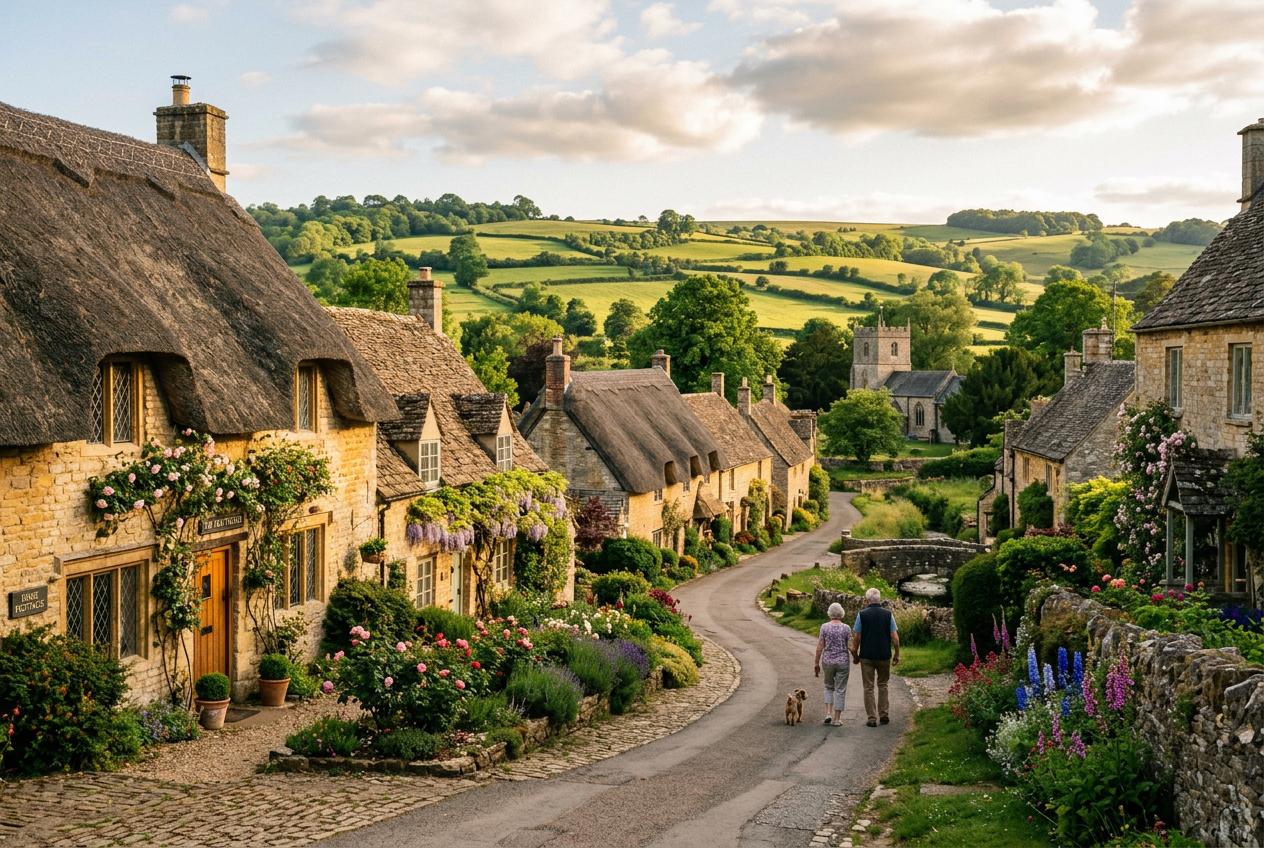
The village you choose to sleep in determines your entire trip rhythm. The Cotswolds is not one compact cluster; it is a scattering of villages across five counties connected by B-roads. Picking the wrong base can mean an hour of driving before you see anything you came for. I have stayed overnight in all of the villages below. They are genuinely different propositions.
Maya’s honest take: “Bourton-on-the-Water is the prettiest base for photos and has the most tea rooms, but Stow-on-the-Wold puts you closer to the northern villages and has better parking. Bibury is stunning at dawn but dead quiet after dark. There is no single perfect base, just the right one for your trip style.”
Bourton-on-the-Water
Best for first-timers and families. The most visitor-ready village with the most cafes, shops, and attractions (Model Village, Birdland, and Motor Museum). Gets extremely crowded between 11 a.m. and 4 p.m. Book accommodation with parking included. Check options on Booking.com.
Stow-on-the-Wold
Best for a central, practical base. A proper market town rather than a tourist village, with a large square, good pubs, and easy driving access to both northern and southern Cotswolds. Quieter in the evenings than Bourton. My personal go-to for a 4-day trip.
Chipping Campden
Best for a northern Cotswolds focus and walking access. The start of the Cotswold Way. An elegant high street with a fine wool church history. Quieter and more spread out than Stow. Works well if you plan to walk rather than just village-hop.
Bibury
Best for a romantic, quiet overnight stay. Arlington Row is the most photographed street in the Cotswolds. After the day-trippers leave around 5 p.m., the village becomes very still. Limited dining options. One pub, one hotel. You will drive elsewhere for dinner variety.
Moreton-in-Marsh
Best for car-free arrivals by train. The only Cotswolds village with a mainline train station on the London-Oxford-Worcester line. A workaday market town rather than a picture-postcard village, but practical and well-connected. If you are doing the Cotswolds without a car, this is your most sensible base. For cottage rentals nearby, check Vrbo.
Getting to the Cotswolds: Trains, Cars, and the Reality of Rural Transport
The Cotswolds has no single gateway airport or station. How you arrive shapes your first day. Most US visitors fly into London Heathrow and either rent a car or take the train to a Cotswolds-edge station. UK visitors typically drive from London, Birmingham, or Bristol. Below is the honest comparison I give friends when they ask which option makes sense.
Maya’s honest take: “The train from London Paddington to Moreton-in-Marsh takes about 90 minutes and drops you into a working town with bus links. It is the most elegant car-free entry point. But once you are there, the gaps between buses to villages like Bibury or the Slaughters can be two hours or more. A car transforms the trip.”
Car (from London)
Time: 2 to 2.5 hours to the northern Cotswolds via the M40/A40.
Cost: £40–£60 in fuel round-trip, plus £30–£60 per day for rental if needed.
Verdict: The most flexible option. Essential for a multi-day trip covering multiple villages.
Train (from London Paddington)
Time: 90 minutes to Moreton-in-Marsh, 80 minutes to Kemble (for Cirencester and the southern Cotswolds).
Cost: £25–£60 per person one-way depending on how far ahead you book. Check National Rail or use Kayak to compare train and flight package options if arriving from the US.
Verdict: Good for a car-free 2 to 3-day trip if you base in Moreton and use buses and taxis.
Organized Day Tour (from London)
Time: A very long 10 to 12-hour day with 5 to 6 hours of driving.
Cost: £60–£100 per person.
Verdict: Rushed but logistically simple. You will see the greatest hits from a coach window. Book through GetYourGuide if you only have one day and refuse to drive. Not a substitute for a proper multi-day stay.
Do You Need a Car in the Cotswolds?
For a multi-day trip that covers multiple villages, yes, you genuinely need a car. The bus network exists but is sparse. Route 801 connects Moreton-in-Marsh, Stow, Bourton, and Cheltenham roughly hourly during the day, but reaching Bibury, the Slaughters, or Chipping Campden without your own wheels requires careful timetable planning or expensive local taxis. If you are an American visitor unfamiliar with UK country lanes, know that Cotswolds roads are narrow, often hemmed by dry-stone walls, and require confident use of passing places.
Drive at a speed that lets you stop in half the distance you can see. Most rental car agencies at Heathrow offer automatic transmission if you book ahead, but automatic availability is much lower than in the US, so reserve early.
What a Trip to the Cotswolds Actually Costs (GBP + USD)
The Cotswolds is not a budget destination. The price of a room in a honey-stone village B&B is comparable to a decent London hotel, and pub meal costs have risen noticeably in the last few years. A comfortable mid-range trip for two people sharing a room typically costs £300–£440 per day total, or roughly $375–$555 USD at current exchange rates. Solo travelers should budget about 30% more per person since the accommodation cost does not split.
@experienceaddict SAVE if you need Cotswolds inspo! ✨ I spent 2 days in The Cotswolds UK & I did so many fun things – so I thought It was only right that I bring you my whole 2 day Cotswolds itinerary so you can use it for your next UK staycation 🙌 Leave a comment if you want day 2 ❤️ #cotswolds #thecotswolds #thingstodointhecotswolds #englishcountryside #ukstaycation
Maya’s honest take: “Parking costs catch people out. Village car parks in Bourton, Stow, and Broadway typically charge £3–£6 for a few hours. The machines increasingly use apps rather than coins, so have the PayByPhone or RingGo app ready before you leave home.”
Accommodation (per night)
- Budget B&B or inn: £80–£110 / $100–$140
- Mid-range boutique B&B or coaching inn: £130–£200 / $165–$250
- Luxury manor house hotel: £250+ / $315+
- Search hotels on Hotels.com or Booking.com to compare village options.
Daily Spending (per person)
- Pub lunch with a drink: £16–£22 / $20–$28
- Three-course dinner: £35–£55 / $44–$69
- Attraction entry (castle or garden): £12–£25 / $15–$31
- Daily car parking across villages: £8–£15 / $10–$19
- Coffee and cake stop: £8–£12 / $10–$15
Attraction costs vary significantly. Sudeley Castle entry is around £20 per adult. Blenheim Palace, just outside the official Cotswolds boundary but a common itinerary inclusion, costs more if you buy tickets on the gate. Book both online in advance for a small saving. For package deals bundling accommodation with attraction tickets, check Expedia.
Best Time to Visit the Cotswolds
The Cotswolds is a year-round destination, but the experience changes dramatically by season. Late spring (May to early June) and early autumn (September) are the strongest months for first-time visitors. The gardens are at their best, the days are long, and the crowds are manageable. Summer (July and August) brings the warmest weather but also peak visitor numbers, school holidays, and accommodation prices that can double compared to November. The popular villages like Bourton-on-the-Water become genuinely uncomfortable to navigate between 11 a.m. and 3 p.m. in August.
Winter (November to February, excluding Christmas) is the quietest and cheapest window. Many smaller attractions and gardens close or run reduced hours, and Sunday opening is limited. However, a crisp December day with frost on the dry-stone walls and a log fire in a pub is the Cotswolds at its most atmospheric. If you visit in winter, check opening times on official attraction websites before driving to a garden or castle. The official Cotswolds tourism site lists seasonal opening hours for most major properties.
@letravelstyle fall is the PERFECT time to visit – I have a full travel guide linked in bio 🤎 #cotswolds #englishcountryside #uktravel #fairytale #dreamyaesthetic
What to See and Do in the Cotswolds
The Cotswolds is not a checklist of major attractions in the way London or Edinburgh are. Its appeal is cumulative: the villages, the lanes between them, the pub gardens, the sudden view from a rise. That said, some specific stops earn their reputation. These are the ones I tell friends not to skip, and the ones I quietly steer them past if time is tight. For honest recent reviews of specific pubs and restaurants before you commit to a booking, I use TripAdvisor.
Iconic Villages
- Bibury: Arlington Row is the photograph everyone wants. Go before 9 a.m. or after 5 p.m. for crowds you can count on one hand.
- Bourton-on-the-Water: The most visitor-friendly village with the most to do. The Model Village is charmingly odd.
- Castle Combe: Often called the prettiest village in England. Very small, very busy, no parking in the village center itself.
- The Slaughters (Upper and Lower): Quiet, romantic, a short walk between them along the stream. No major “attraction,” just the place itself.
Historic Houses and Castles
- Sudeley Castle, Winchcombe: A lived-in castle with real Tudor history and excellent gardens. Book tickets online.
- Blenheim Palace, Woodstock: Technically just outside the Cotswolds boundary, but a common inclusion. A full day out. Birthplace of Winston Churchill.
- Hidcote Manor Garden: An Arts and Crafts garden near Chipping Campden. National Trust. Stunning in May and June.
Walks and Countryside
- Cotswold Way National Trail: 102 miles from Chipping Campden to Bath. Walk a short section rather than committing to the whole thing.
- Broadway Tower to Chipping Campden: A 5-mile stretch with views into Wales on a clear day and a pub at the end.
- Minster Lovell ruins: A free, atmospheric riverside ruin near Burford. A good leg-stretch without the crowds.
7 Mistakes First-Time Visitors Make in the Cotswolds
These are the errors I have made myself or watched friends make. None of them are catastrophic, but fixing them saves you time, money, and frustration.
- 1. Trying to visit six villages in one day. Four is the realistic maximum. Five if you skip lunch. The roads are slow, and parking takes time at each stop.
- 2. Arriving in Bourton-on-the-Water at 1 p.m. on a Saturday in August. Go early morning or late afternoon, or visit on a weekday. The difference is transformative.
- 3. Not booking a dinner table, even midweek. The good pubs in Stow, Burford, and Chipping Campden fill up. A phone call at lunchtime for a same-evening table is a habit worth forming.
- 4. Assuming every village has a shop for supplies. Smaller villages like the Slaughters and Bibury have little beyond a pub and maybe a hotel. Stock up on snacks and water in Stow or Moreton.
- 5. Skipping the gardens because you are not a gardener. Hidcote and Kiftsgate are landscape experiences, not just flower collections. They are worth two hours even if you cannot name a single plant.
- 6. Planning a major attraction for a Sunday without checking opening times. Some properties open later, close earlier, or are closed entirely on Sundays outside peak season.
- 7. Not downloading offline maps. Mobile signal vanishes in the valleys between villages. Download the area on Google Maps before you leave your accommodation each morning.
Frequently asked questions
Is 2 days enough for the Cotswolds?
Two full days is enough to cover either the northern villages (Stow, Chipping Campden, Broadway) or the southern ones (Bibury, Bourton, Burford), but not both. You will need a car and a clear plan. It is a satisfying weekend break from London, not a comprehensive visit.
Do you need a car in the Cotswolds?
For a multi-day trip covering multiple villages, yes, a car is strongly recommended. The bus network is sparse and does not reach many of the most famous villages. A car-free trip is possible if you base in Moreton-in-Marsh and use the 801 bus and local taxis, but your itinerary will be limited.
What is the best month to visit the Cotswolds?
Late May, June, and September offer the best balance of good weather, open gardens in full bloom, and manageable crowd levels. July and August have the warmest temperatures but peak visitor numbers and higher accommodation prices.
Which Cotswolds village is the most beautiful?
Bibury, particularly Arlington Row, is the most photographed and often cited as the most beautiful. Castle Combe, Bourton-on-the-Water, and the Slaughters are close contenders. Beauty here is subjective, but these four consistently top visitor lists.
How much does a trip to the Cotswolds cost?
Budget roughly £150–£220 per person per day ($190–$280 USD) for a comfortable mid-range trip, including a good B&B, pub lunches and dinners, attraction entries, and fuel or train costs. Budget options exist, but the Cotswolds is generally a moderate to expensive destination by UK regional standards.
What is the best base village for a first trip?
Stow-on-the-Wold is the best all-around base for first-timers with a car, offering central access to both northern and southern villages, good pubs, and a proper market-town feel. Bourton-on-the-Water is better if you want maximum amenities and attractions on your doorstep. Moreton-in-Marsh is the best base if you arrive by train.
Can you do the Cotswolds as a day trip from London?
Technically yes, but it involves a long day with roughly 5 to 6 hours of total driving or a structured coach tour. You will see two or three villages at most, and the experience will feel rushed. A day trip works as a taster, not as the full Cotswolds experience the region deserves.
Is the Cotswolds expensive compared to other UK destinations?
Yes. Accommodation and dining in the most famous villages are priced at a premium comparable to London or Edinburgh, especially between May and September. The Cotswolds markets itself to a well-heeled domestic and international audience, and prices reflect that. Budget travel is possible with planning, but it is not the region’s default mode.
Plan your trip: booking platforms we trust
I have used every platform below to book Cotswolds trips across different seasons and budgets. No single site wins for everything, so I listed what each one does best for this specific region. The right tool depends on whether you are booking a room, a cottage, a flight-and-hotel bundle, or an organized tour.
Best for wide B&B and hotel choice across Cotswolds villages.
Best for self-catering cottages for families or groups staying a week.
Best for comparing flight prices into London and Birmingham for international travelers.
Best for bundling US flights with a rental car for Heathrow or Birmingham pickup.
Best for booking organized Cotswolds day tours and guided walks.
Best for recent pub and restaurant reviews before you reserve a table.