advertisement
Bondi Beach: A Current Visitor’s Guide (Route, Times & Costs)
Bondi Beach sits 7 kilometers east of Sydney’s CBD. The fastest public transport route is a train from Town Hall or Central to Bondi Junction, then a 10-minute ride on bus 333 or 380 to the beach. The swim-safe zones are between the red and yellow flags at the center of the beach.
The southern end near Icebergs has the strongest rip current and is best left to experienced surfers. Expect crowds on summer weekends, but a weekday morning in autumn gives you the place almost to yourself.
Bondi Beach is Sydney’s most famous stretch of sand, but if you are planning a visit, you need more than the postcode and a list of heritage listings. Here is exactly how to get there, where it is safe to swim, what has changed recently, and how to spend your day like a local who knows which bus to catch and which rip current to avoid. The encyclopedias will give you the history. This guide gives you the logistics.
Jump to: How to Get There | Safety & Where to Swim | Best Time to Visit | What to Do | Where to Eat & Stay | 2026 Events | FAQs
Key takeaways
- Train to Bondi Junction, then bus 333 or 380 to the beach. The full trip from Sydney CBD takes 30 to 40 minutes and costs roughly $4 to $5 AUD on an Opal card.
- Swim only between the red and yellow flags. The famous “Backpackers’ Rip” at the south end near Icebergs is a permanent rip current. The flagged area at the center of the beach is patrolled by surf lifesavers.
- Bondi Beach is safe to visit. The December 2025 incident was an isolated event. The beach and surrounding area are heavily patrolled, busy, and operating normally. Standard city-beach awareness applies.
- Parking is scarce and expensive. The main beachfront car park on Campbell Parade fills before 9 a.m. on summer weekends. Street parking in surrounding streets is metered and time-limited. The train and bus combination is genuinely easier.
- Visit on a weekday morning in autumn or spring for the best experience. Summer weekends deliver the postcard energy but come with crowds, queues, and parking gridlock.
Where Bondi Beach Is & How to Get There
Bondi Beach sits 7 kilometers east of Sydney’s central business district, in the Eastern Suburbs. The beach itself runs roughly 1 kilometer from Ben Buckler Point in the north to the rocky headland at the south end, where the Icebergs pool and clubhouse sit. Campbell Parade runs the length of the beach with cafes, pubs, and shops on the inland side.
Getting there is straightforward, but the final leg from Bondi Junction train station to the sand is where first-time visitors get confused.
Train + Bus (the best option)
Take a T4 Eastern Suburbs line train from Town Hall, Central, or Martin Place to Bondi Junction. The trip takes 10 to 15 minutes. At Bondi Junction, exit the station and find the bus interchange. Buses 333 and 380 run every few minutes directly to Bondi Beach. The bus ride takes roughly 10 minutes. The bus drops you on Campbell Parade, a 1-minute walk from the sand. The full trip from the CBD costs roughly $4 to $5 AUD on an Opal card.
You can tap on with a contactless credit or debit card if you do not have an Opal card.
Direct Bus from the City
Bus 333 runs from Circular Quay through the city to Bondi Beach. It is slower than the train and bus combination, roughly 45 to 60 minutes depending on traffic, but it saves you the transfer at Bondi Junction. This is a useful option if you are staying near Circular Quay or the eastern edge of the CBD. The same Opal fare applies.
Driving & Parking
Driving to Bondi Beach is easy. Parking at Bondi Beach is not. The main beachfront car park on Campbell Parade fills before 9 a.m. on summer weekends and public holidays. Rates run roughly $8 to $10 AUD per hour. Street parking in the surrounding residential streets is metered, time-limited, and aggressively enforced. If you must drive, arrive before 8 a.m. or park at Bondi Junction and take the bus for the final 10 minutes.
Rideshare drop-off zones are located on Campbell Parade near the main beach entrance. There is no dedicated all-day parking lot within a short walk of the sand.
Maya’s honest take: “I have circled the Bondi backstreets for 25 minutes looking for a spot on a Sunday in January. I found one eventually, but I could have taken the train and bus door-to-door in less time. Unless you are arriving at sunrise, leave the car at Bondi Junction.”
Is Bondi Beach Safe to Visit? Swimming, Currents & Current Conditions
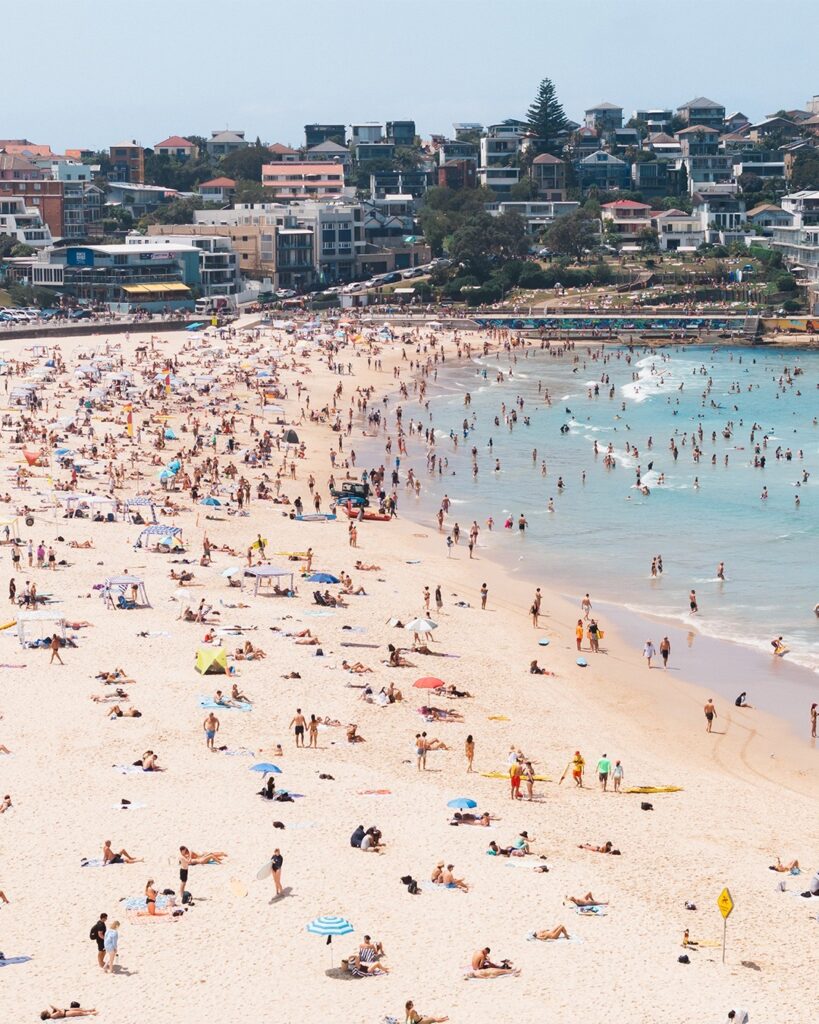
Yes. Bondi Beach is safe to visit. The incident on 14 December 2025 was an isolated attack. The beach and the surrounding Campbell Parade area remain heavily used, busy, and normally functioning. Standard awareness of your surroundings applies, the same as any major city beach in the world. There is a visible police and surf-lifesaving presence on the beach and along the promenade throughout the day.
The real safety concern at Bondi Beach is the water, not the land. Bondi has a permanent rip current at the southern end near the Icebergs pool, known colloquially as the Backpackers’ Rip. It is strong, it is always there, and it is the reason the beach has a hazard rating of 7 out of 10 at the south end compared to 4 out of 10 at the north end. The only safe place to swim is between the red and yellow flags at the center of the beach, which is patrolled by volunteer surf lifesavers. The flags are moved daily based on the conditions. If you swim outside the flags, you are swimming unsupervised in a rip-prone stretch of coast.
Do not do it. If you are caught in a rip, do not swim against it. Float, signal for help, and wait for the lifesavers to reach you. They are among the best-trained in the world.
North End (Ben Buckler)
Hazard rating: 4/10. Gentler waves, less consistent rip activity. Better for casual swimmers and families with children. Still swim between the flags. The rocks at Ben Buckler Point are slippery and not suitable for climbing.
South End (Icebergs)
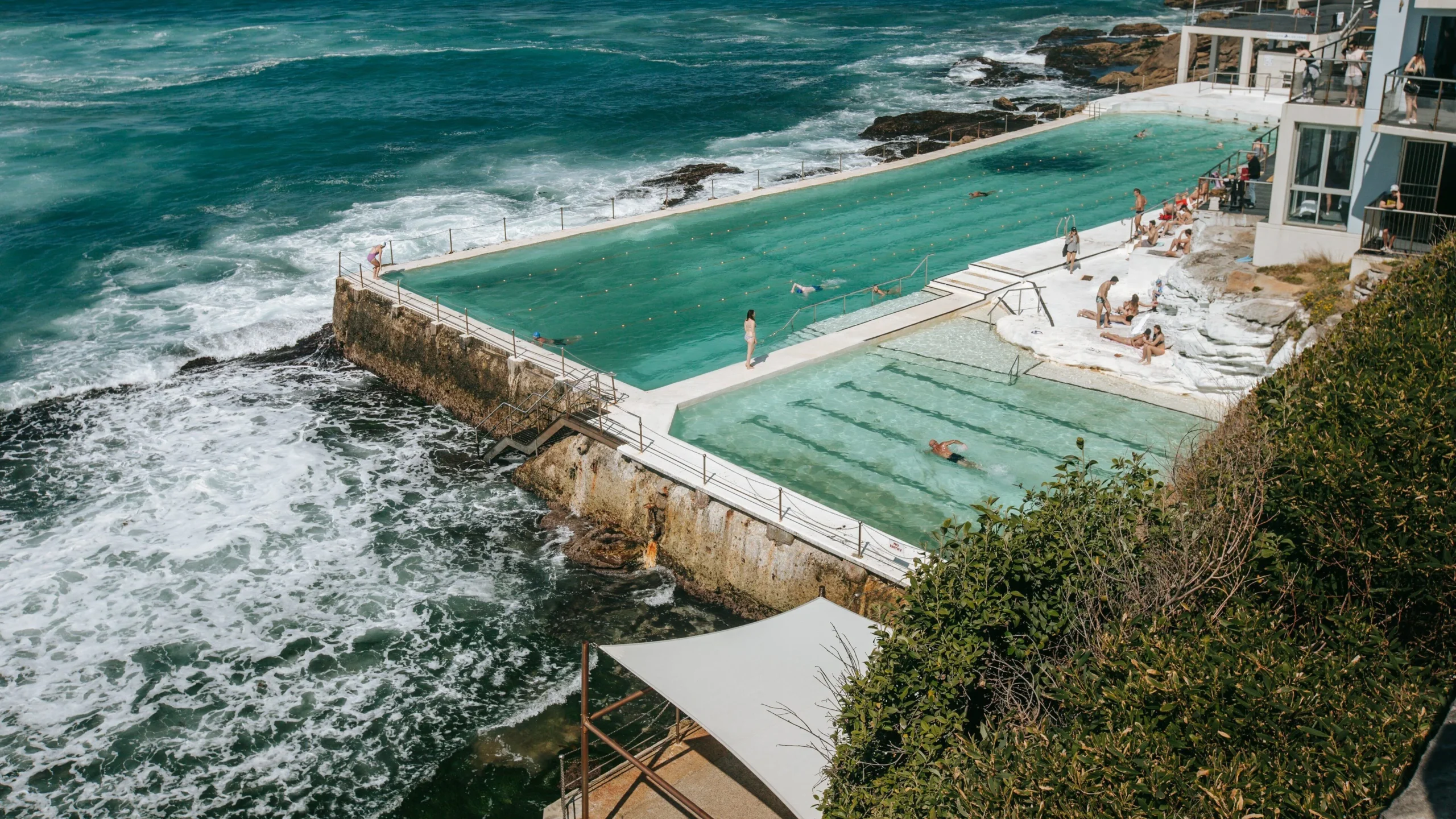
Hazard rating: 7/10. The Backpackers’ Rip is permanent here. This end is for experienced surfers and strong swimmers who know the conditions. Do not swim here unless you are confident reading rips. The Icebergs pool is a safe, controlled alternative right next to the surf.
Best Time to Visit Bondi Beach

Bondi works in every season, but the experience changes dramatically. Summer, December through February, delivers the classic Bondi energy: hot sand, packed beach, surf lifesavers on duty, and a carnival atmosphere along Campbell Parade. Water temperatures sit around 21 to 23 degrees Celsius. The trade-off is crowds. The sand fills by 10 a.m. on weekends, and parking is genuinely difficult. If you want the summer Bondi experience, arrive by 8 a.m. and plan to stay through the afternoon. Autumn, March through May, is the underrated window.
The water is still warm from summer, the air temperature is pleasant in the mid-20s, and the crowds thin considerably after Easter. A weekday morning in April gives you the beach almost to yourself. Winter, June through August, is for walkers and photographers.
The water drops to roughly 17 degrees, and the air is cool but often sunny. The Bondi to Coogee coastal walk is at its best in winter, with clear skies and dramatic light. Spring, September through November, is the shoulder season sweet spot: warming water, manageable crowds, and the Sculpture by the Sea exhibition in late October.
What to Do at Bondi Beach
The beach itself is the main draw, but Bondi rewards visitors who do more than lay a towel down and stay put. The Bondi to Coogee coastal walk is the essential activity. It runs 6 kilometers along the clifftops past Tamarama, Bronte, and Clovelly beaches, with ocean views the entire way. Allow 2 hours at a relaxed pace with stops for photos. The path is paved and well-maintained. Wear decent walking shoes, bring water, and start early in summer to avoid the midday heat. The Icebergs Pool at the southern end of Bondi is a public saltwater pool built into the rocks. Entry costs roughly $10 AUD for adults. Swimming laps here while waves break over the pool edge is one of the iconic Sydney experiences. The pool is open year-round, and the adjoining clubhouse serves a good breakfast with a view.
Surf lessons operate daily on the beach through several licensed schools. A 2-hour group lesson costs roughly $70 to $90 AUD and includes a board and wetsuit. Book in advance during summer. The Bondi skate park on the beachfront is free, open to the public, and a genuine local institution. Even if you do not skate, it is worth a stop for the people-watching. The Bondi Markets run every Sunday at the Bondi Beach Public School on Campbell Parade, selling local crafts, vintage clothing, and street food.
Where to Eat & Stay on Campbell Parade
Campbell Parade runs the full length of the beach and holds most of the cafes, pubs, and restaurants. The quality varies sharply. The places worth your time and money are the ones that have been there for years and do not rely on the view alone to fill tables. Speedos Cafe at the north end does all-day breakfast with a direct view of the sand. It is busy on weekends, and the queue moves faster than it looks. Porch and Parlour, just off Campbell Parade on Glenayr Avenue, serves the best brunch in the area, with a menu that changes seasonally and a crowd that spills onto the pavement. Bondi Icebergs Club, the bistro-level dining room, not the fine-dining restaurant upstairs, is the best value meal with a view in Bondi. The food are pub classics done well, and the dining room overlooks the pool and the ocean.
@sammmyrobinson Bondi Food Tour @onemilethelabel
For a drink, the Beach Road Hotel on Glenayar Street is the local pub, not on the beachfront but a 2-minute walk away. It has live music, a beer garden, and a crowd that is more local than touristy. Hotel Ravesis on Campbell Parade is the beachfront bar for a sunset drink, but it is expensive and the service can be slow when it is packed. Accommodation on the Bondi beachfront is limited and expensive. Hotel Ravesis and QT Bondi are the two main options directly on Campbell Parade. Both sit across the road from the sand, not directly on it. Rates run $300 to $500+ AUD per night depending on the season. Book months ahead for summer weekends. For more availability and lower prices, stay in Bondi Junction and take the bus.
For comparing hotel options across Bondi and the Eastern Suburbs, Booking.com has the most comprehensive coverage. For reading recent reviews of the cafes and pubs on Campbell Parade, TripAdvisor is the most reliable source.
Bondi Beach Events Calendar
These are the annual events that shape the Bondi experience. Dates shift slightly each year. Check the official event websites closer to your visit for confirmed dates.
City2Surf
August. A 14-kilometer fun run from the Sydney CBD to Bondi Beach. Over 80,000 runners. The beach and surrounding streets are packed all day. Do not plan a quiet beach visit on City2Surf Sunday.
Sculpture by the Sea
Late October to early November. A free outdoor sculpture exhibition along the Bondi to Coogee coastal walk. World-class art with an ocean backdrop. The path is busier than usual during this window, but the walk is worth it.
Flickerfest
January. Australia’s leading short-film festival, held at the Bondi Beach Pavilion. Screenings run over several days. Book tickets in advance.
Frequently asked questions about visiting Bondi Beach
Is Bondi Beach safe to visit now?
Yes. The beach and the Campbell Parade area are busy, heavily used, and functioning normally. The incident of 14 December 2025 was an isolated event. A visible police and surf-lifesaving presence operates on the beach and along the promenade throughout the day. Standard awareness of your surroundings applies.
Is Bondi Beach free to visit?
Yes. The beach is free and open to the public year-round. There is no entry fee. The Icebergs Pool charges roughly $10 AUD for adult entry. Parking is metered and expensive. Surf lessons and equipment hire carry their own fees.
Are dogs allowed on Bondi Beach?
Dogs are not permitted on the sand at Bondi Beach. They are allowed on the promenade and in the surrounding streets on a leash. The nearest off-leash dog beach is Rose Bay, roughly a 10-minute drive away.
Is there free Wi-Fi at Bondi Beach?
Free public Wi-Fi was previously available but is no longer reliably active as of mid-2026. Most cafes along Campbell Parade offer free Wi-Fi to customers. Do not count on a free public signal on the sand.
What is the best way to get to Bondi Beach from Sydney CBD?
Take a T4 train from Town Hall or Central to Bondi Junction, then bus 333 or 380 to the beach. The full trip takes 30 to 40 minutes and costs roughly $4 to $5 AUD on an Opal card. This is faster and less stressful than driving and parking.
Where should I swim at Bondi Beach?
Swim only between the red and yellow flags at the center of the beach. This zone is patrolled by surf lifesavers and is set daily based on conditions. The southern end near icebergs has a permanent rip current and is unsafe for casual swimmers.
Is Bondi Beach wheelchair accessible?
Yes. The promenade along Campbell Parade is flat and wheelchair accessible. Accessible toilets and changing facilities are available at the Bondi Pavilion. Beach wheelchairs are available through the surf lifesaving club; contact them in advance to arrange use.
Plan your Bondi visit: useful links
We do not sell tickets or process bookings. These are the platforms we use to plan our own Bondi days and Sydney stays.
Best for comparing hotels in Bondi, Bondi Junction, and across Sydney’s Eastern Suburbs.
Best for booking Bondi surf lessons and guided coastal walk tours with verified operators.
Best for reading recent reviews of Bondi cafes, restaurants, and surf schools before you commit.