advertisement
Maria Island, Tasmania: The Complete Visitor’s Guide
Fact-Checked By Maya Whitfield, Senior Travel Editor at WakaAbuja
Maria Island is a car-free national park off Tasmania’s east coast, reached by a 30-minute ferry from Triabunna. It packs convict history, dramatic coastal cliffs, and some of the densest wombat populations in Australia into a single, walkable island. You can visit on a rushed day trip, but staying overnight in the old penitentiary or a tent gives you the place almost to yourself once the last ferry leaves.
The Wikipedia entry will give you 2,600 words on Bernacchi’s cement empire and the two distinct convict eras. What it will not give you is the current ferry timetable, the real cost of a campsite, or what it feels like to have a wombat waddle right past your bunkhouse door at dusk. I have made the 6 a.m. drive from Hobart to the Triabunna dock three times now. This guide covers the logistics I got wrong on my first trip so you can get them right on yours.
Jump to: Ferry Times & Prices | Day Trip vs. Overnight | Best Walks | Wildlife Guide | Where to Stay | What to Pack | FAQs
Key takeaways
- Maria Island is a car-free national park accessible only by a passenger ferry from Triabunna, roughly 90 minutes northeast of Hobart.
- A day trip costs about $52 AUD per adult for the return ferry ticket, but you only get four to five hours on the island.
- Staying overnight in the penitentiary bunkhouse or a campsite costs extra but lets you explore the Fossil Cliffs and Painted Cliffs without the day-tripper crowd.
- You are guaranteed to see wombats, Cape Barren geese, and wallabies; Tasmanian devils are around but mostly nocturnal, so an overnight stay improves your odds.
- There are no shops, no fuel, and no bins on the island — you carry in everything you need and carry out all your rubbish.
- Bicycle hire is available on the island and is the single best way to cover ground quickly between the main points of interest.
- Phone reception is patchy to nonexistent; download offline maps and let someone on the mainland know your planned return time.
Maria Island at a glance
Maria Island sits in the Tasman Sea about four kilometers off the east coast of Tasmania. The entire island is a national park, declared in 1971, and the only settlement is Darlington, a cluster of preserved convict-era buildings near the northern ferry jetty. The island measures roughly 20 kilometers north to south and 13 kilometers at its widest point. It carries two names: the English one given by Abel Tasman in 1642 and the Indigenous Palawa kani name, wukaluwikiwayna, reflecting a much longer human history.
The practical upshot for visitors is that Darlington functions as a living open-air museum with a bunkhouse, basic toilets, cold showers, and a ranger station. There are no paved roads beyond the immediate Darlington area. Everything beyond the jetty is a gravel track or dirt walking path.
Maya’s honest take: “The first thing that hits you is the quiet. No traffic hum, no PA announcements, just wind and the occasional Cape Barren goose honk. That silence alone is worth the ferry ticket.”
How to get there: ferry times, prices, and booking
The only way to reach Maria Island is the passenger ferry operated by Encounter Maria Island out of Triabunna, a small coastal town about 90 minutes’ drive from Hobart. The crossing takes roughly 30 minutes and runs daily, with extra services during the warmer months. The ferry does not carry vehicles. Bicycles are allowed for a small surcharge and must be booked in advance because deck space is limited.
Ferry departure times and pricing change seasonally, so I always check the official Encounter Maria Island website before booking. At the time of my last visit, the return adult fare sat around $52 AUD, with a national parks pass sold separately. You must have a valid Parks Tasmania pass before boarding. A day pass costs around $22 AUD per adult or about $45 AUD for a vehicle pass, though that vehicle pass covers your car left at the Triabunna dock parking lot and grants entry to other Tasmanian parks during its validity window.
The schedule structure is straightforward: a morning departure from Triabunna, a return in the early afternoon for day-trippers, and a later return for overnighters. If you are doing a day trip, you take the morning ferry out and the early afternoon ferry back, which gives you about four to five hours on the island. If you miss that return, you are not getting back to the mainland that day. I set a phone alarm for 30 minutes before the scheduled departure so I am never sprinting down the jetty.
Maya’s honest take: “Book the ferry online at least a week ahead in summer. I watched a family of four get turned away at the Triabunna counter in January because the day’s sailings were fully booked.”
Day trip, overnight, or the Maria Island Walk: how many days do you need?
The right length depends entirely on whether you want a quick sample or a full immersion. I have done both a day trip and a two-night stay, and the experiences are so different they almost feel like visiting two separate islands.
Day trip
- Cost: ~$52 AUD ferry + $22 AUD park pass
- Time on island: 4–5 hours
- Covers: Darlington, Painted Cliffs, maybe Fossil Cliffs if you walk fast
- Best for: Tight schedules, families with young kids, first-time Tasmania visitors
- Downside: You share every spot with the day-trip crowd; no wildlife at dusk
Overnight (1–2 nights)
- Cost: Ferry + park pass + $13 AUD camping or ~$40 AUD for a bunk per night
- Covers: Painted Cliffs at sunset, Fossil Cliffs, Bishop and Clerk summit, evening wombat encounters
- Best for: Photographers, wildlife watchers, anyone wanting the island after the last ferry leaves
- Downside: Basic facilities, cold showers, no hot food unless you carry a stove
The Maria Island Walk (4 days)
- Cost: ~$2,500–$3,000 AUD per person, all-inclusive guided
- Covers: Full north-to-south traverse, gourmet meals, private glamping camps, exclusive beach access
- Best for: Hikers who want a premium guided experience, honeymooners, milestone trips
- Downside: Significant cost, fixed departure dates, books out months ahead
My recommendation: if you can spare one night, do it. The shift that happens when the day-trippers board the 2:30 p.m. ferry and Darlington empties out is the moment Maria Island becomes genuinely special. Wombats emerge to graze on the grass around the penitentiary, the light turns golden on the sandstone cliffs, and the campground goes quiet except for the waves.
Best walks and things to do on Maria Island
Everything worth doing on Maria Island starts from Darlington on foot or by bicycle. I rent a bike every visit because the Fossil Cliffs are a 90-minute walk each way on a gravel track that a bicycle covers in 20 minutes. Cycle hire operates from a small shed near the jetty and costs around $30 AUD per day. Bring cash in case the card reader is down.
Painted Cliffs
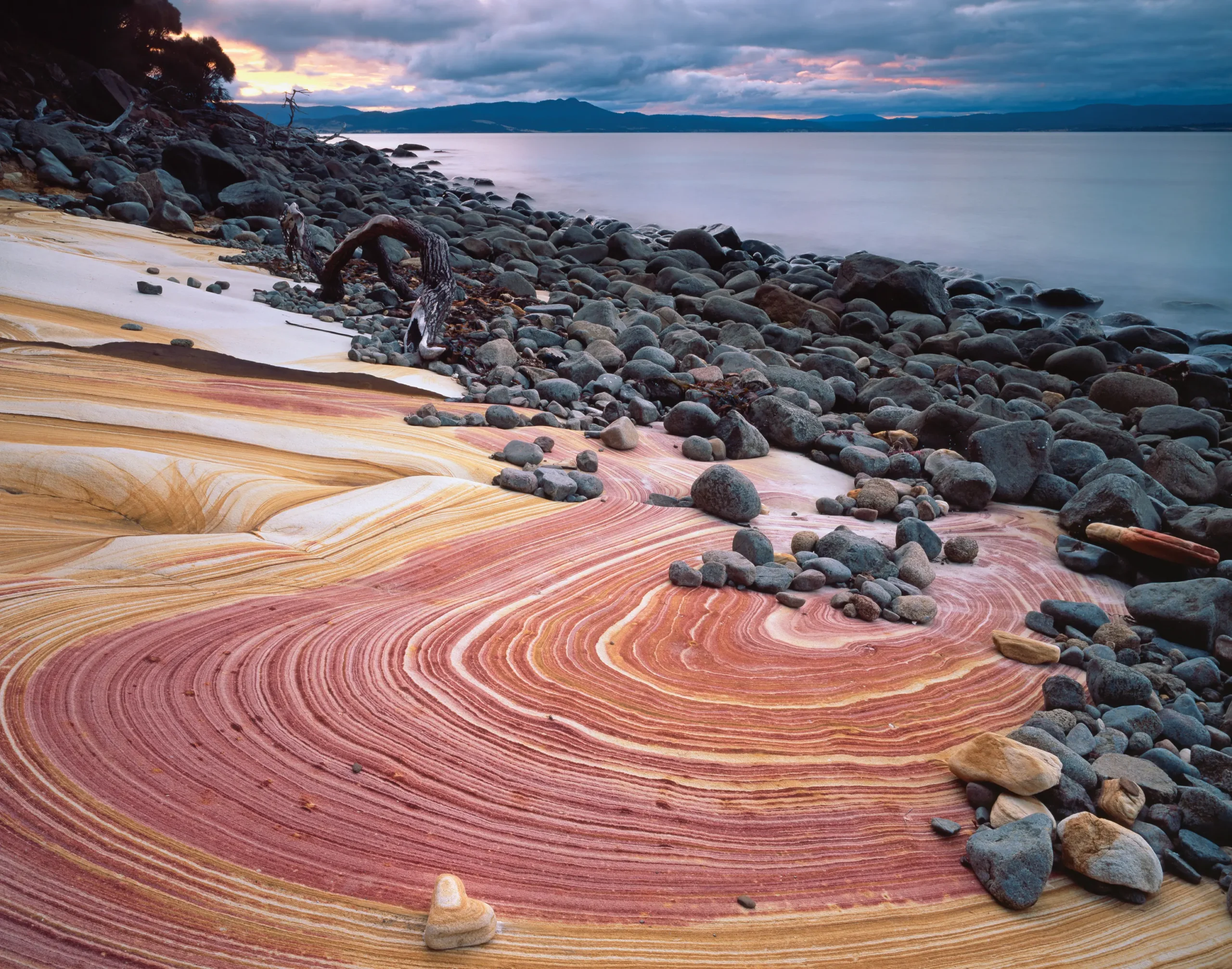
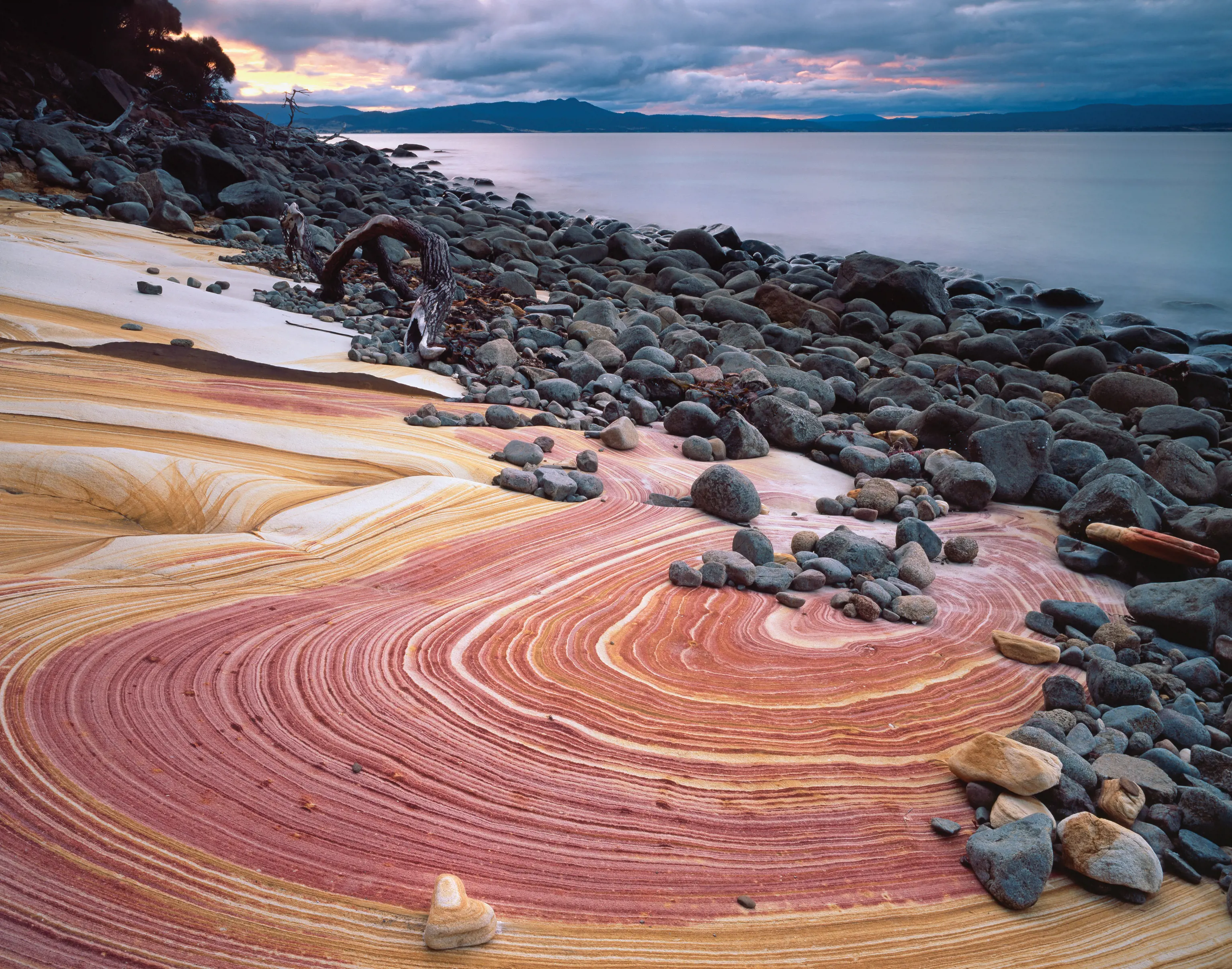
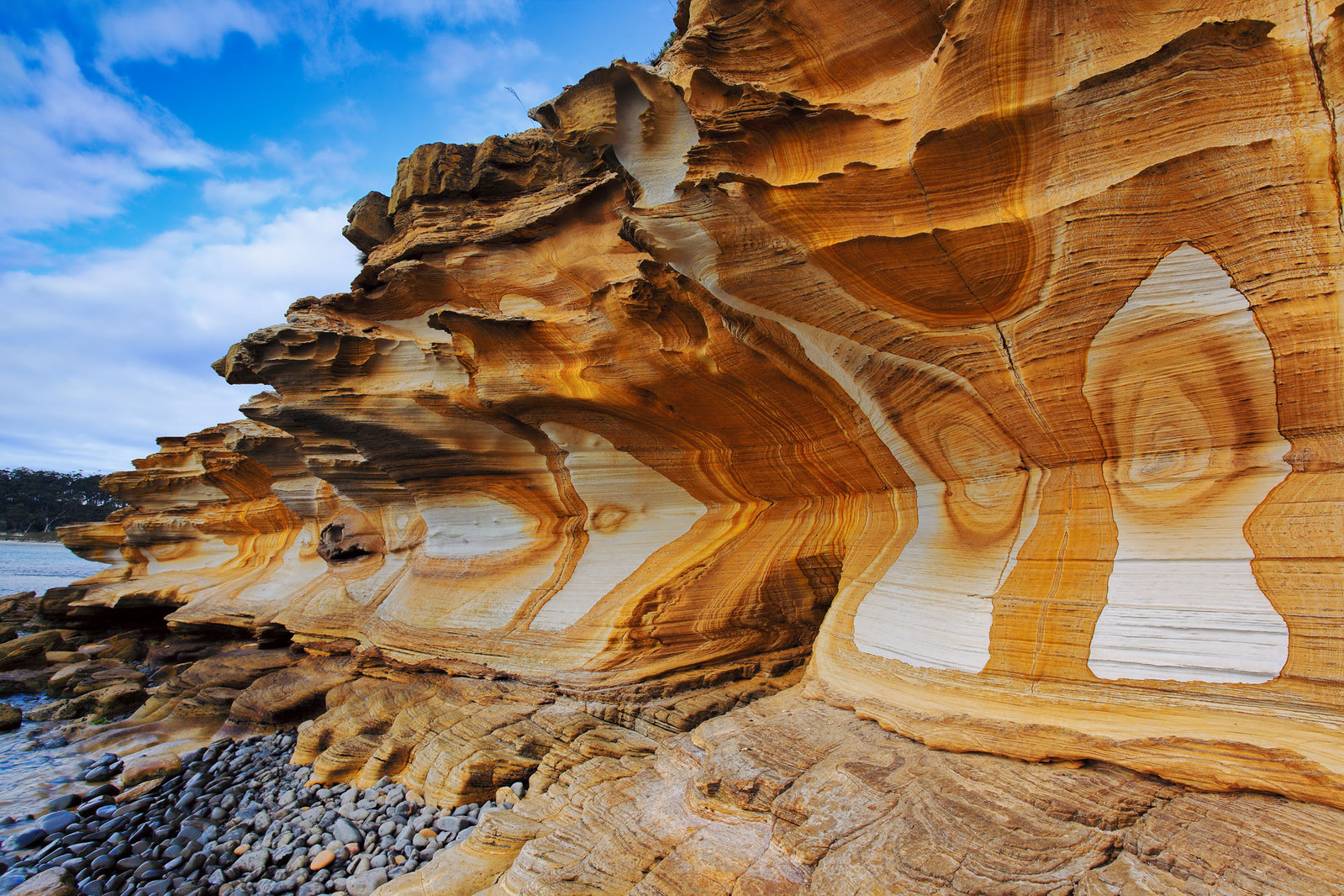
A 90-minute return walk from Darlington along a flat coastal track, best visited at low tide when the sandstone formations are fully exposed. The iron-oxide patterns in the rock look like swirling watercolor paint, and the late-afternoon light makes them glow. Check tide times with the ranger station before setting out. The track is well-marked and suitable for children.
Fossil Cliffs
A two-to-three-hour return walk, longer if you stop to examine the fossil beds. The cliff face is dense with preserved shellfish and ancient marine life dating back roughly 300 million years. The interpretive signs are genuinely helpful. Stay behind the safety barriers; the cliff edge drops sharply into deep water. I watched a ranger politely but firmly redirect a teenager who had hopped the fence for a selfie.
Bishop and Clerk summit
This is the hardest day walk on the island, a four-to-five-hour return hike that climbs roughly 620 meters to a rocky dolerite peak. The final section involves a steep boulder scramble with route markers painted on the rock. On a clear day, the summit gives you a panoramic view across the Tasman Sea to the Freycinet Peninsula. Do not attempt this in wet weather; the dolerite becomes dangerously slick. Carry at least two liters of water and start early to avoid the midday sun on the exposed upper slope.
Darlington convict site
The penitentiary, commissariat store, and old coffee palace are preserved as a UNESCO World Heritage-listed convict site, part of the broader Australian Convict Sites listing. You can walk through the buildings freely, and information panels in each room explain the probation-era system that operated here between 1842 and 1850. The top floor of the penitentiary is now basic bunk accommodation, which means you can literally sleep inside a convict-built structure.
Wildlife guide: what you will see and where
Maria Island delivers the most reliable close-range wildlife encounters I have had anywhere in Australia. The animals here are abundant and largely unbothered by human presence because there are no cars to hit them and no dogs to chase them. That said, these are wild animals, not pets. Keep a respectful distance, never feed them, and do not block their path when they are moving between grazing spots.
@nathsway Cutest island getaway in Aus 😍 – Located just a short drive from Hobart on the east coast of Tasmania, Maria Island feels like stepping into another world! This quiet and remote island is home to dramatic cliffs, pristine beaches and more wombats than people living on it! First take the short walk to the Painted Cliffs where the sandstone glows with swirls of orange and gold! Then continue on to the Fossil Cliffs to see layers of rock containing fossils millions of years old. Finally if you’re chasing adventure, the Bishop and Clerk hike is a must! I took on the challenging 13km scramble to the summit and was rewarded with unreal views over the island and the Tasman Sea. With no cars on the island and wildlife everywhere you look, Maria Island is one of Tasmania’s most peaceful escapes! – #seeaustralia #travelaustralia #tasmania #mariaisland #hobarttasmania
Wombats
Everywhere around Darlington, especially late afternoon and early morning. They graze on the grass flats between the penitentiary and the jetty. Do not crowd them or try to touch them; a startled wombat can charge, and their teeth are serious.
Tasmanian devils
Introduced to the island as part of a conservation breeding program. Mostly nocturnal. I have seen them at dusk near the campground and once, memorably, snuffling around the penitentiary steps after dark. Red torch light is less disruptive than white light for night viewing.
Cape Barren geese
Unmissable. Large, pale grey birds with a distinctive bright greenish-yellow cere above the beak. They graze on the grass flats and are aggressively territorial during nesting season from roughly July to September. Give them a wide berth.
Forester kangaroos
Tasmania’s largest kangaroo species, common in the open grassy areas beyond the Darlington fence line. Most active at dawn and dusk. They are skittish compared to the wombats, so use a zoom lens for photos.
A brief history, because it matters here
Maria Island carries layers of human history that you will bump into constantly as you walk around. The Aboriginal presence dates back thousands of years, with the Tyreddeme band of the Oyster Bay Nation as traditional custodians. From 1825 onward, the island became a penal settlement in two distinct phases, first as a place for secondary offenders and later as a probation station where convicts worked in timber-getting, agriculture, and construction.
The wildest chapter belongs to Diego Bernacchi, an Italian entrepreneur who arrived in the 1880s and tried to turn the island into an industrial hub. He built a cement works, planted vineyards, and even attempted silk production. Most of it failed commercially, but the ruins of his cement silos still stand on the western side of the island as a strange monument to ambitious failure. After Bernacchi’s ventures wound down, farming families worked the land until the national park was declared in 1971. The park status stopped development and preserved the convict-built settlement of Darlington almost exactly as it stood.
When to visit: seasonal weather and wildlife activity
Tasmania’s seasons are pronounced, and Maria Island is exposed to whatever the Tasman Sea throws at it. Summer from December to February brings the warmest temperatures, the longest daylight hours, and the largest visitor numbers. Daytime highs average around 21 degrees Celsius, but the UV index runs high, and shade is scarce on the exposed tracks. This is also peak snake season; keep to the marked paths and watch where you step.
Autumn from March to May is the sweet spot in my opinion. The weather stays settled, the summer crowds thin, and the evening light is spectacular. Winter from June to August is cold, with overnight lows dropping to single digits Celsius and regular rain. The penitentiary bunkhouse is unheated, so you need a serious sleeping bag. Spring from September to November brings Cape Barren goose nesting season, wildflowers, and active wildlife after the leaner winter months. Whale spotting is possible along the east coast during the spring migration.
Maya’s honest take: “I went once in late April and once in mid-January. April was colder but gave me the Fossil Cliffs completely alone for 40 minutes. January gave me sunburn and a queue for the Painted Cliffs photo spot.”
Where to stay: penitentiary bunks versus camping
Accommodation on Maria Island splits into two straightforward options. The Penitentiary bunkhouse occupies the top floor of the old convict barracks and offers basic single and family rooms with foam mattresses on wooden bunks. You need to bring your own sleeping bag or linen. The building has no heating, no cooking facilities, and cold showers only. A bunk costs around $40 AUD per adult per night, and bookings open through the Parks Tasmania website. It sells out weeks ahead during summer and school holidays.
The Darlington campground sits a short walk from the jetty with designated tent sites, a basic shelter, gas barbecues, and the same cold-shower toilet block. Campsites cost roughly $13 AUD per adult per night. You carry your tent, food, stove, and everything else from the ferry. There is no campfire allowance anywhere on the island; you cook on a gas stove or the shared barbecue. The campground is exposed to the wind, so pitch your tent behind the low scrub line if the forecast looks blustery.
If you are doing the four-day Maria Island Walk, the operator provides private glamping camp setups at exclusive locations, including hot showers and prepared meals. That is a fully guided premium experience and is priced and booked entirely separately through the walk operator’s website.
What to pack and mistakes first-timers make
Maria Island is a carry-in, carry-out destination. There is no shop, no cafe, no bin, and no filtered water beyond the rainwater tanks at Darlington, which the rangers recommend treating before drinking. Every item you need must go on the ferry with you, and every piece of rubbish must come back.
Essential packing list
- All your food and snacks. There is nowhere to buy anything on the island.
- At least two liters of water per person per day. Treat or boil tank water if you plan to refill.
- A warm layer and a rain jacket, even in summer. The weather can shift from sun to cold wind in 20 minutes.
- Sturdy walking shoes. The tracks are gravel and rock; flip-flops will not cut it beyond the jetty area.
- Sunscreen, a hat, and sunglasses. The UV is strong, and shade is limited on exposed tracks.
- A head torch with a red-light mode for finding the toilet block at night and for spotting wildlife without disturbing it.
- A portable power bank. There are no charging points in the bunkhouse or campground.
- All rubbish bags. You carry out everything you carry in.
Common first-timer mistakes
- Not booking the ferry ahead in peak season. The boat fills completely in January and over Easter.
- Assuming there is phone reception. There is not. Download offline maps before you leave Triabunna.
- Bringing too much gear. You haul everything from the jetty to your accommodation on foot or by bike.
- Forgetting the national park pass. The ferry ticket does not include park entry, and rangers do check.
- Underestimating the Bishop and Clerk hike. It is steep and exposed, and the boulder scramble at the top is genuinely challenging.
- Approaching Cape Barren geese during nesting season. They will charge, and they are faster than you expect.
- Not carrying enough water. There is exactly one rainwater tank in Darlington; beyond that, there is nothing.
Frequently asked questions
Is Maria Island worth visiting on a day trip from Hobart?
Yes, but it makes for a long day. The drive from Hobart to Triabunna takes about 90 minutes, and you need to arrive 30 minutes before departure. You will spend roughly five hours traveling door-to-door for four to five hours on the island. It is worthwhile if a day is all you have, but an overnight stay softens the travel-to-island-time ratio considerably.
Do I need to book the Maria Island ferry in advance?
Yes, strongly recommended. During summer school holidays and over Easter, the ferry sells out days or even weeks ahead. Book directly through the Encounter Maria Island website. If you are bringing a bicycle, you must reserve deck space for it at the time of booking.
Can you visit Maria Island without a car?
Yes, a bus service runs from Hobart to Triabunna, though it is limited and requires careful scheduling around the ferry times. Most visitors drive or book a tour that includes Hobart hotel pickup. Tassielink and other regional coach services are worth checking for current timetables.
Are there toilets and showers on Maria Island?
Yes, at Darlington. The toilet block has flush toilets and cold-water showers. There is no hot water unless you are on the guided Maria Island Walk, which provides its own facilities. The showers are clean but unheated, so a quick rinse is more tolerable in summer than in midwinter.
Will I definitely see a wombat on Maria Island?
Almost certainly, yes. Wombats graze on the grass flats around Darlington every afternoon and early morning, and they are unfazed by human presence. I have never visited without seeing multiple wombats within ten minutes of stepping off the jetty. Keep your distance and do not attempt to feed or touch them.
Is Maria Island suitable for children?
Yes, with some planning. The Painted Cliffs walk is flat and manageable for young children. The wildlife encounters are a highlight for kids. The main challenges are the lack of food options, the cold showers, and the need to carry everything. For a family day trip, pack plenty of snacks and focus on the Darlington area and Painted Cliffs.
Can I take my dog to Maria Island?
No. Domestic animals, including dogs, are strictly prohibited on Maria Island to protect the wildlife and the national park ecosystem. This includes dogs left in vehicles at the Triabunna dock, as cars can heat dangerously during the day. Leave your pet at home or with a sitter.
Plan your trip: booking resources we use
Maria Island requires booking several separate pieces: the ferry, the national parks pass, and accommodation if you are staying overnight. I recommend locking in the ferry first because available sailings dictate everything else.
Best for finding guided Maria Island day tours from Hobart with transport and ferry included.
Best for reading recent visitor reviews about current ferry conditions and wildlife sightings.
Best for finding accommodation in Triabunna or Hobart the night before your ferry departure.
Best for renting a full holiday house in Triabunna or Orford as a base for your Maria Island trip.