advertisement
Serengeti National Park: Complete Guide to Tanzania’s Great Migration
Fact-Checked By Maya Whitfield, Senior Travel Editor at WakaAbuja
Serengeti National Park covers 14,750 square kilometers of grassland and woodland in northern Tanzania. It protects the largest land migration on Earth, with roughly 1.5 million wildebeest and 250,000 zebra moving through the ecosystem each year. Park entry costs about $60 to $70 per adult per day for foreign visitors, depending on the season, and the best time to see the migration varies by month and location.
I have sat in a Land Cruiser near the Grumeti River and watched a line of wildebeest stretch from one horizon to the other, thousands of animals moving with a kind of nervous, unstoppable energy. That moment is the reason the Serengeti exists in the public imagination, but the reality of planning a trip there is more complicated than any nature documentary shows.
This guide gives you what Wikipedia and the official park page leave out: real costs, month-by-month migration timing, how the park’s three regions differ, and how it compares to Ngorongoro and the Maasai Mara.
Jump to: What Is the Serengeti | The Great Migration | Wildlife | The Three Regions | Best Time to Visit | Entry Costs | Serengeti vs. Ngorongoro vs. Maasai Mara | FAQ
Key takeaways
- The Serengeti is 14,750 square kilometers, roughly the size of Connecticut, and protects the largest land migration on Earth.
- The Great Migration involves about 1.5 million wildebeest and 250,000 zebra moving in a continuous loop through the Serengeti and into Kenya’s Maasai Mara.
- Park entry for foreign visitors costs between $60 and $70 per adult per day, with additional concession fees for staying overnight inside the park.
- The best time to see the migration depends on where the herds are. The southern plains are best from January to March, the western corridor in May and June, and the northern river crossings from July to October.
- The park has three distinct regions, and the experience changes dramatically depending on which one you visit.
- The Serengeti is not the same as Ngorongoro Crater. Ngorongoro is a separate conservation area with different rules, different fees, and a completely different landscape.
- Budget at least 3 to 4 days inside the park for a meaningful safari, and expect total costs to run from $250 per day for budget camping safaris to over $1,000 per day for luxury lodges.
What Is Serengeti National Park?
Serengeti National Park is a protected area in northern Tanzania, spanning 14,750 square kilometers across the Mara and Simiyu regions. It was established in 1951 and designated a UNESCO World Heritage Site in 1981. The name comes from the Maasai word “siringet,” which roughly translates to “the place where the land runs on forever.” That is not poetic exaggeration. The southern plains genuinely do seem to run to the edge of the visible world.
The park sits at an elevation between 900 and 1,800 meters, with volcanic soils that support short-grass plains in the south and more wooded terrain in the north and west. It is part of a larger ecosystem that includes Ngorongoro Conservation Area, Maswa Game Reserve, and Kenya’s Maasai Mara National Reserve. The animals do not recognize park boundaries, and the migration moves through all of these areas across the year.
I have spent time in all three regions of the park, and they feel like different countries. The south is wide open and treeless, the west is dense with riverine forest, and the north is rocky and green. Understanding those differences is the single most important thing you can do before choosing where to stay and when to go.
Maya’s honest take: “People say ‘the Serengeti’ like it is one place. It is not. It is three very different landscapes with three very different safari experiences. Pick the wrong region for the wrong month and you will wonder what all the fuss is about.”
The Great Migration Explained
The Great Migration is the continuous, year-round movement of roughly 1.5 million wildebeest, 250,000 zebra, and smaller numbers of gazelle through the Serengeti-Mara ecosystem. The animals follow the rain and the fresh grass it produces. There is no single starting point or ending point. The herds move in a rough clockwise loop, calving in the south between January and March, moving west and north through the middle of the year, crossing the Grumeti and Mara rivers, and then drifting back south as the short rains return in November.
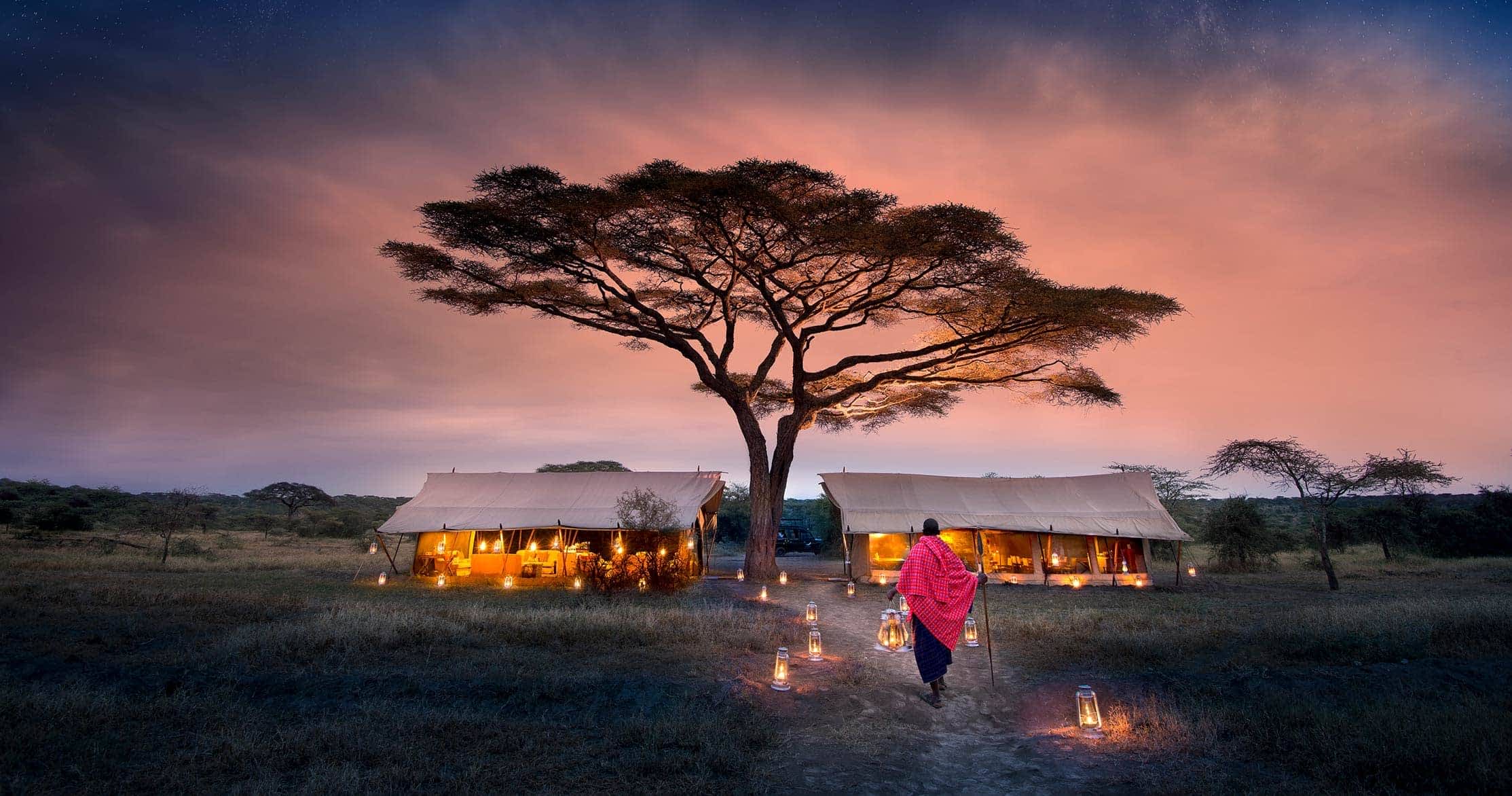
This is not a synchronized event. It is a broad, messy, living system. The herds can split, stall, or double back depending on rainfall. A river crossing can happen on a Tuesday and be over by Thursday. I have spent two days waiting for a crossing that never came, and I have also arrived at the Mara River to find thousands of animals pouring down the bank with no warning at all. That unpredictability is part of the experience, but it means you should never plan a trip around a single expected crossing date.
Migration by Month
Here is how the migration generally moves through the year, based on long-term patterns and recent field reports. This is a planning guide, not a guarantee. Rain patterns can shift the timing by weeks in either direction.
January to March, Southern Plains
The herds concentrate in the short-grass plains around Ndutu and the southern Serengeti. This is calving season, with up to 8,000 wildebeest born per day at the peak. Predator action is intense. The landscape is green and full of life. This is my personal favorite time to be in the park.
April to May, Western Corridor
The long rains arrive, and the herds begin moving west toward the Grumeti River. This is a wetter, quieter time in the park. Roads can be muddy, and some camps close. The landscape is lush and green, and the Grumeti River crossings, while smaller than the Mara, are dramatic. Prices are often lower.
June to July, Western to Northern
The herds push north through the western corridor and into the northern Serengeti. By late July, large numbers are gathering near the Mara River, waiting to cross. The first major crossings usually happen in July, but the timing varies.
August to October, Northern Serengeti and Maasai Mara
This is the classic river crossing season. The herds cross back and forth across the Mara River between Tanzania and Kenya. Crocodiles take their toll, and the crossings are spectacular and brutal. The northern Serengeti is busy with safari vehicles during these months.
November to December, Return South
The short rains begin, and the herds start drifting back toward the southern plains. This is a transitional period. The animals are spread out, and the landscape turns green again. It is a good time for fewer crowds and still-solid wildlife viewing.
For up-to-date migration reports, I follow the field updates from safari operators on the ground. The Tanzania National Parks Authority site is also useful for official park news and current conditions.
Wildlife of the Serengeti
The Serengeti supports one of the densest large-mammal populations in the world. The Big Five are all present, though rhinos are rare and mostly confined to a protected area in the central Serengeti. Lion numbers are estimated at around 3,000, making this one of the largest lion populations in Africa. Leopards are common in the acacia trees along the Seronera River, and cheetahs favor the open southern plains.
Beyond the big cats and the migration herds, the park holds elephants, buffalo, giraffes, hippos, and more than 500 bird species. The birding is seriously underrated. I have spent an afternoon near a hippo pool watching malachite kingfishers and grey-headed kingfishers work the same stretch of water, and it was as memorable as any lion sighting.
The wildlife densities shift with the seasons. In the dry months, animals concentrate near permanent water sources like the Seronera and Grumeti rivers. In the wet months, they spread out across the plains. That is why choosing where to stay based on the time of year matters so much. A lodge that is perfectly placed in August might be in the wrong place entirely in February.
The Three Regions of the Serengeti
The Serengeti is usually described in three parts: the southern plains, the western corridor, and the northern Serengeti. Each has a distinct landscape, wildlife pattern, and safari feel. Here is what each region is actually for from a visitor’s perspective.
Southern Plains
The south is wide open, with short grass and almost no trees. It is the heart of the migration during calving season from January to March. This is where you see the huge herds at their densest, along with the predators that follow them. The downside is that the South is seasonal. Outside the green season, it can be dry and empty.
Western Corridor
The west follows the Grumeti River, a green ribbon of forest and dense bush through otherwise dry country. It is best from May to July, when the migration passes through and the Grumeti River crossings happen. It is also home to large resident hippo pods and some of the park’s best birding. The roads here can be rough, and the camps are fewer and more spread out.
Northern Serengeti
The north is hillier and more wooded, rolling country that feels different from the flat south. It is the staging ground for the Mara River crossings from July to October. This is the most dramatic place to be during crossing season, but it is also the busiest and most expensive. The landscape is beautiful year-round, with granite kopjes and riverine forest.
Best Time to Visit Serengeti National Park
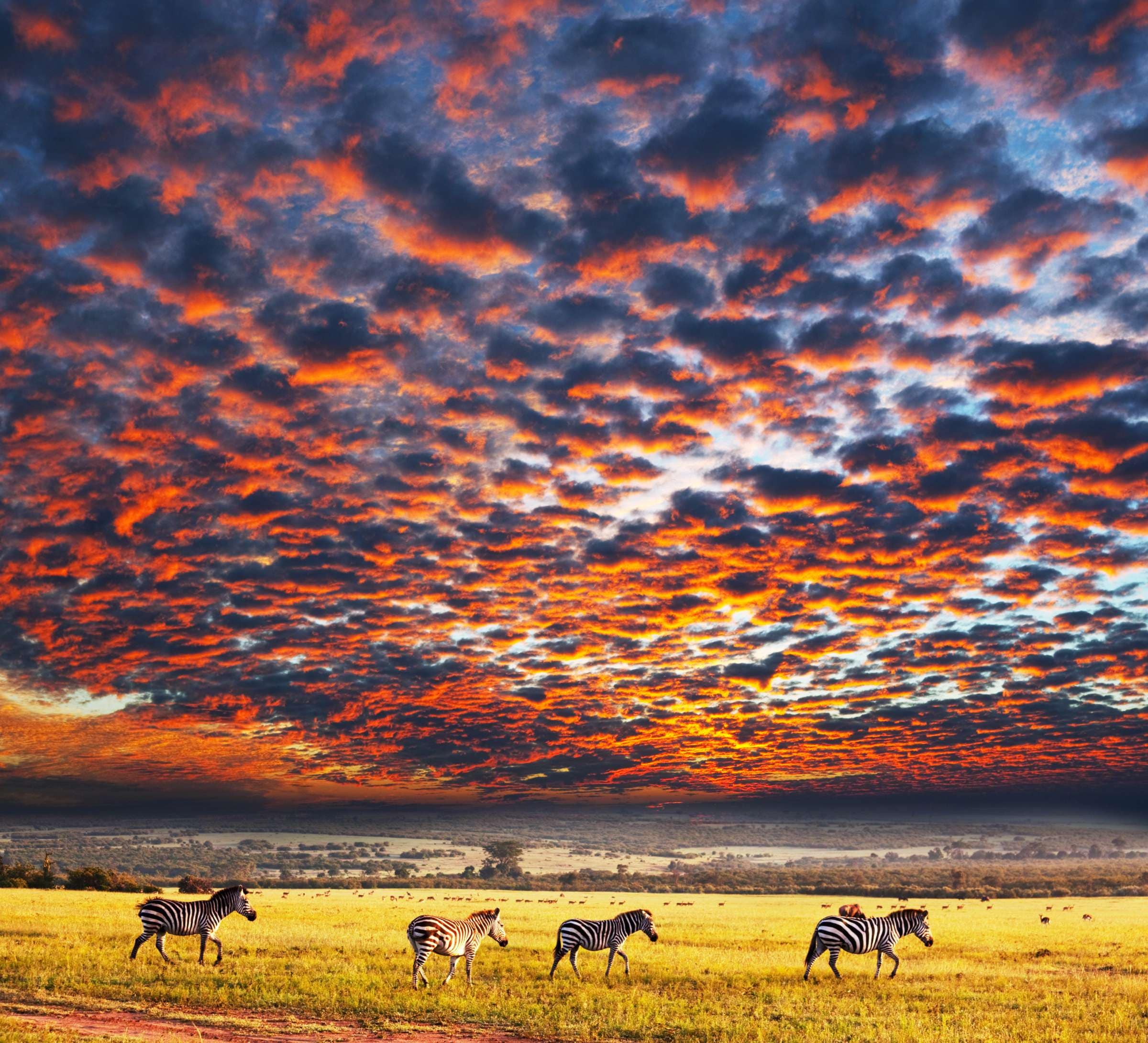
There is no single best time to visit the Serengeti, because the park changes so much across the year. The best time for you depends on what you want to see and how much you want to spend. The dry season, from June to October, is the most popular and the most expensive. The green season, from January to March, offers calving and fewer crowds in the south. The shoulder months of November and April are quieter and cheaper, but the wildlife viewing can be less predictable.
I have visited in February and in September, and they were completely different trips. February was lush and green, with wildebeest calves everywhere and relatively few other vehicles. September was dusty and golden, with the northern river crossings in full swing and a lot more traffic on the roads. Both were worth it for different reasons. If you can only go once, I would lean toward January through March for the calving and the green landscape, unless your primary goal is to see a river crossing.
For booking flights and safaris, I start with Kayak to compare flights into Kilimanjaro International Airport or Arusha, then use a safari operator or GetYourGuide to find specific Serengeti tour options.
How Much Does It Cost to Visit the Serengeti?
The Serengeti is not a cheap destination, and the costs stack up fast. The main expenses are park entry fees, concession fees for staying inside the park, accommodation, and transport. Park entry for foreign visitors is currently around $60 to $70 per adult per day, depending on the season and current TANAPA rates. Children pay less. Concession fees for overnight stays inside the park add another $50 to $70 per person per night, depending on the camp or lodge.
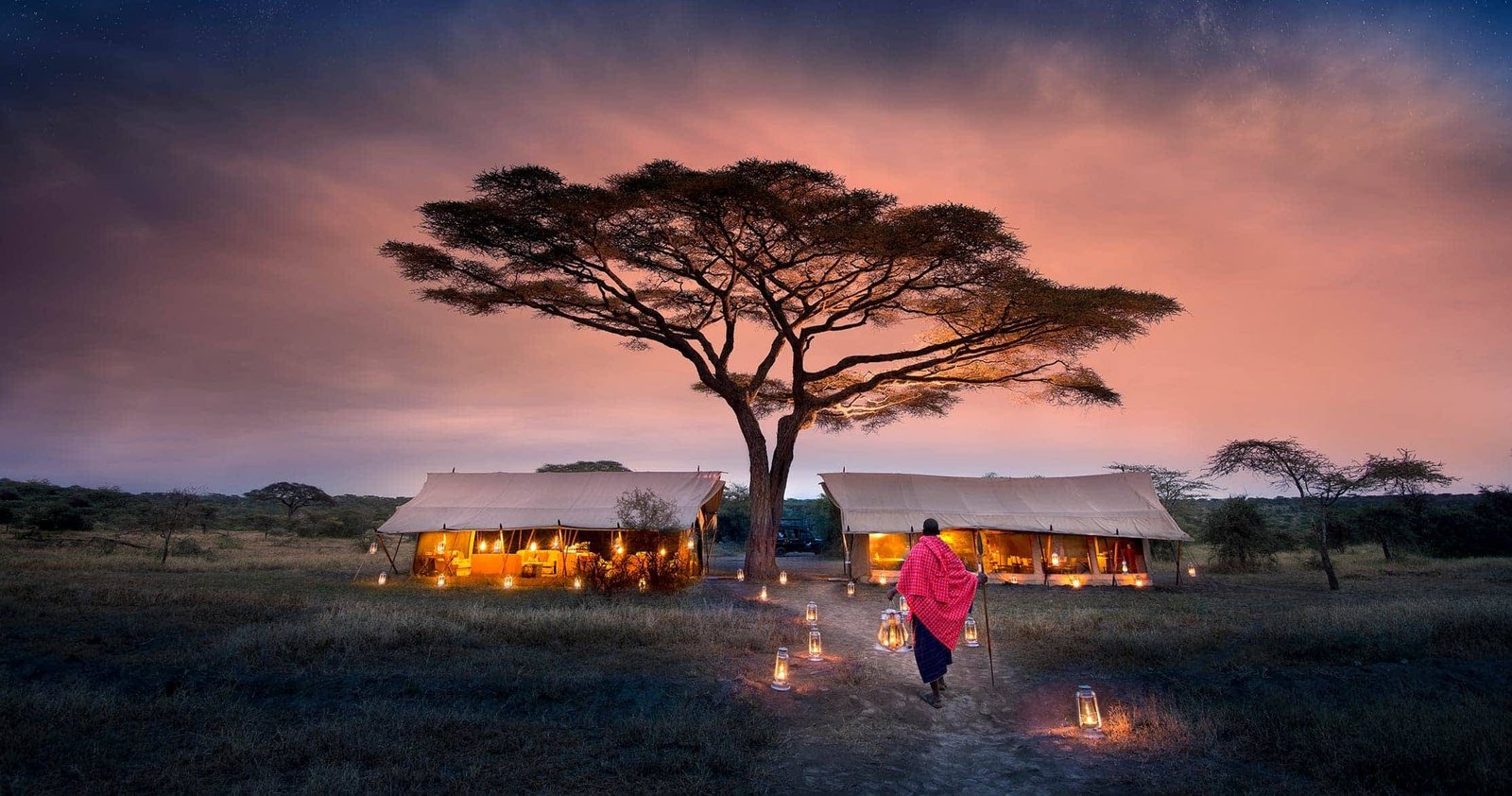
On top of those fees, you have the actual safari cost. A budget camping safari can run $200 to $300 per person per day. A mid-range lodge safari typically runs $400 to $700 per person per day. Luxury lodges and tented camps easily exceed $1,000 per person per day. These prices usually include game drives, meals, and a guide, but you should confirm exactly what is included before you book.
The single biggest mistake I see first-timers make is underestimating the total cost. They budget for park fees and forget about concession fees, tips, and the cost of getting from Arusha to the park gate. The drive from Arusha to the Serengeti takes 6 to 8 hours, and many people fly into one of the park’s small airstrips instead, which adds $150 to $300 per person for the flight.
For lodging near Arusha before or after your safari, I have used Booking.com for hotels and guesthouses. For full safari packages that bundle lodging, park fees, and guide services, Expedia and safari specialist sites are good starting points.
Serengeti vs. Ngorongoro vs. Maasai Mara

People often use “Serengeti” and “Ngorongoro” interchangeably, but they are different places with different rules. Ngorongoro Conservation Area is a separate protected area adjacent to the Serengeti, centered on a massive volcanic caldera. It is smaller, more contained, and easier to see a lot of wildlife in a short time. The Serengeti is vast and open, and the wildlife is more spread out. Both are worth visiting, but they offer different experiences.
The Maasai Mara in Kenya is the northern extension of the same ecosystem. The migration crosses between the Serengeti and the Mara, and the Mara is famous for its own river crossings from July to October. The Mara is much smaller than the Serengeti, so wildlife densities can be higher in the dry season, but it is also more crowded with safari vehicles.
Serengeti
- 14,750 square kilometers
- Best for the migration and open plains
- Park entry about $60 to $70 per adult per day
- Needs 3 to 4 days minimum
Ngorongoro Crater
- About 260 square kilometers of crater floor
- Best for dense wildlife in a small area
- A conservation area entry fee applies
- Can be done in 1 to 2 days
Maasai Mara
- About 1,500 square kilometers
- Best for river crossings and high predator density
- Park entry about $70 to $80 per adult per day in high season
- Can be done in 2 to 3 days
If you have a week, the classic northern Tanzania circuit combines the Serengeti, Ngorongoro, and often Lake Manyara or Tarangire. That is the trip I recommend to first-timers because it gives you the full range of landscapes and wildlife. You can add the Maasai Mara as a separate Kenya trip or do a cross-border itinerary if you have more time and budget.
History and Conservation in the Serengeti
The Serengeti was first protected as a game reserve in 1929, then became a national park in 1951. The boundaries have shifted since then. In 1959, the Ngorongoro Crater highlands were split off into a separate conservation area after negotiations with the Maasai people who lived there. That split remains a source of tension and debate, and it shaped the Serengeti as it exists today.
Bernhard Grzimek and his son Michael played a major role in bringing the Serengeti to international attention through their 1959 book and film “Serengeti Shall Not Die.” Michael Grzimek died in a plane crash during that work, and his grave is near the Ngorongoro Crater rim. The book helped build the global conservation movement around the park, but it also contributed to a narrative that ignored the Maasai and other communities who had lived in and used the landscape for generations. That context matters when you visit. The Serengeti is not empty wilderness. It is a managed landscape with a long human history.
The current conservation challenge is the proposed highway that would cut across the northern Serengeti. The plan has been debated for years, with conservationists warning that a major road through the park could disrupt the migration. The legal and political situation changes frequently. I follow the news on this through TANAPA and reputable East African news outlets, because the facts shift faster than any guidebook can keep up with.
Frequently Asked Questions
How big is Serengeti National Park?
Serengeti National Park covers 14,750 square kilometers, roughly the size of Connecticut or Northern Ireland. It sits in northern Tanzania and is part of a larger ecosystem that includes Ngorongoro Conservation Area and Kenya’s Maasai Mara.
What is the best month to see the Great Migration?
There is no single best month. January through March offers calving in the southern plains, while July through October offers river crossings in the northern Serengeti and Maasai Mara. The exact timing depends on rainfall and shifts from year to year.
How much does it cost to enter Serengeti National Park?
Park entry for foreign visitors is about $60 to $70 per adult per day, depending on the season and current TANAPA rates. Overnight stays inside the park also incur a concession fee, usually $50 to $70 per person per night. Safari packages often bundle these fees into a total per-person daily rate.
How many days do you need in the Serengeti?
Most safari operators recommend at least 3 to 4 days inside the park. That gives you time to explore more than one region and increases your chances of seeing the migration, big cats, and a river crossing. One or two days feels rushed given the park’s size.
Is Serengeti National Park safe?
Yes, the Serengeti is safe for visitors who follow the rules. The main risks are wildlife encounters and vehicle accidents, both of which are managed by staying in your vehicle except at designated points and listening to your guide. Malaria prophylaxis is recommended, and you should check current health advice before travel.
What is the difference between Serengeti and Ngorongoro?
The Serengeti is a vast, open national park best known for the migration and wide plains. Ngorongoro is a separate conservation area centered on a volcanic caldera, where wildlife is denser and easier to see in a short time. Both are part of the same ecosystem but have different fees and rules.
Can you see the Big Five in the Serengeti?
Yes, all Big Five species are present, but rhinos are rare and mostly confined to a protected area in the central Serengeti. Lion, leopard, elephant, and buffalo are seen regularly. Seeing all five in one trip is possible but not guaranteed.
Plan your trip: booking platforms we trust
For a Serengeti safari, the booking order I recommend is flights first, then safari package or accommodation, then any pre-safari hotel nights. Here are the platforms I use for each step.
Best for comparing flights into Kilimanjaro or Arusha.
Useful for finding Serengeti safari tours and day trips.
Good for hotels in Arusha before and after your safari.
Useful for bundling flights and hotels with safari packages.
Good for recent safari operator reviews and traveler photos.