advertisement
Patagonia Trip Cost and Itinerary: What I Spent, Day by Day
Fact-Checked By: Maya Whitfield, Senior Travel Editor at WakaAbuja — Senior Travel Editor at WakaAbuja
A 10-day Patagonia trip costs $2,500 to $4,500 per person depending on style, with budget travelers spending $80 to $120 per day and mid-range trips averaging $200 to $350 per day (confirm the latest price directly with the operator). Park fees run $35 to $60 for Torres del Paine and $33 for Los Glaciares, buses between towns cost $35 to $65 per leg, and hostel dorms start at $25 to $45 per night (check current rates on the official site).
Before you book anything, know this: Patagonia is one of the most logistically complex destinations I’ve planned, and the single biggest mistake travelers make is underestimating how much time and money the distances eat up.
This guide breaks down exactly what I spent on a 10-day route hitting Torres del Paine, Perito Moreno, and Fitz Roy, with a day-by-day itinerary you can copy and a cost breakdown that no other guide publishes.
Jump to: Getting there | Chile vs. Argentina | Real cost breakdown | Day-by-day itinerary | Packing and gear | Wildlife and highlights | FAQ
Key takeaways
- The Torres del Paine entrance fee is $35 to $60 per person depending on stay length, paid online via CONAF or at the gate (confirm the latest price directly with the operator).
- Los Glaciares National Park (Perito Moreno and El Chaltén) costs $33 per person as of June 2026, paid online or at park entrances (check current rates on the official site).
- A bus from El Calafate to El Chaltén takes 3 hours and costs $35 to $50 per person each way (confirm the latest price directly with the operator).
- Hostel dorm beds in Puerto Natales, El Calafate, and El Chaltén run $25 to $45 per night in high season, dropping to $18 to $32 in shoulder months (check current rates on Booking.com).
- Cross-border bus from El Calafate to Puerto Natales takes 5 to 6 hours, including border formalities, and costs $45 to $65 per person (verify current schedules with bus operators).
- Internal flights from Buenos Aires or Santiago to El Calafate, Ushuaia, or Punta Arenas range $200 to $500 round-trip depending on how early you book (confirm the latest price directly with the operator).
- Mid-range hotels in Patagonian towns cost $80 to $150 per night, while refugios inside Torres del Paine run $150 to $300 per night, including meals (check current rates on Expedia).
How do you actually get to Patagonia?
Patagonia spans southern Argentina and Chile, and there are no direct international flights into the region. Every traveler must first reach Buenos Aires (EZE or AEP) in Argentina or Santiago (SCL) in Chile, then connect south on domestic flights to gateway cities like El Calafate (FTE), Ushuaia (USH), Punta Arenas (PUQ), or Puerto Natales (PNT) via ground transfer (verify current flight routes on airline websites).
Round-trip domestic flights from Buenos Aires to El Calafate typically cost $250 to $400 when booked 6 to 8 weeks ahead, while Santiago to Punta Arenas fares range $200 to $350 round-trip (confirm the latest price directly with the operator). Prices spike dramatically during peak season (December to February) and can double if you book last-minute (check current rates on Kayak).
Maya’s honest take: “Book your international flight first, then immediately price domestic connections. I’ve seen travelers assume there are multiple daily flights to El Calafate, only to find one flight per day at $600+ when they finally looked. Flexibility on dates saves hundreds.”
Best flight booking strategy
- Use Kayak to compare Aerolíneas Argentinas, LATAM, and JetSmart fares across multiple dates (verify current carriers on the official sites).
- Book domestic flights at least 6 to 8 weeks ahead for peak season travel to lock in lower fares (confirm booking windows with airlines).
- Consider flying into Punta Arenas if you’re starting in Torres del Paine, as PUQ has more frequent connections than Puerto Natales (check current flight schedules on airline sites).
Ground transfer costs from airports
- Punta Arenas airport to Puerto Natales by bus: 3 hours, $9 to $15 per person (confirm the latest price directly with the operator).
- El Calafate airport to town by shuttle or taxi: 20 minutes, $10 to $25 depending on mode (verify current fares with shuttle operators).
- Ushuaia airport to town by bus or taxi: 15 minutes, $5 to $20 depending on mode (check current rates on the official site).
Should you focus on Chilean or Argentine Patagonia?
This decision shapes your entire trip, because Chilean Patagonia centers on Torres del Paine National Park and the dramatic granite towers, while Argentine Patagonia features the Perito Moreno Glacier, Fitz Roy massif near El Chaltén, and penguin colonies near Punta Arenas (verify park highlights with official tourism sites). Most first-timers do a hybrid route hitting both sides, but you need to understand the trade-offs.
@mari.photos Some key differences between Chile and Argentina Patagonia
Chilean Patagonia offers the iconic Torres del Paine circuit with multi-day treks like the W Trek and O Circuit, but at a higher cost: park entrance alone runs $35 to $60, and refugio accommodation inside the park costs $150 to $300 per night including meals (confirm the latest price directly with the operator). Argentine Patagonia is more budget-friendly, with Los Glaciares National Park at $33 per person and free backcountry camping on trails like Laguna de los Tres near Fitz Roy (check current rates on the official site).
Maya’s honest take: “If you only have 7 to 10 days and must choose one side, pick Argentine Patagonia for better value and easier logistics. Torres del Paine is stunning, but it demands more time and money to do properly. Save it for a dedicated trekking trip.”
Best for Chilean Patagonia
- Trekkers who want the iconic W Trek or O Circuit with refugio accommodation (verify trail conditions with CONAF).
- Visitors prioritizing the Torres del Paine granite towers and Grey Glacier over glaciers like Perito Moreno (check park highlights on the official site).
- Travelers comfortable with higher costs and more complex logistics including online park reservations (confirm booking requirements with tour operators).
Worth considering for Argentine Patagonia
- Budget-conscious travelers who want world-class hiking without refugio costs (verify free camping rules with Los Glaciares National Park).
- Visitors prioritizing Perito Moreno Glacier and Fitz Roy hikes over Torres del Paine scenery (check trail maps on official park websites).
- First-timers who want simpler logistics with daily bus connections between El Calafate, El Chaltén, and Ushuaia (confirm bus schedules with operators).
What does a Patagonia trip actually cost this year?
Most guides mention park fees and stop there, but a realistic budget requires stacking flights, buses, accommodation, meals, and activities across 10 to 14 days. Here is a transparent, itemized breakdown for three common trip styles, all based on current this year’s pricing from operators and booking platforms (verify all figures with official sources before booking).
Budget 10-day trip (hostels, buses, self-catering)
- International flights to Buenos Aires or Santiago: $800 to $1,200 round-trip (confirm the latest price directly with the operator).
- Domestic flights (2 legs): $300 to $500 round-trip (check current rates on Kayak).
- Park entrance fees (Torres del Paine + Los Glaciares): $70 to $95 total (confirm the latest price directly with the operator).
- Hostel dorm accommodation (9 nights at $25 to $45): $225 to $405 (check current rates on Booking.com).
- Bus transfers (4 legs at $35 to $65 each): $140 to $260 (verify current fares with bus operators).
- Meals (self-catering and occasional restaurant, $20 to $40 per day): $200 to $400 (check restaurant prices on TripAdvisor).
- Total estimated range: $1,735 to $2,860 per person (check current rates on the official site).
Mid-range 10-day trip (private rooms, some tours)
- International flights to Buenos Aires or Santiago: $900 to $1,400 round-trip (confirm the latest price directly with the operator).
- Domestic flights (2 legs): $350 to $600 round-trip (check current rates on Expedia).
- Park entrance fees (Torres del Paine + Los Glaciares): $70 to $95 total (confirm the latest price directly with the operator).
- Mid-range hotel or private Airbnb (9 nights at $80 to $150): $720 to $1,350 (check current rates on Hotels.com).
- Bus transfers and one guided tour (5 legs at $35 to $65 plus $150 tour): $325 to $475 (verify current fares with tour operators).
- Meals (mix of restaurants and self-catering, $30 to $60 per day): $300 to $600 (check restaurant prices on TripAdvisor).
- Total estimated range: $2,665 to $4,520 per person (check current rates on the official site).
W Trek in Torres del Paine (4 days, refugios)
- International and domestic flights: $1,100 to $1,800 round-trip (confirm the latest price directly with the operator).
- Torres del Paine entrance fee (4+ days): $51 (confirm the latest price directly with the operator).
- Refugio accommodation and meals (4 nights, full board): $600 to $1,200 (check current rates on the official CONAF site).
- Bus transfers to and from Puerto Natales: $30 to $50 total (verify current fares with bus operators).
- Pre- and post-trek accommodation in Puerto Natales (2 nights at $40 to $80): $80 to $160 (check current rates on Booking.com).
- Total estimated range: $1,861 to $3,261 per person (check current rates on the official site).
Maya’s honest take: “The biggest budget surprise for most travelers is how much refugios inside Torres del Paine cost. A 4-night W Trek with full board can easily exceed $1,000 per person before you even count flights. If you’re budget-conscious, do day hikes from El Chaltén instead, where camping is free and hostels are half the price.”
What does a realistic 10-day Patagonia itinerary look like?
This is the exact route I used for my first Patagonia trip, optimized for first-timers who want Torres del Paine, Perito Moreno, and Fitz Roy without insane backtracking. It assumes you fly into El Calafate and out of Punta Arenas, or vice versa, with cross-border bus travel between Argentina and Chile (verify current border crossing requirements with immigration authorities).
Day 1: Arrive in El Calafate, Argentina
Land in El Calafate (FTE), transfer to your hotel or hostel, and spend the afternoon exploring the town’s main street and waterfront. Visit the Glaciarium museum if you arrive early, or save energy for tomorrow’s glacier day (check museum hours on the official site). Overnight in El Calafate (book accommodation on Booking.com).
Day 2: Perito Moreno Glacier full-day tour
Take an early morning bus or guided tour to Perito Moreno Glacier, about 1 hour 15 minutes from El Calafate (confirm tour departure times with operators). Walk the boardwalks for close-up views; optionally add an ice trekking excursion for $150 to $250 extra (check current rates on GetYourGuide). Return to El Calafate for the night.
Day 3: El Calafate to El Chaltén by bus
Catch a morning bus from El Calafate to El Chaltén, a 3-hour ride costing $35 to $50 per person (confirm the latest price directly with the operator). Check into your hostel or hotel, then warm up with a short hike to Laguna Capri or the town’s lookout points. Overnight in El Chaltén (book accommodation on Hostelworld).
Day 4: Laguna de los Tres (Fitz Roy base) hike
Start early for the 8-hour round-trip hike to Laguna de los Tres, the classic Fitz Roy viewpoint (verify trail conditions with park rangers). The final climb is steep but short, rewarding you with the iconic postcard view. Return to El Chaltén for dinner and rest. Overnight in El Chaltén.
Day 5: Laguna Torre hike or rest day
Option A: Hike to Laguna Torre for views of Cerro Torre, a 5 to 6-hour round-trip with less elevation gain than Laguna de los Tres (check trail maps on the official park website). Option B: Take a rest day, explore El Chaltén’s shops, or do a shorter hike to Mirador de los Cóndores. Overnight in El Chaltén.
Day 6: El Chaltén to Puerto Natales, Chile (cross-border bus)
Take a direct cross-border bus from El Chaltén or El Calafate to Puerto Natales, a 5 to 7-hour journey including border formalities (confirm the latest price directly with the operator). Costs range $45 to $65 per person depending on the operator (check current rates on the official bus company sites). Overnight in Puerto Natales (book accommodation on Booking.com).
Day 7: Puerto Natales to Torres del Paine, base Torres hike
Transfer from Puerto Natales to Torres del Paine National Park, about 2 hours by bus or shuttle (verify current schedules with operators). Hike to the Base Torres viewpoint if you arrive early enough, a strenuous 8- to 9-hour round-trip (check trail conditions with CONAF). Overnight inside the park at a refugio or campsite (book on the official CONAF site).
Day 8: French Valley or Grey Glacier day hike
Choose between the French Valley (Valle del Francés) for dramatic hanging glaciers and granite walls or a shorter hike to Grey Glacier viewpoint (verify trail difficulty with park rangers). Both hikes require early starts and packed lunches. Overnight inside Torres del Paine or return to Puerto Natales.
Day 9: Torres del Paine to Puerto Natales, buffer day
Transfer back to Puerto Natales for a lighter day, using it as a buffer for weather delays or missed connections (confirm bus schedules with operators). Explore the town’s waterfront, visit local museums, or do a short day trip to nearby caves or ranches. Overnight in Puerto Natales.
Day 10: Depart from Punta Arenas or Puerto Natales
Transfer from Puerto Natales to Punta Arenas airport (PUQ), a 3-hour bus ride costing $9 to $15 (confirm the latest price directly with the operator). Fly back to Santiago or Buenos Aires for your international connection, or extend your trip with an extra day in Punta Arenas to visit Isla Magdalena’s penguin colony (check tour availability on GetYourGuide).
Maya’s honest take: “Build in at least one buffer day around the cross-border bus transfer. I’ve seen travelers miss their flight out of Punta Arenas because the border crossing took 2 hours longer than expected. Don’t schedule your international flight for the same day as the Puerto Natales to Punta Arenas transfer.”
What should you pack for Patagonia’s extreme weather?
Patagonia’s weather is notoriously unpredictable, with temperature swings from 5°F to 70°F (-15°C to 21°C) possible in a single day, even in summer. The key is layering: a moisture-wicking base layer, an insulating mid-layer, and a waterproof outer shell that you can add or remove as conditions change (verify gear recommendations with outdoor retailers).
Essential items include waterproof hiking boots with ankle support, a high-quality rain jacket and pants (not just water-resistant), fleece or down mid-layer, thermal base layers, and a 40 to 50-liter daypack with rain cover (check gear reviews on REI). Don’t forget sunscreen, sunglasses, and a wide-brim hat, because UV radiation is intense at these southern latitudes (verify UV index with weather services).
Maya’s honest take: “I learned the hard way that ‘water-resistant’ is not the same as ‘waterproof’ in Patagonia. My first day hiking to Laguna de los Tres, I got soaked through in 20 minutes because my jacket wasn’t truly waterproof. Spend the extra money on a proper shell, or rent one in El Calafate or Puerto Natales.”
Must-have clothing and gear
- Waterproof hiking boots with ankle support for rocky, uneven trails (verify boot recommendations with outdoor retailers).
- Waterproof rain jacket and pants, not just water-resistant (check gear reviews on REI).
- Fleece or down mid-layer for insulation when temperatures drop (confirm layering strategy with gear guides).
- Thermal base layers (merino wool or synthetic) for cold mornings and evenings (verify material recommendations with outdoor experts).
- 40 to 50-liter daypack with rain cover for hiking and day trips (check pack capacity with trail requirements).
Worth considering for comfort
- Trekking poles for steep descents on Laguna de los Tres and Torres del Paine trails (verify pole necessity with trail guides).
- Gaiters to keep mud and water out of boots on wet trails (check gaiter reviews on outdoor retailer sites).
- Insulated water bottle sleeve to prevent freezing in cold weather (confirm insulation effectiveness with gear tests).
- Quick-dry hiking pants that convert to shorts for variable temperatures (verify conversion pant quality with user reviews).
What wildlife and natural highlights should you prioritize?
Patagonia’s “Big Five” wildlife includes pumas, guanacos, huemul deer, Andean condors, and ñandú (greater rheas), though seeing pumas requires luck and often a specialized tour (verify wildlife sighting probabilities with tour operators). More commonly spotted are guanacos grazing near roads, condors soaring over Torres del Paine, and sea lions and penguins along the Chilean coast (check wildlife calendars with conservation organizations).
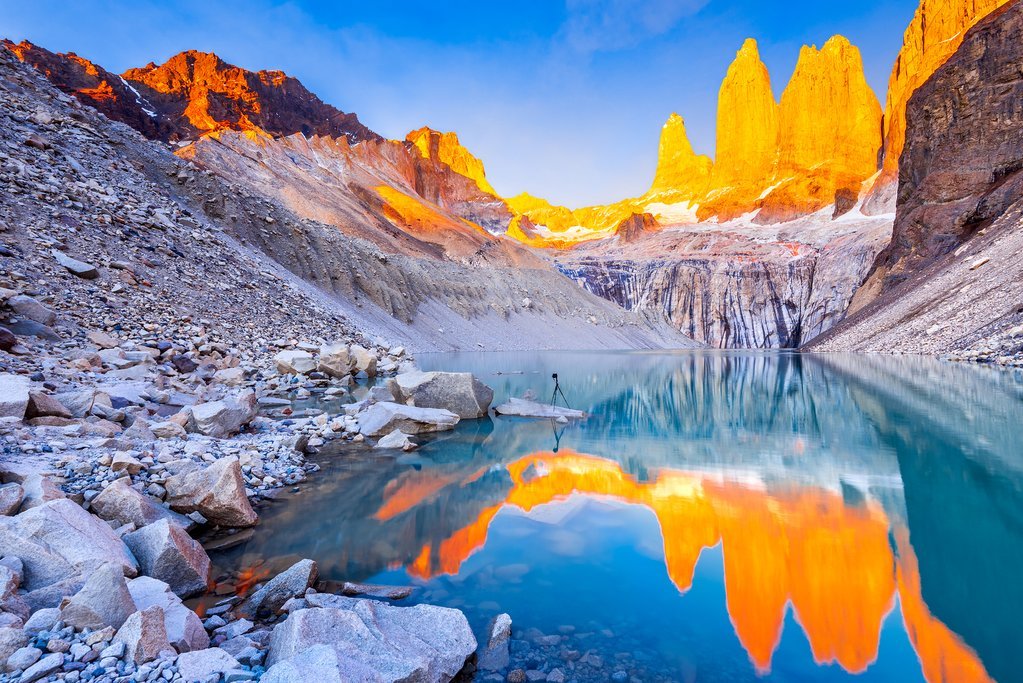
Natural highlights beyond wildlife include the Perito Moreno Glacier’s advancing ice wall, the granite spires of Torres del Paine and Fitz Roy, turquoise glacial lakes like Lago Argentino and Lago Sarmiento, and the otherworldly landscapes of the Patagonian steppe (verify geological information with national park resources). Each region offers distinct scenery: Argentine Patagonia excels in glaciers and volcanic peaks, while Chilean Patagonia showcases dramatic granite towers and fjords (check regional highlights on official tourism sites).
Maya’s honest take: “Don’t fixate on seeing pumas. They’re incredibly elusive, and most visitors never spot one. Instead, focus on the landscapes and the wildlife you’re guaranteed to see: guanacos everywhere, condors circling above Torres, and if you time it right, penguin colonies on Isla Magdalena.”
Best wildlife viewing locations
- Torres del Paine for guanacos, ñandú, and Andean condors (verify wildlife hotspots with park rangers).
- Isla Magdalena near Punta Arenas for Magellanic penguins (October to March season) (check tour availability on GetYourGuide).
- Los Glaciares National Park for huemul deer sightings near El Chaltén (confirm huemul habitat with conservation organizations).
- Beagle Channel near Ushuaia for sea lions, cormorants, and occasional orca sightings (verify wildlife tour operators with TripAdvisor).
Must-see natural highlights
- Perito Moreno Glacier walkways and optional ice trekking (book tours on GetYourGuide).
- Torres del Paine Base Torres viewpoint for iconic granite tower photos (verify trail conditions with CONAF).
- Laguna de los Tres viewpoint for Fitz Roy’s dramatic spire (check trail maps on official park website).
- Grey Glacier viewpoint or boat tour in Torres del Paine (confirm boat schedules with tour operators).
Frequently asked questions
How much does a 10-day Patagonia trip cost per person?
A 10-day Patagonia trip costs $1,700 to $4,500 per person depending on style, with budget travelers spending $80 to $120 per day and mid-range trips averaging $200 to $350 per day (confirm the latest price directly with the operator). This includes international and domestic flights, accommodation, park fees, buses, and meals (check current rates on the official site).
What is the entrance fee for Torres del Paine National Park?
Torres del Paine entrance fee is $35 for a single day, $51 for 4 or more days, paid online via CONAF or at the park gate (confirm the latest price directly with the operator). Children under 12 and seniors over 60 enter free (verify current fees on the official CONAF website).
Do I need a visa to visit Patagonia in Argentina and Chile?
Most visitors from the US, Canada, UK, EU, and Australia do not need a visa for tourist stays up to 90 days in Argentina and Chile (verify visa requirements with embassy websites). You must have a passport valid for at least 6 months beyond your travel dates and proof of onward travel (check entry requirements with immigration authorities).
What is the best time of year to visit Patagonia?
The best time to visit Patagonia is during the southern hemisphere summer from December to February, when temperatures are warmest and all trails and services are open (verify seasonal closures with park authorities). Shoulder months like November and March offer fewer crowds but cooler weather and some reduced services (check seasonal schedules with tour operators).
How do you cross the border between Argentina and Chile in Patagonia?
Cross-border buses operate between El Calafate/El Chaltén in Argentina and Puerto Natales in Chile, taking 5 to 7 hours including border formalities (confirm the latest price directly with the operator). You’ll exit Argentina at one checkpoint and enter Chile at another, with passport stamps on both sides (verify current border procedures with immigration authorities).
Can you do Patagonia without doing multi-day treks?
Absolutely. Most visitors do Patagonia with day hikes from base towns like El Calafate, El Chaltén, and Puerto Natales, without overnight trekking (verify day hike options with tour operators). The W Trek and O Circuit in Torres del Paine are optional for serious hikers, but you can see the highlights with shorter day hikes and bus transfers (check day tour availability on GetYourGuide).
Is Patagonia safe for solo travelers?
Patagonia is generally very safe for solo travelers, with low crime rates in small towns and national parks (verify safety information with government travel advisories). The main risks are weather-related and trail safety, so always check conditions, carry proper gear, and inform someone of your hiking plans (check trail safety guidelines with park authorities).
Plan your trip: booking platforms we trust
I’ve tested these platforms across dozens of trips for reliability, customer support, and real inventory. They’re not all right for every situation, but each one solves a specific problem better than the alternatives.
Kayak
Best for comparing domestic flight fares across Aerolíneas Argentinas, LATAM, and JetSmart.
Booking.com
Widest selection of Patagonia hotels and hostels with free cancellation on most properties.
GetYourGuide
Verified day tours to Perito Moreno, Torres del Paine, and penguin colonies with instant confirmation.
TripAdvisor
Real traveler reviews for restaurants, tour operators, and accommodation in El Calafate, El Chaltén, and Puerto Natales.
Expedia
Flight and hotel packages for pre- and post-Patagonia stays in Buenos Aires or Santiago.
Hotels.com
Loyalty rewards program for repeat travelers booking mid-range Patagonia hotels.
More South America travel guides
If you’re planning a broader South America trip or need more destination-specific advice, these guides cover the next steps in your itinerary.
- Hotels in South America — budget to luxury accommodation guides with verified prices.
- Best things to do in Argentina and Chile — from Buenos Aires tango to Atacama Desert tours.
- Travel planning guides — itineraries, packing lists, and logistics for South America trips.
- Visa requirements for South America — entry rules, permitted stay lengths, and extension processes.
- How to find cheap flights to South America — fare comparison strategies and booking timing tips.
WakaAbuja does its best to keep all information accurate at the time of publishing. Prices, policies, and availability change regularly. Always verify with official sources before you travel. We are not liable for errors caused by outdated information. Travel insurance is strongly recommended.