

Chicago Travel Guide: Where to Stay, What to Skip, and What a Week Really Costs
Some links on this page are affiliate links. We may earn a commission at no extra cost to you.
Chicago is easiest for first-time visitors who stay in the Loop or River North, fly into O’Hare (ORD) or Midway (MDW), and use the L train instead of a car. Plan three to four days for the core sights. Costs swing sharply by season, and CTA fares changed this year in February, so confirm current rates on the Chicago Transit Authority site before you budget.
This guide is for the traveler who has heard about deep dish, the bean, and the cold and wants to know which of those things should actually shape the trip. It is not for someone who wants a ranked list of forty attractions.
I built this around the decisions that determine whether Chicago feels manageable or miserable: your base, your airport, your season, and your transit card.
Jump to: How many days | Best time | Where to stay | Airport to city | Trip costs | What to see | Safety | Mistakes | Who it is not for | FAQ
Key takeaways
- Stay in the Loop for first-timer convenience, River North for restaurants and nightlife, or Lincoln Park for a quieter residential feel with quick L access.
- The L from O’Hare is the default car-free arrival; the Blue Line runs directly into the airport terminal, and the fare is now $2.75 for full rail (confirm the current rate and pass options on transitchicago.com).
- A car is a burden in the core. Use the L, the buses, and your feet. Rent a car only for suburban day trips.
- Chicago CityPASS bundles five attractions and costs $144 for adults, which can save money if you want three or more of the included venues (verify the current list and price on citypass.com).
- Winter cold is not a joke. If you are visiting between December and February, budget for indoor-heavy days and proper layers.
- The most common first-timer error is underestimating how much the season changes the trip, both in cost and in comfort.
How many days do you need in Chicago?
Three full days is the right amount for a first visit that covers the Loop, the lakefront museums, and one neighborhood beyond downtown. Four days lets you add a second neighborhood and an architecture boat tour without rushing. Two days works only if you pick one cluster and accept that you will miss a lot.
Chicago’s core sights are grouped in a way that rewards planning. The Loop holds the Art Institute of Chicago, Millennium Park, and the Chicago Theatre district. The Museum Campus, a 57-acre lakefront park, holds the Field Museum, Shedd Aquarium, and Adler Planetarium. The riverfront and Navy Pier sit within walking distance of the Loop. If you try to do all of that in two days, you will spend your trip moving between ticket queues rather than looking at anything. Three days gives you breathing room.
Maya’s honest take: The mistake I see most is booking two nights and treating Chicago as a stopover. The city is dense but not small. Give it three nights or admit you are coming for one museum and one meal.
Best for
- 3 days: the standard first-timer trip
- 4 days: adds a neighborhood and a boat tour
- 2 days: a focused weekend with one priority
Worth considering
- 5+ days: lets you add a day trip or slow down
- 1 day: only if you pick the Loop and nothing else
- Downside: more days in winter mean more indoor time
When is the best time to visit Chicago?
Late spring (May to early June) and early autumn (September to October) give you the most comfortable weather for walking and lakefront time. Summer is lively, but hotel prices peak and the popular sights are crowded. Winter is cold, windy, and cheap on lodging, but you need to plan around indoor attractions.
Chicago’s festival calendar is a real planning factor. Lollapalooza fills Grant Park in late July and early August, and hotel rates rise accordingly (verify dates on the official festival site). The Chicago Air and Water Show draws large lakefront crowds in August. If your dates are flexible, check the city’s major event calendar before booking. A cheap hotel rate during a festival week usually means noise and crowds rather than a bargain.
According to Choose Chicago, the city’s official tourism board, the lakefront and downtown events run year-round, so there is no truly quiet season for the core attractions.
Where should you stay in Chicago?

The Loop is best for first-timers who want the Art Institute, Millennium Park, and the river within walking distance. River North suits visitors who prioritize restaurants and nightlife. Lincoln Park offers a quieter residential base with quick L access to the core. Wicker Park is for travelers who want a neighborhood feel and do not mind a longer commute.
The Loop
The Loop is Chicago’s central business district and the most convenient base for a short first trip. The Art Institute of Chicago, Millennium Park, the Chicago Theatre, and the Riverwalk are all walkable. The trade-off is that the Loop empties out at night and on weekends, and hotel dining can feel generic. It is the right choice if your priority is minimizing transit time to the headline sights.
River North
River North sits just north of the river and has the highest concentration of restaurants, bars, and galleries within walking distance of downtown. It is still close enough to walk to the Loop and the Magnificent Mile. The downside is noise and higher hotel rates, especially on weekends. Choose River North if you want a lively evening atmosphere without giving up central access.
Lincoln Park
Lincoln Park is a residential neighborhood with the Lincoln Park Zoo (free), the Peggy Notebaert Nature Museum, and easy L access to the Loop. It is quieter and greener than River North, and hotel options tend to be smaller. The trade-off is that you will spend more time on the train. Choose Lincoln Park if you value calm and park space over being in the middle of everything.
Wicker Park
Wicker Park is a northwest neighborhood known for independent shops, music venues, and a less polished feel. It is on the Blue Line, which connects directly to O’Hare, making it convenient for airport arrivals. The downside is that you are a train ride from the core sights. Choose Wicker Park if you have already done the downtown attractions or you prioritize neighborhood character over convenience.
Loop: best for
- First-timers who want to walk to the Art Institute and Millennium Park
- Short trips where transit time matters
- Business travelers mixing work and sightseeing
River North: best for
- Food-focused travelers who want options on the doorstep
- Evening atmosphere and walkable nightlife
- Downside: weekend noise and higher rates
Lincoln Park: best for
- Travelers who want green space and a free zoo
- Quieter evenings and a residential feel
- Downside: longer L rides to the Loop
For current hotel availability in these neighborhoods, compare Chicago hotels on Booking.com or browse where to stay in Chicago.
How do you get from the airport to downtown Chicago?
The L train is the simplest car-free option from both airports. From O’Hare (ORD), the Blue Line runs directly into the terminal and takes roughly 45 minutes to the Loop; the fare is $2.75 for full rail, and the O’Hare station fare is $6 (confirm current rates and pass options on transitchicago.com). From Midway (MDW), the Orange Line connects to the Loop in about 25 minutes.
O’Hare (ORD) to downtown on the Blue Line
The Blue Line station sits inside the airport terminal, which makes the train unusually easy for a US airport. You pay with a Ventra card, a contactless bank card, or a single-ride ticket. The CTA changed its fare structure this year in February, and the 3-day pass was discontinued, so do not assume an old pass option still exists. If you are staying in River North or the Loop, the Blue Line puts you within a short walk or bus ride of most hotels. If you are staying in Lincoln Park, you will need a transfer or a rideshare for the final leg.
Midway (MDW) to downtown on the Orange Line
Midway is closer to the Loop, and the Orange Line is a straightforward ride. The airport is smaller and easier to navigate than O’Hare. The trade-off is that fewer international flights use Midway. If you are flying domestically and can choose Midway, it often saves time on both ends.
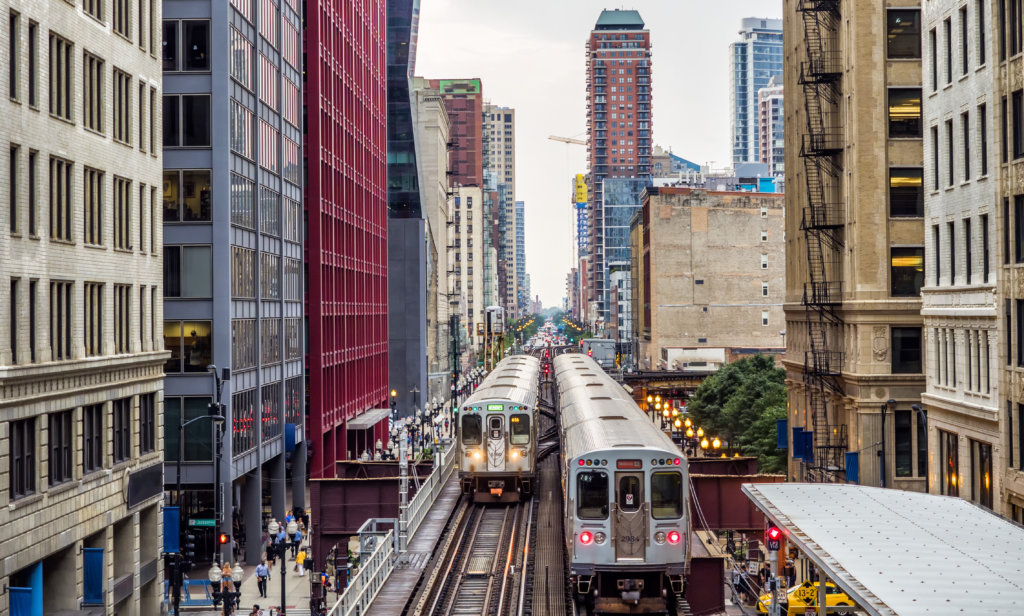
Maya’s honest take: What I check first is whether my hotel is actually near an L station, not just “in River North.” A ten-minute walk with luggage in winter feels like thirty. Pull up the CTA map and your hotel’s exact address before you book.
How much does a Chicago trip cost?
A mid-range first-time trip to Chicago costs roughly $180 to $300 per person per day, including a three-star or better hotel, three meals, transit, and one paid attraction (confirm current prices with each provider; hotel rates vary widely by season and event calendar). Budget travelers can push lower by using hostels, eating at casual spots, and prioritizing free attractions like Millennium Park and the Lincoln Park Zoo.
Where the money goes
Accommodation is the largest variable, and it swings more than in most US cities. Summer and festival weeks push downtown hotel rates up sharply (check current rates for your dates). Food ranges from inexpensive taquerias and hot dog stands to high-end tasting menus. Attractions are the third cost. The Art Institute of Chicago charges admission (check the official site for current pricing and free days). The Field Museum, Shedd Aquarium, and Adler Planetarium each have separate tickets, and the Museum Campus trio can add up quickly if you do all three (verify current pricing on each venue’s official page).
Chicago CityPASS costs $144 for adults and bundles five attractions, which is worth pricing out if you want three or more of the included venues.
The cost trap I see most
The trap is not the museum tickets. It is choosing a hotel that is not near an L station and then paying for rideshares every day. A cheaper hotel in a less connected area can easily erase its savings on transport. Do the math on total cost including transit before you book the “deal.”
Maya’s honest take: I would rather pay more for a River North hotel near a Blue Line stop than save on a far-flung property and spend the difference on Ubers. The transit-connected base is the cost-saving decision, not the room rate.
What should first-time visitors see in Chicago?
The essential Chicago first-timer list is the Art Institute of Chicago, Millennium Park (including Cloud Gate, the sculpture known as the Bean), the Museum Campus, the Chicago Riverwalk and an architecture boat tour. These cover the city’s defining strengths: world-class art, ambitious public space and architecture that rewards looking up.
Art Institute of Chicago and Millennium Park
The Art Institute is one of the oldest and largest art museums in the United States, with a collection that includes major Impressionist works . Millennium Park next door is free and holds Cloud Gate, the Crown Fountain and the Lurie Garden. According to Choose Chicago, Millennium Park is one of the top free attractions in the city. Do the museum in the morning and the park in the afternoon, or vice versa. Trying to do both plus the riverfront in one day is too much.
The Museum Campus
The Museum Campus is a 57-acre lakefront park that holds the Field Museum, Shedd Aquarium and Adler Planetarium . You do not need to do all three. The Field Museum is the most time-intensive and holds SUE, the largest T. rex ever discovered . The Shedd is one of the oldest continually operating aquariums in the US . Pick one, check the official hours and last-entry times, and leave room for the lakefront walk between them.
The river and the architecture boat tour
The Chicago Architecture Center River Cruise is the standard architecture boat tour, and it is genuinely worth the money if you care about buildings (book through the official Architecture Center or compare Chicago tours on GetYourGuide). The Chicago Riverwalk is free and walkable on its own. If you are visiting in winter, check whether the boat tours are running before you plan around one. For a broader menu, see best things to do in Chicago.
Is Chicago safe for tourists?
Chicago’s downtown and the neighborhoods covered in this guide are generally fine for visitors using normal city awareness. Like any large American city, crime is concentrated in specific areas, and your experience depends heavily on where you go and when.
What I check first is not a blog’s safety ranking but the official guidance: the Chicago Police Department’s public information and the city’s visitor resources. The Loop can feel empty at night outside event days, and the pedway system and underpasses deserve the same caution you would apply in any city.
Use rideshares after dark if you are uncertain about a walking route, and keep your phone out of sight on the L. According to the National Park Service’s Chicago travel page, the city’s historic sites are spread across neighborhoods, which means you should plan your route rather than wander into unfamiliar areas after dark.
What are the common first-trip mistakes in Chicago?
The most common mistakes are seasonal and logistical: packing for the wrong weather, underestimating the L, booking a hotel without checking transit access, and trying to see the Museum Campus and the Loop in the same day. Each has a fix.
Mistake: visiting in winter without proper layers
The fix: check the forecast and pack for wind chill, not just temperature. Chicago’s lakefront wind makes the cold feel sharper than the number suggests. A warm coat, hat and gloves are not optional between December and February.
Mistake: booking a hotel that is not near an L station
The fix: check the CTA map before you book. A hotel that advertises “River North” may be a fifteen-minute walk from the nearest station. Use the official CTA map and your hotel’s exact address.
Mistake: trying to do all three Museum Campus venues in one day
The fix: pick one or two. The Field Museum alone can take half a day. Check each venue’s official hours and last-entry times before you go.
Mistake: assuming the 3-day CTA pass still exists
The fix: check the current fare options on transitchicago.com. The CTA changed its fare structure this year in February, and the 3-day pass was discontinued . The 1-day and 7-day passes remain, but confirm before you load a card.
Mistake: buying CityPASS without checking the attraction list
The fix: price CityPASS against your actual list. If you want three or more of the included attractions, it may save money . If you only want the Art Institute and Millennium Park, buy direct and skip the pass.
Mistake: treating the lakefront as a summer-only asset
The fix: the Lakefront Trail and the parks are worth using in spring and autumn, when the crowds are thinner and the weather is better for walking. According to Choose Chicago, the lakefront is a year-round asset, not just a summer beach.
Who is Chicago not for?
Chicago is not for travelers who want a warm-weather beach trip or a compact old town where every sight is within a five-minute walk. It is not a city you can fully appreciate in a single rushed day between flights. If your ideal trip is swimming in the sea and wandering narrow streets, Chicago will disappoint you, and that is fair.
It is also not ideal for travelers who refuse to use public transit and do not want to pay for rideshares. The city’s core is walkable, but the spread-out attractions punish that combination. And if you are visiting between December and February with a low tolerance for cold, you will spend more time recovering indoors than exploring.
Frequently asked questions
Is Chicago worth visiting for a first-timer?
Yes, if you care about art, architecture, food and lakefront public space. Chicago is not a conventional tourist city with a single iconic sight, and that is part of its character. Three days gives you enough time to see the essentials without feeling rushed.
How do I get from O’Hare to downtown Chicago?
Take the Blue Line L train. It runs directly from the airport terminal to the Loop in roughly 45 minutes. The full rail fare is $2.75, and the O’Hare station fare is $6 (confirm current rates and pass options on transitchicago.com) . Rideshares are available but cost significantly more.
Do I need a car in Chicago?
No, not if you stay in the Loop, River North or Lincoln Park and use the L. A car is useful only for suburban day trips or if you have mobility needs that make transit impractical. Downtown parking is expensive and traffic is slow.
Which neighborhood should first-timers stay in?
The Loop is best for first-timers who want to walk to the Art Institute and Millennium Park. River North suits food-focused travelers. Lincoln Park is quieter and greener with a free zoo. Wicker Park is for a neighborhood feel and Blue Line airport access.
Is Chicago CityPASS worth it?
Only if you genuinely want three or more of the five included attractions, which typically include Shedd Aquarium, Skydeck Chicago, Field Museum, Art Institute and 360 Chicago (verify the current list on citypass.com) . Adult passes cost $144. If you only want one or two sights, buy direct.
How many days do you need in Chicago?
Three full days is the standard. Two days works if you pick one cluster and stay central. Four or more days lets you add a neighborhood, an architecture boat tour and a slower pace.
What is the best month to visit Chicago?
May, June, September and October offer the most comfortable weather for walking and lakefront time. Summer is lively but crowded and expensive. Winter is cold and cheap on lodging but requires indoor planning. Check the festival calendar before booking.
Is the L safe and easy to use?
The L is a normal American transit system: useful, affordable and generally fine for visitors using standard city awareness. The Blue Line from O’Hare is the easiest segment. Keep your phone out of sight and stay aware late at night. Check transitchicago.com for service alerts before you travel.
What is Chicago known for?
Chicago is known for its architecture, deep dish pizza, the Art Institute of Chicago, Millennium Park and Cloud Gate, the lakefront, blues and house music, and a food scene that goes far beyond its famous dishes. It is also a major convention and sports city, with teams including the Cubs at Wrigley Field.
Is Chicago walkable?
Parts of it are. The Loop, River North and the lakefront are walkable within themselves. The city as a whole is not, and you should not plan to walk between the Loop and Lincoln Park or Wicker Park. Use the L for longer hops.
Sources we checked
I verify fares, hours and attraction details against official operator and government pages before publishing, and I re-check them when the article is refreshed. Prices and schedules change; use these links as the starting point for your own confirmation.
- Chicago Transit Authority for current L fares, pass options and service information
- Choose Chicago for official visitor information and event calendars
- Chicago CityPASS official page for current pricing and the included attraction list
- Art Institute of Chicago official site for admission prices and hours
- Field Museum official site for tickets and operating hours
- Shedd Aquarium official site for admission and timed-entry information
- National Park Service Chicago travel page for historic sites and context
Plan your trip: booking platforms we trust
I use Booking.com when I want a wide range of Chicago hotels with free cancellation options, and I check Kayak first when flight prices are the main variable. For architecture tours and attraction tickets, GetYourGuide is the most straightforward for international visitors. Start with trip planning tips for the sequence, and compare cheap flights to Chicago before you lock dates.
WakaAbuja does its best to keep all information accurate at the time of publishing. Prices, policies, and availability change regularly. Always verify with official sources before you travel. We are not liable for errors caused by outdated information. Travel insurance is strongly recommended.