The Complete Guide to Kenya’s Elephant & Kilimanjaro Safaris in Amboseli National Park
Fact-Checked By Maya Whitfield, Senior Travel Editor at WakaAbuja
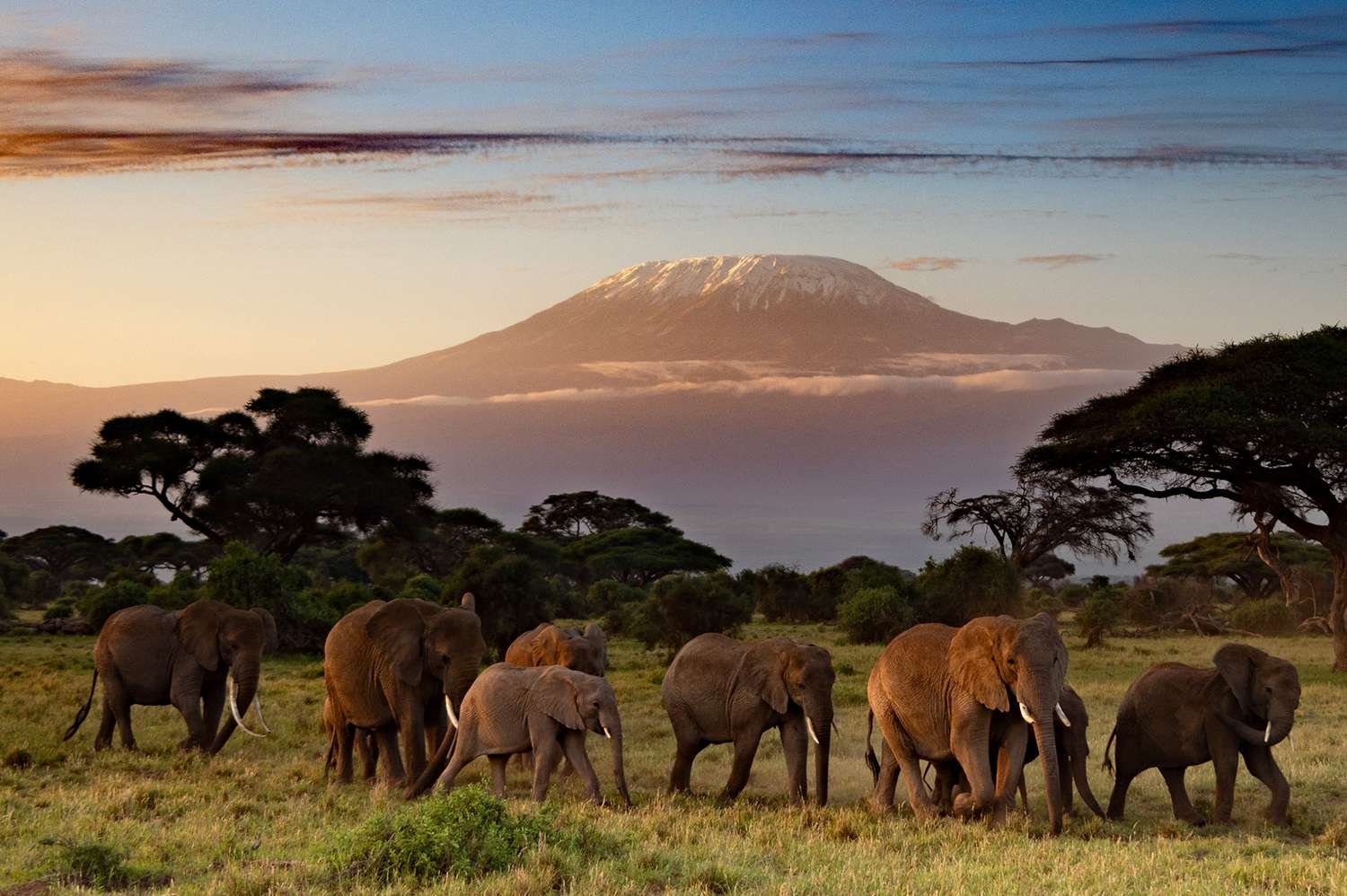
Amboseli National Park is a compact, 392-square-kilometer reserve in southern Kenya where massive elephant herds roam against the backdrop of Mount Kilimanjaro. It is the best park in Kenya for photographing elephants and the mountain together, though it sees far fewer big cats than the Masai Mara. Most travelers visit for two to three days, combining it with Tsavo or the coast.
I have sat in a dust-covered Land Cruiser at 6:30 in the morning, shivering in the cold air, watching a family of elephants cross the dried lake bed with Kilimanjaro floating pink behind them. That moment is why you come to Amboseli. But getting the practical details right is what makes the difference between a magical trip and a frustrating one.
The fee structure has been a moving target, the county government is changing how the park runs, and the advice you read on most websites is out of date. This guide is what I wish I had before I first went.
Jump to: Current Fees | Which Gate to Use | 3-Day Itinerary | Real Costs | Where to Stay | FAQs
Key takeaways
- Fees are in flux. A 2025 tariff overhaul was suspended by a Kenyan court, so you may pay the older $80 non-resident rate or a higher one depending on legal rulings.
- Two or three days is the sweet spot. One day is too rushed; four is usually overkill unless you are a serious photographer.
- The elephants are the show. Amboseli has some of the largest and best-studied elephant families in Africa, with big males carrying enormous tusks.
- Kilimanjaro is often hidden. It is most visible at dawn and in the dry season from June to October. The wet season gives green scenery but clouds the peaks.
- You need cash for the gate in some cases. Mobile money like M-Pesa is widely used, but have a backup plan and verify the current payment options before you drive in.
- Amboseli is not a big-cat destination. If you want lions and cheetahs, pair this with Tsavo or the Mara.
Is Amboseli National Park worth visiting compared to other Kenyan parks?
Yes, but for a specific reason. You come to Amboseli for the elephants and that iconic Kilimanjaro backdrop. The park is smaller and the wildlife is easier to spot because the vegetation is thinner and the swamps concentrate the animals. I have spent days here and never felt bored because the elephant behavior is so rich. The big males, the nursery groups, the teenagers testing each other—it plays out like a soap opera.
That said, if you expect the lion density of the Mara, you will be disappointed. Amboseli has lions, cheetahs, and hyenas, but they are spread out. I once went three full days without a single cat sighting, and I was perfectly happy because the elephants were that good.
Maya Whitfield’s honest take: “If you have to choose one park in Kenya and you do not care about big cats, Amboseli beats the Mara on sheer photographic drama. If you want the classic savanna predator show, do not come here instead of the Mara. Come here in addition to it.”
Best for
- Elephant photographers and researchers
- Travelers who want a compact, low-stress safari
- First-time safari visitors who want guaranteed big wildlife
- People combining Kenya with a Tanzania border crossing
Worth considering
- Big-cat enthusiasts who expect lion leopards on every drive
- Travelers who want dense forest and riverine habitat
- People who dislike dusty, dry landscapes in the dry season
What are the current Amboseli entrance fees this year?
:max_bytes(150000):strip_icc()/TAL-header-elephants-amboslei-kenya-SAFARISUMMIT0125-9e9fd48f1fe84fc08415b183194f09ae.jpg "Amboseli National Park: The Complete Guide to Kenya's Elephant & Kilimanjaro Safari 1")
The official non-resident adult rate has historically been $80 per day, with children paying $40. Residents and East African citizens pay a much lower rate, usually in Kenyan shillings. But here is the critical part most guides skip: a new premium-park tariff was gazetted in 2025, raising non-resident fees toward $90 to $100 per day for parks like Amboseli. A Kenyan High Court order suspended that increase in October 2025, reinstating the older rates pending further hearings.
That means the number you pay at the gate depends on when the court rules and what KWS and the county government decide next. I have seen travelers arrive expecting one price and get charged another because they read a stale website. The Kenya Wildlife Service official page remains the most reliable place to verify current fees before you drive in.
Maya Whitfield’s honest take: “Do not trust a printed price list from last year. Check the official KWS site or call your lodge the week before you travel. The fee dispute is real, and it changes what you pay.”
Vehicle fees are separate. A standard safari van or Land Cruiser typically costs around Ksh 1,000 to Ksh 3,000 per day depending on seating capacity and registration. Self-drive travelers need to budget for that on top of the per-person fee. You can pay by card at some gates now, but the network can fail, so carry enough cash in Kenyan shillings to cover one full day at minimum.
Which Amboseli gate should I use based on where I am coming from?
The main gate for most road travelers is Kimana Gate on the eastern side. It is the most logical entry point if you are driving from Nairobi via Emali and Kimana town, or if you are coming from Tsavo West via the Chyulu Hills. The road from Emali to Kimana used to be rough, but it has been graded in recent years. I have done this drive in a 2WD sedan in the dry season, but I would not recommend it after heavy rain.
If you are coming from the Tanzanian border at Namanga, or if you are flying into the Amboseli airstrips, you will likely enter via Meshanani Gate on the western side. Some lodges in the Selenkay Conservancy use their own private access routes. Ask your lodge which gate they recommend before you leave Nairobi, because Google Maps sometimes sends people to a closed or less-used gate.
Kimana Gate is best for
- Driving from Nairobi via Emali
- Coming from Tsavo West or the coast
- Accessing budget camps near Kimana town
Meshanani Gate is best for
- Flying in from Nairobi or the Mara
- Staying at western-side lodges like Ol Tukai
- Combining with a Namanga border crossing into Tanzania
When is the best time to visit Amboseli for clear Kilimanjaro views?
The dry season from June to October and January to February gives you the highest chance of clear skies and visible elephants at the swamps. The mountain is often visible at dawn and then disappears behind clouds by mid-morning. I have stood at Observation Hill at sunrise in July and seen the whole summit sharp against a pale orange sky, and by 9 a.m. it was gone.
The wet season from March to May and November brings lush green grass and migratory birds, but the mountain hides more often. The park also becomes harder to drive in because the black cotton soil turns into thick mud. If you want the classic postcard photo, go dry season. If you want fewer tourists and greener scenery, take the risk on the shoulder months.
Maya Whitfield’s honest take: “Do not plan a one-day trip in April and expect the mountains. You will see elephants, yes, but the Kilimanjaro shot is a dry-season gift. If the photo is your priority, pick July to September.”
What does a realistic 3-day Amboseli itinerary look like?
Most people try to cram too much. Amboseli is small, so you do not need to drive long distances. A three-day trip gives you two full mornings, which is when the light and the elephants are best. Here is how I would plan it.
Day 1: Arrival and afternoon game drive
Leave Nairobi early, ideally by 6 a.m. The drive via Emali takes about four to five hours with a stop. Arrive at Kimana Gate, pay your fees, and settle into your lodge. Head out on a late afternoon drive to the swamp area around Ol Tukai, where the elephants gather to drink. The light is golden, and the first elephant sighting feels unreal.
Day 2: Full day with Observation Hill and the lake bed
Start before sunrise. Drive to the dry lake bed if it is the dry season, where you can see wildebeest, zebra, and elephants crossing. Then go to Observation Hill for the panoramic view. Spend the hot midday hours resting at your lodge, then do an evening drive to a different swamp. I have seen some of my best elephant interactions in the last hour before the park closes.
Day 3: Morning drive and departure
One last early drive, usually to find the big male elephants, then breakfast and the drive back to Nairobi or your next park. If you are flying, you can book a late morning flight from Amboseli airstrip and be back in Nairobi by lunch.
@dominicwilliams_theguide 3 Days and 2 nights safari in Amboseli National Park, your stay at this magnificent Resort @PENETY RESORTS Book with me now! WhatsApp: +254 795 153 750 #creatorsearchinsights #amboselinationalpark #penetyresorts #foryoupage #dominicwilliamssafariguide
How much does a trip to Amboseli actually cost?
People budget for the entrance fee and forget everything else. A realistic budget for two adults sharing a mid-range tented camp, driving from Nairobi in a rented 4×4, looks like this: entrance fees around $160 per day for two non-residents, vehicle fees around $30 to $50, fuel and driver costs, plus accommodation from $150 to $400 per night per person, depending on the camp. A fully guided three-day package typically runs $800 to $1,500 per person.
Self-drive sounds cheaper but rarely is after you factor in the rental, insurance, fuel, and the stress of navigating the dirt roads. I have done both, and I now prefer a guided package unless I am traveling with a photographer who knows the park well. The difference in wildlife spotting is real.
Where to check current prices
For lodge rates, I check Booking.com and then call the property directly. Many Kenyan lodges offer resident rates, direct-booking discounts, or seasonal specials that do not appear on international platforms. For flight packages, Expedia sometimes bundles the domestic flights from Wilson Airport, but compare against Safarilink and AirKenya directly.
What are the most common mistakes people make in Amboseli?
I have watched visitors make these errors repeatedly, and I made a few myself on my first trip. Avoid them and your trip will be better.
1. Expecting the Mara’s big cats
Amboseli has lions and cheetahs, but they are not the focus. If you spend all day searching for cats, you will miss the elephant drama that makes this park special.
2. Not bringing enough cash
Card machines fail, and mobile money is not always reliable at the gate. Carry at least Ksh 10,000 in mixed bills for one day of fees and emergency snacks.
3. Underestimating the dust
The dry lake bed and dirt roads produce fine alkaline dust that coats everything. Bring a scarf or buff for your face, and protect your camera gear.
4. Skipping Observation Hill
It is the only place in the park where you can get out of your vehicle legally for a panoramic view. Do not skip it. The climb is short, and the view is worth the sweat.
5. Booking only one night
One night gives you one afternoon and one morning. That is barely enough to understand the landscape. Two nights is the minimum for a satisfying visit.
6. Ignoring the county government change
Amboseli’s management shifted to Kajiado County in late 2025, which is part of why fees and services are being reworked. Read the local news or ask your lodge about any service changes before you go.
Where should you stay near Amboseli by budget tier?
I have stayed inside the park, just outside the gates, and in the private conservancies to the north. Each has trade-offs. Inside the park means you wake up to elephants and lose no time at the gate. Outside the gate is cheaper but adds a 20 to 40 minute drive each morning.
Luxury inside the park
- Ol Tukai Lodge: the classic in-park option, great for elephant photography from your room
- Tortilis Camp: just outside the park but with a private conservancy feel
Mid-range and tented camps
- Kibo Safari Camp: close to Kimana Gate, solid mid-range pricing
- Sentrim Amboseli: reliable, good for families
Budget and basic
- Kimana town guesthouses: very cheap, but far from the gate and basic
- Public campsites inside the park: bring your own gear, check availability with KWS
For reviews and real traveler photos, I use TripAdvisor before booking any lodge. For hotel loyalty rewards, Hotels.com sometimes beats direct booking prices on the larger properties.
Frequently asked questions
Is Amboseli safe for tourists?
Yes, Amboseli is generally safe for tourists. Violent crime against visitors is rare, and the park has KWS rangers and a visible security presence. The bigger risks are vehicle accidents on rough roads, dehydration, and wildlife encounters if you exit your vehicle where it is not allowed. Follow park rules and stay in your car except at designated spots like Observation Hill.
Are there crocodiles in Amboseli?
No, there are no significant crocodile populations in Amboseli. The park is dominated by seasonal swamps and a dry lake bed, not permanent deep rivers. You might see small reptiles, but do not expect large crocodile or hippo populations like you would find in the Mara River.
Can you see Mount Kilimanjaro from Amboseli year-round?
No, visibility varies by season and time of day. The mountain is most visible at dawn during the dry months from June to October and January to February. During the wet season and late mornings, clouds often cover the summit. Some travelers visit for three days and never get a clear view, so set your expectations accordingly.
Is Amboseli in Kenya or Tanzania?
Amboseli is entirely in Kenya, in Kajiado County near the Tanzania border. Kilimanjaro itself is in Tanzania, which creates confusion because the mountain dominates the Amboseli skyline. You cannot cross the border inside the park; you need to go through the Namanga border post.
Do I need malaria prophylaxis for Amboseli?
Yes, malaria is present in the region, especially during and after the rains. The risk is lower in the dry season but not zero. Consult a travel health clinic before your trip and carry a good insect repellent. Most lodges provide mosquito nets or screened rooms.
Can I self-drive in Amboseli National Park?
Yes, self-drive is allowed in a 2WD during the dry season, but a 4×4 is much better after rain. You need a valid park entry permit and vehicle fee. However, if you are not experienced with African game driving, a local guide will spot far more wildlife and handle the rough roads for you.
Are drones allowed in Amboseli?
No, drones are banned in all Kenyan national parks and reserves without special permission from the Kenya Civil Aviation Authority and KWS. You cannot fly a drone in Amboseli. If you bring one, leave it in your lodge room, or you may be fined.
Plan your trip: booking platforms we trust
I use a mix of platforms depending on what I need. For lodges inside and just outside the park, Booking.com and TripAdvisor give the best combination of photos, reviews, and cancellation policies. For flights from Nairobi to the Amboseli airstrips, Kayak is my go-to for comparing Safarilink and AirKenya fares. For bundled packages, Expedia occasionally wins on price when you book a flight plus a lodge together.
WakaAbuja does its best to keep all information accurate at the time of publishing. Prices, policies, and availability change regularly. Always verify with official sources before you travel. We are not liable for errors caused by outdated information. Travel insurance is strongly recommended.