advertisement
Wildlife Crossings Explained: How They Work and What’s Opening Around the World
Fact-Checked By Maya Whitfield, Senior Travel Editor at WakaAbuja
A wildlife crossing is a structure built over or under a road to let animals move safely between habitats. They include vegetated overpasses, underpass tunnels, culverts, and canopy bridges. The world’s largest wildlife crossing, the Wallis Annenberg Crossing in Agoura Hills, California, opens on December 2, 2026.
A mountain lion named P-22 became famous for crossing two of Los Angeles’ busiest freeways and surviving in a small urban park. He was lonely, isolated, and hemmed in by highways. His story is why the world’s largest wildlife crossing now spans ten lanes of the US-101 freeway just north of LA.
This guide explains how these structures work, why they matter, and what is actually opening this December.
Jump to: What Is a Wildlife Crossing? | 6 Types Compared | Costs & Benefits | The December 2026 Opening | Do They Work? | Where to See One | FAQs
Key takeaways
- Wildlife crossings save animal and human lives. In the United States alone, wildlife-vehicle collisions cause over 200 human deaths and 29,000 injuries every year.
- Banff National Park proved the concept works. Its 24 crossings have been used more than 84,000 times by large mammals, and fencing cut ungulate deaths by over 80 percent.
- The six main types include overpasses, underpasses, culverts, canopy bridges, fish ladders, and green roofs. Each serves different species and budgets.
- The Wallis Annenberg Wildlife Crossing opens December 2, 2026. It spans 10 lanes of US-101 in Agoura Hills and now costs about $114 million, up from the original $85 million estimate.
- You can visit some crossings. Banff, Snoqualmie Pass in Washington, and soon the Agoura Hills site offer public viewing opportunities.
What is a wildlife crossing?
A wildlife crossing is any structure that lets animals move safely across a human-made barrier, usually a road or railway. The goal is to reconnect habitat that has been split apart by highways, which causes inbreeding, starvation, and dangerous road crossings. These structures range from simple underground tunnels to massive vegetated bridges covered in native plants.
I have stood on a wildlife overpass in Banff National Park and watched elk tracks in the snow leading straight across a bridge that carried no cars. The bridge was for them. It is a strange and hopeful thing to see an animal use infrastructure designed specifically for its survival.
Maya Whitfield’s honest take: “The first time you see a 50-meter-wide forest crossing a freeway, you realize this is not a niche conservation project. It is the future of road design.”
What are the six types of wildlife crossings?
Not all crossings look like bridges. The right design depends on the species, the landscape, and the budget. Here is how the main types compare.
Overpass or green bridge
Vegetated bridges built over highways. Best for large mammals like deer, elk, bears, and mountain lions. Banff and the Annenberg Crossing are the most famous examples. Cost ranges from a few million to over $100 million.
Underpass tunnel or viaduct
Roads are elevated on columns, leaving space for animals to pass underneath. Cheaper than overpasses and often used for deer, coyotes, and smaller mammals. Florida’s I-75 uses underpasses for panthers.
Culvert or amphibian tunnel
Small concrete or metal pipes under roads. Usually for amphibians, reptiles, and small mammals. Very low cost, often under $50,000 each. Used widely in the northeastern US for salamanders.
Canopy bridge
Rope or mesh bridges strung between trees across roads. Designed for arboreal species like monkeys, squirrels, and sloths. Common in Costa Rica, India, and Australia. Very low cost.
Fish ladder
Stepped water channels that let fish swim past dams and culverts. One of the oldest forms of wildlife crossing, dating back to 18th-century Europe. Essential for salmon and other migratory fish.
Green roof
Vegetated surfaces on buildings and structures. Not a traditional crossing, but they create stepping-stone habitats in urban areas. Used in cities like Singapore and Toronto.
Why are wildlife crossings built, and what do they cost?

The direct cost of doing nothing is enormous. In the United States, wildlife-vehicle collisions cause more than 200 human deaths and 29,000 injuries each year. Property damage from these crashes runs into the billions annually. Crossings are a fraction of that cost when built as part of new road projects.
Banff National Park spent about 7 to 8 percent of its highway expansion budget on wildlife crossings and fencing. A study of Virginia underpasses found they prevented between 2.6 and 9.2 deer collisions per year each, making them cost-effective within a few years. The Annenberg Crossing is an outlier at $114 million because it is a retrofit on an existing ten-lane freeway in a dense urban area, not a planned rural highway.
Maya Whitfield’s honest take: “The math is simple. A single human fatality costs society more than a million dollars. A wildlife crossing that prevents one fatal crash pays for itself.”
What is opening in December 2026? The Wallis Annenberg Wildlife Crossing
The Wallis Annenberg Wildlife Crossing in Agoura Hills, California, is set to open on December 2, 2026. It spans ten lanes of US-101 and will be the largest wildlife crossing in the world once completed. The project has entered its final construction phase, with soil placement and native planting happening through late 2026.
The cost climbed from an original estimate of $85 million to roughly $114 million due to construction inflation, design refinements, and the complexity of building over an active freeway. The crossing is named after Wallis Annenberg, whose foundation donated a significant portion of the funding. It was inspired directly by P-22, the mountain lion who became trapped in Griffith Park by surrounding freeways.
Maya Whitfield’s honest take: “This crossing is not just about mountain lions. It is about proving that a major urban freeway can coexist with wildlife. If it works here, it can work anywhere.”
If you want to follow the opening, check the official Caltrans project page or the 101 Wildlife Crossing website. Both publish construction updates and event announcements.
Do wildlife crossings actually work?
Yes, and the data is overwhelming. Banff National Park in Canada has the longest-running monitoring program. Its 24 crossings have been used more than 84,000 times by large mammals, including grizzly bears, wolves, elk, and moose. Fencing along the Trans-Canada Highway cut large-ungulate mortality by more than 80 percent.
In Florida, underpasses and fencing along I-75 reduced Florida panther road deaths significantly. Before the crossings were built, panthers were being killed on roads at a rate that threatened the entire population. The crossings, combined with speed enforcement and fencing, helped stabilize the population. The Netherlands has built more than 600 ecoducts since the 1980s, and they are now standard practice there.
Where can you see a wildlife crossing in person?
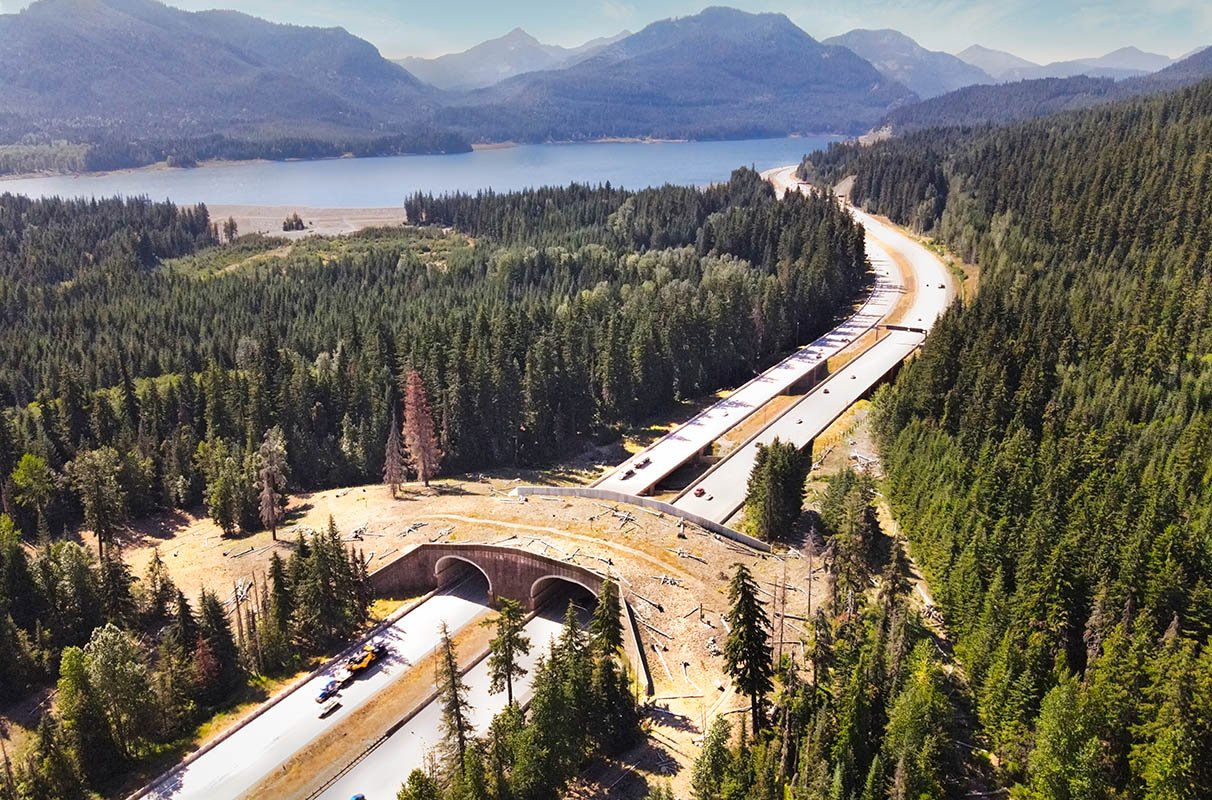
You do not need to be a biologist to visit one. Banff National Park has public viewpoints near several of its overpasses, and the park’s visitor centers can point you to the best spots. Snoqualmie Pass in Washington has a wildlife overpass visible from a public parking area. The Annenberg Crossing in Agoura Hills will include a viewing and educational component once it opens in December.
If you are in Europe, the Netherlands has dozens of accessible ecoducts, many with bicycle paths underneath or nearby observation points. Australia’s Slaty Creek crossing on the Hume Highway is visible from a rest area. These are not hidden facilities. They are built along public roads, and seeing one from a safe pullout is entirely possible.
For planning a visit to Banff or other wildlife-rich destinations, I use GetYourGuide for guided wildlife tours. For accommodation near Banff or Snoqualmie Pass, Booking.com has the widest range of options from lodges to budget motels.
Frequently asked questions
How do wildlife crossings work?
Wildlife crossings reconnect habitats that roads have split apart. Fencing along the highway guides animals toward the crossing structure, which can be an overpass, underpass, or tunnel. Once animals learn the route, they pass safely between areas they could not previously reach without crossing traffic.
How much does a wildlife crossing cost?
Costs vary widely by type and location. Small culverts and amphibian tunnels can cost under $50,000. Larger underpasses range from $500,000 to several million. Large vegetated overpasses typically cost $5 million to $20 million in rural areas, but urban retrofits like the Annenberg Crossing can exceed $100 million.
What animals use wildlife crossings?
Almost every type of animal can benefit. Large mammals like deer, elk, bears, and mountain lions use overpasses and underpasses. Amphibians and reptiles use small tunnels. Fish use ladders. Arboreal species like monkeys and squirrels use canopy bridges. The design determines which species will use it.
When does the Wallis Annenberg Wildlife Crossing open?
The Wallis Annenberg Wildlife Crossing in Agoura Hills, California, is scheduled to open on December 2, 2026. It is currently in its final construction phase, with soil placement and native vegetation planting ongoing throughout late 2026.
Are wildlife crossings worth the cost?
Yes, the data supports their value. Banff National Park reduced large-ungulate mortality by over 80 percent with crossings and fencing. Virginia underpasses prevented between 2.6 and 9.2 deer collisions per year each, making them cost-effective within a few years. They also save human lives and reduce property damage.
Which country has the most wildlife crossings?
The Netherlands is widely considered the world leader, with more than 600 ecoducts and related structures built since the 1980s. Canada has the most studied network at Banff National Park. The United States is rapidly expanding its crossings, especially in western states and Florida.
Plan your trip: booking platforms we trust
If you want to see a wildlife crossing in person, these are the platforms I use for wildlife-focused travel. For guided tours in Banff or other national parks, GetYourGuide has excellent local operators. For lodging near crossings like Banff or Snoqualmie Pass, Booking.com gives the best cancellation flexibility. For flights to Calgary, Seattle, or Los Angeles, Kayak compares all airlines without bias.
WakaAbuja does its best to keep all information accurate at the time of publishing. Prices, policies, and availability change regularly. Always verify with official sources before you travel. We are not liable for errors caused by outdated information. Travel insurance is strongly recommended.