advertisement
Planning a trip to Blue Canyon, Arizona? Here’s everything you need to know about permits, guided access, road conditions, and the best ways to get there safely and legally.
Fact-Checked By Maya Whitfield, Senior Travel Editor at WakaAbuja
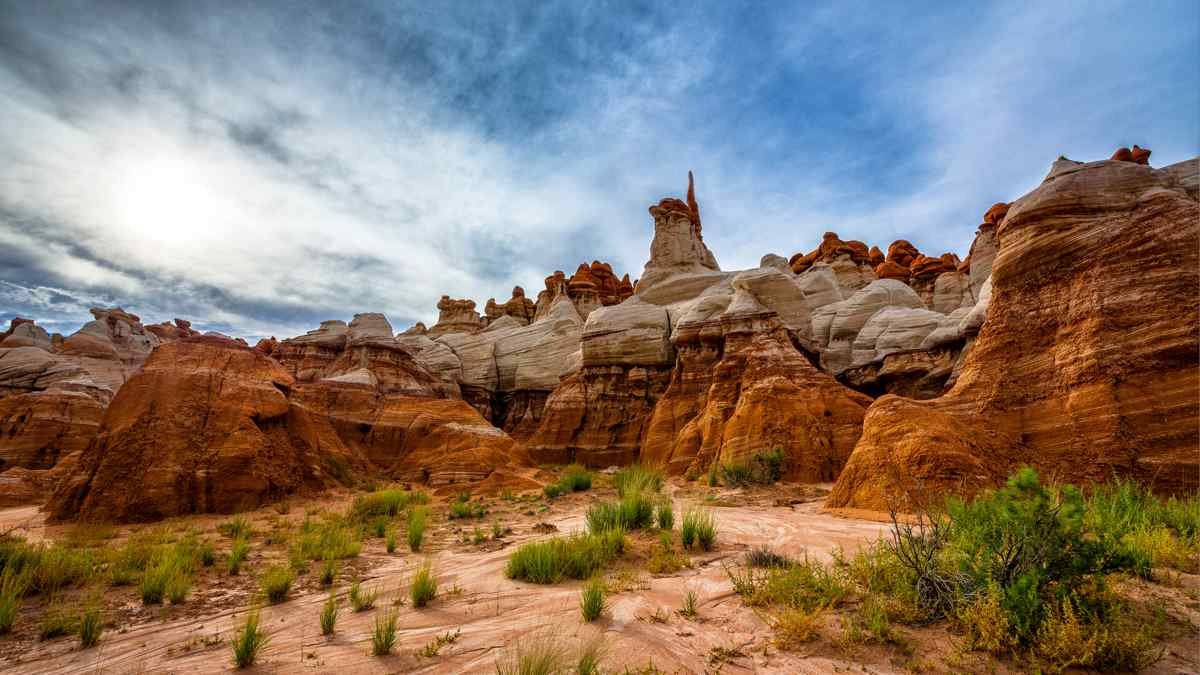
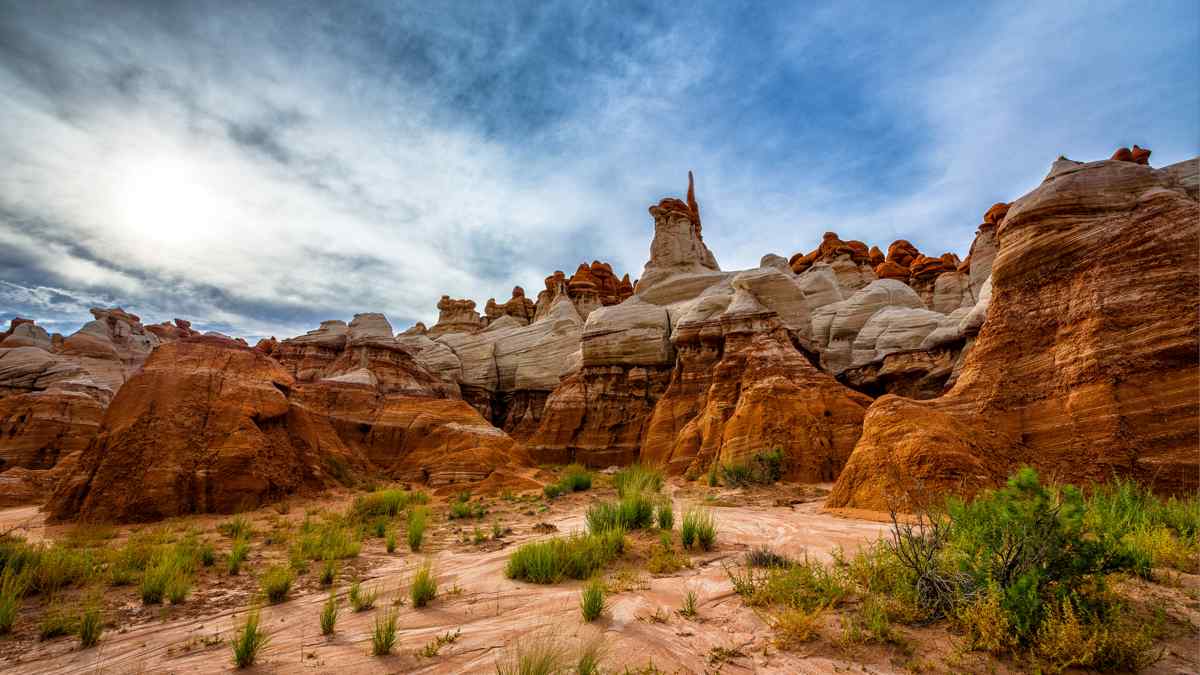
Blue Canyon is a remote badlands landscape on the Hopi Reservation in northern Arizona, known for its red, white, and blue-gray hoodoo rock formations. You must obtain a permit and be accompanied by an authorized Hopi guide to visit. Access requires driving 14 to 15 miles on unpaved dirt roads, and a high-clearance vehicle is strongly recommended.
I have stood at the edge of Blue Canyon at sunrise, watching the first light turn the white sandstone caps pink and then gold while the shadows pulled blue from the deeper rock. It is one of the strangest, quietest places in Arizona, and getting there is half the story. This is not a casual roadside stop. It is a permit-only, guide-required trip onto sovereign Hopi land, down a washboard dirt track that can turn to impassable mud in minutes.
This guide covers what the outdated websites will not tell you: how to actually get a permit today, what a guide costs, whether your car can make it, and how to avoid driving three hours just to get turned around at the gate.
Jump to: Permits & Guides | Getting There | Road Conditions | Costs | Mistakes to Avoid | FAQs
Key takeaways
- A permit and Hopi guide are mandatory. This is tribal land, not a public park. Do not attempt to visit without authorization.
- Expect to pay for a guide. Rates vary, but budget $100 to $200 per person for a half-day visit, plus tip.
- High clearance is strongly recommended. The dirt access road is rough, and the Moenkopi Wash crossing can flood after rain.
- There is no gas, food, or water at Blue Canyon. Fuel up in Tuba City or Flagstaff and pack everything you need.
- Sunrise and sunset are the best light. Midday sun flattens the colors and hides the blue tones.
- Cell service is unreliable. Download offline maps and tell someone your route before you leave pavement.
What is Blue Canyon, Arizona?
Blue Canyon is a hidden branch of Moenkopi Wash, tucked into the southwestern edge of the Hopi Reservation. It is not a single overlook but a sprawling network of eroded badlands where the rock layers have weathered into thousands of hoodoos, spires, and undulating ridges. The colors shift as the light moves: chalky white caps over deep red sandstone, with blue and purple shadows pooling in the crevices.
Geologically, the canyon cuts through the Moenkopi Formation, a Triassic-era sedimentary layer laid down by ancient rivers and floodplains. The red comes from iron oxide, the white from a cap of harder sandstone that protected the softer layers beneath. The blue tint is mostly an optical effect, caused by shadow and mineral variation rather than actual blue rock. It is a sister canyon to Coal Mine Canyon, which sits only a few miles to the east, but Blue Canyon is more remote and sees far fewer visitors.
Do you need a permit and a guide for Blue Canyon?
Yes to both. Blue Canyon sits entirely on Hopi Reservation land, and the Hopi Tribe requires all visitors to obtain a permit and be accompanied by an authorized Hopi guide. This is not a suggestion. Tribal police do patrol the area, and unauthorized visitors can be fined or escorted out. I have spoken with travelers who were turned away because they assumed the rules had relaxed. They have not.
How to book a Hopi guide for Blue Canyon
The most reliable starting point is the Hopi Cultural Center near Shungopavi, where staff can direct you to currently authorized guides. You can also call the Hopi Tribe’s tourism office in Kykotsmovi Village. I strongly recommend calling ahead rather than showing up, because guide availability is limited and same-day walk-ups are often impossible. Ask for a list of authorized guides and arrange your permit at the same time.
What does a Blue Canyon guide cost?
Guide rates are not published on a central website, which is part of the confusion. Based on recent traveler reports and calls to the cultural center, expect to pay between $100 and $200 per person for a half-day visit, depending on group size and whether transportation is included. Some guides charge a flat rate per vehicle. Tipping is customary and appreciated. Confirm the total cost and what is included before you commit.
How do you get to Blue Canyon, Arizona?
There are two main approaches, both requiring significant dirt-road driving. The northern route is the most common, and it is the one most guides use. The southern route is shorter from the Hopi mesas but has less reliable road maintenance.
Northern route via Red Lake Trading Post and US 160
From US 160 near Red Lake Trading Post, turn south onto the dirt road and follow it roughly 14 miles. The road winds through open range and crosses the Moenkopi Wash in several places. You will pass through a gate or two, which should be open if you are with a guide. The final descent into the canyon is steep and eroded in sections.
Southern route via AZ 264
From AZ 264 east of Tuba City, a less-used track heads north toward the canyon. This route is roughly 15 miles of dirt and is generally rougher than the northern approach. It also crosses private land in places, so it is not recommended unless your guide specifically directs you this way.
Do you need 4WD or high clearance for Blue Canyon?
A high-clearance vehicle is strongly recommended. The dirt road has deep ruts, exposed rocks, and wash crossings that scrape low sedans. A 4WD is not always necessary in dry weather, but it provides real security on the steep final descent and on sandy patches. I would not attempt this road in a standard rental car, and most rental companies prohibit their vehicles on unpaved reservation roads anyway.
The Moenkopi Wash crossing
The wash is dry most of the year, but it floods quickly after rain. Even a few inches of moving water can strand a vehicle in soft sand. Check the weather forecast for the entire area, not just Blue Canyon, because storms upstream in the Moenkopi drainage can send water downstream hours later. If the road is wet, do not attempt the crossing. Wait it out or reschedule.
How much does a trip to Blue Canyon cost?
Beyond the guide fee, budget for fuel, food, water, and possibly a night’s lodging in Tuba City or Flagstaff. Gas is not available near the canyon. The nearest reliable fuel is in Tuba City, about 30 miles west. A full tank from Flagstaff and back is roughly 250 miles of driving, much of it on dirt. Bring more water than you think you need, especially in summer when temperatures exceed 100 degrees Fahrenheit.
A realistic budget for two people, including guide fees, fuel, snacks, water, and a motel night in Tuba City, runs $250 to $450 for the day. It is not a cheap day trip, but the solitude and the landscape justify it for the right traveler.
What mistakes do people make at Blue Canyon?
1. Showing up without a permit or guide
This is the most common and most costly error. Tribal land is not public land. You will be turned away or fined.
2. Driving a low-clearance rental car
The road will damage a sedan, and your rental agreement likely prohibits it. Rent a proper 4WD or book a guide who provides transportation.
3. Visiting at midday for photography
Harsh overhead light erases the blue shadows and makes the white rock glare. Go at sunrise or sunset, or accept that midday is for scouting, not shooting.
4. Underestimating the heat and isolation
There is no shade, no water, and no cell service. Bring at least a gallon of water per person, salty snacks, and a physical map. Tell someone your planned route and return time.
5. Trying to visit when rain is forecast
The Moenkopi Wash floods, and the dirt road becomes impassable. A storm 50 miles away can ruin your day. Check the radar before you go.
How does Blue Canyon compare to Coal Mine Canyon, The Wave, and Antelope Canyon?
If you are deciding where to spend your time in northern Arizona, here is how Blue Canyon stacks up against its more famous neighbors.
Blue Canyon
Permit: Yes, Hopi guide required
Cost: $100 to $200 per person
Drive from Flagstaff: 3 hours
Photography: Excellent at sunrise and sunset
Coal Mine Canyon
Permit: Yes, Hopi guide required
Cost: Similar to Blue Canyon
Drive from Flagstaff: 2.5 hours
Photography: Very good, more accessible
The Wave
Permit: Yes, lottery required
Cost: $7 per person for a permit
Drive from Flagstaff: 2.5 hours plus hike
Photography: World-class, extremely competitive permits
Antelope Canyon
Permit: No, but a tour is required
Cost: $50 to $100 per person
Drive from Flagstaff: 2 hours
Photography: Iconic but crowded and controlled
Blue Canyon wins on solitude and raw, unmanaged landscape. You will likely have the place to yourself. But it demands more logistical effort than any of the others. If you want convenience, Antelope Canyon is easier. If you want silence and strange rock, Blue Canyon is worth the hassle.
Frequently asked questions
Is Blue Canyon the same as Coal Mine Canyon?
No, they are separate canyons about 5 miles apart on the Hopi Reservation. Both cut through the Moenkopi Formation and share similar red and white coloring, but Blue Canyon is more remote and sees fewer visitors. Coal Mine Canyon is slightly easier to reach and has a more defined overlook area.
Can I visit Blue Canyon without a guide?
No. The Hopi Tribe requires all visitors to be accompanied by an authorized Hopi guide with a valid permit. Unauthorized access is trespassing on tribal land and can result in fines or removal. Do not attempt to visit independently.
How far is Blue Canyon from Flagstaff or Tuba City?
Blue Canyon is about 3 hours from Flagstaff and about 30 miles east of Tuba City, mostly on rural roads. The last 14 to 15 miles are unpaved dirt and take 45 to 60 minutes alone. Tuba City is the nearest town with fuel, food, and lodging.
Is there cell service at Blue Canyon?
Cell service is unreliable on the Hopi Reservation and typically nonexistent once you leave the paved highways. Download offline maps before you go, and let someone know your itinerary. Do not count on being able to call for help if you get stuck.
What should I bring to Blue Canyon?
Bring at least one gallon of water per person, sun protection, sturdy shoes, snacks, a physical map, and a full tank of gas. There are no services at the canyon. In summer, go early or late to avoid extreme heat. In winter, roads can be muddy or icy.
How much time do I need at Blue Canyon?
Plan for at least two hours on-site to explore the main hoodoo field and photograph the formations. Serious photographers may want four to five hours, especially if visiting for both sunset and sunrise on a multi-day trip. Add 3 to 4 hours total for driving from the nearest town and back.
Plan your trip: booking platforms we trust
For a trip like Blue Canyon, the guide is the essential booking, and that happens through the Hopi Cultural Center or tribal tourism office, not an app. But for the logistics around it, these platforms help. Kayak is my go-to for comparing flights to Flagstaff or Phoenix. Booking.com covers motels in Tuba City and Flagstaff. For rental cars, check Kayak’s car search since you will want a high-clearance vehicle, and confirm with the rental company that unpaved reservation roads are permitted.
WakaAbuja does its best to keep all information accurate at the time of publishing. Prices, policies, and availability change regularly. Always verify with official sources before you travel. We are not liable for errors caused by outdated information. Travel insurance is strongly recommended.