
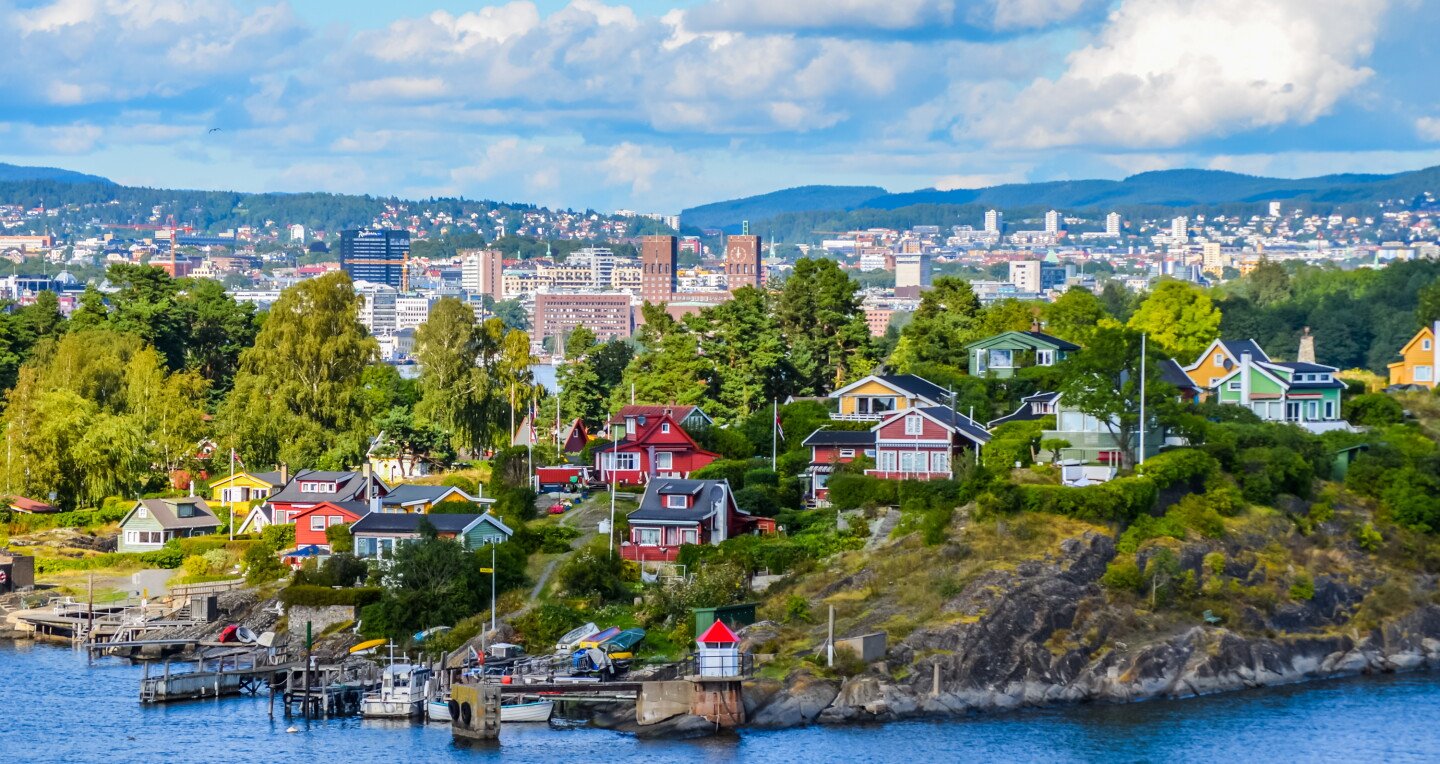
Your practical guide to visiting Oslo for the first time, covering how much to budget, where to stay, what to see, how to get around, and how to make the most of your time in Norway’s capital.
Fact-Checked By: Maya Whitfield—Senior Travel Editor at WakaAbuja
A trip to Oslo works best with 3 full days if you want to see the main sights without rushing. Budget around 1,800 to 2,600 NOK per person per day for a mid-range trip including a hotel, meals, transport, and one paid attraction, but not including flights (confirm the latest price directly with the operator). The Oslo Pass is worth it only if you visit at least 3 paid museums in one day; otherwise, pay as you go.
I first flew into Oslo in late September with a cheap jacket and a bad assumption that “Scandinavia in autumn is fine.” It rained for two days straight, and I spent the first morning buying a wool base layer I should have packed. I have been back three times since, and the lesson is always the same:
Oslo rewards the traveler who plans logistics first and sights second. This guide gives you the numbers, the plan, and the honest trade-offs so you do not repeat my soggy first day.
Jump to: Is Oslo Worth It? | How Many Days | When to Go | Getting There | Oslo Pass Math | Sample Itineraries | What It Costs | Where to Stay | What to Pack | FAQ
Key takeaways
- 3 full days is the sweet spot. It gives you one day for the museums, one for the neighborhoods, and one for Holmenkollen and the fjord.
- Oslo is expensive, but not uniformly. A beer costs 90 to 120 NOK. A grocery-store sandwich costs 40 to 60 NOK (confirm the latest price directly with the operator).
- Skip the Oslo Pass unless you visit 3 or more paid museums in a day. Do the math below before buying.
- The Airport Express train is fast but overpriced. The regional Vy train takes 10 minutes longer and costs half as much.
- Buy alcohol at the airport duty-free. A bottle of wine at Vinmonopolet costs 150 to 250 NOK, but duty-free prices are 40 to 60 percent lower (confirm the latest price directly with the operator).
- July and August are the busiest and most expensive months. May and September give you better prices and fewer crowds with decent weather.
Is a Trip to Oslo Worth It?

Yes, if you want a compact, walkable capital with excellent museums, real access to nature, and a food scene that has quietly become one of the best in Northern Europe. Oslo is not a party city, and it is not a bargain destination. It is a design-and-nature city that works best for travelers who want quality over quantity.
If you are choosing between Oslo, Copenhagen, and Stockholm, Oslo wins on nature access and loses on nightlife. The Oslofjord is 15 minutes from the city center, and the forests start at the edge of the metro line. I have gone from a museum to a silent pine forest in under 25 minutes using public transit. That is the Oslo pitch.
Maya Whitfield’s honest take: “Oslo is not a city you ‘do.’ It is a city you move through slowly. If you try to rush it, you will miss the point.”
How Many Days Do You Need in Oslo?
Three full days is the right answer for a first trip. That gives you one day for the Bygdøy museums and the Opera House area, one day for Vigeland Park, Grünerløkka, and the food scene, and one day for Holmenkollen and the fjord. If you have a fourth day, add a day trip to Bergen or a proper hike in Nordmarka.
One day is enough to see the Opera House, walk Karl Johans gate, and visit one museum, but you will feel like you only saw the postcard version. Five days lets you add a second day trip or slow down enough to sit in a sauna by the fjord, which is a genuinely Oslo thing to do and worth the time.
When Should You Go to Oslo? Season by Season
Oslo has four real seasons, and they change the trip more than most travelers expect. Summer is warm and light but crowded and expensive. Winter is cold and dark but cheaper and atmospheric. Spring and autumn are the value windows.
Summer (Jun-Aug)
Daylight: 17 to 19 hours
Temperature: 15 to 24°C
Reality: The most expensive time. Hotels jump 30 to 50 percent above May rates (confirm the latest price directly with the operator).
Winter (Dec-Feb)
Daylight: 6 to 8 hours
Temperature: -5 to 3°C
Reality: Cheapest hotel rates. The Christmas markets are excellent, and the snow makes Holmenkollen spectacular.
Spring & Autumn
Daylight: 10 to 14 hours
Temperature: 2 to 12°C
Reality: The value window. May and September have fewer crowds, lower prices, and generally stable walking weather.
How Do You Get to Oslo From the Airport?
Oslo Gardermoen Airport (OSL) sits 47 kilometers north of the city. You have three real options, and the fastest one is not the best value. The Flytoget Airport Express train reaches Oslo S in 19 minutes and costs around 210 NOK (confirm the latest price directly with the operator). The regional Vy train reaches Oslo S in 22 to 25 minutes and costs around 120 NOK (confirm the latest price directly with the operator).
Airport transfer comparison
Flytoget Airport Express: 19 minutes, 210 NOK, runs every 10 minutes (confirm the latest price directly with the operator).
Vy regional train: 23 minutes, 120 NOK, runs every 20 to 30 minutes (confirm the latest price directly with the operator).
Flybussen coach: 45 to 50 minutes, 180 NOK, less frequent (confirm the latest price directly with the operator).
Taxi: 30 to 40 minutes, 600 to 900 NOK (confirm the latest price directly with the operator).
My advice: take the Vy train. You lose four minutes and save 90 NOK, which is enough for a decent cinnamon roll and a coffee. The only reason to take the Airport Express is if you are late for a connection or you have an early morning flight and want the peace of mind.
Is the Oslo Pass Worth It? A Worked Example
The 24-hour Oslo Pass costs around 495 NOK for adults (confirm the latest price directly with the operator). The question is whether you will visit enough paid attractions in one day to beat that. Here is the math with current attraction prices.
A typical museum day might look like this: the Munch Museum (180 NOK), the Norwegian Folk Museum (180 NOK), and the Fram Museum (140 NOK). That totals 500 NOK in entry fees (confirm the latest price directly with the operator). Add a 24-hour Ruter transport pass at 117 NOK (confirm the latest price directly with the operator), and your day costs 617 NOK without the Oslo Pass. The pass saves you about 120 NOK if you visit all three.
But if you only visit the Munch Museum and the National Museum, you spend 380 NOK on entry plus 117 NOK on transport, for 497 NOK. The pass would lose you money. The rule of thumb: buy the Oslo Pass only if you plan to visit 3 or more paid museums in one day, or if you want the convenience of not buying separate tickets at every door.
Maya Whitfield’s honest take: “I bought the Oslo Pass once and used it for two museums and a tram ride. I lost about 80 NOK. Now I just pay as I go unless I have a packed museum day.”
Sample Trip to Oslo: A Day-by-Day Itinerary
Day 1: The Postcard Oslo
Start at the Opera House and walk up the marble roof. Then walk along the waterfront to Akershus Fortress. Have lunch at Mathallen Food Hall, then spend the afternoon at the National Museum. End with dinner in Aker Brygge and a drink at a sauna on the fjord if you are brave enough to jump in.
Day 2: The Neighborhoods and the Park
Take the tram to Vigeland Park and spend two hours there. Then walk to Frogner for a quiet coffee. After lunch, cross the river to Grünerløkka and wander the vintage shops and record stores. Eat dinner at one of the small restaurants on Thorvald Meyers Gate.
Day 3: The Fjord and the Heights
Take the ferry to Bygdøy and visit the Fram Museum and the Norwegian Folk Museum in the morning. After lunch, take the metro up to Holmenkollen and walk to the ski jump viewing platform. If the weather is clear, the view over the fjord is the best in the city.
What Does a Trip to Oslo Actually Cost?
Here is a realistic daily budget for one person in mid-range comfort, not including flights. Prices are approximate and fluctuate by season (confirm the latest price directly with the operator).
Budget
Hostel bed: 400 to 600 NOK
Food: 300 to 450 NOK
Transport: 120 NOK
One attraction: 150 NOK
Daily total: 970 to 1,320 NOK
Mid-range
3-star hotel: 1,200 to 1,800 NOK
Food: 600 to 900 NOK
Transport: 120 NOK
Two attractions: 300 NOK
Daily total: 2,220 to 3,120 NOK
Comfortable
4-star hotel: 2,200 to 3,500 NOK
Food: 1,000 to 1,500 NOK
Transport: 200 NOK
Three attractions: 450 NOK
Daily total: 3,850 to 5,650 NOK
Flights from the US East Coast to Oslo generally run 4,500 to 7,500 NOK round-trip in economy, more in summer (confirm the latest price directly with the operator). From within Europe, budget carriers often run 1,500 to 3,000 NOK round-trip.
Where Should You Stay in Oslo?
Stay central unless you have a specific reason not to. Sentrum, the area around Oslo S and Karl Johans gate, is the most convenient for transport and sightseeing. Aker Brygge and Tjuvholmen are more expensive but waterfront and modern. Grünerløkka is the best value for atmosphere, with independent cafes and fewer chain hotels, but you will ride the tram into the center most days.
For a first trip, I recommend Sentrum or the area between the station and the National Theatre. You can walk to the Opera House, the palace, and the waterfront in under 20 minutes. For a second trip, stay in Grünerløkka or Frogner to experience the neighborhoods properly.
Practical Essentials: Visa, Currency, Cards, and Safety
Visa and entry
Norway is part of the Schengen Area. US, UK, Canadian, and Australian citizens do not need a visa for stays under 90 days. Check the Norwegian Directorate of Immigration for the latest rules if you hold a different passport.
Currency and cards
Norway uses the Norwegian krone (NOK). You almost never need cash. Cards and mobile payment are accepted everywhere, including buses and market stalls. I have spent an entire week in Oslo without touching a coin.
Tipping
Tipping is not expected in the same way it is in the US. Rounding up the bill or leaving 5 to 10 percent at a sit-down restaurant is appreciated but not required. Nothing is added to the bill automatically.
Safety
Oslo is very safe by global standards. The main risk is petty theft around Oslo S and along the busiest stretch of Karl Johans gate late at night. Keep your phone in a zipped pocket and be alert, but do not be paranoid. Violent crime against tourists is rare.
What Should You Pack for Oslo?
Pack layers, even in summer. The weather changes fast, and mornings can be 10°C even in July. Here is the season-by-season checklist I use.
Summer
- Light waterproof jacket
- One warm layer for evenings
- Comfortable walking shoes
- Refillable water bottle
- Sunglasses and sunscreen
Winter
- Merino wool base layer
- Insulated waterproof boots
- Heavy down or wool coat
- Gloves, hat, and scarf
- Lip balm and moisturizer for the dry air
Spring & Autumn
- Waterproof trench or shell jacket
- Wool mid-layer
- Water-resistant shoes or boots
- Compact umbrella
- Scarf and light gloves for evenings
What Are the Biggest Mistakes on a Trip to Oslo?
I have made all of these, and I have watched other travelers repeat them. Here is what to avoid.
- Buying the Oslo Pass without doing the math. It only pays off with 3 or more paid museums in one day.
- Taking the Airport Express by default. The Vy train is half the price and only 4 minutes slower.
- Not packing a waterproof layer. Oslo does not get huge storms, but it drizzles often, especially in spring and autumn.
- Eating every meal in a restaurant. A grocery-store lunch saves you 150 to 250 NOK per day (confirm the latest price directly with the operator).
- Trying to see everything in one day. Oslo is compact, but the museums are spread out and deserve time.
- Forgetting that alcohol sales are restricted. Beer and wine above 4.7% ABV are only sold at Vinmonopolet, which closes early on Saturdays.
Frequently asked questions about a trip to Oslo
Is Oslo expensive to visit?
Yes, Oslo is one of the more expensive European capitals. Expect to spend 1,800 to 2,600 NOK per person per day for a mid-range trip, not including flights (confirm the latest price directly with the operator). You can cut costs by staying in hostels, buying grocery-store meals, and using the Vy train instead of the Airport Express.
How many days do you need for a trip to Oslo?
Three full days is the right amount for a first visit. That gives you enough time for the main museums, the neighborhoods, and a trip up to Holmenkollen without rushing. One day is too little, and five days is comfortable if you want to add a day trip.
Do I need a visa for a trip to Oslo?
US, UK, Canadian, and Australian citizens do not need a visa for stays under 90 days in Norway, which is part of the Schengen Area. Other passport holders should check the Norwegian Directorate of Immigration website before booking.
Is Oslo a walkable city?
Yes, central Oslo is very walkable. Most major sights in the city center sit within a 20- to 30-minute walk of each other. For longer trips to Bygdøy or Holmenkollen, the ferry and metro are easy and reliable.
What is the best month to visit Oslo?
May and September are the best value months. You get decent weather, fewer crowds, and hotel rates that are 20 to 40 percent lower than July and August (confirm the latest price directly with the operator). December is best if you want Christmas markets and a winter atmosphere.
Can I use euros or US dollars in Oslo?
No. Norway uses the Norwegian krone (NOK), not the euro. Cards are accepted almost everywhere, so you rarely need cash. If you do withdraw cash, use an ATM in the city center rather than the airport for better rates.
Is the Oslo Pass worth buying?
Only if you plan to visit 3 or more paid museums in one day. The 24-hour pass costs around 495 NOK (confirm the latest price directly with the operator). If you only visit one or two museums, paying separately is cheaper.
Plan your trip: booking platforms we trust
These are the platforms I actually use to plan and book Oslo trips. I always cross-check the official sites against at least one of these before paying.
Booking.com
Best for comparing Oslo hotel rates and reading recent guest reviews.
Expedia
Useful for bundling Oslo flights and hotels into one package.
Kayak
Best for checking if Oslo flight prices drop before you book.
GetYourGuide
Good for booking Oslo fjord cruises and guided walking tours.
TripAdvisor
Essential for reading unfiltered reviews of Oslo hotels and restaurants.
Hotels.com
Useful if you collect rewards nights and want to apply them to an Oslo stay.
WakaAbuja does its best to keep all information accurate at the time of publishing. Prices, policies, and availability change regularly. Always verify with official sources before you travel. We are not liable for errors caused by outdated information. Travel insurance is strongly recommended.