
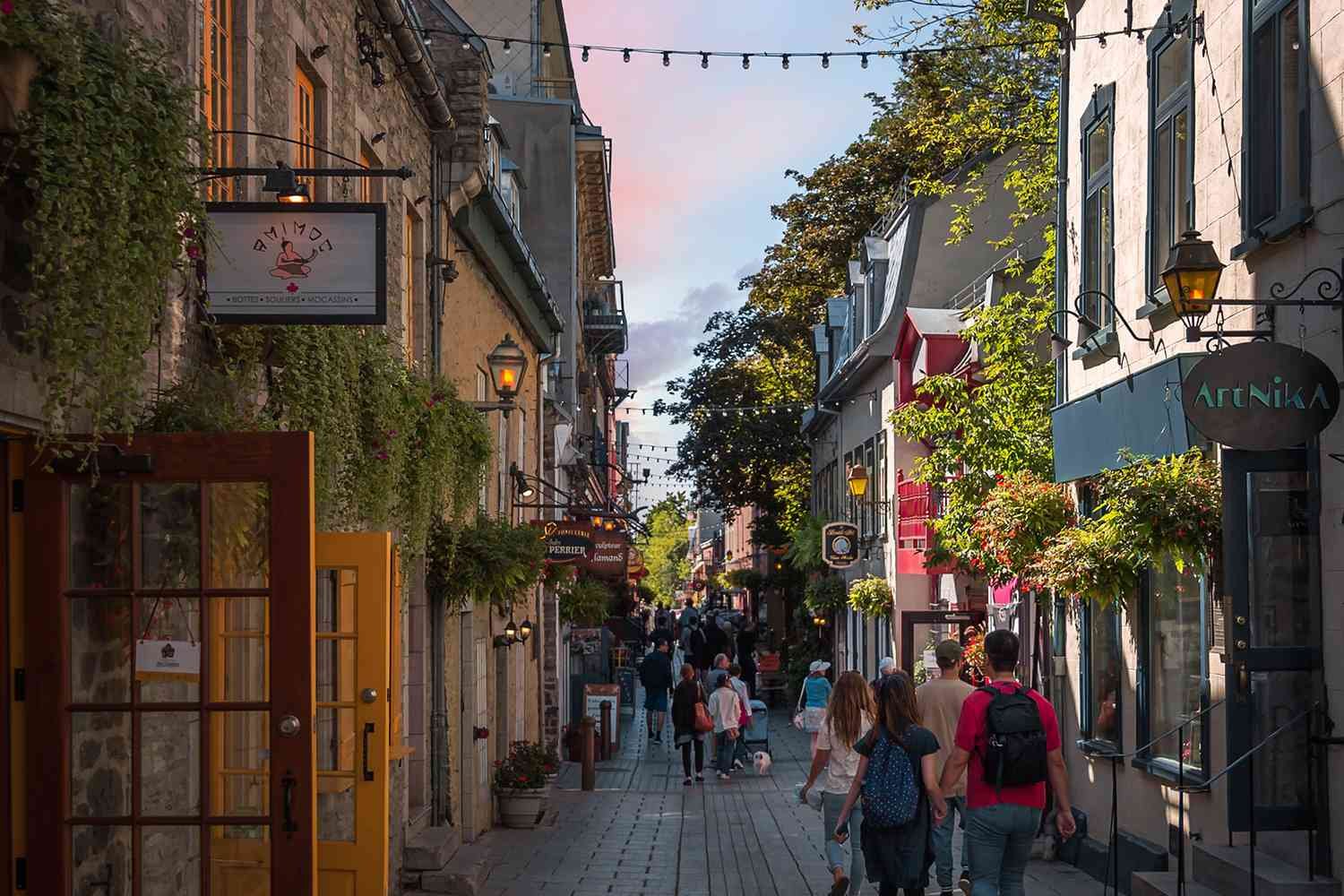
Your practical guide to the ideal length of stay, daily costs, and what to budget for a trip to Quebec City.
Fact-Checked By: Maya Whitfield—Senior Travel Editor at WakaAbuja
A trip to Quebec City works best with 3 full days if you want to see the old town, Montmorency Falls, and the food scene without rushing. Budget around 180 to 300 CAD per person per day for a mid-range trip, including hotel, meals, transport, and one paid attraction, not including flights (confirm the latest price directly with the operator). The city is very walkable, so you do not need a car unless you plan day trips beyond the falls.
I first arrived in Quebec City in early October with a rough plan and a light jacket, assuming “Canada in autumn is mild.” I spent the first evening shivering on the Dufferin Terrace, watching the St. Lawrence River turn steel gray while the wind cut through my sweater. I came back better prepared, and I have returned twice since.
The city rewards the traveler who plans days and costs carefully, because the old town is compact, but the good experiences are spread across the upper and lower town in a way that catches first-timers off guard.
Jump to: How Many Days | Best Time to Go | What to See | 3-Day Itinerary | 5-Day Itinerary | What It Costs | Getting Around | Mistakes to Avoid | FAQ
Key takeaways
- 3 full days is the sweet spot. It gives you one day for the old town, one for the falls and the river, and one for food and neighborhoods.
- Quebec City is very walkable. You do not need a car for the old town, the ferry, or most attractions.
- Summer is the busiest and most expensive time. June through August hotel rates jump 30 to 50 percent above May and September levels (confirm the latest price directly with the operator).
- Winter is magical but cold. Expect temperatures between -8°C and -15°C in January and February, with the Winter Carnival as the main draw.
- The total trip cost is often higher than the hotel rate suggests. Parking, meals in the old town, and one or two paid attractions add up fast.
- Skip the funicular if you can walk. It saves you 3 minutes and costs 5 CAD per ride (confirm the latest price directly with the operator). Take the stairs instead.
How Many Days Do You Need in Quebec City?

Three full days is the right answer for a first trip. That gives you enough time to explore Upper Town and Lower Town without rushing, take the ferry across the St. Lawrence for the view, and do a half-day trip to Montmorency Falls. If you have four or five days, you can add a day trip to Île d’Orléans or a slower pace with more time in cafes and bakeries.
Two days is workable if you are already in Montreal and just want a taste. You will see the old town and the falls, but you will skip the quieter neighborhood walks and the food market. One day is a mistake. You will spend more time parking and orienting than actually experiencing the city, and the old town deserves better than a rushed afternoon.
Maya Whitfield’s honest take: “If you only have two days, stay in Upper Town and skip Montmorency Falls. The falls are beautiful, but the old town is the reason you came. Do not trade two hours in Petit-Champlain for a waterfall photo.”
When Is the Best Time for a Trip to Quebec City?
Quebec City has four real seasons, and they change the trip more than most travelers expect. Summer is warm, crowded, and festival-heavy. Winter is frozen, quieter, and built around the Winter Carnival. Spring and autumn are the value windows, with lower prices and fewer crowds.
Summer (Jun-Aug)
Temperature: 18 to 25°C
Reality: The most expensive and busiest time. The Festival d’Été in July draws huge crowds, and hotel rates peak (confirm the latest price directly with the operator).
Winter (Dec-Feb)
Temperature: -8 to -15°C
Reality: The Winter Carnival in February is the main event. Dress in real layers, including a wool base and insulated boots. The cold is part of the experience.
Spring & Autumn
Temperature: 5 to 15°C
Reality: The value window. May and September have fewer crowds, lower hotel rates, and generally stable walking weather. Late October brings dramatic foliage.
What Should You See on a Trip to Quebec City?
Quebec City is small enough that you can see the main sights in two focused days, but the quality of the experience depends on how you sequence them. The old town is split between Upper Town and Lower Town, connected by steep streets and a funicular that is not worth the money unless you have mobility issues.
Start with the must-see list: the Château Frontenac and Dufferin Terrace, Petit-Champlain and Place Royale in Lower Town, the Plains of Abraham, and the ferry across the St. Lawrence for the best view of the city skyline. Add Montmorency Falls as a half-day trip, and Île d’Orléans if you have a full extra day.
Maya Whitfield’s honest take: “The ferry is the most underrated thing in Quebec City. It costs 7.70 CAD round-trip (confirm the latest price directly with the operator) and gives you the best skyline photo you will take all trip. Go at sunset.”
Must do
- Walk the Dufferin Terrace and see the Château Frontenac up close.
- Wander Petit-Champlain and Place Royale in Lower Town.
- Take the ferry across the St. Lawrence at sunset.
- Visit the Plains of Abraham and walk the battlefield.
If you have extra time
- Half-day trip to Montmorency Falls and the suspension bridge.
- Drive or cycle around Île d’Orléans for cider and cheese stops.
- Visit the Musée de la civilisation for a break from the cold or rain.
- Walk the Fortifications of Québec, the only remaining walled city north of Mexico.
Sample 3-Day Quebec City Itinerary
This is the itinerary I would give a first-timer who wants to see the highlights without feeling rushed. It assumes you are staying in or near Upper Town and walking most of the time.
Day 1: Upper Town
Start at the Château Frontenac and walk the Dufferin Terrace. Then follow the fortification walls toward the Citadelle. Spend the afternoon on the Plains of Abraham, and end with dinner in the old port area.
Day 2: Lower Town and the River
Walk down to Petit-Champlain and Place Royale in the morning before the crowds. Have lunch in the old port, then take the ferry across the St. Lawrence. Spend the evening in Saint-Roch for a less touristy dinner scene.
Day 3: Falls and Food
Take the bus or a short drive to Montmorency Falls in the morning. Walk the suspension bridge and the stairs. Return to the city for a late lunch at the Grand Marché, then spend the afternoon wandering the Saint-Jean-Baptiste neighborhood.
Sample 5-Day Quebec City Itinerary
Five days lets you slow down and add a proper day trip without feeling like you are missing the city. This is my preferred pace if you are coming from outside Canada and want to justify the flight.
Days 1-3: The Core
Follow the 3-day itinerary above, but spread the Lower Town and Upper Town walks across two days instead of one. Add a slow morning at a cafe in Saint-Jean-Baptiste.
Day 4: Île d’Orléans
Rent a car or join a small tour to Île d’Orléans. Stop at the cider houses, the chocolate shop, and the fromagerie. The island is quiet and agricultural, a sharp contrast to the old town.
Day 5: Museums and Neighborhoods
Spend the morning at the Musée de la civilisation or the Musée national des beaux-arts. Then walk the Saint-Sauveur neighborhood and have a long lunch. Use the evening for one last walk along the fortifications at dusk.
What Does a Trip to Quebec City Actually Cost?
Here is a realistic daily budget for one person in Canadian dollars, not including flights. Prices are approximate and fluctuate by season (confirm the latest price directly with the operator).
Budget
Hostel bed: 45 to 70 CAD
Food: 40 to 60 CAD
Transport: 10 to 15 CAD
One attraction: 10 to 20 CAD
Daily total: 105 to 165 CAD
Mid-range
3-star hotel: 150 to 250 CAD
Food: 70 to 110 CAD
Transport: 15 to 25 CAD
Two attractions: 25 to 40 CAD
Daily total: 260 to 425 CAD
Comfortable
4-star hotel: 300 to 450 CAD
Food: 120 to 180 CAD
Transport: 30 to 50 CAD
Three attractions: 40 to 60 CAD
Daily total: 490 to 740 CAD
A 3-day trip at the mid-range tier will cost roughly 780 to 1,275 CAD per person, before flights. Flights from major US East Coast cities to Quebec City generally run 350 to 650 CAD round-trip in economy, more in summer (confirm the latest price directly with the operator).
How Do You Get Around Quebec City?
You walk. The old town is compact, and most of what you want to see sits inside or immediately adjacent to the walls. For longer trips, the city bus system is reliable and cheap. A single ride costs 3.75 CAD cash or 3.25 CAD with the RTC app (confirm the latest price directly with the operator).
The ferry to Lévis costs 7.70 CAD round-trip (confirm the latest price directly with the operator) and is the best value attraction in the city. The funicular between Upper and Lower Town costs 5 CAD per ride (confirm the latest price directly with the operator) but is not worth it unless you have mobility issues or heavy luggage. The stairs are faster than waiting in line during peak season.
Maya Whitfield’s honest take: “Do not rent a car for Quebec City unless you plan multiple day trips. Parking in the old town is expensive, hard to find, and the streets are narrow. Walk or take the bus.”
What Are the Biggest Mistakes First-Timers Make in Quebec City?
I have made several of these, and I have watched other travelers repeat them. Here is what to avoid.
- Underestimating the hills. Upper Town and Lower Town are connected by steep streets. Wear comfortable shoes, not fashion boots.
- Renting a car for the old town. You will pay 30 to 50 CAD per day for parking (confirm the latest price directly with the operator) and spend more time circling than exploring.
- Paying for the funicular. The stairs take 3 minutes and are free. The funicular is a 5 CAD shortcut for the same distance (confirm the latest price directly with the operator).
- Eating every meal in the tourist district. Walk 15 minutes to Saint-Roch or Saint-Jean-Baptiste and save 30 to 50 percent on dinner (confirm the latest price directly with the operator).
- Not checking the ferry schedule. The ferry runs frequently but reduces service in winter and late evenings. Check the current schedule before you walk down to the terminal.
- Packing for the wrong season. Quebec City is colder than you expect, especially in spring and autumn. Bring a real waterproof layer.
Frequently asked questions about a trip to Quebec City
Is Quebec City walkable?
Yes, Quebec City is very walkable. The old town is compact, and most major sights sit within a 20 to 30 minute walk of each other. The only exceptions are Montmorency Falls and Île d’Orléans, which require a bus or car.
Do I need a car for a trip to Quebec City?
No, not for the city itself. The old town, ferry, and most neighborhoods are walkable, and the bus system covers the rest. Only rent a car if you plan multiple day trips beyond Montmorency Falls.
How many days do you need in Quebec City?
Three full days is the right amount for a first visit. It gives you enough time for the old town, Montmorency Falls, and the food scene without rushing. Two days works if you are already nearby, but one day is too short.
Is Quebec City expensive to visit?
It is moderately expensive. A mid-range trip runs 180 to 300 CAD per person per day including hotel, food, and activities (confirm the latest price directly with the operator). The old town dining and parking are the biggest cost drivers.
What is the best month to visit Quebec City?
September is the best overall month for most travelers. The summer crowds have thinned, hotel prices drop, and the weather is still comfortable for walking. February is best if you want the Winter Carnival, but expect very cold temperatures.
Do I need to speak French in Quebec City?
No, but a few basic phrases help. Most people working in restaurants, hotels, and attractions speak English, especially in the tourist areas. A simple “bonjour” before switching to English goes a long way.
Plan your trip: booking platforms we trust
These are the platforms I actually use to plan and book Quebec City trips. I always cross-check the official sites against at least one of these before paying.
Booking.com
Best for comparing Quebec City hotel rates and reading recent guest reviews.
Expedia
Useful for bundling Quebec City flights and hotels into one package.
Kayak
Best for checking if Quebec City flight prices drop before you book.
GetYourGuide
Good for booking Montmorency Falls tours and Old Québec walking tours.
TripAdvisor
Essential for reading unfiltered reviews of Quebec City hotels and restaurants.
Hotels.com
Useful if you collect rewards nights and want to apply them to a Quebec City stay.
WakaAbuja does its best to keep all information accurate at the time of publishing. Prices, policies, and availability change regularly. Always verify with official sources before you travel. We are not liable for errors caused by outdated information. Travel insurance is strongly recommended.