
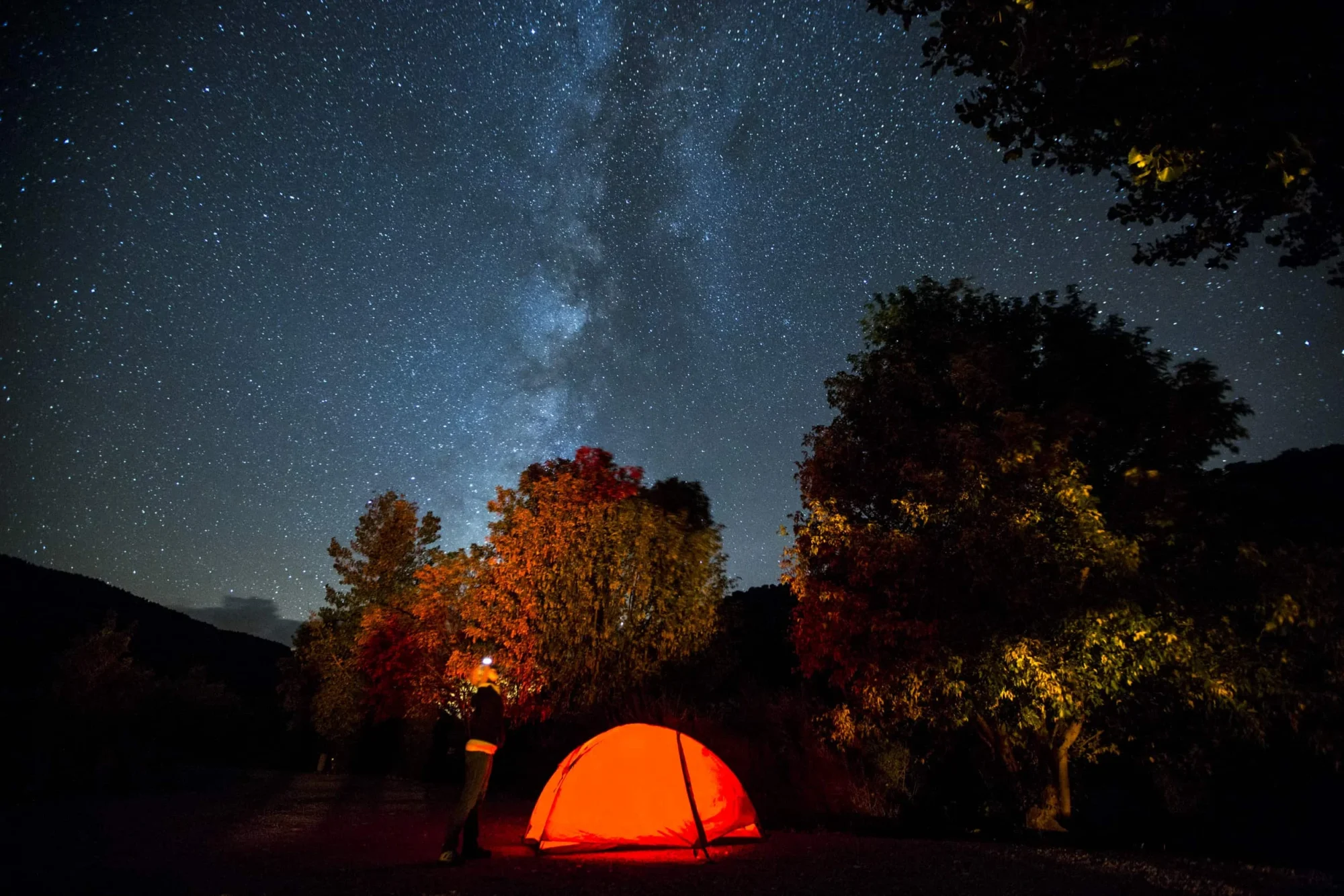
Find the right camping lantern for every adventure, from weekend campsites to remote off-grid trips, with our expert-tested picks for brightness, battery life, durability, and portability.
Fact-Checked By: Maya Whitfield—Senior Travel Editor at WakaAbuja
The best camping lantern depends on your trip type. For most car campers, a rechargeable LED lantern with 300 to 600 lumens, a 5,000 to 10,000 mAh battery, and an IPX4 water rating covers every situation from cooking to reading. Backpackers should prioritize a lightweight inflatable or collapsible lantern under 200 grams, while group campers need a lantern with a true 360-degree beam and at least 800 lumens (confirm the latest price directly with the operator).
The wrong camping lantern is either dead by 9 p.m. or so heavy you resent hauling it. I have carried a 400-gram metal lantern on a 20-kilometer backpacking trip and a featherweight solar light that gave up during a rainy dinner. Testing lanterns is not about finding the brightest thing on the shelf.
It is about matching the right output, battery life, and durability to the trip you are actually taking. These are the ones that earned a permanent spot in my gear bin.
Jump to: How We Tested | Best by Trip Type | How Many Lumens? | The Reviews | Comparison Chart | Gas Lantern Safety | FAQ
Key takeaways
- Rechargeable LED lanterns are the best default for most campers. They are brighter, safer, and cheaper to run than gas.
- Do not buy more lumens than you need. 300 to 600 lumens is the sweet spot for a campsite. 1,000+ is overkill for most people.
- Battery capacity matters more than brightness. A 10,000 mAh lantern at 300 lumens will outlast a 5,000 mAh lantern at 600 lumens.
- IPX4 is the minimum water rating to look for. It means the lantern can handle rain splashes from any direction.
- Gas lanterns are brighter but require ventilation. Never use a propane or liquid-fuel lantern inside a tent.
- The best budget lanterns are often USB-C rechargeable. They eliminate the ongoing cost of disposable batteries and charge from a power bank.
How We Tested These Camping Lanterns
I tested seven lanterns across four months, in conditions ranging from a rainy weekend in the Pacific Northwest to a dry, dusty basecamp in the Utah desert. Each lantern was evaluated on five criteria: brightness accuracy, battery life in real use, durability in wet and dusty conditions, ease of use with cold or gloved hands, and beam quality for both close-up tasks and group settings.
I did not test these lanterns in a lab. I cooked dinner by them, read by them in a tent, hung them from trees in the rain, and dropped two of them onto hard-packed dirt. The notes below reflect what actually happened, not what the spec sheet promised.
Maya Whitfield’s honest take: “A lantern that works in a showroom does not always work at 5 a.m. when your fingers are numb and the rain is sideways. I test for the 5 a.m. version.”
The Best Lantern by Trip Type
If you only have 30 seconds, here is the short version. Each pick is matched to the specific use case where it outperforms the others.
Best for Backpacking
Pick: Black Diamond Moji R
Why: 100 grams, collapsible, USB-C rechargeable, and bright enough for a two-person tent.
Best for Car Camping
Pick: BioLite AlpenGlow 500
Why: 500 lumens, 6,400 mAh battery, and a warm white mode that is easier on the eyes at night.
Best for Groups
Pick: Goal Zero Lighthouse 600
Why: True 360-degree beam, 600 lumens, and a built-in hand crank for emergency charging.
Best for Emergency Kits
Pick: Goal Zero Crush Light
Why: Solar charging, collapsible, 60 lumens, and it can live in a glovebox for years.
How Many Lumens Do You Actually Need?
Lumens are the most misunderstood number on a lantern spec sheet. More is not always better. A 1,000-lumen lantern on a picnic table is blinding. A 100-lumen lantern in a large group shelter is useless. Here is the practical breakdown I use.
Lumens by use case
Tent interior or reading: 50 to 150 lumens
Cooking and meal prep: 200 to 400 lumens
Picnic table or group of 4: 400 to 600 lumens
Large group site or field: 800+ lumens
Emergency power outage: 100 to 300 lumens is plenty for a room.
Most campers will be happiest with a lantern that offers 300 to 600 lumens on high and a dimmer mode below 100 lumens for reading. That range covers every normal campsite task without wasting battery.
The Best Camping Lanterns, Reviewed

BioLite AlpenGlow 500 — Best Overall
Lumens: 500 max, dimmable to 5
Battery: 6,400 mAh, USB-C rechargeable
Burn time: 5 hours high, 200 hours low
Water rating: IPX4
Weight: 210 grams
Pros: Warm white mode, dimmer is intuitive, and doubles as a power bank.
Cons: Slightly heavier than backpacking-specific options.
Real-use note: The warm white mode is the best I have used for reading in a tent. It does not wash out the space with harsh blue light, and the dimmer goes low enough to use as a nightlight without disturbing a tentmate.
Black Diamond Moji R—Best for Backpacking
Lumens: 150 max
Battery: 1,500 mAh, USB-C rechargeable
Burn time: 10 hours high, 70 hours low
Water rating: IPX4
Weight: 100 grams
Pros: Collapsible, ultralight, simple one-button operation.
Cons: Not bright enough for large groups.
Real-use note: I carried this on a three-day backpacking trip in the Cascades and forgot it was in my pack until dark. It lit a two-person tent perfectly and weighed less than my phone.
Goal Zero Lighthouse 600 — Best for Groups
Lumens: 600 max
Battery: 5,200 mAh, USB rechargeable plus hand crank
Burn time: 6 hours high, 180 hours low
Water rating: IPX4
Weight: 480 grams
Pros: True 360-degree beam, emergency hand crank, bright enough for a 6-person table.
Cons: Heavy for backpacking.
Real-use note: The hand crank is not a gimmick. I used it for two minutes and got another 20 minutes of light after the battery died on a windy night. It is the lantern I grab for group trips.
Goal Zero Crush Light — Best for Emergency Kits
Lumens: 60 max
Battery: 1,000 mAh, solar and USB rechargeable
Burn time: 6 hours high, 35 hours low
Water rating: IPX4
Weight: 90 grams
Pros: Solar charging, collapsible, nearly indestructible.
Cons: Too dim for cooking or group use.
Real-use note: I keep one in my car glovebox and one in my emergency kit at home. It is not the brightest lantern, but it always works, and the solar panel means it never needs a wall outlet.
Luci Outdoor 2.0 — Best Solar Lantern
Lumens: 75 max
Battery: 1,000 mAh, solar only
Burn time: 24 hours low
Water rating: IP67
Weight: 125 grams
Pros: Fully waterproof, inflatable, and floats.
Cons: Solar charging is slow in cloudy weather.
Real-use note: I left this in direct sun for six hours at a desert camp, and it ran all night on low. It is not bright enough for cooking, but it is perfect for inside a tent or as a marker light.
Coleman NorthStar Propane Lantern — Best Gas Lantern
Lumens: 1,500 max
Power: Propane cylinder
Burn time: 7 hours high per 1 lb cylinder
Water rating: Not rated for water
Weight: 1,100 grams
Pros: Extremely bright, reliable in cold weather, no battery to die.
Cons: Requires ventilation, mantles need replacing, heavy.
Real-use note: This is the lantern I use for winter car camping when battery lanterns drain faster in the cold. It is bright enough to light a whole site, but I never use it inside a tent.
Camping Lantern Comparison Chart
Here is the full comparison at a glance. All prices are approximate and should be confirmed directly with the retailer (check current rates on the official site).
BioLite AlpenGlow 500
Lumens: 500
Battery: 6,400 mAh
Weight: 210 g
Best for: Car camping
Black Diamond Moji R
Lumens: 150
Battery: 1,500 mAh
Weight: 100 g
Best for: Backpacking
Goal Zero Lighthouse 600
Lumens: 600
Battery: 5,200 mAh
Weight: 480 g
Best for: Groups
Goal Zero Crush Light
Lumens: 60
Battery: 1,000 mAh
Weight: 90 g
Best for: Emergency kits
Luci Outdoor 2.0
Lumens: 75
Battery: 1,000 mAh
Weight: 125 g
Best for: Solar
Coleman NorthStar
Lumens: 1,500
Power: Propane
Weight: 1,100 g
Best for: Winter car camping
Gas and Propane Lantern Safety Notes
Gas lanterns are bright and reliable, but they come with risks that LED lanterns do not. These are the rules I follow and the rules you should follow too.
- Never use a gas lantern inside a tent, vehicle, or enclosed space. They produce carbon monoxide, which is odorless and can be fatal.
- Always use a gas lantern in a well-ventilated area. Even under a canopy, make sure there is airflow.
- Replace mantles carefully. Mantles are fragile and release fine ash when burned. Let them cool completely before handling.
- Check the propane cylinder for leaks before attaching. A soapy water test will show bubbles at the connection if there is a leak.
- Keep gas lanterns away from flammable materials. The globe gets extremely hot and can ignite nearby fabric or paper.
- Store propane cylinders upright and outside the living area. Never store them in a hot car trunk or near an open flame.
For more detailed safety guidance, check the U.S. Consumer Product Safety Commission page on carbon monoxide safety.
Frequently asked questions about camping lanterns
How many lumens do I need for a camping lantern?
For most campsite use, 300 to 600 lumens is the sweet spot. That covers cooking, eating, and socializing around a table. For reading inside a tent, 50 to 150 lumens is plenty. For large group sites, look for 800 lumens or more.
Rechargeable vs. battery-powered lantern: which is better?
Rechargeable lanterns are better for most campers because they are cheaper to run over time and can be topped up from a power bank or car charger. Battery-powered lanterns are useful for emergency kits where you may not have access to power for recharging.
Is a gas lantern better than an LED lantern?
Gas lanterns are brighter and work better in extreme cold, but they are heavier, require ventilation, and need fuel. LED lanterns are safer, lighter, and more convenient for most trips. Gas is only worth it for winter car camping or extended power outages.
What is a good IP rating for a camping lantern?
IPX4 is the minimum you should look for. It means the lantern can handle rain splashes from any direction. IPX7 is better if you plan to use it near water or in heavy rain, as it can survive temporary immersion.
How long should a camping lantern battery last?
A good rechargeable lantern should run at least 5 to 10 hours on high and 100+ hours on low. Battery capacity, measured in mAh, is a better indicator than the manufacturer’s claimed burn time, which is often optimistic.
Can I use a camping lantern as a power bank?
Some rechargeable lanterns, like the BioLite AlpenGlow 500, double as power banks. This is a useful feature for charging a phone in an emergency, but it drains the lantern battery quickly, so do not rely on it as your only power source.
Do lanterns work in cold weather?
LED lanterns lose some battery capacity in freezing temperatures, but they still work. Gas lanterns actually perform better in cold weather because the fuel burns regardless of temperature. If you camp in winter, a gas lantern or an LED with a lithium battery is the best choice.
Plan your trip: gear and booking resources we trust
These are the platforms I actually use to research and buy camping gear. I always cross-check the manufacturer’s specs against real user reviews before purchasing.
REI
Best for researching gear specs, reading expert buying guides, and checking member reviews.
Booking.com
Useful for finding cabins or campsites near major outdoor areas.
Expedia
Good for bundling a car rental with a campsite-adjacent hotel for the night before you head out.
GetYourGuide
Best for booking guided camping trips or outdoor experiences if you want a structured first trip.
TripAdvisor
Essential for reading campsite reviews and finding good spots near national parks.
Vrbo
Useful for renting a cabin or vacation home near a camping area for a mixed indoor-outdoor trip.
WakaAbuja does its best to keep all information accurate at the time of publishing. Prices, policies, and availability change regularly. Always verify with official sources before you travel. We are not liable for errors caused by outdated information. Travel insurance is strongly recommended.