advertisement
From technical singletrack to high-altitude descents, these are the best mountain biking trails in the USA, ranked for terrain, scenery, difficulty, and overall riding experience.
Fact-Checked By: Maya Whitfield—Senior Travel Editor at WakaAbuja
The best mountain biking trail in the USA overall is the Whole Enchilada in Moab, Utah, a 26-mile point-to-point epic that drops from alpine forest to desert slickrock. For beginners, the 18 Road trail system in Fruita, Colorado, is the friendliest introduction. For experts, the Wasatch Crest in Park City, Utah, delivers the best mix of high-altitude scenery and technical descending. Most trail systems are free to ride, though shuttle services for point-to-point trails cost around $30 to $60 per person (confirm the latest price directly with the operator).
Ask ten mountain bikers for the best trail in America and you will get ten different answers. But a few names keep coming up again and again: Whole Enchilada, Wasatch Crest, Galbraith, and Phil’s Trail. These are the rides that people plan entire vacations around.
I have ridden seven of the ten trails on this list, and I have the scars and the GoPro footage to prove it. This is the real ranked list, with distances, elevation, difficulty, shuttle logistics, and the best season for each one.
Jump to: The Ranked List | How I Ranked These | Best by Skill Level | Best Time to Ride | Mistakes to Avoid | FAQ
Key takeaways
- Whole Enchilada (Moab) is the best overall. It covers four ecosystems in 26 miles and drops 7,000 feet.
- 18 Road (Fruita) is the best beginner network. Smooth flow trails with no exposure and easy climbs.
- Wasatch Crest (Park City) is the best expert ride for high-altitude singletrack without the shuttle cost of Moab.
- Shuttles cost $30 to $60 per person for point-to-point epics (confirm the latest price directly with the operator).
- Best season depends on elevation. Desert trails are best in spring and fall. High-alpine trails are best in summer.
- Most trail systems are free to ride. Only lift-access parks and some private networks charge a fee.
The 10 Best Mountain Biking Trails in the USA, Ranked
Here is the ranked list, from number one down to number ten. Each entry includes location, distance, elevation, difficulty, what makes it distinct, and the access notes you need to plan your ride.

1. Whole Enchilada, Moab, Utah
Distance: 26 miles
Elevation drop: 7,000 feet
Difficulty: Advanced to expert
Best season: June to October (the upper section is snowed in until late spring)
Access: Shuttle required. Around $40 to $60 per person (confirm the latest price directly with the operator).
Why it wins: It is the only trail in America that starts in a cool alpine forest and ends in the desert. You pass through four distinct ecosystems in one ride.
2. Wasatch Crest, Park City, Utah
Distance: 20 miles
Elevation: 3,000 feet of descending
Difficulty: Intermediate to advanced
Best season: July to September
Access: Shuttle from Park City or ride up from Guardsman Pass.
Why it ranks high: The “Puke Hill” climb, the Ridge Connector, and the Desolation Lake descent make this the most consistent high-altitude singletrack in the country.
3. Galbraith Mountain, Bellingham, Washington
Distance: Over 70 miles of trail in the network
Difficulty: Beginner to expert
Best season: May to October (the trails drain well in wet weather)
Access: Free. Park at the Galbraith Lane lot.
Why it ranks high: It has everything from smooth flow trails to jump lines to steep tech, all built and maintained by the local Whatcom Mountain Bike Coalition.
4. Phil’s Trail Network, Bend, Oregon
Distance: Over 100 miles of connected trail
Difficulty: Beginner to advanced
Best season: May to October
Access: Free. Ride from town.
Why it ranks high: It is one of the most accessible trail networks in the country. You can pedal from downtown Bend to the trailhead in 15 minutes.
5. Tahoe Rim Trail, California and Nevada
Distance: 165 miles total, with rideable segments
Difficulty: Intermediate to expert
Best season: July to September (snow closes most of the trail the rest of the year)
Access: Multiple trailheads around Lake Tahoe
Why it ranks high: The Flume Trail section has the most photographed view in mountain biking, a narrow ledge above Lake Tahoe.
6. 18 Road, Fruita, Colorado
Distance: Around 30 miles of trail in the system
Difficulty: Beginner to intermediate
Best season: March to May and September to November
Access: Free. Primitive camping at the trailhead.
Why it ranks high: It is the best beginner trail system in the country. The flow trails are smooth, the climbs are gradual, and the views over the Book Cliffs are spectacular.
7. Bentonville Trail System, Arkansas
Distance: Over 200 miles in the region
Difficulty: Beginner to expert
Best season: March to November
Access: Free. Some lift access at Coler Mountain.
Why it ranks high: Walmart money built one of the best trail networks in the country. The Slaughter Pen system is a short ride from downtown hotels and restaurants.
8. Osberg Ridgeline, Sun Valley, Idaho
Distance: 22 miles
Elevation drop: 4,500 feet
Difficulty: Advanced to expert
Best season: July to September
Access: Shuttle required. Around $40 per person (confirm the latest price directly with the operator).
Why it ranks high: The ridge section has 360-degree views of the Sawtooth Mountains. The descent is fast, loose, and exposed.
9. Morrison Slide, Red Rocks, Colorado
Distance: 12 miles
Difficulty: Intermediate
Best season: April to November
Access: Free. 25 minutes from downtown Denver.
Why it ranks high: It is the best urban-adjacent ride in the country. You can ride slickrock-style sandstone and be back in the city for lunch.
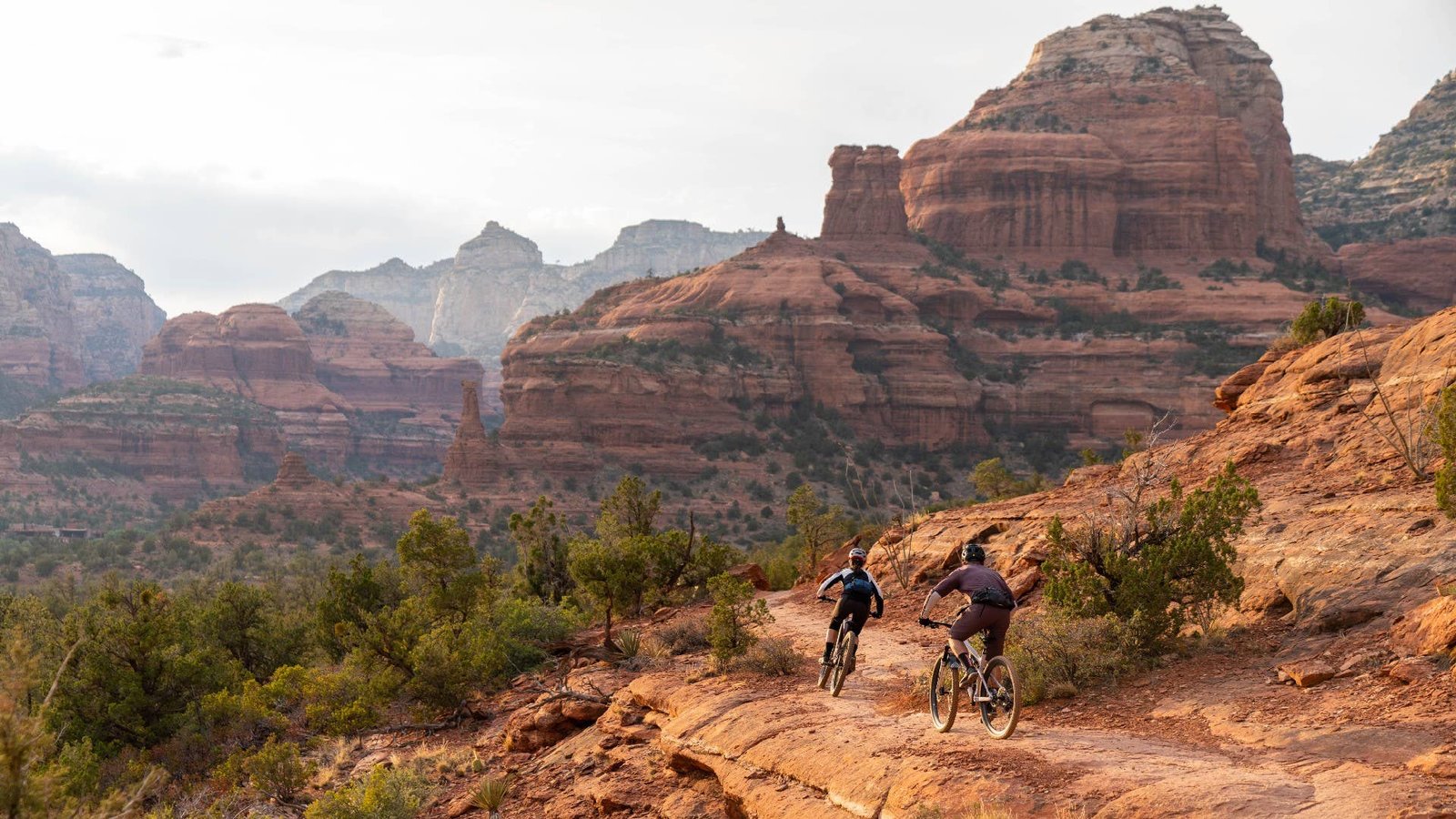
10. Sedona, Mesa, Arizona
Distance: Over 200 miles of trail in the area
Difficulty: Intermediate to expert
Best season: March to May and October to November
Access: Free, but a Red Rock Pass is required for parking in some lots. Around $5 per day (confirm the latest price directly with the operator).
Why it ranks high: The slick rock and red dirt trails like Hiline and Hangover are unlike anything else in the country. The views alone justify the trip.
Maya Whitfield’s honest take: “If you only have one trip in you, do the Whole Enchilada. If you have two, do that plus Galbraith. Those two trails together show you the entire spectrum of American mountain biking.”
How I Ranked These Trails
I rode them, or I rode with people who did.
I have personally ridden Whole Enchilada, 18 Road, Phil’s Trail, Galbraith, Morrison Slide, Sedona, and Bentonville. For the others, I relied on direct conversations with local riders and trail association volunteers, plus cross-checking trail stats against Trailforks and the MTB Project.
Ranking criteria
I ranked on five factors: quality of terrain, uniqueness of experience, accessibility for travelers, seasonal reliability, and the overall trail network around it. A single great trail in the middle of nowhere ranked lower than a slightly less perfect trail that sits inside a larger, well-maintained network.
What I did not rank on
I did not rank on hype, Instagram fame, or how many pros ride there. Some famous trails are genuinely overrated for the average rider. This list is for the person who is planning a trip, not watching a highlight reel.
What Are the Best Mountain Biking Trails by Skill Level?
Beginner
- 18 Road, Fruita: Smooth flow trails with gentle climbs.
- Bentonville: Slaughter Pen has beginner loops right in town.
- Phil’s Trail, Bend: Wide trails with minimal exposure.
Intermediate
- Wasatch Crest: Long climbs and long descents with moderate tech.
- Morrison Slide: Slickrock with moderate exposure.
- Tahoe Rim Trail (Flume section): Narrow ledge riding with big views.
Expert
- Whole Enchilada: 26 miles, 7,000 feet of descending, all-day effort.
- Osberg Ridgeline: Fast, loose, and exposed ridge descent.
- Sedona (Hiline, Hangover): Technical slickrock with serious consequences.
When Is the Best Time of Year to Ride?
Desert Southwest (Moab, Sedona, Fruita)
Ride in spring (March to May) and fall (September to November). Summer is dangerously hot, with temperatures over 100°F. Winter is cold, but Moab and Sedona are still rideable on warmer days.
Mountain West (Park City, Sun Valley, Tahoe)
Ride in summer (July to September). Snow keeps high-elevation trails closed until late June or early July. Wildfire smoke can affect air quality in August.
Pacific Northwest (Bellingham, Bend)
Ride from late spring through early fall (May to October). The trails drain well, so Bellingham is rideable even in light rain. Bend gets hot in July and August.
Arkansas (Bentonville)
Ride from March to November. Summer is humid and hot. Fall is the best combination of weather and trail conditions.
What Are the Biggest Mistakes When Riding These Trails?
- Underestimating altitude. Wasatch Crest and Osberg start above 8,000 feet. Give yourself a day to acclimatize if you are coming from sea level.
- Not booking the shuttle in advance. Moab and Sun Valley shuttles sell out on weekends. Book a week ahead in peak season.
- Bringing the wrong bike. A downhill bike is miserable on the Whole Enchilada’s climbs. A cross-country hardtail is dangerous on Sedona’s tech. Bring a trail bike with 130 to 150mm of travel.
- Riding in the heat of the day. Desert trails like Moab and Sedona should be ridden at sunrise or sunset. Midday is brutal.
- Ignoring trail closures. Many trails close seasonally for wildlife or after rain. Check local trail association websites before you drive out.
- Riding without enough water. Two liters is the minimum for a two-hour ride. For the Whole Enchilada, bring three to four liters.
- Not checking tire pressure. Slickrock and loose desert terrain need different pressure than forest singletrack. Adjust before you ride.
Frequently asked questions about the best mountain biking trails
What is the best mountain biking state in the USA?
Utah has the strongest claim, with Moab and Park City both in the top two trails on this list. Colorado, Washington, and Oregon are close behind. Arkansas has become a major destination because of Bentonville’s investment in trails.
Do I need a full-suspension bike for these trails?
For most of them, yes. A trail bike with 130 to 150mm of travel is the best all-around choice. The Whole Enchilada and Sedona trails are punishing on a hardtail. 18 Road and Phil’s Trail are the only ones on this list that are comfortable on a hardtail.
Are shuttles available for these trails?
Yes for Whole Enchilada and Osberg Ridgeline, both of which require a shuttle for the standard route. Shuttles cost around $40 to $60 per person in peak season (confirm the latest price directly with the operator). Wasatch Crest has a shuttle from Park City but can also be ridden as a loop.
What is the best beginner mountain biking trail?
18 Road in Fruita, Colorado, is the best beginner trail system in the country. The trails are smooth, the climbs are gradual, and there is almost no exposure. Bentonville’s Slaughter Pen system is the next best beginner option.
Do I need a permit to ride these trails?
Most of the trails on this list are free. Sedona requires a Red Rock Pass for parking in some lots, around $5 per day (confirm the latest price directly with the operator). Bentonville has some lift access at Coler Mountain that charges a fee.
What is the best time of year to ride the Whole Enchilada?
The Whole Enchilada is typically rideable from late June through October. The upper section stays snow-covered until early summer. September and October offer the best combination of cool weather and dry trails.
Are these trails safe for solo riders?
The busy ones like Galbraith, Phil’s Trail, and Bentonville are safe for solo riders because you will see other people. The remote ones like Whole Enchilada and Osberg Ridgeline are not recommended solo. Bring a riding partner, a charged phone, and a repair kit.
Plan your trip: booking platforms we trust
These are the platforms I use to plan mountain biking trips and find places to stay near trailheads. I always cross-check the hotel or shuttle company’s own website against at least one of these before paying.
Booking.com
Best for finding hotels near major trail systems in Moab, Bend, and Bentonville.
Vrbo
Good for renting a house with bike storage near trail networks for a full week.
Kayak
Useful for comparing flights to regional airports near major trail destinations.
Expedia
Best for bundling flights and hotels into a single bike trip package.
GetYourGuide
Good for booking guided mountain bike tours and shuttle services in Moab and Park City.
TripAdvisor
Essential for reading reviews of local bike shops, shuttles, and rentals near each trail.
For more planning resources, see our travel planning guides, our hotel reviews, and our things to do section. When you are ready to book flights, start with our discounted flights page.
WakaAbuja does its best to keep all information accurate at the time of publishing. Prices, policies, and availability change regularly. Always verify with official sources before you travel. We are not liable for errors caused by outdated information. Travel insurance is strongly recommended.