advertisement
New Zealand rewards travelers who plan their route well, and these best places to visit make it easier to build an unforgettable itinerary.
Fact-Checked By: Maya Whitfield—Senior Travel Editor at WakaAbuja
The best places to visit in New Zealand are Milford Sound and Fiordland on the South Island, Queenstown for adventure, Aoraki/Mount Cook for alpine scenery, Rotorua for geothermal and Maori culture on the North Island, and the Bay of Islands for coastal scenery. Two weeks is the minimum to cover both islands without rushing, and the best months to visit are December through March for warm weather and long daylight, or April and November for fewer crowds and lower prices.
New Zealand does not really have a single best place. It has about 25 of them, scattered across two islands that somehow each feel like a different country. I have driven the length of both islands twice, once in summer and once in the shoulder season, and the same lesson came up every time: the hard part is not finding beautiful places here; it is figuring out which ones actually fit into the time you have.
This guide groups the best of them by island, tells you when to go, and, unlike most best-places lists, shows you how to string them into a route that works.
Jump to: Quick Reference | North Island | South Island | How to Group Them | Best Time to Visit | Maori Place Names | Mistakes to Avoid | FAQ
Key takeaways
- Two weeks is the minimum for both islands. One week only works if you stay on one island.
- The South Island has the bigger scenery. The North Island has the better food, culture, and beaches.
- Rent a car or campervan. Public transport between the top places is limited, and many stops are not on a train line.
- Book Milford Sound cruises and Tongariro shuttles weeks ahead in peak season (confirm the latest price directly with the operator).
- Summer runs December to February. It is also the most expensive and most crowded. April and November are the sweet spots.
- Do not try to see everything in one trip. Pick a route, go deep, and save the rest for a second visit.
Quick Reference: Where to Go and When
If you want the short version, here it is. Each entry shows the island, what it is best for, the ideal season, and how much time to allow.
North Island highlights
Bay of Islands: Best for sailing, dolphins, and coastal scenery. Summer. 2 to 3 days.
Rotorua: Best for geothermal parks and Maori culture. Year-round. 2 days.
Tongariro National Park: Best for alpine hiking. November to April. 2 days.
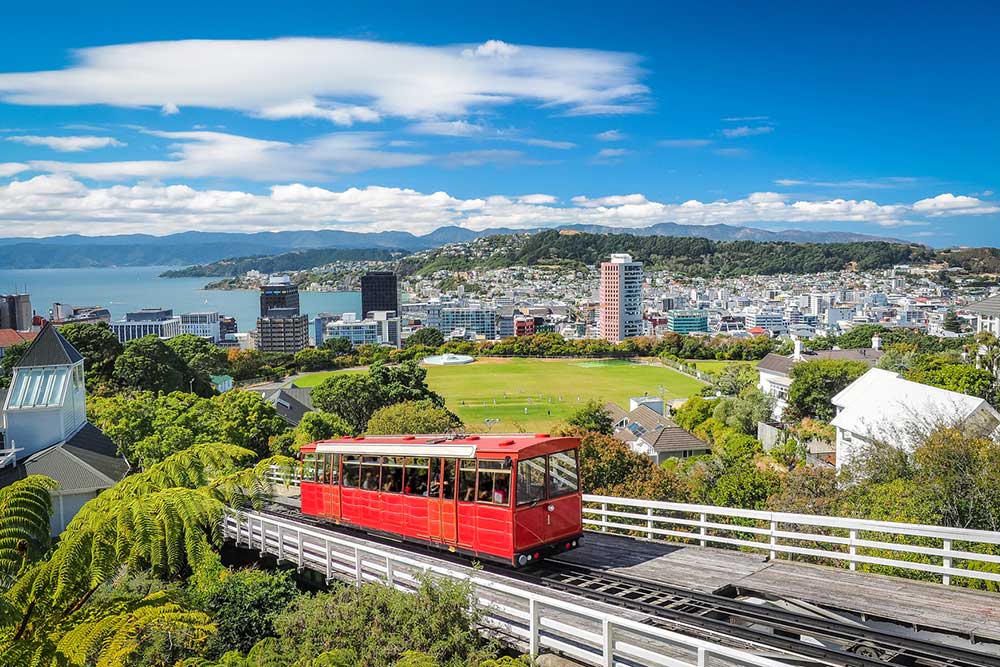
Wellington: Best for food, coffee, and museums. Year-round. 2 days.
South Island highlights
Abel Tasman: Best for coastal hiking and kayaking. November to March. 2 to 3 days.
Aoraki/Mount Cook: Best for alpine scenery and glacier walks. Year-round. 1 to 2 days.
Milford Sound: Best for fjord cruises. Year-round, but check road access in winter. 1 to 2 days.
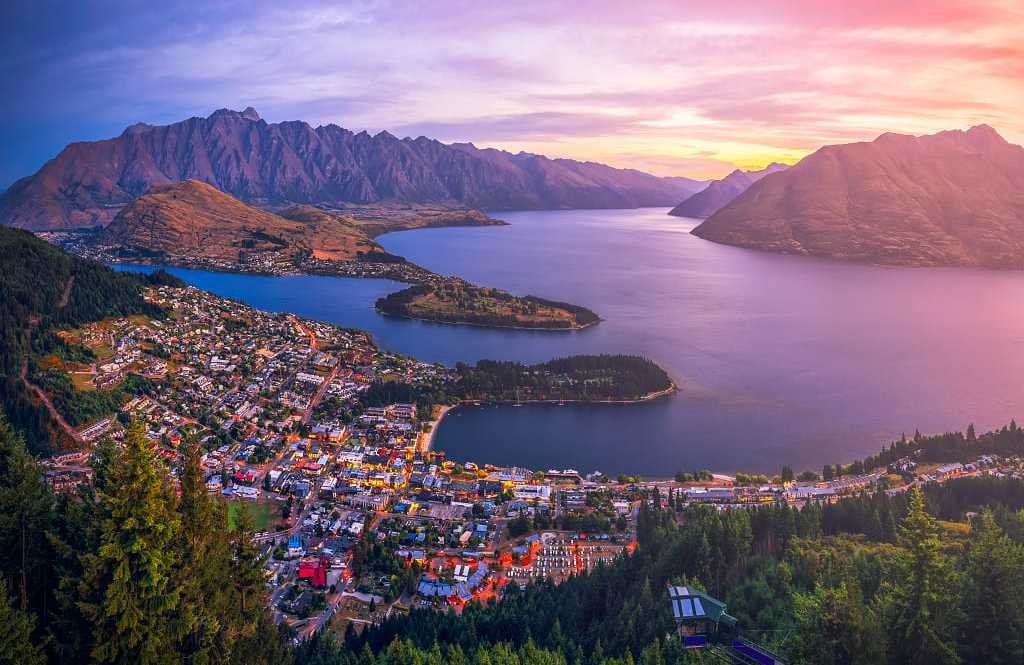
Queenstown: Best for adventure sports and nightlife. Year-round. 3 to 4 days.
The Catlins: Best for waterfalls, wildlife, and empty roads. Year-round. 1 to 2 days.
What Are the Best Places to Visit on New Zealand’s North Island?
The North Island is warmer, more populated, and easier to drive around than the South. It has the country’s biggest city, its capital, and the best concentration of Maori cultural experiences. It also has the best swimming beaches.
Bay of Islands
The Bay of Islands is a 3-hour drive north of Auckland and a completely different landscape: warm water, dozens of islands, and the historic town of Russell. The main activity is getting on the water. Dolphin-watching cruises, sailing trips, and the ferry to the Hole in the Rock are all bookable from Paihia. Allow 2 to 3 days.
Waiheke Island and Auckland
Auckland is the entry point for most international flights, and Waiheke Island is a 40-minute ferry ride from the downtown wharf. Waiheke has vineyards, olive groves, and quiet beaches. It is the easiest escape from a city in New Zealand. Allow 1 to 2 days in Auckland and 1 full day on Waiheke.
Rotorua
Rotorua smells like sulfur. That is the geothermal activity, and it is the reason people come. The town sits on a volcanic field with geysers, boiling mud pools, and hot springs. It is also the best place in the country to learn about Maori culture, with several marae offering traditional performances and hangi feasts. Allow 2 days.
Tongariro National Park
Tongariro is New Zealand’s oldest national park and home to the Tongariro Alpine Crossing, one of the best day hikes in the world. The 19.4-kilometer trail crosses volcanic terrain and takes 6 to 8 hours. It is only accessible by shuttle because the trail is one-way. Book the shuttle in advance (confirm the latest price directly with the operator). Allow 2 days.
Hahei and Cathedral Cove
Cathedral Cove is a natural rock arch on the Coromandel Peninsula, accessible by a 45-minute walk or a kayak tour. The beach is one of the most photographed spots in the country. Parking is limited in summer, so go early or take the shuttle from Hahei village.
Wellington
Wellington is the capital and the cultural heart of the country. It has the national museum Te Papa, the Zealandia wildlife sanctuary, and a compact downtown with excellent coffee and restaurants. The cable car up to the botanical gardens is a classic. Allow 2 days.
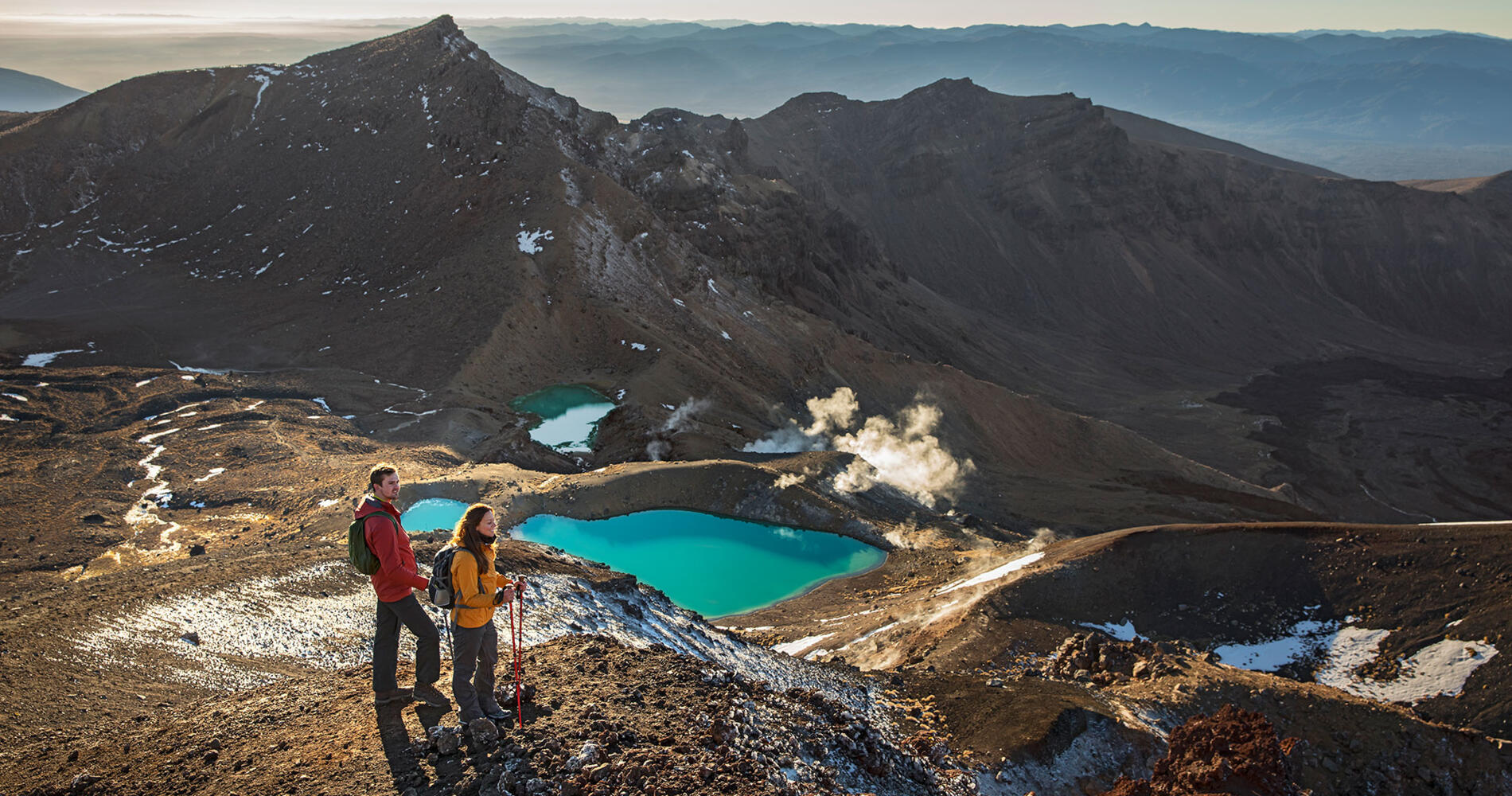
Maya Whitfield’s honest take: “The Tongariro Crossing is not a walk. It is a full-day hike with real exposure and changeable weather. Do not attempt it in jeans and sneakers. Book the shuttle, bring layers, and start early.”
What Are the Best Places to Visit on New Zealand’s South Island?
The South Island is where the postcard scenery lives. Fjords, glaciers, alpine lakes, and mountain roads. It is less populated and easier to drive, but distances are bigger than they look on a map. Give yourself more time than you think you need.
Abel Tasman National Park
Abel Tasman is the smallest national park in the country and the most popular for coastal hiking and kayaking. The Coast Track runs 60 kilometers along golden beaches and native forest. Day walks and water taxis let you cover the best sections without committing to the full multi-day hike. Allow 2 to 3 days.
Nelson Lakes
Nelson Lakes is a quiet alpine area with two glacial lakes, beech forest, and short walks. It is much less visited than the famous stops and rewards travelers who want to slow down. Allow 1 day, or more if you are hiking.
Kaikoura
Kaikoura is the whale-watching capital of New Zealand. Sperm whales are resident year-round, and dolphin swimming and seal colony visits are the other main draws. The town is small, and the mountains come down almost to the sea. Allow 1 to 2 days.
Aoraki/Mount Cook
Aoraki is the highest mountain in New Zealand at 3,724 meters. The national park has short walks, glacier lakes, and the best stargazing in the country. It is part of the Dark Sky Reserve. Allow 1 to 2 days.
Lake Tekapo
Lake Tekapo is known for its turquoise color, which comes from glacial rock flour suspended in the water. The Church of the Good Shepherd on the lakeshore is one of the most photographed buildings in the country. Allow half a day to a full day.
Franz Josef and Fox Glacier
These two towns sit at the foot of the glaciers of the same names. The glaciers have retreated significantly over the past decade, so the classic heli-hike is now the main way to get on the ice. Weather cancellations are common, so build in a spare day. Allow 2 days.
Punakaiki and the Pancake Rocks
Punakaiki is a short stop on the West Coast, famous for the Pancake Rocks, layered limestone formations that blow water through blowholes at high tide. It is a 30-minute walk and a good break on the drive between Greymouth and Westport.
Fiordland: Milford Sound and Doubtful Sound
Milford Sound is the most famous fjord in the country, and Doubtful Sound is the bigger, quieter alternative. Both require a cruise to see properly. Milford is a 4-hour drive from Queenstown, and the road can close in winter. Doubtful Sound is reached via a boat across Lake Manapouri and a bus over the Wilmot Pass. Allow 1 to 2 days for Milford and 2 days for Doubtful.
Queenstown and Wanaka
Queenstown is the adventure capital of the world, with bungee jumping, jet boating, skiing, and a lively restaurant and bar scene. Wanaka is 1 hour away and much quieter, with the famous lone tree and access to the Rob Roy Glacier Track. Allow 3 to 4 days for Queenstown and 1 to 2 for Wanaka.
Dunedin
Dunedin is a university town with Victorian and Edwardian architecture, a great street-art scene, and the wildlife-rich Otago Peninsula nearby. The albatross colony at Taiaroa Head is the only mainland colony in the world. Allow 1 to 2 days.
Christchurch
Christchurch has rebuilt itself since the 2011 earthquakes with a mix of new architecture and restored heritage. The Botanic Gardens and the newly reopened cathedral are the main draws. Allow 1 day.
The Catlins
The Catlins is the southeast corner of the South Island, a wild coastal region with waterfalls, sea caves, and penguin and seal colonies. It is off the main tourist loop and one of the best places to escape the crowds. Allow 1 to 2 days.

How Do You Fit These Into an Actual Trip?
This is where most guides stop. Here is how I would structure three realistic trip lengths.
One week in New Zealand
Pick one island. For a first trip, fly into Queenstown and do the South Island loop: Queenstown, Milford Sound, Aoraki/Mount Cook, Lake Tekapo, and Christchurch. Drive time is manageable, and the scenery is the best in the country. Alternatively, fly into Auckland and do the North Island: Auckland, Waiheke, Rotorua, Tongariro, and Wellington.
Two weeks in New Zealand
Do both islands. Fly into Auckland, drive south through Rotorua and Tongariro, take the ferry from Wellington to Picton, then work your way down the South Island. Or fly into Christchurch, do the South Island loop, and fly from Queenstown to Auckland for the North Island at the end. Two weeks is tight but doable if you accept one or two long driving days.
Three weeks or more
Now you can add the Catlins, Nelson Lakes, Abel Tasman, and the Bay of Islands without cutting anything. Three weeks is the point where New Zealand stops feeling rushed. You can slow down, stay an extra night somewhere you like, and skip a stop if the weather turns.
When Is the Best Time to Visit New Zealand?
New Zealand’s seasons are reversed from the Northern Hemisphere. Summer runs December through February and is the warmest, driest, and busiest time. Winter runs June through August and is best for skiing and quieter roads. Spring and autumn are the shoulder seasons and my personal favorites.
Some places have specific windows. The Tongariro Alpine Crossing is safest from November to April and can be dangerous in winter without alpine experience. Milford Road can close in winter for avalanche control. The glaciers are accessible year-round by helicopter, but weather cancellations are more common in the wet months of May to September. Waiheke Island vineyards are best in late summer and early autumn.
A Note on Maori Place Names and Culture
New Zealand’s place names are mostly Maori, and many are directly tied to the landscape’s cultural significance. Aoraki means “cloud piercer” in reference to the mountain that is sacred to Ngai Tahu. Tongariro, Ngauruhoe, and Ruapehu are ancestors in Maori tradition. Ngauruhoe, which many travelers know as Mount Doom from the Lord of the Rings films, is no longer climbed at the request of local iwi because of its cultural significance.
Learning a few words of te reo Maori goes a long way. Kia ora is a general greeting. “Whanau” means “family.” Marae is a meeting ground. If you are visiting a marae, follow the guidance of your host and treat the space as you would a private home.
What Are the Biggest Mistakes When Planning a New Zealand Trip?
- Underestimating driving times. Roads are winding and often single-lane in each direction. A 200-kilometer drive can take 4 hours.
- Trying to see both islands in under 10 days. You will spend more time in the car than at any of the places you came to see.
- Not booking Milford Sound cruises ahead. Peak season cruises sell out days in advance (confirm the latest price directly with the operator).
- Attempting the Tongariro Crossing in winter without gear. Snow, ice, and high winds make it dangerous.
- Climbing Ngauruhoe (Mount Doom). It is culturally significant to local iwi, and climbing is discouraged.
- Assuming you can wing accommodation in peak season. Book popular towns like Queenstown and Wanaka 3 to 6 months ahead for December and January.
- Forgetting about sandflies on the West Coast and Fiordland. Bring strong repellent. They are relentless.
Frequently asked questions about visiting New Zealand
What is the most beautiful place in New Zealand?
Milford Sound in Fiordland is the most consistently named as the country’s most beautiful place, with Mitre Peak rising directly from the water. Aoraki/Mount Cook and the Tongariro Alpine Crossing are the other two most cited, depending on whether you prefer alpine or volcanic scenery.
How many places should I visit in 2 weeks in New Zealand?
Aim for 8 to 10 stops across both islands in two weeks, with no single stop less than one night. Anything more than that and you will spend most of your trip in the car. If you want to move slower, stay on one island.
Is North Island or South Island better for first-time visitors?
The South Island has the bigger scenery and is the better first pick if you have only one week. The North Island is better for Maori culture, geothermal activity, and beaches. If you have two weeks, do both.
Do I need a car to see New Zealand’s best places?
Yes, for most of the top places. Public transport connects the main cities but does not reach Milford Sound, the glaciers, Abel Tasman, or the Catlins efficiently. Renting a car or campervan is the standard way to travel.
What is the best time of year to visit Milford Sound?
Milford Sound is accessible year-round, but the road can close in winter for avalanche control. Summer (December to February) has the best weather and the most reliable road access. Winter cruises are dramatic but come with heavier rain and possible road closures.
How much does a two-week trip to New Zealand cost?
Budget travelers can manage on 3,000 to 4,500 NZD per person for two weeks, including food, accommodation, transport, and activities (confirm the latest price directly with the operator). Mid-range trips run 6,000 to 9,000 NZD, and comfortable trips with nicer hotels and helicopter experiences can exceed 12,000 NZD. International flights are extra.
Do I need a visa to visit New Zealand?
Most visitors from visa-waiver countries, including the US, UK, Canada, and most of the EU, need an NZeTA (New Zealand Electronic Travel Authority) before flying. It is valid for two years and can be requested online. Check the official Immigration New Zealand site for the current rules.
Plan your trip: booking platforms we trust
These are the platforms I use to plan New Zealand trips. For campervans and rental cars, book direct, but always compare these first to catch package deals.
Booking.com
Best for hotels and motels in Queenstown, Rotorua, and Wellington.
Vrbo
Ideal for renting a holiday home for a group or family trip.
Kayak
Best for comparing flights into Auckland, Christchurch, and Queenstown.
GetYourGuide
Good for booking Milford Sound cruises, glacier heli-hikes, and Maori cultural experiences.
Expedia
Useful for bundling flights and hotels into a single package.
TripAdvisor
Essential for reading recent reviews of lodges, tours, and restaurants.
For more planning help, see our travel planning guides, our hotel reviews, our things to do section, and our visa category. When you are ready to book flights, start with our discounted flights page.
WakaAbuja does its best to keep all information accurate at the time of publishing. Prices, policies, and availability change regularly. Always verify with official sources before you travel. We are not liable for errors caused by outdated information. Travel insurance is strongly recommended.