advertisement
The Best US Kayaking Destinations, Rated by Skill Level and Season (Complete Guide)
Fact-Checked By: Maya Whitfield, Senior Travel Editor at WakaAbuja
The best US kayaking destinations depend on your skill level and when you can travel. For beginners, Florida’s Everglades and Texas’ Lady Bird Lake offer calm, warm water with easy access. For intermediate paddlers, Michigan’s Pictured Rocks and Utah’s Black Canyon on the Colorado River deliver scenery and manageable conditions. For experts, Alaska’s Glacier Bay and Washington’s San Juan Islands require cold-water gear, navigation skills, and sometimes permits costing around $10 to $25 per person (confirm the latest price directly with the managing agency).
Most “best places to kayak” lists tell you where the water is pretty. They do not tell you whether you will freeze in it, need a permit to touch it, or need three years of sea-kayak experience to survive it. This one does, for every spot below.
I have paddled in 14 states and made every beginner mistake in the book: wrong boat, wrong season, wrong layers, and once, a terrifying two-hour battle against wind on a lake I had no business being on. The lessons from those mistakes are baked into every entry here.
Jump to: Beginner destinations | Intermediate destinations | Expert destinations | Cost breakdown | What to avoid | FAQ
Key takeaways
- Skill level matters more than destination fame. A beginner should not launch into Glacier Bay or the San Juan Islands without a guided trip.
- Cold water kills fast. Water below 60 degrees Fahrenheit can cause cold shock in under a minute (check local water temperatures before you paddle).
- Permits are required for several top destinations, including parts of the Everglades, the Boundary Waters, and some national park waterways.
- Best months vary by region. Florida peaks in winter, the Great Lakes peak in summer, and desert canyons are best in spring and fall.
- Rental costs range from around $40 per day for a recreational kayak to around $150 per day for a sea kayak (confirm the latest price directly with the rental operator).
- Guided tours are the safest option for first-timers in unfamiliar waters, and they often include gear and permits.
- Always check the National Weather Service marine forecast before launching. Afternoon winds are the most common cause of kayak emergencies.
What are the best kayaking destinations in the US for beginners?
Beginner kayaking is about calm water, easy access, and warm temperatures. You want a destination where you can learn to paddle without fighting currents, wind, or cold. The spots below are forgiving, well-serviced, and genuinely beautiful. They are also the most crowded, so plan around weekends and holidays if you want space.
I learned to kayak on a flat lake in Michigan. It was boring, and that was the point. Boring water teaches you balance, stroke technique, and how to get back in after a capsize. Start boring, then graduate.
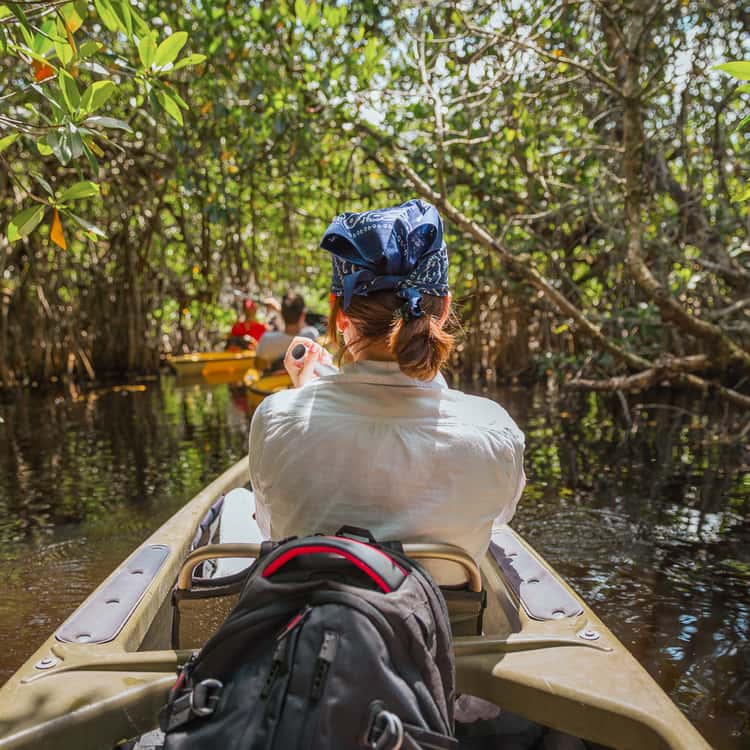
Maya’s honest take: “The Everglades is the best beginner kayaking destination in the country, but only if you go with a guide on your first trip. The mangrove tunnels all look the same, and it is very easy to get lost.”
Everglades National Park, Florida
Skill level: beginner to intermediate. Best months: November through April. Permit: required for backcountry camping, not for day paddles. The Everglades offers mangrove tunnels, open bays, and freshwater rivers, all teeming with wildlife. Turner River and Nine Mile Pond are the two most popular beginner routes. Hell’s Bay is more advanced and requires a permit. Manatees, dolphins, and alligators are common sightings. The water is warm year-round, which removes the cold-shock risk that makes cold-water kayaking dangerous.
Check the National Park Service website for current paddle trail conditions and alligator advisories before you launch.
Lady Bird Lake, Austin, Texas
Skill level: beginner. Best months: March through May and September through November. Permit: none for day paddling. Lady Bird Lake is a calm, 416-acre reservoir in the middle of Austin, with a no-wake rule that keeps motorboats from creating dangerous chop. Rentals are available at multiple docks along the shore, typically around $20 to $30 per hour (confirm the latest price directly with the rental operator). The skyline views at sunset are the main draw, but the real appeal for beginners is the flat, forgiving water.
Lake Tahoe, California,, and Nevada
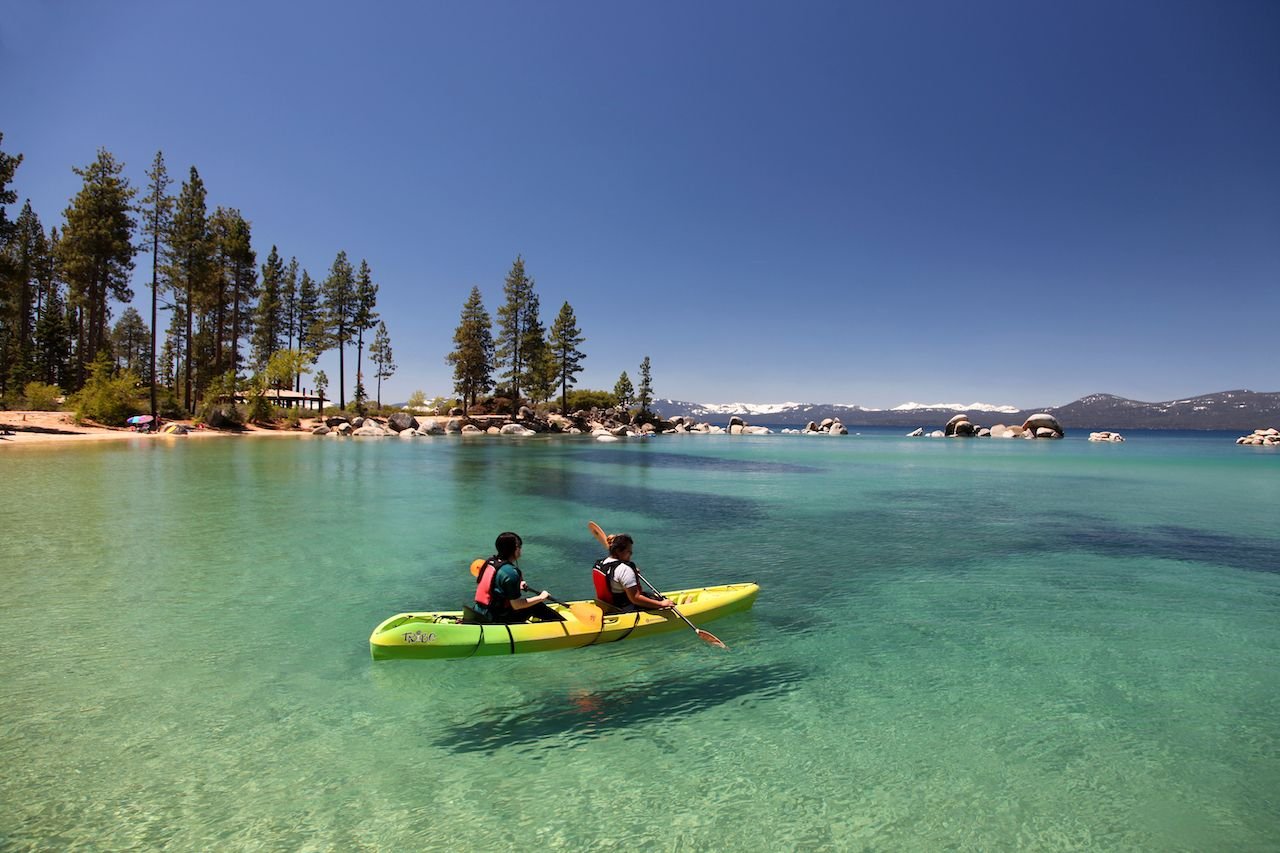
Skill level: beginner in calm mornings, intermediate by afternoon. Best months: June through September. Permit: none for day paddling. Lake Tahoe is stunning, but it is also 6,225 feet above sea level and can turn rough fast. The key is to paddle early. Morning water is glassy. By 1 p.m., afternoon winds can create two-foot chop that is genuinely difficult for a beginner. Stick to the shoreline and check the marine forecast on the National Weather Service before you go. Water temperatures remain cold year-round, so dress for immersion.
Best beginner destinations
- Everglades National Park (warm water, wildlife, guided options)
- Lady Bird Lake, Austin (calm, no-wake, easy rentals)
- Lake Tahoe (stunning, but only in the morning)
- Chattahoochee River, Georgia (mild current, close to Atlanta)
- Willamette River, Oregon (urban paddling with guided tours)
Worth considering for easy paddling
- Lake Mead, Nevada (warm water, desert scenery, but summer heat is brutal)
- Buffalo National River, Arkansas (gentle current, beginner-friendly outfitters)
What are the best kayaking destinations for intermediate paddlers?
Intermediate kayaking is where the scenery gets dramatic. You have enough skill to handle mild currents, small waves, and longer distances. The destinations below reward that skill with landscapes you cannot see from a car or a trail. They also demand more planning: permits, shuttle logistics, and weather windows that can close without warning.
My favorite intermediate paddle was Pictured Rocks in Michigan. The sandstone cliffs change color in the afternoon light, and the water is so clear you can see 20 feet down. But Lake Superior can turn on you in minutes, so I only went with a guided group that knew the shoreline.
Pictured Rocks National Lakeshore, Michigan
Skill level: intermediate. Best months: July through September. Permit: none for day paddling, but overnight trips require a backcountry permit. Pictured Rocks offers 15 miles of sandstone cliffs, sea caves, and shipwrecks along Lake Superior. The water is cold, often in the 50s Fahrenheit even in summer, so a wetsuit or dry suit is essential. The most popular route is from Miners Beach to Chapel Rock, roughly 10 miles round trip. Afternoon winds are common, so most guided trips launch early.
@paddlepicturedrocks A picture perfect day spent on the Pictured Rocks 🤩🛶 #paddlepicturedrocks #picturedrockskayaking #munising #michigan #lakesuperior #summer #picturedrocksnationallakeshore #kayaktour #picturedrocks #kayak #puremichigan #rocks
Black Canyon, Colorado River, Nevada and Arizona
Skill level: intermediate. Best months: March through May and September through November. Permit: required for some sections, check with the National Park Service. The Black Canyon section of the Colorado River, below Hoover Dam, offers dramatic volcanic walls, hot springs, and emerald water. The current is gentle but constant, so you cover distance without much effort. The catch is access: launching below Hoover Dam requires a permit and a shuttle, and the takeout at Willow Beach is 12 miles downstream. Guided tours are the simplest option for first-timers here. If you are also planning to explore Lake Mead, the guide at boating on Lake Mead covers the broader boating context for that region.
San Juan Islands, Washington
Skill level: intermediate to advanced. Best months: June through September. Permit: none for day paddling. The San Juan Islands offer sheltered channels, orca sightings, and a network of small islands to explore. But the currents are strong, and the water is cold year-round. Beginners should not attempt this without a guide. Intermediate paddlers with cold-water experience can join a guided multi-day trip, which is the most common way to experience the islands. The best orca viewing is on the west side of San Juan Island, especially in summer.
Best intermediate destinations
- Pictured Rocks, Michigan (cliffs, sea caves, cold water)
- Black Canyon, Colorado River (hot springs, emerald water, permits)
- San Juan Islands, Washington (orca sightings, strong currents)
- Boundary Waters, Minnesota (canoe country, but kayaks allowed on some routes)
Worth considering for a step up
- Chattahoochee River, Georgia (mild Class I-II rapids)
- Willamette River, Oregon (longer urban paddles with current)
What are the best kayaking destinations for expert paddlers?
Expert kayaking in the US means cold water, strong currents, remote access, and real consequences. These are not destinations you show up to and figure out. They require planning, experience, and often a guide or a permit. The rewards are landscapes that few people ever see from water level.
I have not paddled Glacier Bay myself, but I have friends who have. Every one of them said the same thing: the scale is impossible to describe. You feel very small, very fast.
Glacier Bay, Alaska
Skill level: expert. Best months: June through August. Permit: required for independent paddlers, check with the National Park Service. Glacier Bay is 3.3 million acres of tidewater glaciers, fjords, and wildlife. The water is near freezing, the weather changes hourly, and there are no services once you leave the visitor center. Most paddlers join a guided expedition. Independent trips require a permit, a bear canister, and serious cold-water gear. Humpback whales, sea otters, and brown bears are common.
Na Pali Coast, Kauai, Hawaii
Skill level: expert. Best months: May through September. Permit: required for overnight trips, check with Hawaii State Parks. The Na Pali Coast is 17 miles of towering sea cliffs, sea caves, and remote beaches. The water is warm, but the swell is unpredictable and the shoreline is exposed. Landings are difficult, and several kayakers have died attempting this route. Guided tours are strongly recommended, and even then, only in calm summer conditions.
Colorado River through the Grand Canyon, Arizona
Skill level: expert. Best months: April through October. Permit: required, and the lottery is extremely competitive. The Grand Canyon is a multi-day expedition through Class III to Class V rapids. This is not a kayak day trip. It requires a permit from the National Park Service, a commercial shuttle, and a group with whitewater experience. The scenery is unmatched, but the commitment is enormous.
Best expert destinations
- Glacier Bay, Alaska (tidewater glaciers, remote, permit required)
- Na Pali Coast, Kauai (sea cliffs, swell, guided only for most)
- Grand Canyon, Colorado River (multi-day, Class III-V rapids, lottery permit)
Worth considering for advanced paddlers
- Maine Island Trail (cold water, open ocean, navigation skills)
- Florida Circumnavigational Saltwater Paddling Trail (1,515 miles, expert logistics)
How much does a US kayaking trip actually cost?
Kayaking costs vary wildly depending on whether you rent, join a guided tour, or bring your own boat. Here is a realistic breakdown for a day trip and a multi-day expedition.
Day trip costs
Recreational kayak rentals typically run around $40 to $60 per day (confirm the latest price directly with the rental operator). Sea kayak rentals are more expensive, usually $80 to $150 per day. Guided day tours range from around $75 to $150 per person, depending on location and duration. Permits for day paddling are either free or cost around $10 to $25 per person (check current rates on the official agency site). Add gas, parking, and food, and a realistic day trip budget is $100 to $200 per person.
Multi-day expedition costs
Guided multi-day kayaking trips, like those in Glacier Bay or the San Juan Islands, typically cost $1,000 to $3,000 per person for three to seven days (confirm the latest price directly with the tour operator). This usually includes gear, meals, permits, and a guide. Independent multi-day trips are cheaper on paper but require a significant gear investment: a sea kayak, dry suit, spray skirt, paddle, safety equipment, and camping gear can easily exceed $3,000 upfront.
Where to book
For guided tours and rentals, I usually start with GetYourGuide to compare options and read recent reviews. For flights to gateway cities like Miami, Seattle, or Anchorage, Kayak is my go-to for price comparison. For hotels near launch points, Booking.com has the best filter options, and Vrbo works well if you are traveling with a group and want a house near the water.
What mistakes should you avoid when kayaking in the US?
I have made almost every mistake on this list. Each one cost me time, comfort, or a bit of my pride. Learn from my errors so you do not have to repeat them.
Do not skip the cold-water gear
Cold water is the number one killer in kayaking accidents. Water below 60 degrees Fahrenheit can cause cold shock in under a minute, and hypothermia can set in within 15 to 30 minutes. A wetsuit or dry suit is not optional in places like Lake Superior, the San Juan Islands, or Glacier Bay. Dress for the water temperature, not the air temperature.
Do not ignore the marine forecast
Afternoon winds are the most common cause of kayak emergencies. A calm morning can turn into a windy, choppy afternoon in less than an hour. Check the National Weather Service marine forecast before you launch, and plan to be off the water by early afternoon in exposed areas.
Do not paddle alone in unfamiliar water
Paddling alone is a calculated risk even for experts. In unfamiliar water, it is a bad idea. Go with a group, or hire a guide. If you must paddle alone, stick to calm, well-trafficked areas and tell someone where you are going and when you expect to be back.
Do not assume a permit is not required
Permit requirements change frequently. The Everglades, Boundary Waters, Glacier Bay, and the Grand Canyon all have permit systems. Some are free, some cost money, and some require a lottery months in advance. Check the managing agency’s website before you plan any trip.
Do not overestimate your skill level
The most dangerous kayaker is the one who has done a few flat-water paddles and thinks they are ready for open ocean or whitewater. Be honest about your experience. If you have never paddled in currents or swell, start with a guided trip in a challenging environment before you go independent.
Do not forget about wildlife
Alligators, bears, and whales are all real hazards in different parts of the country. Keep a respectful distance. Store food properly in bear country. Do not paddle toward marine mammals. Wildlife encounters are a privilege, not a right.
Do not neglect sun protection
Water reflects UV rays, so you get burned twice as fast on a kayak. Wear a hat, sunglasses, and long sleeves. Use reef-safe sunscreen on exposed skin. I learned this the hard way on a four-hour paddle in Florida. My legs looked like a lobster for a week.
Frequently asked questions about US kayaking destinations
What is the best time of year to kayak in the US?
It depends on the region. Florida and the Gulf Coast are best in winter and early spring. The Great Lakes, Pacific Northwest, and Alaska are best in summer. Desert canyons like the Colorado River are best in spring and fall. Avoid peak summer heat in Arizona, Nevada, and Texas unless you paddle early morning.
Do I need a permit to kayak in national parks?
Some national parks require permits for kayaking, especially for overnight trips or specific waterways. The Everglades, Glacier Bay, and the Grand Canyon all have permit systems. Day paddling in many parks is permit-free. Always check the specific park’s website before you go.
Is kayaking safe for beginners?
Yes, kayaking is safe for beginners if you choose calm water, wear a life jacket, and avoid cold water and strong currents. Start on a flat lake or a slow river. Take a lesson or join a guided tour before you go independent. Never paddle alone in unfamiliar water.
What is the difference between a sea kayak and a recreational kayak?
Sea kayaks are longer, narrower, and designed for open water and multi-day trips. They track better and handle waves more predictably. Recreational kayaks are shorter, wider, and designed for calm lakes and slow rivers. They are more stable but slower. Choose based on where you plan to paddle.
How much does it cost to rent a kayak?
Recreational kayak rentals typically cost around $40 to $60 per day (confirm the latest price directly with the rental operator). Sea kayak rentals run around $80 to $150 per day. Guided day tours range from around $75 to $150 per person. Multi-day guided expeditions cost $1,000 to $3,000 per person depending on duration and location.
Where is the best place to kayak in the US for wildlife?
The Everglades is the best for alligators, manatees, and wading birds. The San Juan Islands are best for orcas and seals. Glacier Bay is best for humpback whales, sea otters, and brown bears. The Florida Keys are excellent for dolphins and sea turtles.
What should I wear kayaking?
Wear quick-drying layers, a hat, sunglasses, and water shoes. In cold water, wear a wetsuit or dry suit. In warm water, a rash guard and shorts are fine. Always wear a properly fitted life jacket. Bring a dry bag for your phone, keys, and any permits you need.
Are there kayaking destinations that are good for families with kids?
Yes. Lady Bird Lake in Austin, the Chattahoochee River in Georgia, and the Willamette River in Oregon are all family-friendly, with calm water and easy rentals. The Everglades is also good for families if you join a guided tour. Avoid cold water, strong currents, and open ocean with young children.
Plan your trip: booking platforms we trust
I use these platforms when planning my own kayaking trips. They are reliable for comparing prices, reading recent reviews, and booking with confidence. I have noted what each one is best for so you can go straight to the one that fits your needs.
Agoda
Best for Asian hotel deals and sometimes surprising US gateway city rates.
General hotel search with strong filters for waterfront and trailhead towns.
Best for flight and hotel packages if you want to bundle and save.
Flight price comparison across multiple airlines and booking sites.
Family villas and vacation rentals for groups or longer paddling trips.
Tours and activities, including guided kayak tours and rentals.
Loyalty rewards bookings, good if you collect stamps toward free nights.
Reviews and restaurant finds, useful for gateway town dining.
WakaAbuja does its best to keep all information accurate at the time of publishing. Prices, policies, and availability change regularly. Always verify with official sources before you travel. We are not liable for errors caused by outdated information. Travel insurance is strongly recommended.