advertisement
How to Plan a Trip to Yosemite National Park (1, 2, or 3+ Days)
Fact-Checked By: Maya Whitfield, Senior Travel Editor at WakaAbuja — Senior Travel Editor at WakaAbuja
You need 1 to 3+ days depending on your priorities: 1 day for Valley highlights like Tunnel View and Yosemite Falls, 2 days to add Glacier Point and a short hike, and 3+ days for Half Dome or high-country exploration. Entrance fees are $35 per vehicle for 7 days (confirm the latest price directly with the operator), no advance reservation is required in 2026, and lodging ranges from $26 for campgrounds to $300+ for valley lodges (check current rates on the official site).
Yosemite is too big to “see” in a day, and most guides don’t tell you what to skip. Here’s what to do based on how much time you actually have, with current fees, lodging options by base town, and a day-by-day plan that adapts to your schedule.
Jump to: Entrance fees and reservations | How many days you need | Where to stay | What it costs | Must-see landmarks | Best hikes | FAQ
Key takeaways
- No advance reservation is required to enter Yosemite in 2026, but the $35 per vehicle entrance fee still applies (confirm the latest price directly with the operator).
- One day covers Valley highlights like Tunnel View, Yosemite Falls, and El Capitan, while 2 to 3 days unlock Glacier Point, Mariposa Grove, and longer hikes (verify current road conditions with the National Park Service).
- Lodging inside the Valley ranges from $26 to $36 per night for campgrounds to $300 to $500 for Yosemite Valley Lodge rooms (check current rates on Booking.com).
- Half Dome day-hike permits cost $10 to apply plus $10 per person if selected, with a preseason lottery in March and daily lotteries two days in advance (verify permit details on Recreation.gov).
- The best time to visit for waterfalls is May to early June, while September to October offers fewer crowds and pleasant weather with reduced waterfall flows (confirm seasonal conditions with the park service).
- Gateway towns like Mariposa, Oakhurst, and El Portal offer lodging from $80 to $250 per night with 30- to 60-minute drives to Valley attractions (check current rates on Hotels.com).
- A budget 3-day trip costs $400 to $550 total with camping and groceries, while mid-range trips run $1,400 to $1,800, including lodge rooms and park dining (confirm the latest price directly with the operator).
What are the Yosemite entrance fees and reservation requirements?
Good news for 2026 and 2027 planners: Yosemite National Park does not require advance entrance reservations this year, including during peak summer months and the February Horsetail Fall “Firefall” period (verify current policies on the National Park Service website). You still must pay the standard entrance fee on arrival, and some activities like Half Dome hiking and wilderness camping require separate permits.
Entrance fees are $35 per private vehicle for 7 consecutive days, $30 per motorcycle, or $20 per person entering by foot, bicycle, or bus (confirm the latest price directly with the operator). The Yosemite Annual Pass costs $70 for unlimited entry for one year, while the America the Beautiful Interagency Pass at $80 covers entrance fees at all national parks and federal recreation lands (verify current pass prices on the NPS website).
Maya’s honest take: “Even without reservations, arrive by 7 a.m. on summer weekends or expect to wait in traffic as Valley parking fills by 9 to 10 a.m. The no-reservation policy doesn’t mean no crowds; it just means you can show up without booking months ahead.”
Entrance fee breakdown
- Private vehicle (7 days): $35 (confirm the latest price directly with the operator).
- Motorcycle (7 days): $30 (verify current fee on the NPS website).
- Per person, foot/bike/bus (7 days): $20 (check current rates on the official site).
- Yosemite Annual Pass: $70 (confirm the latest price directly with the operator).
- America the Beautiful Interagency Pass: $80 (verify current pass prices on the NPS website).
Permits that still require advance booking
- Half Dome day-hike permits: $10 application fee plus $10 per person if selected, preseason lottery March 1 to 31 (verify permit details on Recreation.gov).
- Wilderness camping permits: $5 per person plus $5 reservation fee, available 24 weeks in advance (check current fees on the NPS website).
- Commercial tour permits and special-use permits for filming or events (verify requirements with the park service).
How many days do you need for Yosemite National Park?
The answer depends entirely on what you want to experience: Valley icons, high-country wilderness, or the full Half Dome challenge. Most first-time visitors benefit from at least 2 full days to avoid feeling rushed, while 3 to 4 days unlocks the park’s diversity without exhaustion (verify recommended itineraries with the National Park Service).
If you have only 1 day, focus on Yosemite Valley’s greatest hits: Tunnel View for the iconic panorama, Yosemite Falls for the tallest waterfall in North America, and El Capitan for world-famous rock climbing views (confirm trail conditions with the park service). With 2 days, add Glacier Point for sweeping high-country vistas and a short hike like the Lower Yosemite Fall Loop or Mirror Lake. With 3 or more days, tackle Half Dome with a permit, explore Mariposa Grove’s giant sequoias, or drive Tioga Road for alpine lakes and meadows (verify road openings with the NPS website).
Maya’s honest take: “Don’t try to cram Half Dome into a 1-day Valley visit. The hike is 14 to 16 miles round-trip with 4,800 feet of elevation gain and takes 10 to 14 hours for most people. It deserves its own day and ideally a night nearby to rest before and after.”
1-day itinerary: Valley highlights
- Morning: Tunnel View for sunrise photos, then drive to Yosemite Falls for the short Lower Fall Loop (verify trail conditions with the park service).
- Midday: El Capitan viewpoint and picnic near the meadow, optional shuttle to Curry Village for lunch (check shuttle schedules on the NPS website).
- Afternoon: Mirror Lake walk (seasonal water levels) or Bridalveil Fall short hike, depart via Tunnel View for sunset (confirm sunset times with park alerts).
2-day itinerary: Valley plus Glacier Point
- Day 1: Full Valley exploration, including Yosemite Falls, El Capitan, and Mariposa Grove if time allows (verify grove accessibility with the park service).
- Day 2: Drive to Glacier Point for panoramic views, hike Sentinel Dome or Taft Point if conditions permit, and return via Wawona for giant sequoias (check road conditions on the NPS website).
3 to 4-day itinerary: Full park experience
- Days 1 to 2: Valley highlights and Glacier Point as above (verify trail conditions with the park service).
- Day 3: Half Dome day hike with permit or wilderness backpacking trip (confirm permit availability on Recreation.gov).
- Day 4: Tioga Road scenic drive with stops at Olmsted Point, Tenaya Lake, and Tuolumne Meadows (check seasonal road openings on the NPS website).
Where should you stay: Yosemite Valley vs. gateway towns?
Your lodging choice determines your daily drive times, budget, and how much time you actually spend hiking versus commuting. Staying inside Yosemite Valley puts you minutes from major attractions but costs significantly more and requires booking 12 to 18 months ahead for summer dates (verify availability on Booking.com). Gateway towns offer better value and more dining options but add 30 to 60 minutes each way to Valley attractions (check current rates on Hotels.com).
Yosemite Valley lodging includes developed campgrounds at $26 to $36 per night, Curry Village tent cabins at $130 to $200, Yosemite Valley Lodge rooms at $300 to $500, and The Ahwahnee starting around $580 (confirm the latest price directly with the operator). Gateway towns like Mariposa (45 to 60 minutes to Valley), Oakhurst (60 to 75 minutes), El Portal (15 to 20 minutes), and Groveland (60 minutes via Highway 120) offer motels and hotels from $80 to $250 per night depending on season (check current rates on the official site).
Maya’s honest take: “If you can only get gateway-town lodging, book El Portal or Mariposa for the shortest commutes. Oakhurst is fine if you’re also visiting the park’s southern attractions like Mariposa Grove, but it’s a long daily drive if your focus is Valley and Glacier Point.”
Best for first-time visitors
- Yosemite Valley Lodge or Curry Village for proximity to Valley attractions and shuttle access (verify availability on Expedia).
- Upper Pines, Lower Pines, or North Pines campgrounds for budget-conscious Valley stays (check reservation availability on Recreation.gov).
- El Portal motels for the shortest gateway-town commute at 15 to 20 minutes (confirm current rates on Booking.com).
Worth considering for budget travelers
- Mariposa hotels and vacation rentals for 45 to 60 minute commutes and more dining options (check current rates on Vrbo).
- Oakhurst lodging for southern park access and Mariposa Grove visits (verify availability on Hotels.com).
- Groveland hotels for Highway 120 access and Tioga Road day trips (confirm current rates on TripAdvisor).
What does a Yosemite trip actually cost this year?
Most guides mention the $35 entrance fee and stop there, but a realistic budget requires stacking gas, lodging, food, and any permit costs. Here is a transparent, itemized breakdown for three common trip styles, all based on current pricing from operators and booking platforms (verify all figures with official sources before booking).
Budget 3-day trip (camping, groceries)
- Entrance fee: $35 per vehicle (confirm the latest price directly with the operator).
- Camping: $26 to $36 per night × 3 nights = $78 to $108 (verify campground rates on Recreation.gov).
- Food: Groceries and camp cooking, $25 per person per day × 3 days = $150 for two people (check grocery prices at gateway-town stores).
- Gas: Round-trip from San Francisco Bay Area, $80 to $90 (confirm current gas prices with local stations).
- Extras: One park restaurant meal, $50 (verify menu prices with the lodge restaurant).
- Total estimated range: $400 to $550 total ($200 to $275 per person) (check current rates on the official site).
Mid-range 3-day trip (lodge, mixed dining)
- Entrance fee: $35 per vehicle (confirm the latest price directly with the operator).
- Lodging: Yosemite Valley Lodge or similar, $300 to $400 per night × 2 nights = $600 to $800 (check current rates on Expedia).
- Food: Mix of camp-style lunches and park dining, $50 per person per day × 3 days = $300 for two people (verify restaurant prices with TripAdvisor).
- Gas: Round-trip from Bay Area, $80 to $90 (confirm current gas prices with local stations).
- Activities: Guided tour or glacier point shuttle, $50 to $100 (check tour prices on GetYourGuide).
- Total estimated range: $1,400 to $1,800 total ($700 to $900 per person) (verify current rates on the official site).
Splurge 3-day trip (Ahwahnee, fine dining)
- Entrance fee: $35 per vehicle (confirm the latest price directly with the operator).
- Lodging: The Ahwahnee, $580 to $1,400 per night × 2 nights = $1,160 to $2,800 (check current rates on Booking.com).
- Food: Fine dining at The Ahwahnee and upscale lodge restaurants, $100 to $150 per person per day × 3 days = $600 to $900 for two people (verify menu prices with the restaurant).
- Gas: Round-trip from Bay Area, $80 to $90 (confirm current gas prices with local stations).
- Activities: Private guided tour or photography workshop, $200 to $400 (check tour prices on GetYourGuide).
- Total estimated range: $3,500 to $5,000+ total ($1,750 to $2,500+ per person) (verify current rates on the official site).
Maya’s honest take: “The biggest budget surprise for most visitors is food costs inside the park. A casual deli sandwich runs $18 to $25, and a sit-down dinner at the Mountain Room is $35 to $55 per person. Stock a cooler in Mariposa or Oakhurst before entering to cut food costs by half.”
What are the must-see landmarks in Yosemite?
Yosemite’s iconic landmarks cluster into three zones: Yosemite Valley for waterfalls and granite monoliths, Glacier Point for high-country panoramas, and Mariposa Grove for giant sequoias. You can hit the Valley highlights in a single day, but Glacier Point and Mariposa Grove each deserve half a day minimum to appreciate without rushing (verify current accessibility with the National Park Service).
Yosemite Falls, at 2,425 feet total drop, is the tallest waterfall in North America and flows strongest from May to early June before slowing to a trickle by August (confirm seasonal flow with the park service). El Capitan’s 3,000-foot vertical face dominates the Valley’s western skyline and is visible from multiple viewpoints, including El Capitan Meadow and Tunnel View. Half Dome, rising 4,800 feet above the valley floor, is the park’s most recognizable summit and requires a permit for day hikes (verify permit requirements on Recreation.gov).
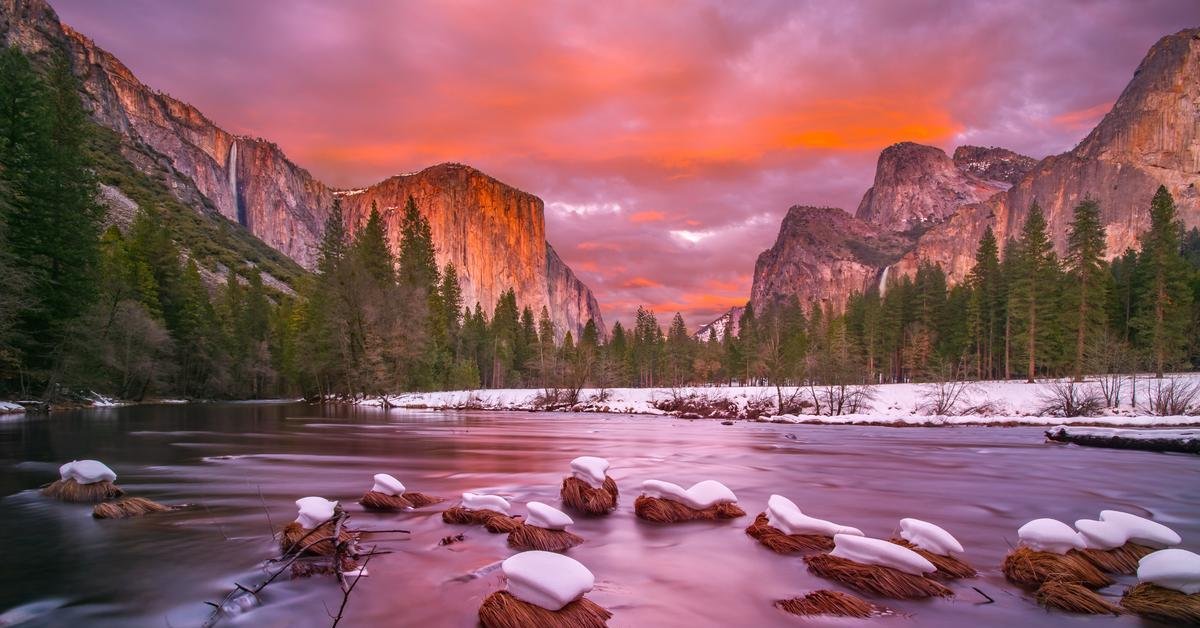
Maya’s honest take: “Tunnel View is the single best first stop for orientation. You’ll see El Capitan on the left, Bridalveil Fall on the right, and Half Dome in the distance. It’s also the most crowded viewpoint, so arrive before 8 a.m. or after 5 p.m. for manageable photo conditions.”
Top Valley landmarks
- Tunnel View: Iconic panoramic vista of El Capitan, Bridalveil Fall, and Half Dome (verify parking availability with park alerts).
- Yosemite Falls: Tallest waterfall in North America, best viewed May to June (confirm trail conditions with the park service).
- El Capitan Meadow: Close-up views of the 3,000-foot granite monolith (check rock climbing activity schedules with the park service).
- Bridalveil Fall: Short 0.5-mile round-trip hike to the waterfall base (verify trail accessibility on the NPS website).
High-country and grove landmarks
- Glacier Point: 360-degree views of Half Dome, Yosemite Valley, and high Sierra peaks (check road opening dates on the NPS website).
- Mariposa Grove: 500+ giant sequoias, including the Grizzly Giant and California Tunnel Tree (verify grove accessibility with the park service).
- Tenaya Lake: Alpine lake along Tioga Road, ideal for picnics and short walks (confirm seasonal road access on the NPS website).
- Tuolumne Meadows: High-elevation meadows with wildflowers and granite domes (check wildflower bloom timing with park rangers).
What is the best hike for each trip length?
Yosemite offers over 750 miles of trails ranging from flat, paved loops to strenuous high-elevation climbs. The right hike for your trip depends on your fitness level, time available, and whether you’ve secured a Half Dome permit (verify trail conditions with the National Park Service).
For 1-day visits, the Lower Yosemite Fall Loop (1 mile, easy) or Mirror Lake walk (2 miles round-trip, easy to moderate) provide iconic scenery without major time commitments. For 2-day trips, the Mist Trail to Vernal Fall (3 miles round-trip, moderate) or Sentinel Dome (2.2 miles round-trip, moderate) offer rewarding views with manageable effort. For 3+ days with a permit, Half Dome (14 to 16 miles round-trip, strenuous) is the ultimate challenge, while the Panorama Trail to Glacier Point (8.5 miles one-way, strenuous) provides high-country diversity without the cables (confirm trail conditions with the park service).
Maya’s honest take: “The Mist Trail lives up to its name. Bring a waterproof jacket even on sunny days, and expect to get soaked between Vernal and Nevada Falls. The trail’s stone steps are slippery when wet, so take your time and use the handrails where provided.”
Best hikes by difficulty
- Easy: Lower Yosemite Fall Loop (1 mile), Mirror Lake (2 miles), Bridalveil Fall (0.5 miles) (verify trail accessibility with the park service).
- Moderate: Mist Trail to Vernal Fall (3 miles), Sentinel Dome (2.2 miles), Taft Point (2.2 miles) (check trail conditions on the NPS website).
- Strenuous: Half Dome (14 to 16 miles), Panorama Trail (8.5 miles one-way), Four Mile Trail (9.6 miles round-trip) (confirm permit requirements with Recreation.gov).
Half Dome permit essentials
- Preseason lottery: March 1 to 31, results mid-April, 225 permits per day (verify application process on Recreation.gov).
- Daily lottery: Applications open two days before hiking date, results late that night (check current lottery schedule on the NPS website).
- Cost: $10 non-refundable application fee plus $10 per person if selected (confirm current fees on Recreation.gov).
- Cables season: Typically late May to early October, weather-dependent (verify cable installation dates with the park service).
Frequently asked questions
Do I need a reservation to enter Yosemite?
No, advance entrance reservations are not required, including during peak summer months and the February Horsetail Fall event (verify current policies on the National Park Service website). You must still pay the $35 per vehicle entrance fee on arrival (confirm the latest price directly with the operator).
How much does it cost to enter Yosemite National Park?
The entrance fee is $35 per private vehicle for 7 consecutive days, $30 per motorcycle, or $20 per person entering by foot, bicycle, or bus (confirm the latest price directly with the operator). The Yosemite Annual Pass costs $70, and the America the Beautiful Interagency Pass is $80 (verify current pass prices on the NPS website).
What is the best time to visit Yosemite for waterfalls?
May to early June offers peak waterfall flows as snowmelt reaches maximum volume, with Yosemite Falls and other cascades at their most impressive (verify seasonal conditions with the park service). By August, many waterfalls slow to a trickle or dry completely (check current flow conditions on the NPS website).
How do I get a Half Dome hiking permit?
Half Dome day-hike permits are distributed by lottery via Recreation.gov, with a preseason lottery March 1 to 31 and daily lotteries two days in advance (verify application process on Recreation.gov). The cost is $10 to apply plus $10 per person if selected (confirm current fees on the official site).
Where should I stay for my first Yosemite visit?
First-time visitors benefit most from Yosemite Valley lodging for proximity to major attractions, with options ranging from $26 campgrounds to $300+ lodge rooms (check current rates on Booking.com). Gateway towns like El Portal and Mariposa offer more affordable lodging with 15 to 60 minute commutes (verify availability on Hotels.com).
Is Yosemite crowded in summer?
Yes, summer brings peak visitation with Valley parking lots filling by 9 to 10 a.m. on weekends and 11 a.m. to noon on weekdays (verify current crowd levels with park alerts). Arrive by 7 a.m. or after 4 p.m. to avoid the worst traffic and secure parking (check real-time conditions on the NPS website).
Can I visit Yosemite in one day?
Yes, a 1-day visit can cover Valley highlights like Tunnel View, Yosemite Falls, El Capitan, and Bridalveil Fall (verify trail conditions with the park service). You won’t have time for Glacier Point, Mariposa Grove, or longer hikes, but you’ll see the park’s most iconic scenery (check current road conditions on the NPS website).
Plan your trip: booking platforms we trust
I’ve tested these platforms across dozens of trips for reliability, customer support, and real inventory. They’re not all right for every situation, but each one solves a specific problem better than the alternatives.
Booking.com
Widest selection of Yosemite Valley and gateway-town hotels with free cancellation on most properties.
Hotels.com
Loyalty rewards program for repeat travelers booking Mariposa, Oakhurst, and El Portal lodging.
Expedia
Flight and hotel packages for pre- and post-Yosemite stays in San Francisco or Los Angeles.
Vrbo
Vacation rentals and family-friendly houses in Mariposa, Oakhurst, and Groveland.
GetYourGuide
Verified day tours and photography workshops in and around Yosemite National Park.
TripAdvisor
Real traveler reviews for park restaurants, lodging, and tour operators.
More national park and California travel guides
If you’re planning a broader California trip or need more destination-specific advice, these guides cover the next steps in your itinerary.
- Hotels in California and national park gateway towns — budget to luxury accommodation guides with verified prices.
- Best things to do in California — from San Francisco city guides to coastal highway road trips.
- Travel planning guides — itineraries, packing lists, and logistics for US national park trips.
- US visa requirements for travelers — entry rules, ESTA applications, and permitted stay lengths.
- How to find cheap flights to the US — fare comparison strategies and booking timing tips.
WakaAbuja does its best to keep all information accurate at the time of publishing. Prices, policies, and availability change regularly. Always verify with official sources before you travel. We are not liable for errors caused by outdated information. Travel insurance is strongly recommended.