advertisement
Trip to Nadi Fiji: 3 Days of What to Actually Do, Eat, and Spend
A trip to Nadi, Fiji, for 3 days costs roughly US$600 to US$900 per person, covering a mid-range hotel, meals, transport, and one or two paid activities (confirm current prices directly with each operator). Day 1 covers Nadi town, the Hindu temple, and the Mud Pool at Sabeto. Day 2 is a day trip to the Mamanuca Islands or Coral Coast. Day 3 is for the Garden of the Sleeping Giant, a market run, and a farewell dinner at Denarau Marina. You do not need a rental car if you base yourself in Nadi or Denarau and book transfers.
I flew into Nadi International Airport on a Tuesday morning in the middle of the dry season and had exactly 72 hours before my onward flight to Auckland. I had read the big destination guides, and most of them pointed me toward twenty different sub-articles without ever answering the simplest question: what do I actually do with three days and a limited budget?
This is that answer. I paid for this trip myself, I kept every receipt, and the numbers below are what I actually spent. If a price has moved since my visit, I flag it and tell you where to check.
Jump to: Quick Answer | Key Takeaways | Getting In and Around | The 3-Day Itinerary | Where to Stay | Where to Eat | What It Costs | What to Avoid | FAQ
Key takeaways
- Nadi is pronounced “Nandi.” Locals will correct you politely, and it is the fastest way to sound like you did your homework.
- A realistic 3-day budget for one person is US$600 to US$900, all-in, excluding international flights (confirm current prices directly with each operator).
- Denarau Marina is the most convenient base if you want easy access to island day trips and restaurants without a car.
- The Sabeto Mud Pool and Garden of the Sleeping Giant are 20 minutes apart and can be done in one half-day for under US$50 combined (check current rates on the official site).
- Island day trips to the Mamanucas start around US$120 per person, including lunch and transfers (confirm the latest price directly with the operator).
- Nadi town itself is worth one morning, not a full day. The market and the Sri Siva Subramaniya Temple are the two stops that matter.
- Taxis are cheap for short hops, but negotiate the fare before you get in, or use a metered cab from the airport rank.
How do you get in and around Nadi?
Nadi International Airport is the main gateway to Fiji and sits about 10 minutes from Nadi town and 20 minutes from Denarau Marina. Most travelers land here, clear immigration, and either head to a Nadi hotel or transfer straight to Denarau.
For getting around, you have three realistic options. Metered taxis are the default for short trips and should cost around FJ$15 to FJ$25 between the airport and Denarau (confirm current rates with the driver or your hotel). Public buses run along the main highway and are extremely cheap, often under FJ$2 for a local hop (check current fares on the official site), but they are slow and not ideal if you are carrying luggage. Private transfers booked through your hotel are the most comfortable option and typically run FJ$40 to FJ$60 for airport-to-Denarau (confirm the latest price directly with your hotel).
I did not rent a car. For a 3-day trip based in Nadi or Denarau, a rental adds parking headaches and a daily rate of around FJ$100 to FJ$150 (check current rates with the rental company) without unlocking anything a taxi or tour cannot reach. If you plan to explore the Coral Coast independently or drive to Suva, then a car makes sense.
Maya Whitfield’s honest take: “The taxi drivers at Nadi airport are friendly and will offer you a flat rate. That rate is almost always higher than the meter. Walk to the official taxi rank outside arrivals, insist on the meter, and you will save yourself FJ$10 to FJ$15 on the first ride alone.”
What should you actually do with 3 days in Nadi?
Here is the itinerary I ran, hour by hour, with what I spent. It balances the two things Nadi does well: accessible cultural sights close to town and easy access to the islands and reefs that make Fiji famous.
Day 1: Nadi town, the temple, and the mud pools
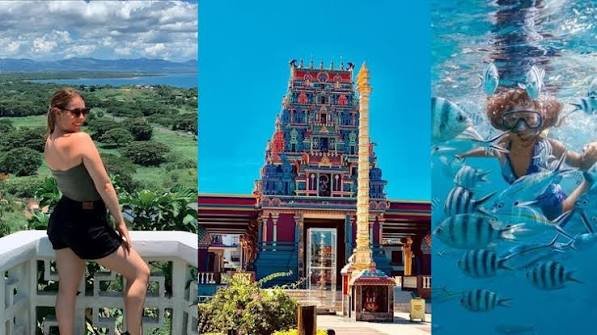
Start at the Sri Siva Subramaniya Temple in Nadi town, the largest Hindu temple in the Southern Hemisphere. Entry is free, but you must cover your shoulders and knees, and photography inside the main shrine is restricted. I spent about 45 minutes here. It is genuinely striking, with brightly painted Dravidian architecture that looks nothing like the rest of Nadi.
From there, walk 10 minutes to the Nadi Municipal Market. This is where locals shop for produce, kava, and spices. I bought a bundle of fresh basil and a small bag of kava for FJ$20 (confirm current prices at the stall). The market is at its best before 11 AM, when the produce is freshest and the crowds are lighter.
After lunch, take a taxi 20 minutes out of town to the Sabeto Mud Pool and Hot Springs. Entry is around FJ$30 per person (check current rates on the official site), and the experience takes about 90 minutes: you cover yourself in mud, let it dry in the sun, rinse in the hot spring pool, then soak in a clean thermal pool. It sounds gimmicky. It is also one of the most fun afternoons I have had on a short trip.
Dinner back in Nadi at a local Indian-Fijian restaurant. I ate at a family-run spot near the market and paid FJ$25 for a full thali with roti and tea (confirm current prices directly with the restaurant).
Day 2: Mamanuca Islands day trip
This is the day that justifies the trip. The Mamanuca Islands are a 45-minute to 90-minute boat ride from Denarau Marina, depending on which island you choose. Day trips typically include round-trip transfers, lunch, and snorkeling gear.
I booked a day trip to South Sea Island through a local operator, which cost around US$130 per person, including lunch and snorkeling equipment (confirm current rates directly with the operator). South Sea is tiny, walkable in 10 minutes, and has excellent snorkeling right off the beach. If you prefer a bigger island with more facilities, Malamala Beach Club is a strong alternative, though it costs more, typically around US$160 per person (check current rates on the official site).
Book your island day trip in advance, especially in peak season from June to September. I watched several people get turned away at the marina because the popular boats were full. If you want to compare operators and read recent reviews before booking, GetYourGuide and TripAdvisor are both useful starting points.
Day 3: Garden of the Sleeping Giant and Denarau
Start the morning at the Garden of the Sleeping Giant, about 15 minutes from Nadi town. This was Raymond Burr’s private orchid collection, now a public garden with over 2,000 orchid varieties and a shaded boardwalk through native forest. Entry is around FJ$18 per person (confirm current prices on the official site). I spent two hours here and could have stayed longer.
Spend the afternoon at Denarau Marina. It is a polished, purpose-built area with restaurants, shops, and a small beach. It is not the “real Fiji” experience, but it is a pleasant way to spend a few hours before a flight. I had a late lunch at a marina restaurant for FJ$40 (confirm current prices directly with the restaurant) and watched the boats come in.
For a final dinner with a view, the restaurants along Denarau’s waterfront are reliable. I would skip the hotel buffets and eat at one of the independent spots instead.
Maya Whitfield’s honest take: “The Garden of the Sleeping Giant is the most underrated stop in Nadi. Most people skip it for another beach day, then regret it. Go early, bring insect repellent, and give yourself two hours minimum.”
Where should you stay in Nadi?
Where you stay shapes your whole trip. Nadi has three realistic zones: Nadi town (cheap, convenient for the airport, less scenic), Denarau Island (resorts, marina, easy island access), and the Coral Coast (further out, more scenic, quieter).
For a 3-day trip, I would base it in Denarau if your budget allows it and in Nadi town if it does not. Denarau gives you walkable restaurants, the marina for day trips, and resort pools. Nadi town gives you local food, cheaper rooms, and a more authentic feel.
Budget picks
- Nadi town guesthouses: from US$40 per night (confirm current rates on the official site).
- Airport-area hotels: from US$70 per night, best for late arrivals.
- Hostels and backpacker lodges: from US$20 per dorm bed (check current rates on the official site).
Mid-range and resort picks
- Denarau resorts: from US$180 per night (confirm current rates on the official site).
- Coral Coast resorts: from US$150 per night, more scenic and quieter.
- Denarau Marina apartments: from US$200 per night, good for families and groups.
I split my stay: two nights in a Nadi town guesthouse and one night at a Denarau resort. The contrast was worth it. If I did the trip again, I would spend all three nights in Denarau and use taxis to explore Nadi town, simply because the marina location makes Day 2 and Day 3 dramatically easier.
For hotel comparisons, Booking.com has the broadest coverage of Fiji properties, and Agoda often surfaces better rates on the Denarau resorts. For family groups or longer stays, Vrbo lists villas and apartments near the marina.
Where should you eat in Nadi?
Fijian food is a blend of indigenous, Indian, and Chinese influences, and Nadi is the best place in the country to eat all three in the same day. These are the spots I would return to.
Named spots worth your money
- Local Indian-Fijian restaurants near Nadi market: full thali for around FJ$20 to FJ$30 (confirm current prices with the restaurant).
- Denarau Marina restaurants: mains from FJ$35 to FJ$60, best for a final dinner with a view (check current menus on site).
- Nadi produce market food stalls: cheap and fresh, ideal for lunch under FJ $15 (confirm current prices at the stall).
- Hotel restaurants: reliable but the most expensive option, mains from FJ$50 upward (check current menus on site).
- Coral Coast resort restaurants: worth the drive if you want a slower, more scenic meal.
What to try
- Kokoda: raw fish cured in lime and coconut cream, Fiji’s national dish.
- Lovo: meat and root vegetables cooked in an underground earth oven.
- Roti and curry: the Indian-Fijian staple, cheap and filling.
- Fresh tropical fruit: papaya, pineapple, and mango from the market.
Maya Whitfield’s honest take: “Eat at least one meal at a market stall in Nadi town. I paid FJ$12 for a plate of curry, roti, and tea that was better than anything I ate at the resorts.”
What does a 3-day trip to Nadi Fiji actually cost?
Here is the honest math from my trip, for one person, excluding international flights.
Budget tier
- Accommodation: US$60 to US$90 total for two nights (confirm current rates on the official site).
- Food: US$40 to US$60 total.
- Transport: US$30 to US$50 total.
- Activities: US$50 for the mud pools and garden (check current rates on the official site).
- Total: roughly US$200 to US$250 for three days.
Mid-range tier
- Accommodation: US$360 to US$540 total for two to three nights (confirm current rates on the official site).
- Food: US$120 to US$180 total.
- Transport: US$60 to US$100 total.
- Activities: US$130 to US$160 for the island day trip plus local sights (check current rates with the operator).
- Total: roughly US$670 to US$980 for three days.
Money-saving tips that actually work
Book your island day trip directly with a local operator rather than through your hotel. I saved about US$25 by walking to the Denarau Marina booking office instead of using the resort concierge (confirm current pricing when you book).
Eat breakfast at your accommodation or a local cafe rather than the hotel buffet. A hotel breakfast in Denarau can run FJ$45 per person (check current menus on site), while a local cafe charges FJ$10 to FJ$15 for the same thing.
Use the public bus for the Nadi town to Denarau route if you are not in a hurry. It costs under FJ$2 (confirm current fares on the official site) versus FJ$20 or more for a taxi.
Buy kava and souvenirs at the Nadi Municipal Market rather than at the airport or Denarau. The same bundle of kava that costs FJ$20 at the market was FJ$60 at the airport (confirm current prices when you shop).
What should you avoid on a trip to Nadi Fiji?
Do not skip travel insurance
Fiji is generally safe for travelers, but the country sits in a cyclone zone and medical evacuations are expensive. Travel insurance is strongly recommended, and it is not optional if you plan to snorkel, dive, or take boats between islands.
Do not assume all beaches in Nadi are swimmable
Nadi’s main town beach is not a swimming beach. It is tidal, muddy at low tide, and not where you want to spend your afternoon. The swimming happens on Denarau, on the islands, or further down the Coral Coast. Plan accordingly.
Do not pay the first taxi price you are offered
Taxi drivers at the airport and in Nadi town will often quote a flat fare that is higher than the meter. Ask for the meter or agree on a price before you get in. This is not a scam, it is just how the local market works.
Do not book an island day trip the morning of
Popular Mamanuca day trips sell out in peak season. I watched people get turned away at Denarau Marina because they tried to book same-day. Book at least 48 hours ahead, or earlier if you are traveling between June and September.
Do not drink tap water without checking
Tap water in Nadi is generally treated, but many travelers experience stomach issues in Fiji. Stick to bottled or filtered water for the first few days, especially if you have a sensitive stomach. Bottled water costs around FJ$2 per liter (confirm current prices at the shop).
Do not skip the temple dress code
The Sri Siva Subramaniya Temple requires covered shoulders and knees. I watched a few tourists get turned away at the gate for wearing shorts and tank tops. Bring a light scarf or a long shirt.
Do not try to do Suva as a day trip from Nadi
Suva is about three hours each way by bus or car. Doing it as a day trip from Nadi means spending six hours in transit for maybe three hours of actual sightseeing. If you want to see Suva, stay overnight. For a 3-day Nadi trip, skip it entirely.
Frequently asked questions
Is 2 days in Nadi enough?
Two days is enough to see the temple, the mud pools, and one island day trip, but it is tight. Three days is the sweet spot: it gives you one full day in Nadi, one island day, and one relaxed day for the Garden of the Sleeping Giant and Denarau. Two days works if you are on a stopover, not as a destination trip.
Do I need a car in Nadi?
No. For a 3-day trip based in Nadi or Denarau, taxis and hotel transfers are cheaper and easier than renting a car. A rental costs around FJ$100 to FJ$150 per day (check current rates with the rental company), plus parking and fuel, and you will not use it enough to justify the cost. Only rent a car if you plan to drive to the Coral Coast or Suva independently.
Is Nadi worth visiting?
Yes, but with the right expectations. Nadi is not the most beautiful part of Fiji. It is the gateway, and it is functional rather than scenic. What makes it worth visiting is its access: the Mamanuca Islands, the Coral Coast, and the local Fijian and Indian-Fijian culture you will not find in the resort areas. Treat Nadi as a base, not the destination.
Why is Nadi pronounced Nandi?
In Fijian, the letter “d” is pronounced like “nd” when it appears between certain vowels. So Nadi is pronounced “Nandi,” and the same rule applies to other Fijian place names like Nadi and Lautoka. Locals will understand you either way, but using the correct pronunciation is a small sign of respect.
What is the best time of year to visit Nadi?
The dry season, from May to October, is the best time to visit Nadi. Rainfall is lower, humidity is more comfortable, and the islands are at their best. The wet season runs from November to April and brings higher rainfall, more humidity, and cyclone risk. Peak tourist season overlaps with the dry season, so expect higher prices and fuller boats from June to September.
Is Nadi safe for tourists?
Nadi is generally safe for tourists. Petty theft can happen in Nadi town, especially at night, so avoid walking alone after dark and keep your valuables out of sight. The bigger risks are natural: strong currents at some beaches, sun exposure, and cyclone season from November to April. Travel insurance that covers medical evacuation is strongly recommended.
Plan your trip: booking platforms we trust
These are the platforms I actually use when planning a Fiji trip. They consistently surface the best rates, the clearest cancellation policies, or the most useful activity comparisons for this region.
Booking.com
Broadest hotel coverage across Nadi and Denarau.
Agoda
Often better rates on Denarau resorts.
Kayak
Flight price comparison for Fiji routes.
GetYourGuide
Island day trips and Nadi activities.
Expedia
Flight and hotel packages for Fiji.
TripAdvisor
Independent reviews for restaurants and tours.
WakaAbuja does its best to keep all information accurate at the time of publishing. Prices, policies, and availability change regularly. Always verify with official sources before you travel. We are not liable for errors caused by outdated information. Travel insurance is strongly recommended.