Trip to Marrakech: Costs, Itinerary, and Local Tips for First-Timers
Plan on four to five days for a first trip to Marrakech. Budget roughly $90 to $150 per day for a mid-range stay, though riad prices and tour costs swing widely by season (confirm current rates before booking). The Medina is walkable, but you need cash in dirhams, a tolerance for haggling, and a riad booked well ahead.
Marrakech rewards planning, but not the kind of planning that squeezes every hour. I learned that the hard way on my first visit, when I booked three guided tours in two days and spent the whole time following a flag through crowds.
The city works better when you leave room for the souks to swallow you for an afternoon. This guide gives you the numbers, the itinerary, and the local rules that actually matter.
Jump to: How many days | What it costs | 5-day itinerary | Where to stay | Local rules | FAQs
Key takeaways
- Four to five days covers the medina, the major palaces and gardens, and a one-day trip without rushing.
- Mid-range travelers should budget around $90 to $150 per day, with riads being the biggest variable (check current rates on Booking.com or Agoda).
- Morocco uses the dirham, and many riads and souk stalls are cash-first. Carry small notes and coins (confirm current exchange rules with your bank).
- Book popular sites like the Majorelle Garden and Bahia Palace ahead, especially in spring and autumn.
- Haggling is expected in the souks, but fixed-price shops and restaurants are not negotiation zones.
- The Medina is not car-friendly. Stay inside the walls if you want atmosphere, or in Gueliz if you want quiet and easier logistics.
How many days do you need for a trip to Marrakech?
Three days is the minimum. You can see the main sights, eat well, and get a feel for the medina, but you will leave feeling like you skipped the parts that make Marrakech memorable, like a slow afternoon in a riad courtyard or a day in the Atlas foothills.
Four to five days is the sweet spot. I recommend five if it is your first time in Morocco. That gives you two full medina days, one day for the gardens and Gueliz, one day trip to the Atlas Mountains or Essaouira, and a buffer day for the inevitable moment when you get lost and decide to stay lost for a while.
A week is only worth it if you plan to add Essaouira or the desert. Marrakech itself does not need seven days. After five, the souks start to feel repetitive, and the heat starts to win. Use the extra time to go somewhere else.
Maya’s honest take: “Do not schedule a guided Medina tour for your first morning. Walk it yourself first, get lost, and then take the tour on day two when you can actually ask useful questions.”
Best for a first trip
- 4 days: Medina, palaces, gardens, one day trip. Tight but complete.
- 5 days: Adds a slower pace and a second day trip option.
Worth considering
- 7 days: Only if you add Essaouira or a desert excursion.
- 3 days: Fine for a city break from Europe, but rushed for long-haul travelers.
What does a trip to Marrakech actually cost?
Marrakech can be cheap or expensive depending on where you sleep. A bed in a hostel dorm can cost as little as $12 per night, while a mid-range riad averages around $65 to $90 per night, and a luxury riad or resort can run well past $250 (check current rates on Booking.com or Hotels.com). That range is the single biggest factor in your budget.
Food is where Marrakech shines for budget travelers. A bowl of harira and a msemen from a medina stall costs a few dollars, while a sit-down dinner in Gueliz or a riad courtyard will run $20 to $40 per person without alcohol (confirm menu prices on site). Alcohol is limited and expensive, so do not plan on wine with every meal.
Activities add up. Majorelle Garden entry is modest, but guided tours, cooking classes, and day trips to the Atlas Mountains or Essaouira cost more. A day trip to the Atlas Mountains typically runs $30 to $60 per person depending on the operator and group size (check current rates with the tour provider). A cooking class often costs $40 to $70 (verify pricing directly with the school).
Visa costs depend on your passport. Many Western nationals do not need a visa for short stays, but you should confirm the current rules on the official Moroccan consular site for your country before booking flights.
Maya’s honest take: “The best money I spent in Marrakech was on a riad with a real courtyard. It cost more than a budget hotel, but it gave me a quiet place to breathe after the medina. Budget for that if you can.”
What does a 5-day Marrakech itinerary look like?
This is the pace I recommend for a first visit. It mixes the Medina with the newer city and one day out, without turning your trip into a forced march.
Day 1: Jemaa el-Fnaa and the Medina
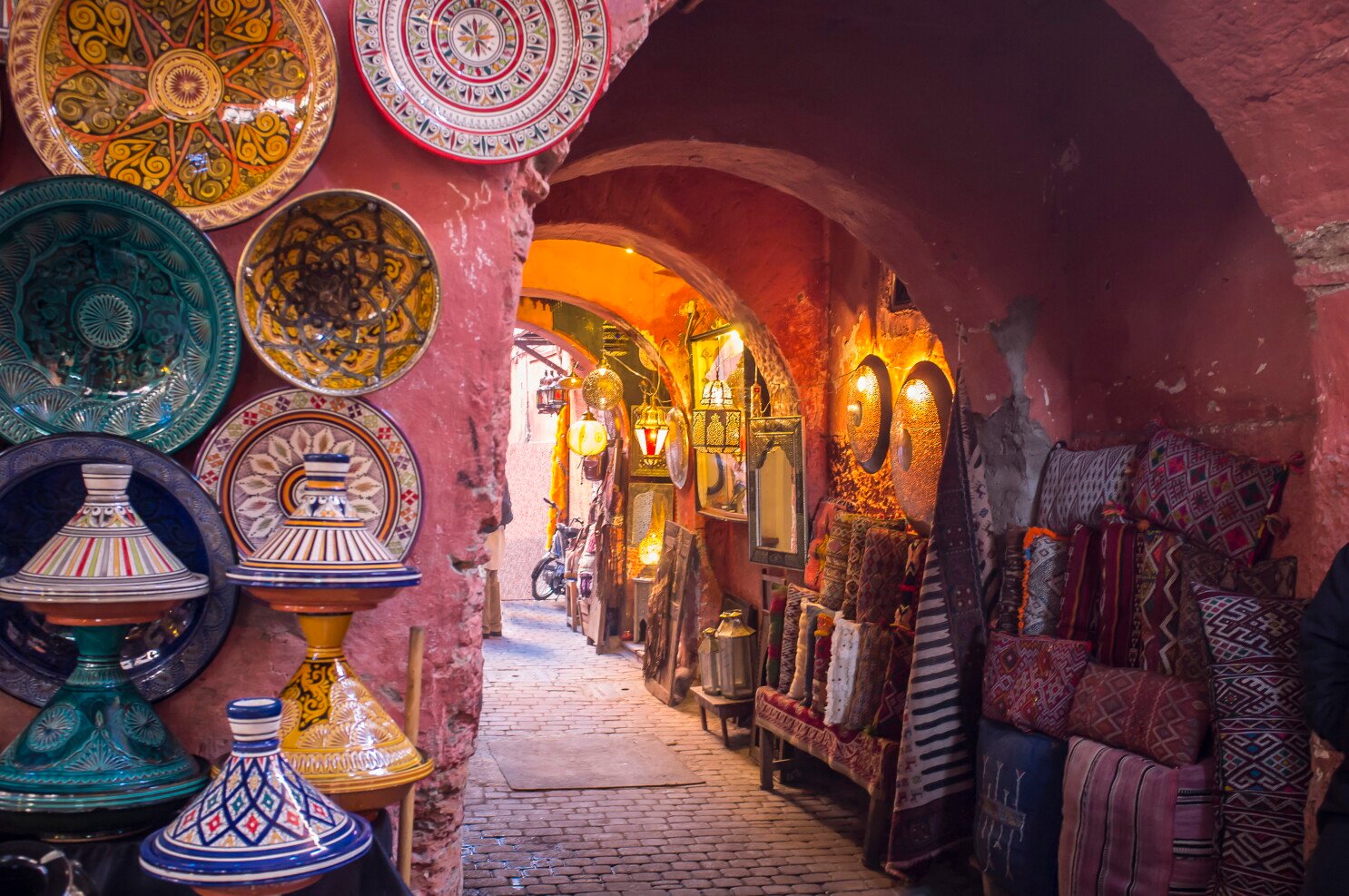
Start with the main square, but do not stay too long. Walk into the souks with no fixed goal. Get slightly lost. Stop for mint tea on a rooftop. In the evening, eat at a food stall in the square or a small restaurant off the main drag. Book a guided Medina tour for the next morning if you want context on what you are seeing.
Day 2: Palaces and museums
Visit Bahia Palace early, before the tour groups arrive. Then head to the Saadian Tombs and the El Badi Palace ruins. In the afternoon, see the Museum of Marrakech or the Maison de la Photographie. Book timed entry where possible (check the official site for current hours and prices).
Day 3: Majorelle Garden and Gueliz
The Majorelle Garden is small and popular, so book a morning slot. Afterward, walk through Gueliz, the newer part of the city, for coffee, galleries, and a quieter lunch. This is also a good day to shop for fixed-price goods rather than haggling in the souks.
Day 4: Atlas Mountains day trip
Book a small-group or private day trip to the Atlas Mountains, with stops in Imlil or the Ourika Valley. A good tour includes a short hike and lunch. Expect to pay around $30 to $60 per person depending on group size and inclusions (confirm the latest price with the operator).
Day 5: Hammam, shopping, and departure
Book a traditional hammam for the morning. It is the best way to end a trip that involved a lot of walking. Spend the afternoon on last-minute shopping, then head to the airport with buffer time. The airport is close, but traffic and security can eat an hour.
Where should you stay on a trip to Marrakech?
The choice comes down to three areas: the medina, Gueliz, and the Palmeraie. Each suits a different kind of trip.
The medina
This is where you want to be for atmosphere. A riad inside the walls puts you within walking distance of the souks and the main square. The trade-off is noise, narrow alleys, and the fact that cars cannot reach many doors. You will walk your luggage in or pay a porter. For first-timers who want the full Marrakech experience, this is worth it. Search hotel guides and compare rooms on Booking.com.
Gueliz
Gueliz is the modern city. Hotels here are easier to reach, quieter, and often cheaper for the same standard. You trade the medina magic for convenience. If you are traveling with family, have mobility concerns, or just want a calm base, this is the better pick.
The Palmeraie
The Palmeraie is resort territory, outside the city center. It suits travelers who want pools, spas, and space and do not mind taxi rides into town. It is not a good base for a short first trip, but it works for a longer stay or a splurge at the end.
Maya’s honest take: “Ask your riad to arrange airport pickup. The first walk into the medina with a suitcase is not the moment to test your navigation skills.”
What should first-timers know before visiting Marrakech?
These are the practical rules that make the difference between a smooth trip and a stressful one. They come from my own mistakes and from advice I wish I had taken more seriously.
Cash is still king.
Carry dirhams in small notes. Many souk stalls, taxis, and small restaurants do not take cards, and ATMs in the medina can run out or charge high fees. Withdraw from a bank ATM in Gueliz if you can. Confirm current withdrawal limits with your bank before you travel.
Haggling has rules.
In the souks, prices are not fixed. Start lower than you want to pay, stay friendly, and be willing to walk away. Do not haggle in shops with posted prices, in restaurants, or in pharmacies. The official Moroccan tourism site has background on local customs if you want more context before you go.
Dress for respect and heat.
Marrakech is a Muslim city. Loose clothing that covers shoulders and knees is the norm, especially outside the tourist zones. It also helps with the sun. Bring a scarf for mosque visits and a hat for the midday heat.
Book the big sites ahead
The Majorelle Garden and Bahia Palace are popular and have timed entry. Book online before you arrive, especially in spring and autumn (check the official site for current ticket prices and hours).
Ignore fake guides.
If someone tells you the souk is closed or your riad is the wrong way, they are probably steering you toward a commission. Use a map, keep walking, and do not hand your bag to anyone who offers to carry it unless you have hired them.
What should you avoid on a trip to Marrakech?
I have made most of these mistakes so you do not have to.
Do not overbook guided tours. One good medina tour is enough. Two or three in a row turns the trip into a lecture and leaves no room for spontaneous detours.
Do not assume you can drink the tap water. Bottled water is cheap and everywhere. Use it for drinking and brushing your teeth if you have a sensitive stomach.
Do not book a ride without checking the access. Some are deep in the medina and require a long walk with luggage. Ask the riad how to reach the door and whether they offer porter service.
Do not skip travel insurance. Morocco is generally safe, but medical care and trip disruptions can be expensive. Travel insurance is worth the cost.
Do not ignore Ramadan timing. If you visit during Ramadan, some restaurants and shops close during the day, and the rhythm of the city changes. It can be a wonderful time to visit, but plan around it.
Frequently asked questions
How many days in Marrakech is enough?
Four to five days is enough for most first-timers. That covers the medina, the main palaces and gardens, and one day trip. Three days is the minimum if you are short on time.
Is Marrakech safe for tourists?
Marrakech is generally safe for tourists, with petty theft and scams being the main concerns. Keep your valuables close, ignore unsolicited guides, and use licensed taxis or rideshares.
Do I need a visa for Marrakech?
Many Western nationals do not need a visa for short stays in Morocco. Check the official Moroccan consular website for your country before booking, because rules change.
What is the best time to visit Marrakech?
Spring (March to May) and autumn (September to November) offer the most comfortable weather. Summer is very hot, and winter is cool but quiet and cheaper.
Can you drink alcohol in Marrakech?
Yes, but it is limited and expensive. Some riads, hotels, and licensed restaurants serve alcohol. Do not expect it at every cafe or medina stall.
How much does a trip to Marrakech cost?
Mid-range travelers should budget around $90 to $150 per day, with riads being the biggest variable. Budget trips can run lower, and luxury stays can run much higher (check current rates on Booking.com or Agoda).
Do I need a car in Marrakech?
No. The medina is walkable, taxis are cheap, and organized day trips handle the mountain routes. A car is more hassle than it is worth for a city-focused trip.
Plan your trip: booking platforms we trust
I use these platforms because they are reliable for price comparison and cancellations. They are not the only options, but they are the ones I check first when planning my own trips.
Agoda — strong for hotel deals across Asia and the Middle East.
Kayak — flight price comparison before you book.
GetYourGuide — medina tours, cooking classes, and Atlas day trips.
Expedia — flight and hotel packages.
TripAdvisor — reviews and restaurant finds.
Looking for more planning resources? Browse our hotel guides, best things to do, and cheap flight tips before you book.
WakaAbuja does its best to keep all information accurate at the time of publishing. Prices, policies, and availability change regularly. Always verify with official sources before you travel. We are not liable for errors caused by outdated information. Travel insurance is strongly recommended.