Naejangsan National Park: When to Go, Routes & Cable Car
Some links on this page are affiliate links. We may earn a commission at no extra cost to you.
Naejangsan National Park peaks for fall foliage from late October to early November, when the maple tunnel between Iljumun Gate and Naejangsa Temple turns crimson. Entry is generally free; the cable car to Yeonjabong Peak runs about 8,000 KRW round trip for adults (confirm the latest fare at the ticket office); and the easiest no-car route from Seoul is KTX to Jeongeup Station followed by local bus 171.
This guide is for travelers who want a clear plan for Naejangsan National Park, not another photo diary. I have not walked every trail here myself, so what follows is built from official park sources, transit operator pages, and a healthy suspicion of outdated blog posts.
If you want the honest version of what works, what costs what, and which route actually fits your legs, read on.
Jump to: When to go | Which entrance | Getting there | Costs | Routes | Cable car | Mistakes | FAQ
Key takeaways
- Peak fall color usually lands in the first week of November; this year, warmer temperatures may push it a few days later, so check the Korea Forest Service forecast before booking non-refundable travel.
- Entry to Naejangsan National Park is free, but parking and the cable car carry separate fees (confirm current rates at the park office).
- From Seoul, KTX to Jeongeup Station takes roughly 1 hour 40 minutes and costs around 39,500 KRW one way (check KORAIL for current fares), then bus 171 takes about 40 minutes to the park entrance.
- The maple tunnel loop to Naejangsa Temple is the signature easy walk, taking 1.5 to 2 hours at a relaxed pace.
- The Naejangsan cable car to Yeonjabong Peak is optional; expect queues on peak weekends and decide before you arrive whether the view is worth the wait.
- Weekday visits in late October and early November are dramatically calmer than weekends, when parking fills before 8:00 AM.
When is the best time to see fall foliage at Naejangsan National Park?
The best time for fall foliage at Naejangsan National Park is typically late October through mid-November, with peak color usually arriving in the first week of November. The Korea Forest Service publishes seasonal forecasts, and local reports from Jeongeup are the most reliable signal in the final week before you travel. This year, higher autumn temperatures may delay peak color by a few days (check the official forecast before locking in dates).
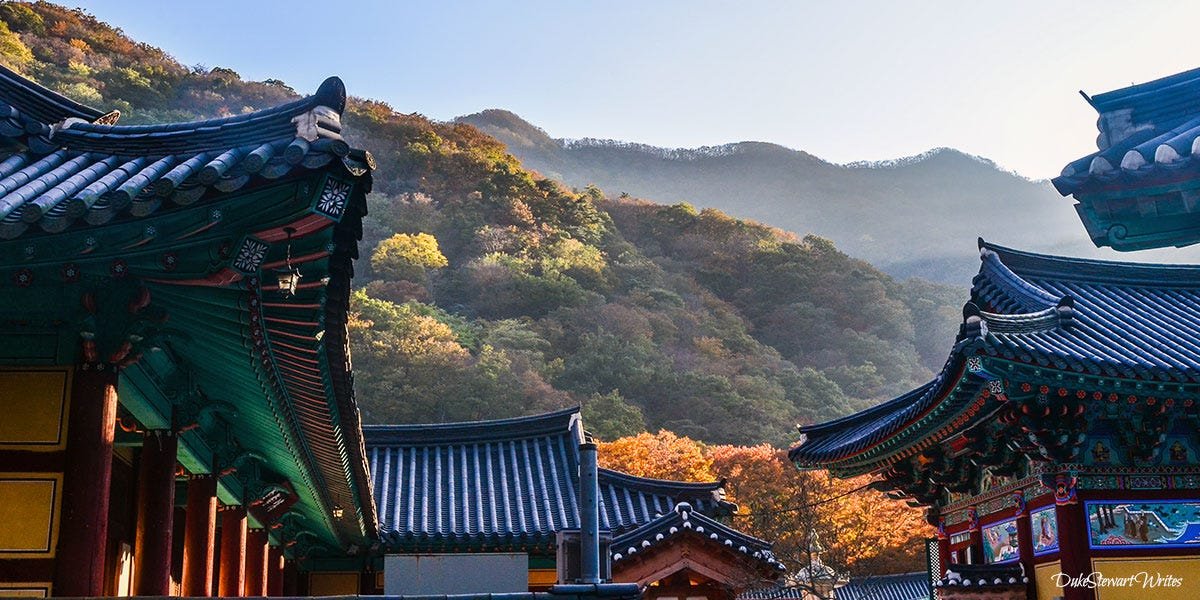
Naejangsan is managed by the Korea National Park Service (KNPS), and the park’s maple tunnel is the centerpiece of the fall season. The walk from Iljumun Gate to Naejangsa Temple passes through a corridor of mature maples that draws the heaviest crowds of the year. Outside foliage season, spring brings azaleas and cherry blossoms, summer is green and humid, and winter offers quiet snowscapes with far fewer visitors.
Maya’s honest take: The mistake I see most is travelers booking flights for the last week of October based on old blog posts, then arriving before the maples have turned. Use the forecast as a guide, not a guarantee, and keep your first two days flexible so you can shift the park visit if needed.
Best for
- Fall foliage seekers: peak color and the maple tunnel
- Weekday visitors who want fewer crowds
- Day-trippers from Seoul using KTX and bus 171
- Photographers chasing soft morning light before 10:00 AM
Worth considering
- Spring for azaleas and fewer people
- Winter for quiet trails and snow, with limited services
- Downside: peak weekends are genuinely crowded, and parking fills early
Which entrance should you use for Naejangsan National Park?
Most first-time visitors should use the Jeongeup entrance, accessed via bus 171 from Jeongeup Station, because it puts you closest to the maple tunnel, Naejangsa Temple, and the cable car. The park spans more than one jurisdiction, and some official listings show a Sunchang County address, which confuses travelers. The Jeongeup side is the practical base for the classic fall foliage route.
The Korea National Park Service lists the Naejangsan Park office in Jeongeup, and the main visitor facilities cluster near that entrance. If you are coming by public transit, Jeongeup Station is your arrival point, and bus 171 drops you at the park terminal near the entrance. The Sunchang side serves different trails and is less useful for a first visit focused on the maple tunnel and cable car.
Maya’s honest take: If a blog tells you to go to Sunchang for the maple tunnel, close the tab. The Jeongeup entrance is where the signature walk begins, and bus 171 from Jeongeup Station is the simplest connection.
How do you get to Naejangsan National Park from Seoul without a car?
The fastest no-car route from Seoul to Naejangsan National Park is KTX to Jeongeup Station, then local bus 171 to the park entrance. The train takes roughly 1 hour 40 minutes and costs around 39,500 KRW one way (confirm current fares on the KORAIL website), while bus 171 takes about 40 minutes and costs roughly 1,700 KRW (check the latest fare with the driver or local transit info).
Intercity buses from Seoul Central City Bus Terminal to Jeongeup are a cheaper alternative, taking around 3 hours, but they add transfer time and are more sensitive to traffic. For travelers who prefer a structured day, organized tours from Seoul exist, but they often combine Naejangsan with other stops and can feel rushed during peak foliage. If you are comparing flight and rail options for your wider trip, our cheap flights and booking flights guide covers the logistics.
Maya’s honest take: The KTX plus bus combo is the only no-car route I would recommend without caveats. It is reliable, but during peak foliage the bus fills up, so leave Seoul early and have a backup plan if the first 171 is full.
What does a visit to Naejangsan National Park cost?
Entry to Naejangsan National Park is free, but parking and the cable car carry separate fees. Some older sources still list a 3,000 KRW temple entry fee, but the Korea National Park Service manages the park as a free-entry national park, and current visitor information should be confirmed on the official KNPS site before you travel. Parking costs are charged per vehicle (confirm the latest rate at the park office).
The cable car fare varies by source, which is a red flag. Recent listings suggest around 8,000 KRW round trip for adults and 5,000 KRW for children (confirm the latest fare at the ticket office), while some blog posts cite higher or lower numbers. Treat any cable car price you see online as a starting point, not a fact, and budget a buffer.
What is free?
- Park entry for walk-in visitors
- Trail access to the maple tunnel and Naejangsa Temple
- Visiting the park’s natural and cultural features
What costs extra?
- Parking (rate varies by vehicle type and season)
- Cable car round trip (around 8,000 KRW adult; confirm current rate)
- Shuttle bus inside the park, where operating
What is the easiest walking route in Naejangsan National Park?
The easiest and most popular walking route is the maple tunnel loop from Iljumun Gate to Naejangsa Temple, which takes 1.5 to 2 hours at a relaxed pace and stays mostly flat. This route passes through the park’s signature maple corridor and ends at the temple grounds, with Uhwajeong Pavilion nearby as a natural extension. It is suitable for most fitness levels and is the route most day-trippers should choose.
For travelers who want more elevation, the cable car to Yeonjabong Peak offers a shortcut to ridge views, but the walking route to the peak is significantly steeper and takes several hours. The Korea National Park Service maintains trail information, and the park’s official site is the best source for current route conditions. If you are building a broader Korea itinerary, our travel planning section covers how to sequence park visits with city stays.
Maya’s honest take: The maple tunnel is the reason you came, and it does not require a summit push. If you have limited time, skip the peak hike and spend the extra hour at Naejangsa Temple and Uhwajeong Pavilion instead of rushing the ridge.
Is the Naejangsan cable car worth it?
The Naejangsan cable car is worth it if you want ridge views without a multi-hour hike and can visit on a clear weekday. It runs from the park’s information center area to an observation point near Yeonjabong Peak, and the ride itself is short. On peak fall weekends, queues can eat an hour or more of your day, and the view from the top is weather-dependent. Decide before you arrive: if the queue is long and your time is short, the maple tunnel is a better use of your hours.
Cable car fares are inconsistently reported across travel sites, so check the ticket window or the official park page for the current adult and child round-trip prices (confirm the latest fare at the ticket office). The cable car is an optional add-on, not a required part of the park visit, and the walking route to Naejangsa Temple does not require it.
Maya’s honest take: Choose the cable car if you are traveling with someone who cannot handle steep stairs and you want a view without the climb. Skip it if you are visiting on a Saturday in early November and your main goal is the maple tunnel. The queue math rarely works in your favor on peak weekends.
What are the most common mistakes when visiting Naejangsan National Park?
The most common mistake is visiting on a peak fall weekend without arriving early, which leads to full parking lots and long cable car queues. The second is trusting outdated blog posts for prices and entry fees, since several competitors still list a 3,000 KRW temple entry that does not reflect current KNPS policy. The third is underestimating transfer time from Seoul and arriving with only two hours of daylight.
Mistake 1: Booking non-refundable travel for a fixed foliage date. Fix: keep your park day flexible and check the Korea Forest Service forecast in the final week.
Mistake 2: Arriving after 9:00 AM on a fall weekend. Fix: take the earliest KTX you can manage and aim to be at the park entrance by 8:30 AM.
Mistake 3: Assuming the cable car is the main event. Fix: the maple tunnel is the signature experience; treat the cable car as optional.
Mistake 4: Using the wrong entrance. Fix: use the Jeongeup side for the classic route and bus 171 from Jeongeup Station.
Mistake 5: Relying on a single blog for prices. Fix: check the official KNPS page and confirm fares at the ticket window.
Maya’s honest take: The single best fix is to build a buffer day. If your Seoul schedule allows, put Naejangsan on day two of your trip and keep day one light. That way, if the forecast shifts, you can swap days without losing money.
Frequently asked questions
Is Naejangsan National Park free to enter?
Yes, entry to Naejangsan National Park is generally free for walk-in visitors. Parking, the cable car, and some facilities carry separate fees (confirm current rates at the park office). Some older sources still list a 3,000 KRW temple entry, which does not reflect current KNPS policy.
How do I get from Seoul to Naejangsan National Park?
Take KTX from Seoul or Yongsan Station to Jeongeup Station (about 1 hour 40 minutes, around 39,500 KRW one way, confirm fares on KORAIL), then bus 171 from outside the station to the park entrance (about 40 minutes, roughly 1,700 KRW, check the latest fare).
How much is the Naejangsan cable car?
Recent listings suggest around 8,000 KRW round trip for adults and 5,000 KRW for children, but fares vary across sources (confirm the latest price at the ticket office). Treat online prices as estimates and budget a small buffer.
When is peak fall foliage at Naejangsan?
Peak foliage usually arrives in the first week of November, with the season running from late October to mid-November. This year, warmer temperatures may delay peak color by a few days, so check the Korea Forest Service forecast before finalizing travel dates.
How long does the maple tunnel walk take?
The walk from Iljumun Gate through the maple tunnel to Naejangsa Temple takes about 1.5 to 2 hours at a relaxed pace. It is mostly flat and suitable for most fitness levels, making it the best choice for a short visit.
Which entrance should I use for Naejangsan?
Use the Jeongeup entrance for the maple tunnel, Naejangsa Temple, and the cable car. Bus 171 from Jeongeup Station drops you at the park terminal. The Sunchang side serves different trails and is less convenient for a first visit.
Is Naejangsan worth visiting outside fall?
Yes, if you want fewer crowds. Spring brings azaleas and cherry blossoms, summer is green and humid, and winter offers quiet snowscapes. The park’s trails and temple remain accessible, but some facilities may have reduced hours (check the official site before visiting).
Can I visit Naejangsan as a day trip from Seoul?
Yes, a day trip is doable using KTX and bus 171, but it makes for a long day. Leave Seoul early, plan for at least 4 hours of transit round trip, and prioritize the maple tunnel over longer hikes if time is tight.
Plan your trip: booking platforms we trust
For this trip, the main booking decisions are your Seoul accommodation and any onward travel. I use Booking.com or Agoda for city hotels, Kayak to compare flight prices if you are coming from abroad, and GetYourGuide only if you want a structured tour that includes transport. For more options, browse our best hotels and things to do guides.
WakaAbuja does its best to keep all information accurate at the time of publishing. Prices, policies, and availability change regularly. Always verify with official sources before you travel. We are not liable for errors caused by outdated information. Travel insurance is strongly recommended.