Punakaiki, West Coast NZ: Tide Timing, Walks, and Honest Road Trip Guide
Some links on this page are affiliate links. We may earn a commission at no extra cost to you.
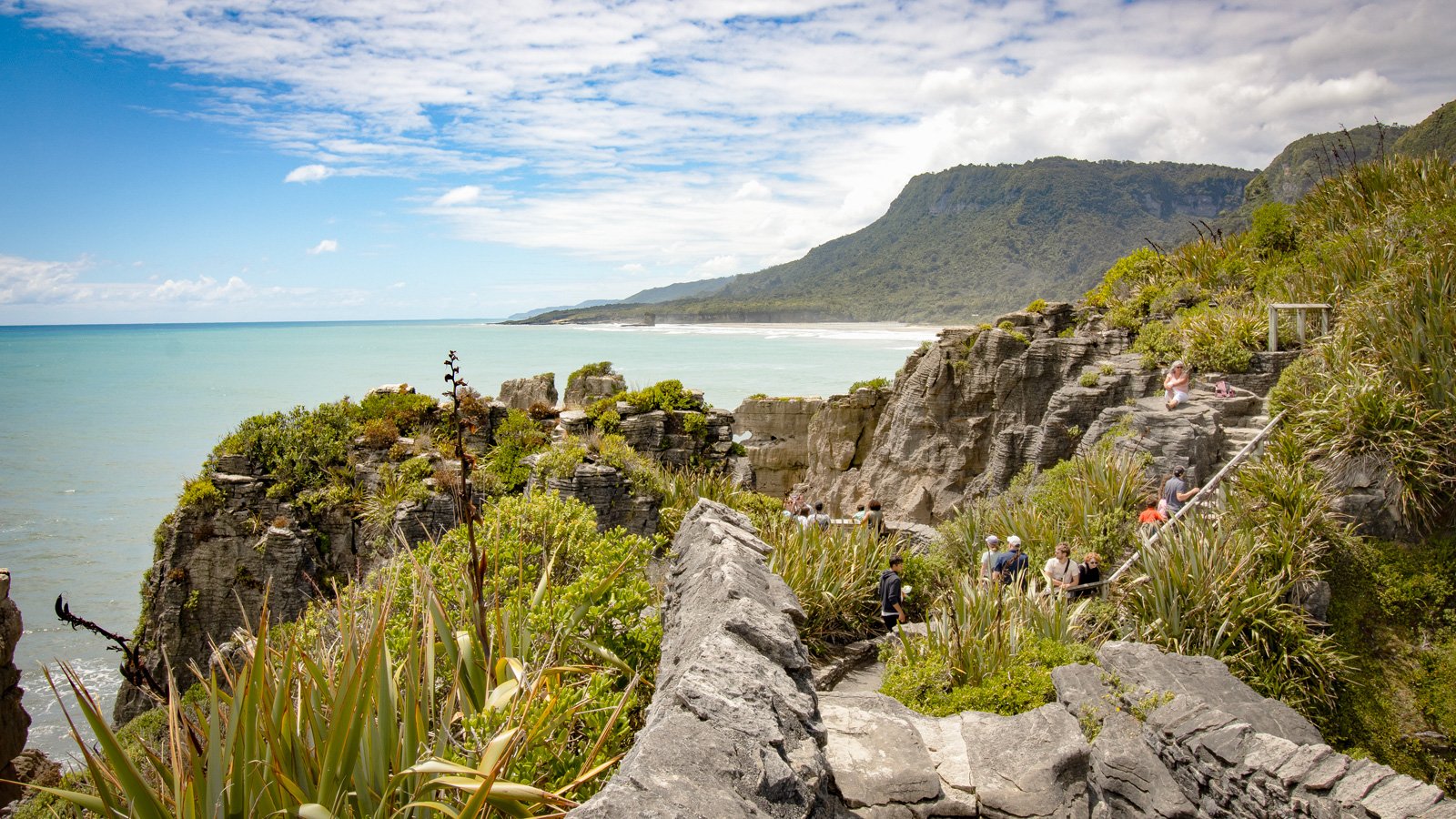
Punakaiki, West Coast NZ, is a small coastal village on State Highway 6, roughly 45 minutes north of Greymouth and 60 minutes south of Westport. It is known for the free Pancake Rocks and Blowholes walk at Dolomite Point, a 1.1 km loop that takes 20 to 30 minutes and works best within 90 minutes of high tide when a south-westerly swell is running. Note that paid parking now applies at the Pancake Rocks car park, so budget for that even though the walk itself costs nothing.
This guide is for road-trippers deciding whether to stop for two hours or sleep over and for anyone who wants to see the blowholes actually erupt rather than stare at wet rocks. It is not for luxury resort seekers or travelers who need a full-service town within walking distance.
What follows is what I check first: the tide, the swell, the parking meter, and the fuel gauge, in that order.
Jump to: Where is Punakaiki | Tide timing | Things to do | Stay or stop | Stay and eat | Best time | Who it is for | FAQ
Key takeaways
- The Pancake Rocks walk is free, but parking at the site now costs $5 per hour or $20 per day, with a free 20-minute grace window (confirm current fees with the Department of Conservation before you go).
- Blowholes need high tide plus a southeasterly swell. High tide on a calm day means spray, not geysers.
- Punakaiki has no fuel station and no ATM. Fill up and withdraw cash in Greymouth or Westport before you arrive.
- There is no supermarket in Punakaiki. Evening dining is limited to a handful of cafe and tavern kitchens, so book ahead or self-cater.
- Sandflies near the Pororari River are aggressive. Bring repellent with picaridin or DEET, not just a citronella wristband.
- State Highway 6 is the only road through. Check the NZ Transport Agency Waka Kotahi journey planner for slips and closures before you drive.
Where is Punakaiki, and how do you get there?
Punakaiki sits on the Great Coast Road section of State Highway 6 in the Buller District, on the South Island’s West Coast. The Department of Conservation puts it about 45 minutes north of Greymouth and 60 minutes south of Westport, though my own drive usually lands closer to 40 and 50 minutes, respectively, without traffic or weather delays.
The village is the gateway to Paparoa National Park and the Pancake Rocks at Dolomite Point. If you are coming from Christchurch, the most common route is via Arthur’s Pass and Greymouth, which puts you on SH6 for the final stretch. Hokitika Airport (HKK) is the nearest commercial airport, about 90 minutes south, while Christchurch International Airport (CHC) is the usual international arrival point for a South Island road trip. The TranzAlpine scenic train terminates in Greymouth, where you can pick up a rental car or arrange a shuttle.
Maya’s honest take: The mistake I see most is treating Punakaiki as a quick photo stop on the way to Franz Josef. If you are driving Greymouth to Westport in one hit, you will arrive, pay for parking, sprint the loop, and leave without ever checking whether the tide is right. Check the MetService tide table the night before. If high tide falls at a convenient hour, build your drive around it. If it does not, decide whether the rocks alone are worth the stop.
Best for
- Road-trippers on SH6 between Greymouth and Westport
- Short walks that suit families and mixed mobility
- Free geology and coastal scenery (apart from parking)
- Rainforest walks in Paparoa National Park
Worth considering
- Overnight stay for sunset and dawn walks without tour buses
- Guided kayaking or horse trekking for a different view of the coast
- Downside: no fuel, no supermarket, limited dining, and sandflies near the river
How do you time the Punakaiki Pancake Rocks and blowholes?
Visit Dolomite Point within roughly 90 minutes either side of high tide, and check that a south-westerly swell is running. The Department of Conservation states plainly that the blowholes are at their best around high tide when there is a south-westerly swell. High tide alone is not enough. A flat sea pushes water through the caverns with a wheeze rather than a boom.
Use the MetService NZ marine forecasts and tide tables for Greymouth or Punakaiki to plan your window. If the swell is small, the Pancake Rocks themselves remain the attraction: the layered limestone formations are still striking, and the coastal views do not require a blowhole eruption to justify the stop. If you are chasing spray, arrive early and expect company. Tour buses cluster around the high tide window, and the car park is not huge.
High tide + swell
- Blowholes erupt with force
- Spray and sound are the main events
- Expect crowds and a full car park
- Bring a waterproof layer for the railings
Low tide or calm sea
- Blowholes may barely puff
- Rock formations are easier to photograph without spray
- Fewer people on the track
- Still worth walking if you are passing through
Walk duration, accessibility, and parking tips
The Pancake Rocks and Blowholes Walk is a 1.1 km loop that takes 20 to 30 minutes at a normal pace, and the Department of Conservation describes it as suitable for wheelchairs with assistance, apart from an optional section with steps. It is paved and all-weather. Allow up to 45 minutes if you plan to stop at every viewing platform during a good tide.
Parking at the site is no longer free. The Department of Conservation introduced paid parking as a pilot, with fees of $5 per hour or $20 per day, and a free grace period if you arrive and leave within 20 minutes (confirm the current fee and pilot status on the DOC Pancake Rocks page before you travel). Payment machines accept cards, not cash. If you are on a tight budget, the free 20-minute window is tight but technically enough for a brisk loop if the car park is not busy. I would not rely on it during peak season.
What are the best things to do in Punakaiki beyond the Pancake Rocks?
Beyond Dolomite Point, Punakaiki offers free forest and coastal walks in Paparoa National Park, a roadside cavern with glowworms, and paid guided activities such as kayaking and horse trekking. The village itself is small, so the surrounding national park does most of the work.
Pororari River Track
The Pororari River Track is a flat, well-formed path that follows a limestone gorge through nikau palm forest, starting about five minutes north of the Pancake Rocks. You can walk for 20 minutes or continue for a couple of hours depending on how far you go. The sandflies here are serious. Apply repellent before you leave the car, not after you feel the first bite. The Department of Conservation posts track alerts for this route after heavy rain, so check before you set out.
Truman Track
Truman Track is a short coastal walk through subtropical forest that ends at a cliff-top viewpoint and a small cove, roughly 15 minutes each way. It is north of Punakaiki village and easy to miss if you are not watching for the sign. The track can close after slips or storm damage, so confirm its status with the Paparoa National Park Visitor Centre before making the detour.
Punakaiki Cavern and Fox River Caves
Punakaiki Cavern is a roadside cave just off SH6 with a short stairway entrance, glowworms on the walls, and no entry fee. Bring a torch and wear shoes with grip. Fox River Caves are a more serious undertaking and should not be attempted without local advice and proper gear. The cavern is a 15 to 20 minute stop, not a destination in itself.
Guided kayaking and horse trekking
Several local operators run guided kayaking on the Pororari River lagoon and horse treks along the coast and through forest. These are paid activities, with prices varying by operator and season (check current rates directly with the operator). They are worthwhile if you want to see the landscape from the water or saddle rather than the car window, but they are not essential for a first visit.
Should you stay overnight in Punakaiki or just stop for two hours?
Stop for two to three hours if you are driving between Nelson and Franz Josef on a tight schedule and the tide happens to align with your arrival. Stay one night if you want to catch both a sunset high tide and a morning walk without tour buses, or if you plan to hike in Paparoa National Park beyond the short walks.
Option A: 2-hour road trip stop
- Walk the Pancake Rocks loop (20 to 30 minutes)
- Add the Pororari River Track for 30 to 60 minutes if sandflies permit
- Grab a coffee or pie from a local cafe
- Best if you are covering Greymouth to Westport in one day
- Downside: you miss the quiet evening and early morning light
Option B: 1-night overnight base
- Catch a second tide window if the first one was mistimed
- Walk Truman Track and Pororari without day-trip crowds
- Have dinner without driving SH6 in the dark
- Best if you are hiking Paparoa or want a slower pace
- Downside: accommodation is limited and books out in peak season
Maya’s honest take: If you are unsure, choose based on the tide, not the accommodation. A two-hour stop at dead low tide on a calm day is a waste of parking money. An overnight stay that lets you hit a 7 am high tide with a fresh swell is worth more than any hotel upgrade on the coast.
Where to stay and eat in Punakaiki (plus honest logistics)
Punakaiki accommodation ranges from beachfront motels and self-contained cabins to DOC campsites and holiday homes, while dining is limited to a small number of cafes and tavern kitchens that close early and fill up in peak season. There is no supermarket in the village, and the nearest fuel and ATM are in Greymouth or Westport.
Best places to stay by budget
For a step up from camping, beachfront motels and the Scenic Hotel Punakaiki offer easy access to the Pancake Rocks and coast, with rates that fluctuate heavily by season (expect to pay roughly NZD $150 to $350 per night depending on room type and timing, and confirm current availability on Booking.com or Agoda). Self-contained cabins and holiday homes suit families and groups, particularly if you want a kitchen so you are not reliant on the few local restaurants (browse options on Vrbo).
Punakaiki Beach Camp covers powered and non-powered sites, cabins, and basic rooms for budget travelers. If you want a broader comparison of West Coast and South Island hotel guides, see our West Coast and South Island hotel guides.
Food, fuel, sandflies, and cell reception warnings
There is no supermarket and no fuel station in Punakaiki. The Department of Conservation visitor centre confirms that fuel and ATMs are in Greymouth or Westport. Fill your tank before you leave either town, and carry cash as a backup even though most card payments work.
Evening dining is limited to a few cafe and tavern kitchens, which can stop serving early or book out entirely in summer (reserve ahead or plan to self-cater). Sandflies are fierce near the Pororari River and the bush edges, particularly in humid weather. Use a repellent with picaridin or DEET and reapply after sweating. Cell reception is patchy on stretches of SH6, so download offline maps before you drive.
What is the best time of year to visit Punakaiki?
February through April usually offers the most stable West Coast weather, with warm temperatures and a better chance of clear days for the coastal walks. Winter brings bigger storm swells, which can make the blowholes more dramatic, along with fewer crowds and lower accommodation prices.
Climate averages for the region show January and February as the warmest months, with mean temperatures around 17°C, while June and July are cooler and wetter (data from Time and Date, based on Hokitika Aerodrome records). The West Coast is a rainforest coastline, so rain is possible in any month. Pack a waterproof shell regardless of season. If your priority is blowhole action, a winter westerly swell is your friend, but you will need to be flexible with walking plans.
Who Punakaiki is for (and who should skip an overnight stay)
Punakaiki suits road-trippers who want a short, free geological walk, families with mixed walking abilities, and travelers who value rainforest and coastal scenery over nightlife or dining. It is not for anyone who needs a full-service town, reliable late-night food, or a base for multiple days of non-hiking activities.
If you are looking for a resort-style stay with a spa, several restaurants, and shops within walking distance, base yourself in Greymouth or Hokitika instead and visit Punakaiki as a day trip. If you are hiking the Paparoa Track or want to explore the Pororari and Truman tracks without rushing, an overnight stay in the village is the better call. For more natural attractions across the country, see our guide to top New Zealand natural attractions.
Frequently asked questions
Is Punakaiki worth visiting on the South Island?
Yes, if you are driving State Highway 6 between Greymouth and Westport. The Pancake Rocks walk is free, short, and geologically unusual, and the Paparoa National Park walks add real value. It is less worth a dedicated detour if you are based in Christchurch or Queenstown and have no other reason to be on the West Coast.
How far is Punakaiki from Greymouth and Westport?
Punakaiki is about 44 km north of Greymouth and 57 km south of Westport on State Highway 6. Driving times are roughly 40 to 45 minutes from Greymouth and 50 to 60 minutes from Westport, depending on weather and road conditions.
What is the best time of day to see the Punakaiki blowholes?
Around high tide, ideally within 90 minutes before or after, and when a south-westerly swell is running. Check the MetService tide table for Greymouth or Punakaiki and the marine swell forecast. High tide without swell produces weak spray, not eruptions.
Do you have to pay to see the Pancake Rocks in Punakaiki?
The walk itself is free. Parking at the Pancake Rocks car park now carries a fee, currently $5 per hour or $20 per day with a free 20-minute grace period (confirm current fees with the Department of Conservation before you visit). Payment is by card at onsite machines.
How long does the Pancake Rocks walk take?
The loop is 1.1 km and takes most people 20 to 30 minutes. Allow 45 minutes if you stop at every viewpoint during a good tide. The path is paved and suitable for wheelchairs with assistance, except for an optional stepped section.
What else is there to do in Punakaiki besides Pancake Rocks?
The Pororari River Track and Truman Track are the main free walks, both in Paparoa National Park. Punakaiki Cavern is a short roadside cave with glowworms. Guided kayaking and horse trekking are available for a fee. The Paparoa Track is a multi-day Great Walk for serious hikers.
Are there places to eat in Punakaiki?
Yes, but very few. A small number of cafes and tavern kitchens serve food, and hours can be limited, especially outside peak season. There is no supermarket. Book dinner ahead or bring self-catering supplies from Greymouth or Westport.
Can you stay overnight in Punakaiki or should you stay in Greymouth?
Stay in Punakaiki if you want to catch multiple tide windows, walk without day-trip crowds, or hike in Paparoa National Park. Stay in Greymouth if you need more dining, fuel, and supermarket options, or if you are using the TranzAlpine train as your transport.
Sources we checked
Maya verifies track conditions, parking fees, and tide guidance against official Department of Conservation pages and MetService forecasts before publishing, and flags any figure that needs a reader to confirm on the day.
Plan your trip: booking platforms we trust
Book accommodation before you leave Greymouth or Westport if you are traveling in peak season, and compare rental car options early if you are arriving by TranzAlpine. For flights into Christchurch or Hokitika, use a comparison tool rather than booking blind.
If you are planning a longer South Island route, start with our South Island road trip planning guides and check New Zealand NZeTA and visitor visa requirements well before departure. Adventure activities on the West Coast are worth insuring, so review adventure travel insurance for New Zealand before you book anything non-refundable.
General hotels and motels in Punakaiki and Greymouth
Agoda
Beachfront and motel deals on the West Coast
Vrbo
Self-contained holiday homes near Paparoa National Park
GetYourGuide
Guided West Coast day tours and activities
If you still need to arrange flights, compare flights to Christchurch and Hokitika before you lock in your road trip dates.
WakaAbuja does its best to keep all information accurate at the time of publishing. Prices, policies, and availability change regularly. Always verify with official sources before you travel. We are not liable for errors caused by outdated information. Travel insurance is strongly recommended.