advertisement
Discover Avalanche Creek in Glacier National Park: Your Essential Trail Guide, Parking Tips, and Key Information
Trail Overview:
- Location: Glacier National Park, Montana, USA.
- Trail Type: Out-and-back hiking trail.
- Distance: Approximately 4 miles round trip.
- Difficulty: Easy to moderate.
- Elevation Gain: Around 300 feet.
- Trail Highlights: Scenic views of Avalanche Creek, lush forest surroundings, access to Avalanche Lake, and potential wildlife sightings.
- Best Time to Visit: Late spring through early fall (June to September) for best trail conditions.
Parking Tips:
- Parking Area: Avalanche Creek Trailhead parking lot, located along the Going-to-the-Sun Road.
- Capacity: Limited spaces, especially during peak season (summer months).
- Arrive Early: To secure a spot, arrive early in the morning.
- Alternative Parking: If the lot is full, consider parking at nearby trailheads or shuttle stops and plan for a shuttle or longer walk.
- Shuttle Service: Glacier Park offers a shuttle system; check current schedules for availability and stops near Avalanche Creek.
What to Know Before You Go:
- Park Entry: Glacier National Park requires an entry pass; purchase in advance if possible.
- Trail Conditions: Can be muddy and slippery early in the season due to snowmelt.
- Bear Safety: Bears are common; carry bear spray and know how to use it. Make noise while hiking.
- Facilities: Restrooms available at the trailhead; no water sources along the trail, so bring enough water.
- Leave No Trace: Pack out all trash, stay on marked trails, and respect wildlife.
- Weather: Mountain weather can change rapidly; bring layers and rain gear.
- Cell Service: Limited or no cell phone coverage in the area.
Fact-Checked By Maya Whitfield, Senior Travel Editor at WakaAbuja
Avalanche Creek is a trailhead and picnic area on the west side of Glacier National Park, about 5.5 miles from the West Entrance. It gives access to two hikes: the wheelchair-friendly Trail of the Cedars boardwalk loop and the 4.5-mile round-trip Avalanche Lake Trail with 730 feet of elevation gain. The parking lot is notoriously crowded and often fills before 9 a.m. in July and August.
I have sat in that parking lot at 7:40 a.m. on a Tuesday in July, watching the last three spaces disappear before I had finished my coffee. Avalanche Creek is not a secret, and it is not a place you can casually roll up to at noon and expect to park. The official NPS page for this spot gives you the basics: there is a trail, there are restrooms, and there is a shuttle stop.
What it does not give you is the reality of actually getting onto the trail before the crowds. This guide fills that gap with the specifics you need to plan a morning here without losing your mind.
Jump to: Location | Trail Comparison | Parking Tips | This Year’s Logistics | Step by Step | FAQs
Key takeaways
- Arrive before 8 a.m. in summer, or plan to use the park shuttle from Apgar or Lake McDonald Lodge.
- Two very different trails start here. Trail of the Cedars is a 0.7-mile accessible boardwalk; Avalanche Lake is a real hike with real elevation gain.
- Dogs are not allowed on either trail, even on a leash.
- The lake is freezing cold. Swimming is allowed, but it is snowmelt-fed and dangerously cold for most people.
- Going-to-the-Sun Road access matters. Avalanche Creek sits on that road, so seasonal closures affect whether you can reach it by car.
- Bear country. Carry bear spray and make noise on the trail, especially in early morning and evening.
Where exactly is Avalanche Creek, and how do you get there?
Avalanche Creek is on the west side of Glacier National Park, directly off Going-to-the-Sun Road. From the West Entrance near West Glacier, it is about 5.5 miles, or a 10 to 15 minute drive without stops. From Apgar Village, it is roughly 3 miles. If you are coming from the east side of the park, you need to drive all the way over Logan Pass, which takes anywhere from 1.5 to 3 hours depending on traffic and road conditions.
The NPS page for Avalanche Creek does not give you mileage from either entrance, which is a genuine omission. If you are staying at Lake McDonald Lodge, you are only about 2.5 miles away. If you are day-tripping from Whitefish or Kalispell, budget 45 to 60 minutes just to reach the West Entrance, then another 15 minutes up the road.
Maya Whitfield’s honest take: “Do not trust your GPS once you enter the park. Cell signal drops fast, and Google Maps sometimes routes people onto closed service roads. Follow the Going-to-the-Sun Road signs and you will not miss it.”
Trail of the Cedars vs. Avalanche Lake Trail: Which one should you hike?
These two hikes share the same trailhead but could not be more different in effort. One is a gentle boardwalk through old-growth forest; the other is a steady climb up to a subalpine lake. If you have limited time or mobility concerns, Trail of the Cedars is the clear choice. If you want the payoff of the lake and can handle 730 feet of climbing, Avalanche Lake is worth every step.
Trail of the Cedars
- Distance: 0.7 mile loop
- Elevation gain: Minimal, about 50 feet
- Difficulty: Easy, mostly boardwalk
- Time needed: 20 to 40 minutes
- Wheelchair accessible: Yes
Avalanche Lake Trail
- Distance: 4.5 miles round trip
- Elevation gain: 730 feet
- Difficulty: Moderate
- Time needed: 2.5 to 4 hours
- Wheelchair accessible: No
My honest recommendation for first-time visitors with one morning to spend: do both. Start with Avalanche Lake while you are fresh, then cool down on the boardwalk loop on your way back. The loop adds only 20 minutes and gives you a completely different forest experience.
What time should you arrive at Avalanche Creek for parking?
The parking lot at Avalanche Creek is one of the smallest major trailhead lots on the west side of the park. It holds roughly 60 to 80 vehicles, and it fills completely on most summer days between mid-June and mid-September. On a Monday in late July, I arrived at 8:15 a.m. and got one of the last three spaces. By 8:40, cars were circling.
In May and October, you have more flexibility. I have parked there at 10 a.m. in early October with no problem. But from late June through Labor Day, you should treat 8 a.m. as the absolute latest arrival time if you want a spot. If you cannot get there that early, the park shuttle is the smarter choice. The shuttle stop is right at the trailhead, and it runs between Apgar, Lake McDonald Lodge, and Logan Pass during peak season.
Maya Whitfield’s honest take: “The shuttle is not a downgrade. It drops you right at the trailhead, you skip the parking stress, and you do not have to walk back to a car after 4.5 miles of hiking. Use it.”
What are this year’s logistics for visiting Avalanche Creek?
Going-to-the-Sun Road typically opens fully to vehicles between mid-June and early July, depending on snowplowing progress. Before the full road opens, you can still reach Avalanche Creek from the west side as far as the road is cleared. Check the official Glacier National Park road status page before you drive up, because the opening date shifts every year.
The park shuttle operates from late June through early September in most years. It is free with park admission, but you still need to pay the park entrance fee or have a valid pass. The vehicle reservation system for Going-to-the-Sun Road has changed several times in recent years. For the most current rules on whether you need a timed entry reservation to drive past the West Entrance, check the official NPS Glacier National Park website. Do not rely on older articles that may describe a reservation system that no longer exists.
What is the Avalanche Lake hike actually like, step by step?

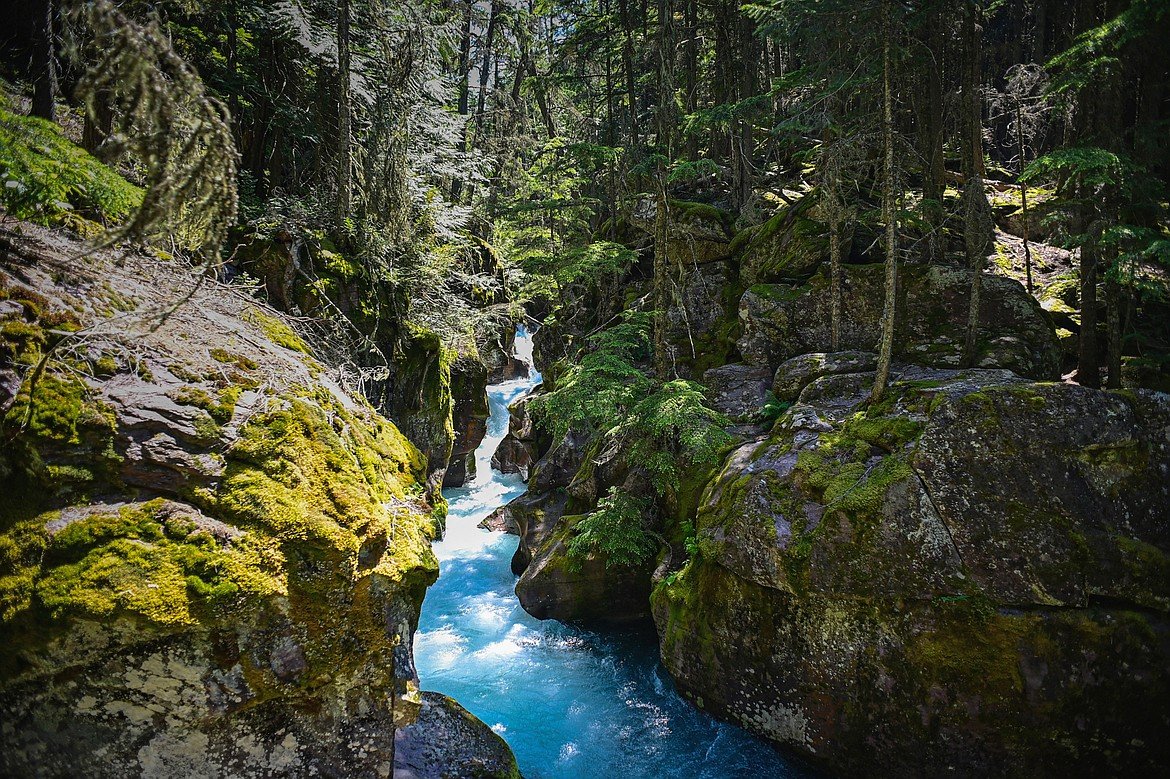
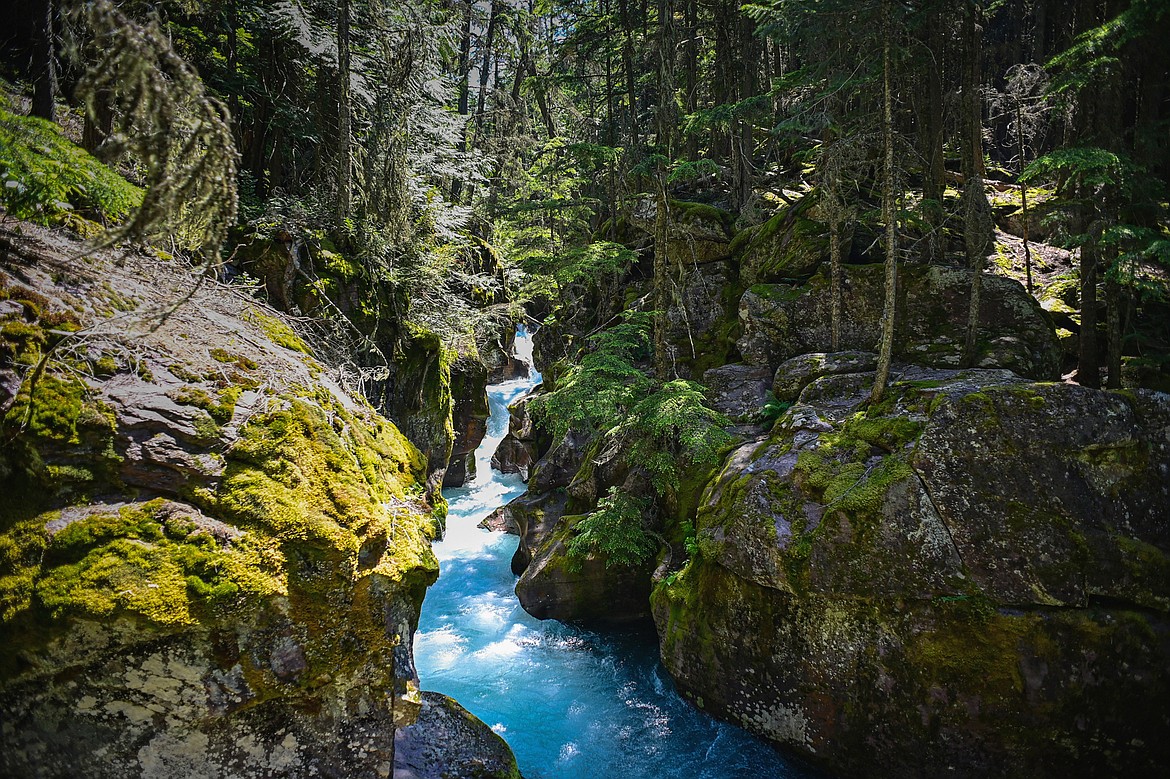
The trail starts at the back of the Trail of the Cedars loop. You follow Avalanche Creek uphill through a narrow gorge for the first half mile, and the sound of rushing water is constant. The red and green rock of Avalanche Gorge is the most photographed spot on the entire hike, and it is worth stopping for even if you have seen photos online.
After the gorge, the trail climbs more steadily through mixed forest. The grade is moderate, not brutal, but it is relentless in places. Around the 1.5-mile mark, you get your first glimpse of the lake through the trees. The trail then flattens out and follows the western shore to the main beach area. This is where you finally see the full view: a narrow, steep-walled lake with Bearhat Mountain at the far end and multiple waterfalls cascading down from Sperry Glacier.
What you will see along the way
The old-growth cedar and hemlock trees on the lower section are some of the largest in the park. Some are over 500 years old. The forest floor is thick with moss and ferns. Keep an eye out for black bears and grizzly bears, especially in the early morning and evening. I have seen black bears twice on this trail, both times near the creek crossing in the first mile.
What rules and safety issues do you need to know?
Pets are not allowed
Dogs and other pets are prohibited on both the Trail of the Cedars and the Avalanche Lake Trail, even on a leash. This is a firm park regulation. Leaving a dog in a hot car is dangerous and can result in fines.
Swimming is allowed but freezing
You can swim in Avalanche Lake, but the water is snowmelt-fed and rarely gets above 50 degrees Fahrenheit even in August. Cold water shock is a real risk. I have watched people wade in, gasp, and turn around within ten seconds. If you do go in, do not stay long and do not swim alone.
Bear safety is mandatory
This is active grizzly and black bear habitat. Carry bear spray that is easily accessible, not buried in your backpack. Make noise while hiking, especially near the creek and in dense vegetation. If you see a bear, do not run. Back away slowly and follow park guidance.
Leave No Trace
Pack out all trash. There are restrooms at the trailhead but none at the lake. Human waste should be packed out or buried at least 200 feet from water sources. The lake shore is fragile, so stay on established trails and avoid trampling vegetation.
What mistakes do first-time visitors make at Avalanche Creek?
1. Arriving after 9 a.m. in summer
The parking lot will be full. You will circle, get frustrated, and waste time that could have been spent on the trail. Arrive early or take the shuttle.
2. Skipping Trail of the Cedars
Some people rush past the boardwalk to get to the lake and never see the 500-year-old trees. That is a mistake. The loop is short and gives you a completely different ecosystem.
3. Not bringing bear spray
You are in prime bear country. Rent or buy bear spray in West Glacier or Apgar before you drive up. It is not optional if you are hiking alone or early in the morning.
4. Underestimating the elevation gain
730 feet does not sound like much, but it is a steady climb the whole way. If you are not used to hiking at elevation, it will feel harder than the stats suggest. Give yourself more time than you think you need.
5. Not checking road status before driving
Going-to-the-Sun Road can close temporarily for weather, construction, or congestion. Check the official NPS road status page the morning of your visit, not the night before.
6. Trying to swim without understanding the cold
The lake looks inviting on a hot day. It is not a swimming lake. If you insist on going in, do it briefly and have dry clothes ready.
Frequently asked questions
Is the Avalanche Lake hike hard?
It is moderate, not easy. The 4.5-mile round trip and 730 feet of elevation gain are steady but not technically difficult. An average hiker takes 2.5 to 4 hours, including stops at the lake. If you are new to hiking or not used to elevation, it will feel challenging.
Can you swim in Avalanche Lake?
Yes, swimming is allowed, but the water is snowmelt-fed and extremely cold. Temperatures rarely exceed 50 degrees Fahrenheit even in August. Cold water shock is a serious risk. Most people wade in briefly and get out quickly.
Are dogs allowed at Avalanche Creek?
No, dogs are not allowed on Trail of the Cedars, Avalanche Lake Trail, or any hiking trail in Glacier National Park. They are allowed in parking lots and picnic areas on a leash, but not on the trails.
How long does the Avalanche Lake hike take?
Most hikers take 2.5 to 4 hours round trip. That includes time at the lake for photos and a snack. If you move quickly and do not stop, you can do it in about 2 hours, but that would be a rushed trip.
Is Trail of the Cedars wheelchair accessible?
Yes, Trail of the Cedars is a 0.7-mile loop with a mostly level boardwalk and packed gravel surface. It is one of the most accessible trails in Glacier National Park. The Avalanche Lake Trail is not wheelchair accessible due to steep grades and uneven terrain.
Do you need a reservation to visit Avalanche Creek?
It depends on the year. Glacier National Park has used timed entry reservation systems for Going-to-the-Sun Road in recent years, but the rules change annually. Check the official NPS Glacier National Park website for the current year’s requirements before you go.
Plan your trip: booking platforms we trust
For lodging near Glacier National Park, I use Booking.com for the best selection of cabins and lodges in West Glacier and Whitefish. For flights into Kalispell or Missoula, Kayak gives the clearest comparison of fares across airlines. If you want to bundle a flight and rental car, Expedia occasionally has package deals that save money over booking separately.
WakaAbuja does its best to keep all information accurate at the time of publishing. Prices, policies, and availability change regularly. Always verify with official sources before you travel. We are not liable for errors caused by outdated information. Travel insurance is strongly recommended.