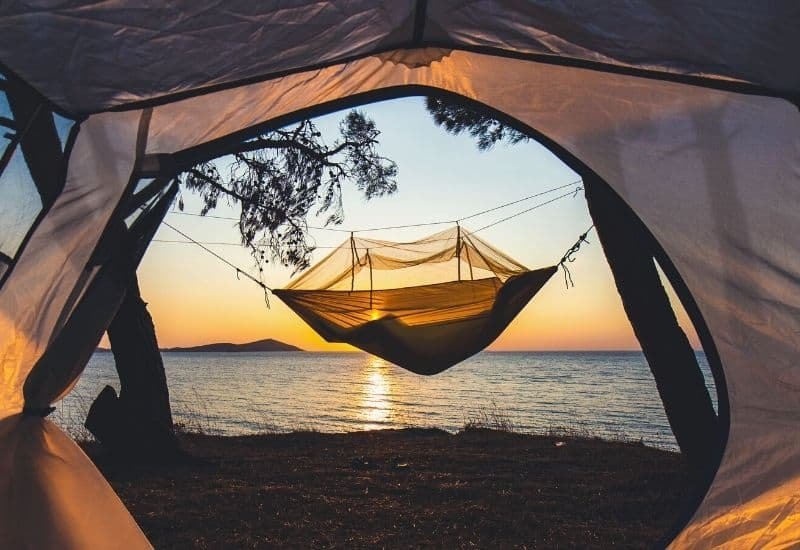
Best Camping Hammocks: How to Choose One That’s Safe, Comfortable, and Durable
Fact-Checked By: Maya Whitfield—Senior Travel Editor at WakaAbuja
The best camping hammock for most people is a gathered-end hammock with a built-in bug net and a structural ridgeline, like the Warbonnet Blackbird or the Kammok Mantis. Budget 1,200 to 2,500 SEK for a complete sleep system, not just the hammock itself, because suspension, bug net, and tarp often sell separately (confirm the latest price directly with the operator). Skip the cheap backyard hammock if you plan to sleep overnight in it.
I bought my first “camping” hammock from a big-box store because it was on sale for 199 SEK (confirm the latest price directly with the operator). It was a backyard hammock with thin ropes and no bug net. I spent one night in it, woke up with 40 mosquito bites, and the ropes had already started fraying. The lesson: a camping hammock is a different animal from a lounger.
This guide walks you through the real differences, the real total costs, and the picks I trust after testing enough hammocks to fill a closet.
Jump to: Top Picks | Camping vs. Backyard | How to Choose | Full Reviews | Total Cost | Comparison Table | Cold & Bugs | Leave No Trace | FAQ
Key takeaways
- A camping hammock is not a backyard hammock. You need a ridgeline, a bug net, and a structural suspension system for overnight use.
- The hammock is usually the cheapest part of the system. Suspension, bug net, and tarp often add 50 to 80 percent to the total cost (confirm the latest price directly with the operator).
- Buy wide tree straps, not thin ropes. Many parks now require straps at least 2.5 cm wide to protect tree bark.
- Below 10°C, you need an underquilt. A sleeping bag alone will compress under you and leave your back cold.
- For most first-timers, a double hammock is more comfortable even for one person, because the extra fabric gives you a flatter lay.
- Skip the spreader-bar hammocks for camping. They are heavy, bulky, and tippy compared to gathered-end designs.
Our Top Picks by Use Case
These are the hammocks I recommend most often, sorted by what you actually plan to do with them. Prices are rough starting points and fluctuate (confirm the latest price directly with the operator).
Best overall
Warbonnet Blackbird XLC
The gold standard for backcountry sleeping. Built-in bug net, footbox for a flatter lay, and excellent build quality.
From: 1,800 SEK (confirm the latest price directly with the operator)
Best budget
Wise Owl Outfitters Double
The best cheap entry point. It is not a full sleep system, but it is comfortable, durable, and easy to hang.
From: 350 SEK (confirm the latest price directly with the operator)
Best complete system
Kammok Mantis
Everything in one box: hammock, bug net, tarp, and suspension. The easiest path from box to trees for a first-timer.
From: 2,500 SEK (confirm the latest price directly with the operator)
Best ultralight
Hummingbird Hammocks Single+
Packs down to the size of a grapefruit. Best for backpackers counting grams, not for lounging all day.
From: 1,000 SEK (confirm the latest price directly with the operator)
Camping Hammock vs. Backyard Hammock: Know This Before You Buy
The biggest mistake first-time buyers make is assuming any hammock works for camping. A backyard hammock is designed for an hour of lounging on a sunny afternoon. A camping hammock is designed to keep you warm, dry, and insect-free through a full night. The differences are specific, and they matter.
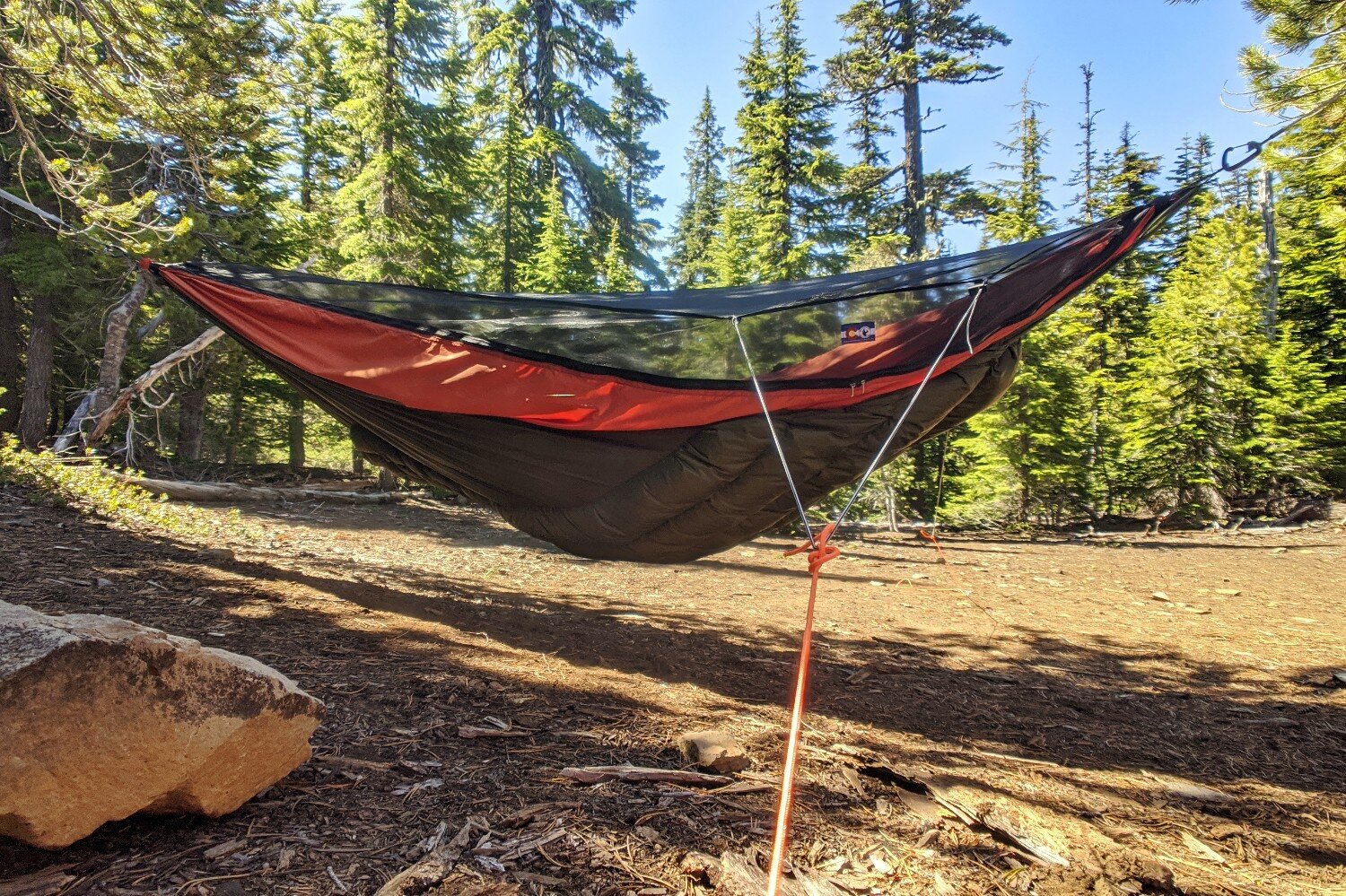
A camping hammock has a structural ridgeline, which holds the hammock at a consistent sag regardless of how tight you hang it. It has a built-in or attachable bug net. It is made from breathable but durable ripstop nylon, not the stretchy cotton or polyester blend used in most loungers. And it is designed to be used with a tarp and an underquilt, not just a single layer of fabric.
Maya Whitfield’s honest take: “If the hammock comes with spreader bars on both ends, it is almost certainly a backyard hammock. Leave it on the patio and buy a gathered-end camping hammock instead.”
How to Choose a Camping Hammock in 60 Seconds
Answer three questions, and you will know what to buy.
Question 1: Will you sleep in it overnight?
If yes, you need a full sleep system: a hammock, bug net, tarp, and underquilt or insulated pad. If not, a simple gathered-end hammock with straps is enough.
Question 2: Are you backpacking or car camping?
Backpacking means weight matters. Car camping means comfort matters more. The best hammock for a backpacker is different from the best one for a weekend at a state park.
Question 3: Are you camping in buggy or cold conditions?
If mosquitoes are bad, you need a bug net. If nights drop below 10°C, you need an underquilt. Both of these change your budget and your gear list.
The Best Camping Hammocks, Reviewed
Warbonnet Blackbird XLC
The Blackbird XLC is the hammock other hammocks are compared to. It has a dedicated head and foot end, a built-in bug net, and a footbox that lets you lie flatter and more comfortably than in a basic gathered-end hammock. It is not cheap, and it does not include suspension, but it is the best overnight sleep I have had in a hammock.
From: 1,800 SEK (confirm the latest price directly with the operator)
Weight: 950 grams with bug net
Capacity: 180 kg
Kammok Mantis
The Mantis is the easiest way to buy a complete camping hammock system. Everything comes in one package: hammock, bug net, rainfly, and suspension. The setup is intuitive, and the quality is high. It is heavier than a stripped-down backcountry setup, but for a first-timer or a car camper, the convenience is worth it.
From: 2,500 SEK (confirm the latest price directly with the operator)
Weight: 1,500 grams complete system
Capacity: 230 kg
Wise Owl Outfitters Double
If you want to try hammock camping without spending a fortune, this is the one. It is a simple, durable, double-wide gathered-end hammock with tree straps included. It does not have a bug net or ridgeline, so it is not a full overnight shelter, but for warm-weather lounging and a first test run, it is excellent value.
From: 350 SEK (confirm the latest price directly with the operator)
Weight: 600 grams
Capacity: 230 kg
Hummingbird Hammocks Single+
This is the ultralight backpacker’s choice. It packs down to about the size of a softball and weighs almost nothing. The trade-off is less fabric and a narrower lay, which some people find less comfortable for full nights. If you are counting grams on a long trail, this is the one.
From: 1,000 SEK (confirm the latest price directly with the operator)
Weight: 220 grams hammock only
Capacity: 160 kg

Total Cost to Actually Camp: Full Systems Compared
The hammock is often the cheapest part of a full camping setup. Here is what a complete sleep system actually costs for each top pick, including suspension, bug net, and tarp where applicable (confirm the latest price directly with the operator).
Warbonnet Blackbird XLC full system
Hammock: 1,800 SEK
Suspension: 300 SEK
Tarp: 1,200 SEK
Underquilt: 1,500 SEK
Total: 4,800 SEK
Kammok Mantis full system
Hammock, net, tarp, and suspension included: 2,500 SEK
Underquilt: 1,200 SEK
Total: 3,700 SEK
Wise Owl Outfitters Double-full system
Hammock and straps: 350 SEK
Bug net: 400 SEK
Tarp: 500 SEK
Underquilt: 800 SEK
Total: 2,050 SEK
Notice that the “budget” hammock becomes a mid-range purchase once you add the missing pieces. This is the hidden cost most buying guides do not show you.
Full Comparison Table
Warbonnet Blackbird XLC: 950 g, 180 kg capacity, integrated bug net, ridgeline included, from 1,800 SEK (confirm the latest price directly with the operator)
Kammok Mantis: 1,500g complete system, 230kg capacity, integrated bug net and tarp, from 2,500 SEK (confirm the latest price directly with the operator)
Wise Owl Outfitters Double: 600 g, 230 kg capacity, no bug net, no ridgeline, from 350 SEK (confirm the latest price directly with the operator)
Hummingbird Hammocks Single+: 220 g, 160 kg capacity, no bug net, no ridgeline, from 1,000 SEK (confirm the latest price directly with the operator)
Cold-Weather and Bug-Season Hammocking: What Changes
Hammock camping in summer is easy. Hammock camping below 10°C is a different sport. The problem is convective heat loss: cold air moves under you, and your sleeping bag compresses beneath your body, losing its insulating value.
The solution is an underquilt, which hangs under the hammock and traps warm air against your back. A sleeping pad inside the hammock also works, but it shifts around more. For bug season, a fully enclosed bug net is non-negotiable in most of Sweden and the US in summer. Some hammocks have integrated nets; others require a separate net that wraps around the hammock.
Maya Whitfield’s honest take: “I skipped the underquilt on an 8°C night because I thought my thick sleeping bag would be enough. I woke up shivering at 3 a.m. with a cold stripe down my back. Buy the underquilt.”
Leave No Trace: Protect Trees with Wide Straps
Thin ropes and bare cord can cut into tree bark and damage the cambium layer, which can kill a tree. Many parks and campgrounds now require hammock straps to be at least 2.5 cm wide. Always use wide tree straps, not ropes or thin cord.
Set up on sturdy, live trees at least 15 cm in diameter. Do not hang from dead trees or branches. And do not use nails, screws, or permanent anchors. For more guidance, see the official Leave No Trace Center for Outdoor Ethics.
What Are the Biggest Mistakes When Buying a Camping Hammock?
I have made all of these, and I have watched other campers repeat them. Here is what to avoid.
- Buying a backyard hammock for camping. No bug net, no ridge line, wrong fabric. You will be cold and bitten.
- Forgetting the suspension. Many quality hammocks do not include straps. Budget for them separately.
- Skipping the underquilt in shoulder season. Below 10°C, you need one. No exceptions.
- Hanging too tight. A good hammock sag is about 30 degrees. Too tight flattens the fabric and makes it tippy.
- Using thin ropes instead of tree straps. It damages trees and is banned in many parks.
- Buying a double hammock for two people to sleep in. Doubles are wider, but two adults sleeping in one hammock is miserable. Buy two singles.
Frequently asked questions about camping hammocks
Do I need an underquilt for hammock camping?
Yes, if overnight temperatures drop below 10°C. The underquilt hangs beneath the hammock and prevents heat loss from cold air moving under you. A sleeping pad inside the hammock can work, but an underquilt is warmer and more comfortable.
What weight limit should I look for in a camping hammock?
Most quality camping hammocks are rated between 180 and 230 kg. Choose a hammock rated for at least 50 kg more than the heaviest person who will use it. Check the suspension rating too, not just the hammock fabric.
Can I use a camping hammock as my only shelter?
Yes, but only if you have a tarp or rainfly, a bug net, and proper insulation. A hammock alone does not protect you from rain or insects. With a full system, it is a legitimate backcountry shelter.
How do you hang a hammock without trees?
You can use a freestanding hammock stand or anchor it to a vehicle roof rack, a sturdy post, or a building corner. Some hammocks come with portable stands, but most backcountry hammocks require two anchor points about 4 to 5 meters apart.
What is the difference between a single and double camping hammock?
A double hammock is wider, usually 180 to 200 cm compared to 120 to 150 cm for a single. The extra fabric gives a flatter, more comfortable lay even for one person. A double is generally better for sleeping, while a single is lighter for backpacking.
How much does a good camping hammock cost?
A basic but quality hammock starts around 350 to 800 SEK (confirm the latest price directly with the operator). A complete sleep system with a hammock, straps, bug net, tarp, and underquilt runs 2,000 to 5,000 SEK total (confirm the latest price directly with the operator).
Plan your trip: gear and booking resources we trust
These are the platforms I actually use to research and buy camping gear. I always cross-check the official brand sites against at least one of these before purchasing.
REI
Best for researching gear specs and reading expert buying guides before you purchase.
Booking.com
Useful for finding cabins or glamping sites near major camping areas.
Expedia
Good for bundling a car rental with a campsite-adjacent hotel for the night before you hit the trail.
GetYourGuide
Best for booking guided camping trips or outdoor experiences if you want a structured first trip.
TripAdvisor
Essential for reading campsite reviews and finding good spots near national parks.
Vrbo
Useful for renting a cabin or vacation home near a camping area for a mixed indoor-outdoor trip.
WakaAbuja does its best to keep all information accurate at the time of publishing. Prices, policies, and availability change regularly. Always verify with official sources before you travel. We are not liable for errors caused by outdated information. Travel insurance is strongly recommended.