advertisement
Explore Canada’s Best Places to Visit and How Long to Stay in Each
Fact-Checked By: Maya Whitfield, Senior Travel Editor at WakaAbuja
The best places to visit in Canada are Banff and Lake Louise for mountain scenery, Vancouver and Victoria for the Pacific coast, Toronto and Montreal for city energy, and Quebec City for old-world charm. Most travelers need 3 to 4 days in each major destination, and a realistic two-week Canada trip covers two or three regions, not the whole country. Expect daily costs of around $150 to $250 per person for mid-range travel, including hotels, food, and transport (confirm the latest prices directly with each operator).
Canada is too big to “do” in one trip. I learned that on my first visit, when I tried to squeeze Vancouver, Banff, and Toronto into ten days and spent most of it in airports. The country is larger than the entire United States, and the distances between highlights are vast. This guide is built differently.
Every destination comes with a recommended trip length, a rough daily cost, and a “best for” tag so you can match the place to the traveler.
Jump to: The 25 destinations | How to combine them | Best time to go | Budget breakdown | FAQ
Key takeaways
- Banff and Lake Louise are the single most popular Canadian destinations for international visitors, and they need 3 to 4 days minimum.
- Canada is expensive. Budget around $150 to $250 per person per day for mid-range travel (check current rates on the official sites).
- The best time to visit depends on the region. Summer (June to August) works everywhere. Fall is best for eastern Canada. Winter is best for skiing and the northern lights.
- You can combine Banff and Jasper in one trip. You can also combine Toronto and Niagara Falls. Trying to combine both coasts in one trip is a mistake.
- Canada requires an eTA (Electronic Travel Authorization) for most visa-exempt visitors flying in. Check the official visa category for current rules.
- Montreal and Quebec City are close enough to pair in one trip. Vancouver and Victoria are also a natural pairing.
- National parks like Banff and Jasper require a Parks Canada Discovery Pass or daily entry fee (confirm the latest price directly with Parks Canada).
What are the 25 best places to visit in Canada?
I have organized this list by region, from west to east, so you can see how destinations fit together geographically. Each entry includes a “best for” tag, an ideal trip length, a rough daily cost, and the best season to visit. Prices are in Canadian dollars unless noted, and all figures are estimates (confirm the latest prices directly with each operator).
Maya’s honest take: “If you only have one week in Canada, go to Banff and Jasper. Nothing else in the country matches the scale of the Rockies. Everything else can wait for trip two.”
1. Banff National Park, Alberta
Best for: First-time visitors, mountain scenery, and photography. Ideal trip length: 3 to 4 days. Rough daily cost: $200 to $350 per person (check current rates). Best season: June to September for hiking, December to March for skiing. Banff is Canada’s oldest national park and the one that appears on every bucket list. The town of Banff is walkable, with restaurants, hotels, and shuttle access to Lake Louise and Moraine Lake. Book lake shuttles in advance, because parking at Lake Louise fills before 7 a.m. in summer.
2. Lake Louise, Alberta
Best for: Iconic views, easy lakeside walks, and luxury stays. Ideal trip length: 1 to 2 days. Rough daily cost: $250 to $500 per person (check current rates). Best season: June to September. Lake Louise is technically inside Banff National Park, but it deserves its own entry because the experience is different. The lake itself is a short, flat walk. The harder trails, like the Plain of Six Glaciers, start from the same shoreline. The Fairmont Chateau Lake Louise is the famous hotel on the water, but there are cheaper options in the village below.
3. Jasper National Park, Alberta
Best for: Wildlife, dark skies, and fewer crowds than Banff. Ideal trip length: 2 to 3 days. Rough daily cost: $180 to $300 per person (check current rates). Best season: June to September. Jasper is what Banff was 30 years ago. It is quieter, wilder, and darker at night. The Icefields Parkway, the drive between Banff and Jasper, is one of the best road trips in the world. Stop at the Columbia Icefield and Peyto Lake along the way.
4. Vancouver, British Columbia
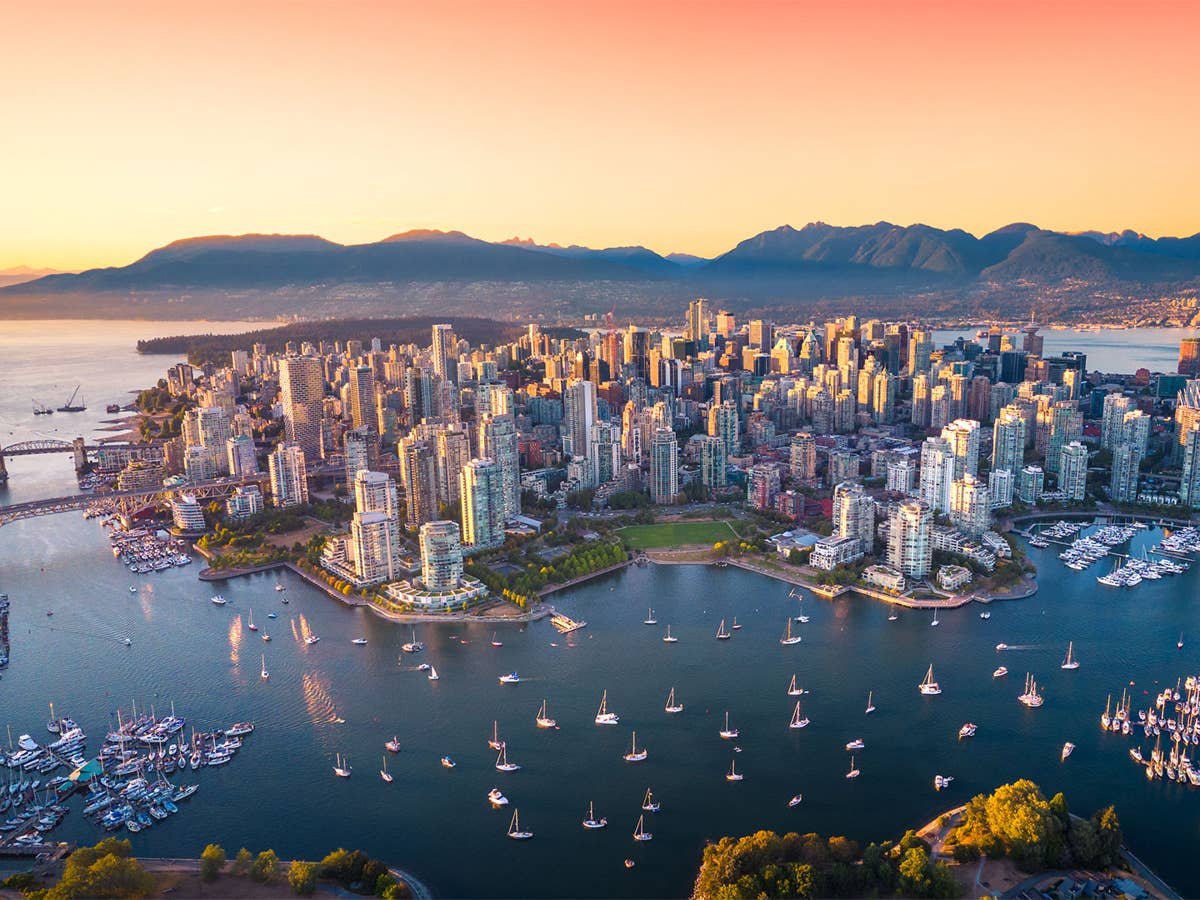
Best for: City plus nature, food scene, mild weather. Ideal trip length: 3 to 4 days. Rough daily cost: $180 to $300 per person (check current rates). Best season: May to September. Vancouver is the only major Canadian city where you can ski in the morning and kayak in the afternoon. Stanley Park, Granville Island, and the Capilano Suspension Bridge are the standard stops. For food, head to Richmond for Chinese restaurants that rival anything in Asia.
5. Victoria, British Columbia
Best for: Gardens, afternoon tea, slower pace. Ideal trip length: 2 days. Rough daily cost: $150 to $250 per person (check current rates). Best season: May to September. Victoria is a ferry ride from Vancouver and feels like a different country. Butchart Gardens is the main attraction, but the Inner Harbour and the Royal BC Museum are worth your time too. It is a good pairing with Vancouver, not a standalone destination.
6. Whistler, British Columbia
Best for: Skiing, mountain biking, and resort comfort. Ideal trip length: 2 to 3 days. Rough daily cost: $200 to $400 per person (check current rates). Best season: December to March for skiing, July to August for biking. Whistler is a two-hour drive from Vancouver and one of the largest ski resorts in North America. In summer, the same mountain turns into a downhill bike park. The village is walkable and full of restaurants.
7. Tofino, British Columbia
Best for: Surfing, storm watching, and rainforest. Ideal trip length: 2 to 3 days. Rough daily cost: $180 to $300 per person (check current rates). Best season: June to September for surfing, November to February for storms. Tofino is on the west coast of Vancouver Island and is one of the few places in Canada where you can surf. The town is small, the beaches are wild, and the rainforest comes right up to the sand. It is a long drive from Victoria, so plan for a full day of travel each way.
8. Calgary, Alberta
Best for: Stampede, gateway to the Rockies, city food scene. Ideal trip length: 2 days. Rough daily cost: $150 to $250 per person (check current rates). Best season: July for the Calgary Stampede, June to September for everything else. Calgary is the closest major airport to Banff, which makes it a practical stop. The Calgary Stampede in July is the city’s signature event. Outside that window, the city is a good base for day trips to Drumheller and the badlands.
9. Drumheller and the Canadian Badlands, Alberta
Best for: Dinosaurs, geology, and family trips. Ideal trip length: 1 to 2 days. Rough daily cost: $120 to $200 per person (check current rates). Best season: May to September. Drumheller is home to the Royal Tyrrell Museum, one of the best dinosaur museums in the world. The surrounding badlands look like another planet. It is a 90-minute drive from Calgary and works well as a day trip or overnight.
10. Toronto, Ontario
Best for: Urban energy, food, museums, and nightlife. Ideal trip length: 3 to 4 days. Rough daily cost: $180 to $300 per person (check current rates). Best season: May to October. Toronto is Canada’s largest city and its most diverse. The CN Tower, the Royal Ontario Museum, and the Distillery District are the headline attractions. For food, explore Kensington Market, Chinatown, and Little Italy. The city is walkable in the core and has a good subway system.
11. Niagara Falls, Ontario
Best for: Family trips, iconic views, and easy access from Toronto. Ideal trip length: 1 to 2 days. Rough daily cost: $150 to $250 per person (check current rates). Best season: May to October. Niagara Falls is a 90-minute drive or train ride from Toronto. The falls themselves are free to view. The boat tour and the tunnel behind the falls are the paid experiences worth doing. The surrounding town is touristy, so treat it as a day trip from Toronto rather than a destination on its own.
12. Ottawa, Ontario
Best for: History, museums, winter skating. Ideal trip length: 2 days. Rough daily cost: $150 to $250 per person (check current rates). Best season: May to October for sightseeing, January to February for the Rideau Canal Skateway. Ottawa is Canada’s capital and often overlooked by international visitors. Parliament Hill, the ByWard Market, and the Canadian Museum of History are the main stops. In winter, the Rideau Canal becomes the world’s largest skating rink.
13. Montreal, Quebec
Best for: Food, festivals, and French-Canadian culture. Ideal trip length: 3 days. Rough daily cost: $160 to $260 per person (check current rates). Best season: June to October, plus December for holiday markets. Montreal is the most European-feeling city in North America. Old Montreal is walkable and photogenic. The Plateau and Mile End neighborhoods have the best cafes and restaurants. The city hosts the Just for Laughs festival and the Montreal Jazz Festival in summer.
14. Quebec City, Quebec
Best for: Old-world charm, romance, and winter carnival. Ideal trip length: 2 to 3 days. Rough daily cost: $160 to $260 per person (check current rates). Best season: June to October for sightseeing, February for the Winter Carnival. Quebec City is the only walled city north of Mexico. Old Quebec is a UNESCO World Heritage Site. The Chateau Frontenac dominates the skyline. It pairs naturally with Montreal, a three-hour drive or train ride away.
15. Mont-Tremblant, Quebec
Best for: Skiing, fall foliage, and resort weekends. Ideal trip length: 2 days. Rough daily cost: $180 to $350 per person (check current rates). Best season: December to March for skiing, late September to early October for fall colors. Mont-Tremblant is a ski resort town about 90 minutes from Montreal. The pedestrian village is colorful and car-free. In fall, the surrounding Laurentian Mountains turn red and orange.
16. Bay of Fundy, New Brunswick
Best for: Tides, whale watching, and dramatic coastlines. Ideal trip length: 2 days. Rough daily cost: $140 to $220 per person (check current rates). Best season: June to September. The Bay of Fundy has the highest tides in the world, up to 16 meters. The Hopewell Rocks are the most famous viewpoint. Whale watching is excellent in summer. It is a quieter, less-visited part of Canada, which is part of the appeal.
17. Halifax, Nova Scotia
Best for: Maritime history, seafood, and coastal drives. Ideal trip length: 2 to 3 days. Rough daily cost: $150 to $240 per person (check current rates). Best season: June to September. Halifax is the capital of Nova Scotia and the gateway to the Maritimes. The waterfront boardwalk, the Citadel, and the Maritime Museum of the Atlantic are the main stops. The drive along the South Shore to Peggy’s Cove and Lunenburg is one of the best coastal routes in Canada.
18. Cape Breton Island, Nova Scotia
Best for: Road trips, Celtic culture, and coastal scenery. Ideal trip length: 3 days. Rough daily cost: $140 to $220 per person (check current rates). Best season: June to October. Cape Breton is home to the Cabot Trail, a 300-kilometer loop around the island that is one of the most scenic drives in North America. The island has a strong Gaelic heritage, with live music in small pubs most nights in summer.
19. Prince Edward Island
Best for: Beaches, Anne of Green Gables, slow travel. Ideal trip length: 2 to 3 days. Rough daily cost: $140 to $220 per person (check current rates). Best season: June to September. PEI is Canada’s smallest province and one of its most charming. The red sand beaches, the rolling farmland, and the literary history of Anne of Green Gables make it a distinctive stop. The island is small enough to drive end to end in a few hours.
20. Gros Morne National Park, Newfoundland
Best for: Hiking, geology, remote landscapes. Ideal trip length: 3 days. Rough daily cost: $150 to $240 per person (check current rates). Best season: June to September. Gros Morne is a UNESCO World Heritage Site with landscapes that look like Norway. The Tablelands, a rare exposed mantle of the Earth, is the standout feature. The hiking is serious, and the weather changes fast. Bring layers.
21. St. John’s, Newfoundland
Best for: Colorful streets, live music, and coastal hikes. Ideal trip length: 2 to 3 days. Rough daily cost: $150 to $240 per person (check current rates). Best season: June to September. St. John’s is the oldest city in North America and one of the most colorful. The jellybean-row houses on Signal Hill are the postcard image. George Street has more pubs per square foot than almost anywhere in Canada. The East Coast Trail starts right in the city.
22. Yukon and Whitehorse
Best for: Northern lights, wilderness, dog sledding. Ideal trip length: 3 to 4 days. Rough daily cost: $200 to $350 per person (check current rates). Best season: August to April for the northern lights, June to August for midnight sun. The Yukon is one of the best places in the world to see the aurora borealis. Whitehorse is the main hub, with access to Kluane National Park and the Dempster Highway. Winter travel requires serious cold-weather gear.
23. Churchill, Manitoba
Best for: Polar bears, beluga whales, wildlife. Ideal trip length: 2 to 3 days. Rough daily cost: $400 to $800 per person (check current rates). Best season: October to November for polar bears, July to August for beluga whales. Churchill is the polar bear capital of the world. It is accessible only by train or plane. The costs are high, but the experience is unmatched. Book tours months in advance.
24. Winnipeg, Manitoba
Best for: Culture, food, and a gateway to the prairies. Ideal trip length: 2 days. Rough daily cost: $130 to $200 per person (check current rates). Best season: June to September. Winnipeg is often skipped by international visitors, which is a mistake. The Canadian Museum for Human Rights is architecturally stunning. The Exchange District has good restaurants and galleries. The city is also a gateway to Riding Mountain National Park.
25. Saskatchewan’s Grasslands and Prince Albert National Park
Best for: Dark skies, prairie landscapes, and solitude. Ideal trip length: 2 days. Rough daily cost: $120 to $200 per person (check current rates). Best season: June to September. Saskatchewan is the quietest province in Canada for tourism, and that is the point. Grasslands National Park has some of the darkest skies in North America. Prince Albert National Park has lakes, forests, and a resident bison herd. It is a destination for travelers who want space and silence.
Best for first-time visitors
- Banff and Lake Louise (3 to 4 days each for the classic Canada experience)
- Vancouver (3 to 4 days for city plus nature)
- Toronto and Niagara Falls (4 days combined)
- Montreal and Quebec City (5 days combined)
Worth considering for repeat visitors
- Cape Breton Island and the Cabot Trail (3 days)
- Gros Morne National Park (3 days)
- Yukon and Whitehorse (3 to 4 days for northern lights)
- Churchill, Manitoba (2 to 3 days for polar bears)
How do you combine Canada destinations into one trip?
The biggest mistake I see travelers make is trying to cover too much ground. Canada is huge. A trip that tries to include both coasts will be mostly airports and trains. Here are the combinations that actually work.
The classic Rockies trip (7 to 10 days)
Fly into Calgary, drive to Banff (1.5 hours), spend 3 days, then drive the Icefields Parkway to Jasper (3.5 hours), spend 2 days, and fly out of Edmonton or back to Calgary. This is the most efficient way to see the best mountain scenery in Canada.
The Pacific Coast trip (7 to 10 days)
Fly into Vancouver, spend 3 days, take the ferry to Victoria, spend 2 days, then drive or take a bus to Tofino, spend 2 days, and return to Vancouver. This covers city, gardens, and wild coast without leaving British Columbia.
The eastern Canada trip (10 to 14 days)
Fly into Toronto, spend 3 days, take a day trip to Niagara Falls, then take the train to Montreal (5 hours), spend 3 days, then take the train to Quebec City (3 hours), and spend 2 days. If you have more time, add Ottawa between Toronto and Montreal.
The Maritimes trip (10 to 14 days)
Fly into Halifax, spend 2 days, drive to Cape Breton (4 hours), spend 3 days on the Cabot Trail, then drive or ferry to PEI (4 hours plus ferry), spend 2 days, and finish in Moncton or back in Halifax. This is a road trip, not a city trip.
The northern trip (5 to 7 days)
Fly into Whitehorse, spend 2 days, then drive to Dawson City (6 hours) or fly to Churchill for polar bears. These are standalone trips, not add-ons to a Southern Canada itinerary.
For booking flights between these regions, compare prices on Kayak before you commit to a route. For hotels in each city, Booking.com has the best filter options, and Vrbo is useful for family groups or longer stays.
What is the best time of year to visit Canada?
The best time to visit Canada depends entirely on what you want to do. Summer is the safest bet for a first trip. Winter is best for skiing and the northern lights. Fall is best for eastern Canada and foliage. Spring is muddy in most of the country.
Summer (June to August)
Summer is peak season everywhere. Temperatures are warm, trails are open, and wildlife is active. The downside is crowds and prices. Banff, Jasper, and Vancouver are busiest in July and August. Book accommodation three to six months in advance if you are traveling in peak summer.
Fall (September to October)
Fall is my favorite time to visit eastern Canada. The foliage peaks in late September and early October in Quebec and Ontario. Temperatures are mild, crowds are thinner, and prices drop. The Rockies are also beautiful in fall, though snow can arrive early at high elevations.
Winter (November to March)
Winter is for skiers and northern lights chasers. Whistler, Mont-Tremblant, and Banff have world-class skiing. The Yukon and Churchill are best for aurora viewing. Winter travel requires serious cold-weather gear, especially in the prairies and the north. Daylight hours are short, so plan activities accordingly.
Spring (April to May)
Spring is shoulder season in most of Canada. Snow is melting in the mountains, which means mud and closed trails. Cities like Vancouver and Toronto are pleasant in spring. If you are flexible on timing, late May is a good compromise between weather and crowds.
For current travel advisories and entry rules, check the official visa category on our site, which covers eTA requirements and documentation for Canada.
Is Canada expensive to visit?
Yes, Canada is expensive compared to most of the world. It is comparable to the United States or Western Europe for hotels and food. The exchange rate helps if you are coming from a stronger currency, but the baseline costs are still high. Here is a rough breakdown for mid-range travel.
Accommodation
Budget hotels and hostels run around $80 to $150 per night (check current rates). Mid-range hotels are $150 to $300 per night. Luxury hotels and mountain resorts start around $300 and can exceed $600 per night in peak season (confirm the latest prices directly with the hotel). Camping and RV sites are cheaper, usually $30 to $70 per night in national parks (confirm with Parks Canada).
Food
Casual meals are $15 to $25 per person. Mid-range restaurant dinners are $30 to $50 per person. Fine dining starts around $80 per person and goes up from there (check current rates). Groceries and self-catering can cut food costs by half. I usually budget $50 to $80 per day for food when I am not splurging.
Transport
Rental cars are $50 to $100 per day (check current rates). Gas is expensive, around $1.50 to $1.80 per liter in most provinces (confirm current prices at the pump). Trains and buses are cheaper for city-to-city travel. Flights within Canada can be surprisingly expensive, so book early if you are covering long distances.
Activities
National park entry is around $10 to $20 per person per day, or around $70 to $140 for an annual Discovery Pass, depending on the pass type (confirm the latest price directly with Parks Canada). Ski lift tickets are $100 to $200 per day (check current rates). Museum entries are $15 to $30 per person. Tours and excursions vary widely.
Total daily budget for mid-range travel: $150 to $250 per person. Budget travelers can manage $80 to $120 per day by staying in hostels, cooking, and using public transport. Luxury travelers should budget $400 or more per day.
Where to book
For hotels, I check Booking.com first because the filters are good, then cross-check with Hotels.com for loyalty rewards. For vacation rentals and group stays, Vrbo is usually the best option. For flights, Kayak gives the clearest comparison across airlines.
Frequently asked questions about visiting Canada
What is the number one place to visit in Canada?
Banff National Park is the number one place to visit in Canada for most international travelers. It offers the classic Canadian experience: turquoise lakes, snow-capped peaks, and accessible hiking. Lake Louise, Moraine Lake, and the town of Banff are all within a short drive of each other. Plan for 3 to 4 days minimum.
How many days do you need to visit Canada?
You need at least 10 days to see two or three regions of Canada comfortably. A one-week trip works if you focus on a single region, like the Rockies or eastern Canada. To see both coasts, you need at least three weeks. Trying to cover too much in one trip is the most common mistake visitors make.
Is Canada expensive to visit?
Yes, Canada is expensive compared to most destinations. Mid-range travelers should budget around $150 to $250 per person per day for hotels, food, and transport (check current rates). Budget travelers can manage on $80 to $120 per day using hostels and self-catering. The exchange rate may help depending on your home currency.
What is the best time of year to visit Canada?
Summer (June to August) is the best time for a first trip because everything is open and the weather is warm. Fall (September to October) is best for eastern Canada and foliage. Winter (November to March) is best for skiing and northern lights. Spring is shoulder season with mud and closed trails in the mountains.
Do I need a car to visit Canada?
You need a car for national parks, the Maritimes, and rural areas. You do not need a car in Toronto, Montreal, Vancouver, or Quebec City, where public transit and walkability are good. For a Rockies trip, a rental car is essential. For city-focused trips, skip the car and use trains and public transit.
Do I need a visa to visit Canada?
Most visa-exempt visitors flying to Canada need an eTA (Electronic Travel Authorization), which costs around $7 CAD and is valid for up to five years (confirm the latest price directly with the official Canadian government site). Visitors from certain countries need a full visa instead. Check the official rules for your nationality before booking anything. Our visa category has more details on documentation.
What should I pack for a trip to Canada?
Pack layers regardless of season. Even in summer, mountain regions can drop to near freezing at night. Bring a waterproof jacket, sturdy walking shoes, and sun protection. For winter trips, add thermal base layers, insulated boots, gloves, and a hat. For national parks, bring insect repellent in summer.
Can I visit both Banff and Jasper in one trip?
Yes, and you should. Banff and Jasper are connected by the Icefields Parkway, a 230-kilometer drive that is one of the most scenic routes in the world. Plan 3 days in Banff, 1 day for the drive, and 2 days in Jasper. Book accommodation early, especially in July and August.
Plan your trip: booking platforms we trust
I use these platforms when planning my own Canada trips. They are reliable for comparing prices, reading recent reviews, and booking with confidence. I have noted what each one is best for so you can go straight to the one that fits your needs.
Agoda
Best for Asian hotel deals and sometimes surprising Canadian rates.
General hotel search with strong filter options for Canadian cities and mountain towns.
Best for flight and hotel packages if you want to bundle and save.
Flight price comparison across multiple airlines and booking sites.
Family villas and vacation rentals for groups or longer stays.
Tours and activities, including guided hikes and city tours across Canada.
Loyalty rewards bookings, good if you collect stamps toward free nights.
Reviews and restaurant finds are useful for checking recent diner feedback in Canadian cities.
WakaAbuja does its best to keep all information accurate at the time of publishing. Prices, policies, and availability change regularly. Always verify with official sources before you travel. We are not liable for errors caused by outdated information. Travel insurance is strongly recommended.