
The Smart Traveler’s Guide to the Best Things to Do in Boston, Massachusetts
This guide contains affiliate links. We may earn a commission at no extra cost to you.
The best things to do in Boston, Massachusetts, center on the 2.5-mile Freedom Trail, Fenway Park, and the North End food scene. Walk the trail for free, budget about $25 (confirm the latest price with the operator) for a Fenway tour, and save room for a cannoli on Hanover Street.
I have sent dozens of travelers to Boston with the same advice: skip the rental car, buy a CharlieCard, and let the city’s compact geography work for you. Boston rewards walkers who look up at the brick and granite, not drivers circling for parking.
Jump to: Freedom Trail | Fenway Park | Museums | North End | Neighborhoods | Practical Tips | FAQ
Key takeaways
- The Freedom Trail is free to walk on your own and covers 16 sites over 2.5 miles.
- The MBTA subway costs $2.40 per ride with a CharlieCard or contactless payment.
- The Silver Line SL1 bus from Logan Airport to downtown is free.
- The Museum of Fine Arts offers reduced admission on certain days; check the official site before you go (confirm the latest price with the operator).
- Fenway Park tours are the only way to see the Green Monster when the Red Sox are away.
- Boston’s North End is the city’s Little Italy and the best place for a cannoli.
- Do not rent a car; traffic and parking costs make walking and the T the smarter choice.
Is the Freedom Trail worth walking?
Yes, the Freedom Trail is the single best introduction to Boston, and it costs nothing to walk on your own. The 2.5-mile red-brick path connects 16 Revolutionary War sites, starting at Boston Common and ending at the USS Constitution in Charlestown.
You do not need a guide to enjoy it. The trail is painted on the sidewalk and easy to follow. A guided tour adds context, but the self-guided version lets you stop for lunch in the North End or linger at Granary Burying Ground without a schedule. Budget about half a day if you want to see every site; two to three hours covers the highlights from Boston Common to Faneuil Hall. For a deeper dive into Revolutionary history, the National Park Service maintains free ranger programs at several trail sites.
Maya’s honest take: Start early at Boston Common. By 10 a.m. the trail is crowded, and the photo spots near Faneuil Hall have become a slow-moving line. Wear shoes you can walk in for three hours without thinking about your feet.
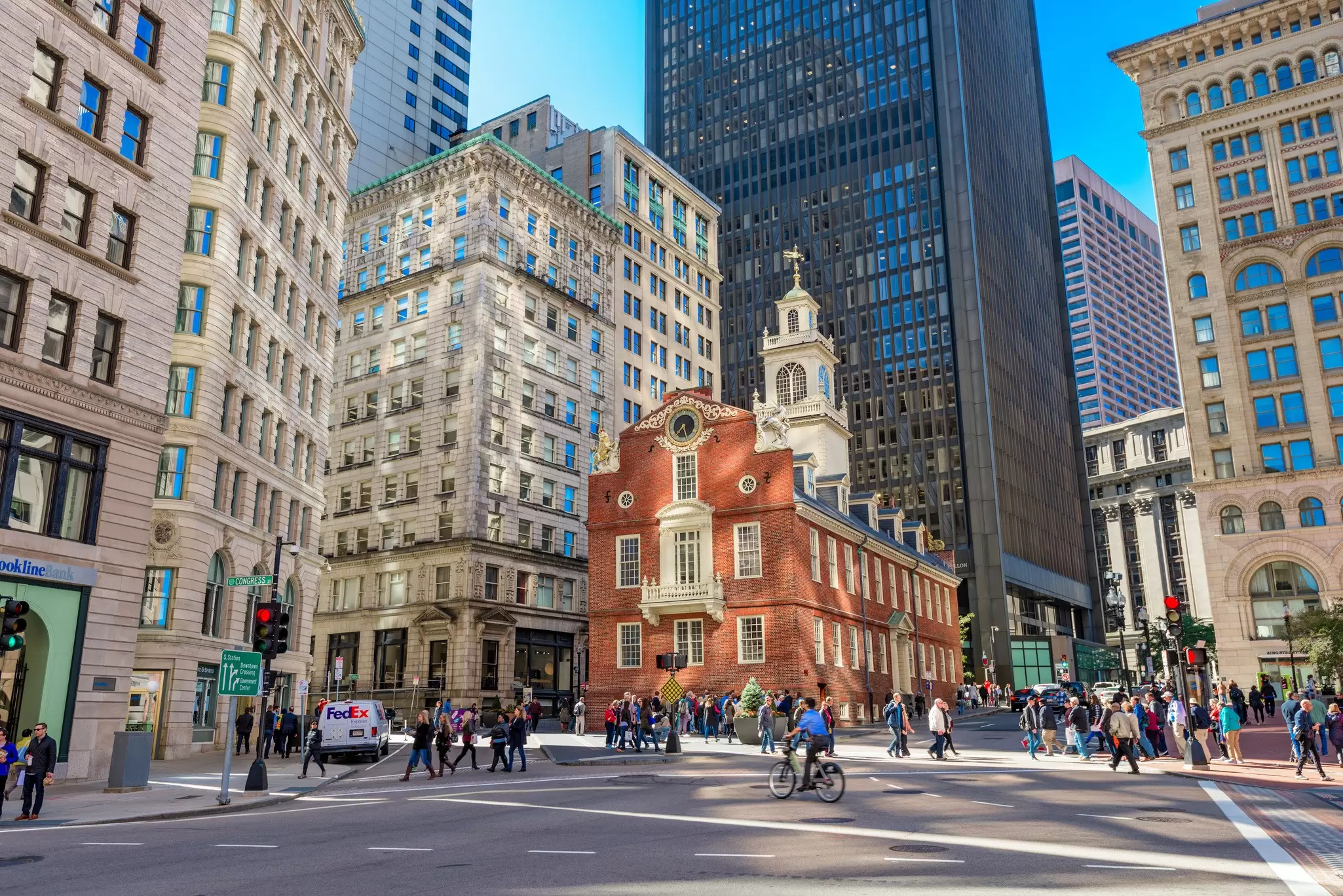
Several trail sites charge admission if you want to go inside. The Old State House, Old South Meeting House, and Old North Church all require tickets (confirm the latest price with the operator). The Paul Revere House also charges a small fee. None of these are mandatory to enjoy the trail, but the Old North Church is worth the entry for the crypt alone.
For a structured experience, book a guided Freedom Trail tour on GetYourGuide that covers the history without you having to read every plaque. Browse more things to do in Boston if you want to build a full itinerary around the trail.
Should you visit Fenway Park even if you are not a baseball fan?
Yes, Fenway Park is worth a visit even if you never watch baseball. Opened in 1912, it is the oldest active ballpark in Major League Baseball and a living museum of American sports culture. The Green Monster, the 37-foot left-field wall, is an icon you recognize even if you cannot name a single Red Sox player.
Game tickets vary wildly by opponent and seat location (confirm the latest price with the operator). If the Red Sox are out of town or you want to see the inner workings of the park, daily tours run year-round. The hour-long tour takes you onto the field, into the dugouts, and up to the press box. It is the best value in the city for sports fans and architecture lovers alike.
On game days, Jersey Street beside the park turns into an open-air market with street food and merchandise. Arrive two hours before first pitch to soak up the atmosphere without fighting the crowd at the gates.
Check the official Boston Red Sox website for the schedule and tour availability before you plan your day.
Which Boston museums are actually worth your time?
The Museum of Fine Arts (MFA) and the Isabella Stewart Gardner Museum are the two best museums in Boston for visitors with limited time. The MFA holds one of the most comprehensive art collections in the Americas, from ancient Egyptian artifacts to Impressionist paintings. The Gardner is smaller, stranger, and more memorable: a Venetian-style palace filled with an eccentric collector’s treasures, including empty frames where stolen paintings once hung.
The Gardner’s 1990 heist remains unsolved. Thirteen works, including pieces by Rembrandt and Vermeer, were taken by men dressed as police officers. The empty frames are still on display. Admission is about $22 for adults (confirm the latest price with the operator), and children 17 and under are free.
The MFA offers reduced admission on certain days. Check the MFA official website for current hours and ticket prices. The Isabella Stewart Gardner Museum’s official site has details on free admission for visitors named Isabella, a quirk written into the museum’s founding charter.
If you are traveling with children, the Museum of Science and the New England Aquarium are the better choices. Both are near the Green Line and easy to combine with a walk along the Rose Kennedy Greenway.
What should you eat in Boston’s North End?
Eat a cannoli from Mike’s Pastry or Modern Pastry and a lobster roll from any reputable shop on Hanover Street. The North End is Boston’s Little Italy, a dense grid of cobblestone streets and brick buildings where the air smells of garlic and espresso. It is the one neighborhood every first-time visitor should walk through slowly.
The cannoli rivalry between Mike’s and Modern is real, and locals take sides. Both are good. Mike’s is larger and more chaotic; Modern is slightly more polished. Try one from each and decide for yourself. For a sit-down meal, avoid the restaurants with photos of food in the window and look for the narrow side streets where the menus are handwritten.
The North End also holds serious history. The Old North Church, where lanterns signaled Paul Revere’s ride, sits on a quiet side street. The Paul Revere House is the oldest remaining building in downtown Boston. Both are stops on the Freedom Trail, and both charge modest admission (confirm the latest price with the operator).
If you want a local’s perspective on the food scene, check recent reviews on TripAdvisor before choosing a restaurant. The North End has excellent food and a few tourist traps. Recent reviews filter out the worst of them.
Which Boston neighborhoods are worth exploring beyond downtown?
Beacon Hill, Back Bay, and Cambridge are the three neighborhoods worth adding to your itinerary after the Freedom Trail. Each offers a different side of Boston: Beacon Hill is gas lamps and cobblestones, Back Bay is Victorian brownstones and shopping, and Cambridge is Harvard, MIT, and bookstores.
Beacon Hill’s Charles Street is the best street in Boston for independent shops and a quiet coffee. The architecture is protected by historic district rules, so the brick sidewalks and window boxes look much as they did in the 19th century. It is a ten-minute walk from Boston Common and rarely crowded before noon.
Back Bay’s Newbury Street is the city’s premier shopping drag, but the real attraction is the Boston Public Library’s Central Library in Copley Square. The Bates Hall reading room is free to enter and looks like a cathedral for books. The courtyard in the center of the building is a peaceful escape from the street.
Cambridge is a short Red Line ride from downtown. Harvard Yard is free and open to the public. The Harvard Art Museums are also free. MIT’s Stata Center is worth a look for fans of unusual architecture. Book a Cambridge walking tour on GetYourGuide if you want the history behind the buildings without wandering aimlessly.
How do you get around Boston without a car?
Walk and take the T, Boston’s subway system. The city center is compact, and the subway fills the gaps. Driving is a mistake: traffic is bad, parking is expensive, and the streets are confusing even with GPS.
A single subway ride costs $2.40 with a CharlieCard or contactless payment (confirm the latest fare with the MBTA). A 7-day pass is $22.50 if you plan to ride more than nine times in a week. For most visitors, contactless payment on your phone or credit card is the simplest option. The MBTA now allows unlimited transfers within a two-hour window when you use the same payment method.
From Logan International Airport, the Silver Line SL1 bus is free and drops you at South Station in about 20 minutes. Do not take a taxi unless you have heavy luggage and an unlimited budget. The free bus is the local move.
Best for walking
- Freedom Trail and downtown
- Beacon Hill and Back Bay
- North End food stops
Best for the T
- Cambridge and Harvard
- Fenway Park on game day
- Museum of Fine Arts
If you need a hotel near a T station, browse hotel guides on WakaAbuja for neighborhood-by-neighborhood breakdowns. Staying in Back Bay or downtown puts you within walking distance of most major sights.
What mistakes should you avoid on a first trip to Boston?
Skip the rental car, buy transit passes instead of single tickets, and do not try to see everything in one day. Boston is small but dense, and rushing defeats the purpose of visiting a city built for walking.
Here are the specific fixes:
Do not rent a car. Parking downtown can cost more than your hotel room per night (confirm the latest rate with your hotel). Use the T and your feet.
Do not buy a CharlieTicket if you can tap a card. Contactless payment works on all subway and bus readers and qualifies for the transfer pilot.
Do not walk the entire Freedom Trail in one unbroken push. Break it at Faneuil Hall for lunch and again in the North End for dessert.
Do not wear Yankees gear. This is not a joke. Red Sox fans are polite but the commentary is relentless.
Do not skip the Boston Public Library because it is free. The Bates Hall reading room is one of the most beautiful interiors in the city and it costs nothing to sit in it.
If you are visiting in summer, book your accommodations early. June through September is peak season and hotel rates climb accordingly (confirm the latest rates with your booking platform). For cheaper rates, consider late November or early December before the holiday rush.
For more planning help, see travel planning resources on WakaAbuja.
Frequently asked questions
How many days do you need in Boston?
Three full days is enough to see the Freedom Trail, Fenway Park, the North End, and one museum without rushing. If you have only one day, walk the Freedom Trail from Boston Common to Faneuil Hall and spend the afternoon in the North End. Two days lets you add Cambridge or a harbor cruise.
Is the Freedom Trail free?
Yes, walking the Freedom Trail is completely free. The trail is a painted line on the sidewalk. Several historic buildings along the route charge admission if you want to go inside, but you can see the exteriors and learn the history from plaques without paying anything (confirm the latest site prices with the operator) [citation:5].
What is the best time of year to visit Boston?
Late June to mid-September offers the best weather for walking and outdoor sightseeing, with warm days and less rain than spring. Fall is also excellent: September and October bring crisp air and fewer crowds than July. Winter is cold but hotel rates drop significantly (confirm the latest rates with your booking platform).
Do you need a car in Boston?
No, a car is a liability in Boston. The city is compact and walkable, and the MBTA subway and bus network covers the rest. Parking is expensive and traffic is heavy. The Silver Line from the airport is free, and a single subway ride is $2.40 with contactless payment (confirm the latest fare with the MBTA).
What food is Boston famous for?
Boston is known for clam chowder, lobster rolls, baked beans, and Boston cream pie. The North End is the best neighborhood for Italian pastries, especially cannoli. For chowder, look for a pub or seafood shack rather than a tourist-facing restaurant on Faneuil Hall’s main drag.
Is Fenway Park worth touring if there is no game?
Yes, the Fenway Park tour is worth it even without a game. You get access to the field, the dugouts, and the press box, and you learn the history of the oldest ballpark in Major League Baseball. Tours run daily and last about an hour (confirm the latest tour times and prices with the operator).
What can you do in Boston for free?
Walk the Freedom Trail, visit the Boston Public Library’s Central Library, stroll through Boston Common and the Public Garden, and explore Harvard Yard in Cambridge. The Silver Line bus from Logan Airport is also free. These free activities alone fill a full day without spending anything except food.
Plan your trip: booking platforms we trust
I use these platforms when booking my own trips because they have clear cancellation policies and reliable customer support. Prices fluctuate, so compare before you commit (confirm the latest rates with each platform).
WakaAbuja does its best to keep all information accurate at the time of publishing. Prices, policies, and availability change regularly. Always verify with official sources before you travel. We are not liable for errors caused by outdated information. Travel insurance is strongly recommended.