Douro Valley, Portugal: How to Visit, What It Costs, and Which Way to See It
Fact-Checked By: Maya Whitfield, Senior Travel Editor at WakaAbuja — Senior Travel Editor at WakaAbuja
A Douro Valley day trip from Porto costs €55 to €140 per person for organized tours, while the train to Peso da Régua is €10.90 one-way and to Pinhão €12.35 (confirm the latest price directly with the operator). River cruises with lunch and wine tasting run €89 to €198 per person (check current rates on the official site). You need at least one full day, but 2 to 4 nights lets you explore multiple towns and quintas at a relaxed pace.
The Douro Valley doesn’t just look like the world’s oldest wine region; it runs like one. From mid-September through early October, the steep terraced vineyards along the Douro River come alive with picking crews, and many quintas open their doors to visitors who want to join in (verify harvest dates with your chosen quinta).
Here’s what a visit actually takes: how long, how much, and which of the four ways to see it is worth your time.
Jump to: What is the Douro Valley | How to get there | Transport comparison | Best viewpoints | Key towns | How much time | What it costs | Best time to visit | FAQ
Key takeaways
- The Douro Valley is a UNESCO World Heritage Site and the world’s oldest demarcated wine region, established in 1756 (verify the UNESCO designation on the official UNESCO website).
- Train from Porto São Bento to Peso da Régua costs €10.90 one-way, to Pinhão €12.35, with journey times of about 2 to 2.5 hours (confirm the latest price directly with the operator).
- Full-day river cruises from Porto with lunch and wine tasting cost €89 to €198 per person depending on inclusions (check current rates on GetYourGuide).
- Car rental from Porto runs €25 to €55 per day for a compact car, plus €8 to €14 in tolls for a Porto to Pinhão round trip (confirm the latest price directly with the operator).
- Harvest season (vindima) runs from mid-September to early October, with peak activity in the last two weeks of September (verify exact dates with quintas, as they vary by altitude and grape variety).
- Hotels in Peso da Régua start from €52 per night for budget properties, while mid-range options run €80 to €150 per night (check current rates on Booking.com).
- Top viewpoints include São Leonardo de Galafura at 640 meters elevation, Miradouro do Penedo Durão with views into Spain, and Miradouro da Cruzinha overlooking the river bend near Pinhão (verify accessibility with local tourism offices).
What is the Douro Valley, and why is it famous?
The Douro Valley is a UNESCO World Heritage Site in northern Portugal, recognized as the world’s oldest demarcated wine region since 1756. The valley follows the Douro River from the Spanish border westward to Porto, where the wine historically traveled downstream on traditional rabelo boats to the cellars of Vila Nova de Gaia for aging and export (verify historical details with the Port Wine Institute).

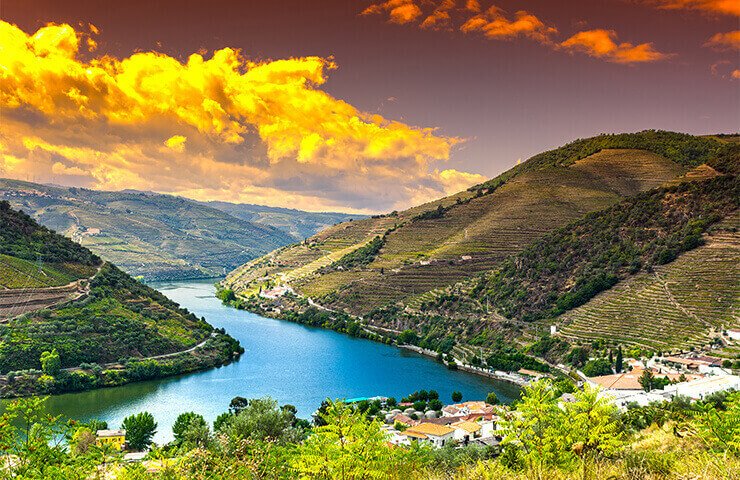
Port wine, the fortified wine that made this region famous, is produced exclusively from grapes grown in the Alto Douro wine region under strict regulations. The valley’s dramatic landscape of steep, terraced vineyards carved into schist slopes over two thousand years represents one of the most significant cultural landscapes in Europe (confirm UNESCO designation details on the UNESCO World Heritage Centre website).
Maya’s honest take: “The UNESCO designation isn’t just a marketing label here. It means 97% of the valley’s landscape is protected, and every quinta you visit operates under regulations that have shaped this region for centuries. That history is tangible in every glass of Port you taste.”
Why the Douro Valley matters
- World’s oldest demarcated wine region, established 1756 (verify date with the Port Wine Institute).
- UNESCO World Heritage Site since 2001 for its cultural landscape (confirm designation on UNESCO website).
- Exclusive production zone for authentic Port wine (check certification with the Port Wine Institute).
- Over 2,000 years of continuous viticulture on steep terraced slopes (verify historical timeline with regional tourism offices).
Porto and the Douro relationship
- Port wine aged in cellars across the river from Porto in Vila Nova de Gaia (verify cellar locations with tourism offices).
- Historic rabelo boats transported wine barrels downstream before roads existed (confirm historical details with museum sources).
- Modern visitors typically start in Porto and travel 1 to 3 hours east into the valley (check travel times with transport operators).
- Porto’s Ribeira district and Douro Valley form a continuous wine tourism corridor (verify tourism routes with Visit Portugal).
How far is the Douro Valley from Porto, and how do you get there?
The Douro Valley begins about 100 kilometers (62 miles) east of Porto, with the main towns of Peso da Régua and Pinhão reachable in 1.5 to 2.5 hours depending on your transport mode. There are four practical ways to visit: by train, by car, by organized tour, or by river cruise from Porto (verify current schedules with operators).
The train from Porto São Bento or Campanhã stations to Peso da Régua costs €10.90 one-way and takes about 2 hours on the regional service, while the InterRegional train continues to Pinhão for €12.35 and takes about 2 hours and 10 minutes (confirm the latest price directly with the operator). Trains run roughly every 2 to 3 hours through the day, but the schedule thins out significantly on weekends and public holidays, so always check the CP timetable the night before you travel (verify current schedules on the CP Portuguese Railways website).
Maya’s honest take: “The train is the most relaxing way to see the valley if you’re not planning to visit multiple quintas in one day. You get the same views as driving, but you can actually enjoy the wine tasting instead of worrying about the drive back. Just know that once you’re in Régua or Pinhão, you’ll need taxis or tours to reach individual quintas.”
Train option details
- Porto São Bento to Peso da Régua: €10.90 one-way, 2 hours on regional service (confirm the latest price directly with the operator).
- Porto Campanhã to Pinhão: €12.35 one-way, 2 hours 10 minutes on InterRegional (verify current schedules on the CP website).
- Historic steam train from Régua to Pinhão: €60 adults, €32 children 4 to 12, seasonal operation (check current rates on the official site).
- No advance booking required for regular trains, but recommended for historic steam trains (verify booking requirements with CP).
Car rental option details
- Compact car rental from Porto: €25 to €55 per day depending on season (confirm the latest price directly with the operator).
- Tolls from Porto to Pinhão round trip: €8 to €14 via A4 and A24 highways (check current toll rates on the official site).
- Driving time Porto to Régua: 1 hour 30 minutes; to Pinhão: 2 hours (verify current road conditions with rental companies).
- Parking at quintas is generally free, but book tastings in advance during harvest season (confirm availability with quintas).
Which way should you visit the Douro Valley: car, train, cruise, or tour?
This is the single most important decision in your Douro planning, because it determines your flexibility, your total cost, and how many quintas you can realistically visit. Each option has clear trade-offs between independence, convenience, and price (verify current offerings with operators).
By car: maximum flexibility
- Cost: €25 to €55 per day rental plus €8 to €14 tolls (confirm the latest price directly with the operator).
- Best for: Visiting 3+ quintas in one day, exploring remote viewpoints, and traveling with 2 to 4 people to split costs.
- Time needed: Full day minimum, 2 to 4 nights ideal for relaxed exploration (verify quinta opening hours in advance).
- Trade-off: You’re driving on winding mountain roads, so wine tasting requires discipline or a designated driver (check road conditions with rental companies).
By train: most relaxing
- Cost: €10.90 to €12.35 one-way from Porto, plus local taxis or tours at the destination (confirm the latest price directly with the operator).
- Best for: Solo travelers or couples who want scenic views without driving stress and day trips focused on one town.
- Time needed: Full day minimum, as round-trip travel takes 4 to 5 hours total (verify train schedules on the CP website).
- Trade-off: Limited flexibility once you arrive, as quintas are spread out and require additional transport (check taxi availability with local tourism offices).
By river cruise: all-inclusive convenience
- Cost: €89 to €198 per person for full-day cruises with lunch and tastings (check current rates on GetYourGuide).
- Best for: First-time visitors who want a curated experience with no logistics, and groups who prefer guided commentary.
- Time needed: 7 to 10 hours for full-day cruises from Porto (verify departure times with cruise operators).
- Trade-off: Fixed itinerary with limited time at each stop, less flexibility to explore independently (check cruise itineraries before booking).
By organized tour: balanced approach
- Cost: €55 to €140 per person for minibus day tours with tastings and lunch (confirm the latest price directly with the operator).
- Best for: Travelers who want some flexibility without driving, small groups seeking value.
- Time needed: 8 to 10 hours for full-day tours from Porto (verify pickup times with tour operators).
- Trade-off: Fixed schedule with group pace, but more stops than cruises and lower cost than private tours (check tour inclusions before booking).
Maya’s honest take: “If it’s your first visit and you’re based in Porto without a car, book a small-group minibus tour. You’ll see more quintas than on a cruise, pay less than a private tour, and still get to taste without worrying about driving. Save the self-drive option for a second visit when you know which quintas you want to revisit.”
What are the best viewpoints in the Douro Valley?
The Douro Valley’s dramatic landscape is best appreciated from its network of miradouros, or viewpoints, perched high above the river on terraced slopes. Late September through mid-October is the single best window for photographers, when the harvest transforms the terraces into a patchwork of deep green, amber, and russet (verify seasonal colors with local tourism offices).
São Leonardo de Galafura sits 640 meters above sea level and offers an absolutely jaw-dropping panoramic vista of the winding Douro River flanked by endless vineyard terraces (verify elevation with tourism offices). Miradouro do Penedo Durão provides views into both Portugal and Spain across the river, with frequent sightings of birds of prey including Egyptian vultures, golden eagles, and peregrine falcons (confirm wildlife sightings with local guides).
Maya’s honest take: “The major viewpoints are busiest on weekend afternoons during harvest season, so target weekday mornings to avoid tour buses. Bring a telephoto lens or zoom capability if you want landscape photos without crowds in the frame.”
Top viewpoints by accessibility
- São Leonardo de Galafura: 640 meters elevation, accessible by car from Régua, 360-degree panoramas (verify road conditions with rental companies).
- Miradouro do Penedo Durão: Border views into Spain, bird-watching opportunities, parking available (confirm accessibility with tourism offices).
- Miradouro da Cruzinha: Overlooks river bend near Pinhão, short walk from town, sunset views (check walking trail conditions with local guides).
- Miradouro de Santo Ovídio: Near Lamego, combines vineyard views with sanctuary visit, less crowded (verify opening hours with sanctuary).
Best viewpoint by month
- April to June: Spring wildflowers and green terraces, clear air, moderate temperatures (verify seasonal blooms with tourism offices).
- September to October: Harvest colors with gold, amber, and crimson vineyards, best photography light (confirm harvest timing with quintas).
- November to March: Winter dormancy with stark schist slopes, fewer crowds, dramatic storm skies (check road conditions in winter months).
- July to August: Lush green vineyards, hot temperatures, busiest season, arrive early to avoid crowds (verify summer hours with viewpoint access points).
Which towns should you visit in the Douro Valley?
Three anchor towns form the backbone of most Douro Valley itineraries: Peso da Régua as the commercial hub and transport junction, Pinhão as the picturesque heart of the wine region with its azulejo-tiled train station, and Lamego as the baroque gateway town on the valley’s northern edge (verify current attractions with tourism offices).
Peso da Régua is home to the Douro Museum, which traces 2,000 years of wine-making history in the region, and serves as the main rail junction where the line from Porto splits toward Pinhão or Pocinho (confirm museum hours on the official website). Pinhão’s 1937 train station features elaborate azulejo tiles depicting harvest scenes and is widely considered one of the most beautiful train stations in the world (verify station visiting hours with CP Portuguese Railways).
Maya’s honest take: “Pinhão is the postcard town, but Régua is where you’ll find more hotel options and better restaurant variety. If you’re staying multiple nights, consider basing in Régua for logistics and taking day trips to Pinhão and Lamego.”
Peso da Régua highlights
- Douro Museum with 2,000 years of wine history exhibits (verify opening hours on the official website).
- Main rail junction with connections to Porto, Pinhão, and Pocinho (check current schedules on CP website).
- Widest selection of hotels and restaurants in the valley (browse options on Booking.com).
- Riverfront promenade with rabelo boat tour departures (confirm tour schedules with operators).
Pinhão highlights
- 1937 azulejo-tiled train station depicting Port wine harvest scenes (verify visiting hours with CP).
- Quinta do Pinhão and nearby estates offering tastings and tours (book in advance during harvest season).
- Riverfront restaurants specializing in grilled fish and regional cuisine (check reviews on TripAdvisor).
- Access point for São Leonardo de Galafura viewpoint, 15 minutes by car (verify road conditions with rental companies).
Lamego highlights
- Sanctuary of Our Lady of Remedios with baroque staircase and valley views (confirm opening hours with sanctuary).
- Lamego Cathedral and historic town center with 18th-century architecture (verify guided tour availability with tourism offices).
- Ramos Pinto wine cellars offering Port and Douro wine tastings (book tastings in advance on the official website).
- Less crowded alternative to Régua and Pinhão, ideal for half-day visits (check transport connections with CP).
How much time do you need in the Douro Valley?
You need at least one full day to experience the Douro Valley from Porto, but 2 to 4 nights lets you explore multiple towns and quintas at a relaxed pace. A day trip covers one or two quintas with a viewpoint stop, while a multi-day stay allows for deeper exploration of the region’s sub-zones and seasonal activities (verify quinta visiting requirements in advance).
One day: essential highlights
- Morning train or tour from Porto to Régua or Pinhão (verify departure times with operators).
- Two quinta visits with tastings, one vineyard tour, one cellar tour (book in advance, confirm the latest price directly with the operator).
- Lunch at a riverside restaurant or included with tour (check menu options on TripAdvisor).
- One viewpoint stop (São Leonardo or Penedo Durão) before return to Porto (verify accessibility with tourism offices).
- Total cost: €55 to €198 per person depending on transport mode (check current rates on the official site).
Two to three nights: relaxed exploration
- Base in Régua or Pinhão with day trips to Lamego and São Leonardo viewpoint (browse hotels on Hotels.com).
- Three to four quinta visits across different sub-regions (Baixo Corgo, Cima Corgo, Douro Superior) (verify locations with quintas).
- Time for river cruise, museum visits, and leisurely meals without rush (check cruise schedules with operators).
- Optional harvest participation if visiting mid-September to early October (book 3 to 4 months ahead, confirm the latest price directly with the operator).
- Total cost: €300 to €800 per person including accommodation, tours, and meals (check current rates on the official site).
Four or more nights: immersive experience
- Multi-town itinerary covering Régua, Pinhão, Lamego, and potentially Torre de Moncorvo or Pocinho (verify transport connections with CP).
- Five to six quinta visits including premium estates with advanced tastings (book well in advance, confirm the latest price directly with the operator).
- Time for hiking trails, bird-watching, and cultural sites beyond wine tourism (check trail conditions with tourism offices).
- Harvest participation, cooking classes, or extended river cruises as seasonal activities (verify availability with operators).
- Total cost: €600 to €1,500+ per person depending on accommodation level and activities (check current rates on the official site).
Maya’s honest take: “If you’re only doing one day, book a small-group tour rather than trying to DIY with the train. You’ll see more quintas, get better commentary, and not waste time figuring out local taxis. Save the independent exploration for a 2 to 3-night stay when you have time to wander.”
What does a Douro Valley trip actually cost this year?
Most guides mention train fares or tour prices in isolation, but a realistic budget requires stacking transport, accommodation, tastings, meals, and activities. Here is a transparent, itemized breakdown for three common trip styles, all based on current pricing from operators and booking platforms (verify all figures with official sources before booking).
Day trip from Porto (budget)
- Round-trip train from Porto to Régua: €21.80 (confirm the latest price directly with the operator).
- Local taxi or tour from Régua to quintas: €40 to €80 (check current rates on the official site).
- Two quinta tastings: €15 to €30 total (verify tasting fees with quintas).
- Lunch at riverside restaurant: €15 to €25 (browse menus on TripAdvisor).
- Total estimated range: €92 to €157 per person (check current rates on the official site).
Day trip from Porto (organized tour)
- Full-day minibus tour with tastings and lunch: €55 to €140 (confirm the latest price directly with the operator).
- River cruise option with lunch and tastings: €89 to €198 (check current rates on GetYourGuide).
- Gratuities for guide and driver: €5 to €10 (verify tipping customs with tour operators).
- Total estimated range: €60 to €208 per person (check current rates on the official site).
Two-night stay (mid-range)
- Round-trip train or car rental: €44 to €110 total (confirm the latest price directly with the operator).
- Hotel in Régua or Pinhão, 2 nights: €160 to €300 total (check current rates on Booking.com).
- Three to four quinta visits with tastings: €60 to €120 total (verify tasting fees with quintas).
- Meals for 2 days: €60 to €120 total (browse restaurant prices on TripAdvisor).
- Viewpoint access and local transport: €20 to €40 (check taxi rates with local operators).
- Total estimated range: €344 to €690 per person (check current rates on the official site).
Four-night stay (comprehensive)
- Car rental 4 days plus tolls: €140 to €260 total (confirm the latest price directly with the operator).
- Hotels or quintas, 4 nights: €320 to €800 total (check current rates on Hotels.com).
- Five to six quinta visits with premium tastings: €120 to €240 total (verify tasting fees with quintas).
- Meals for 4 days: €120 to €240 total (browse restaurant prices on TripAdvisor).
- River cruise or additional activities: €90 to €200 (check activity prices on GetYourGuide).
- Total estimated range: €790 to €1,740 per person (check current rates on the official site).
Maya’s honest take: “The biggest budget surprise for most travelers is quinta tasting fees. Some estates charge €10 to €25 per person just for the tasting, separate from tours or bottle purchases. Ask about fees when you book, and factor them into your daily budget.”
When is the best time to visit the Douro Valley?
The best time to visit the Douro Valley depends on your priorities: harvest atmosphere, weather, crowd levels, or specific activities. September and October are the crown jewel months, with harvest season bringing golden light, active wineries, and warm but not brutal temperatures (verify harvest dates with quintas, as they vary by year and sub-region).
Harvest typically runs from mid-September through early October, though the exact timing varies by year, grape variety, elevation, and sub-region (confirm harvest window with your chosen quinta). In 2026, based on historical patterns and climate trends, the harvest window is expected to run from approximately September 8 to October 15, with peak activity concentrated in the third and fourth weeks of September (verify current predictions with the Port Wine Institute).
Maya’s honest take: “If you want to participate in harvest activities like grape picking or foot-treading, book 3 to 4 months ahead. Quintas limit participant numbers for safety and quality control, and the most popular estates sell out weeks before the harvest window opens.”
Best months by priority
- Harvest atmosphere: mid-September to early October, book 3 to 4 months ahead (verify harvest dates with quintas).
- Weather and scenery: April to early June for spring blooms, September to October for autumn colors (confirm seasonal conditions with tourism offices).
- Fewer crowds: November to March for quiet visits; some quintas are closed or have limited hours (check opening schedules with quintas).
- Warm weather activities: June to August for river cruises and outdoor dining; expect temperatures in the 30s°C (verify summer schedules with operators).
Harvest season specifics
- Core harvest window: September 15 to October 5 for most years and grape varieties (confirm exact dates with quintas).
- Peak activity: last two weeks of September when most estates are at full harvest (verify timing with the Port Wine Institute).
- Accommodation books out 3 to 4 months in advance during harvest (check availability on Booking.com).
- Guided tour slots sell out weeks ahead, especially weekends (book in advance on GetYourGuide).
Frequently asked questions
Is the Douro Valley worth a day trip from Porto?
Yes, a day trip is worthwhile if you focus on one or two quintas with pre-booked tastings and include a viewpoint stop (verify quinta availability in advance). Organized tours from €55 to €140 offer the best value for first-time visitors, while independent travelers can DIY with the train for €21.80 round-trip plus local transport (confirm the latest price directly with the operator). For a more relaxed experience with multiple towns and quintas, plan 2 to 4 nights instead (check hotel availability on Booking.com).
Do you need a car to visit the Douro Valley?
No, you do not need a car, as the train from Porto reaches Peso da Régua and Pinhão, and organized tours provide transport from Porto (verify train schedules on the CP website). However, a rental car gives maximum flexibility to visit remote quintas and viewpoints at your own pace, with compact cars costing €25 to €55 per day plus €8 to €14 in tolls (confirm the latest price directly with the operator). For most first-time visitors, a small-group tour or river cruise is more practical than navigating unfamiliar mountain roads (check tour options on GetYourGuide).
How much does a Douro Valley wine tasting cost?
Wine tastings at Douro quintas typically cost €10 to €25 per person for standard tastings of 3 to 5 wines, with premium tastings ranging from €30 to €60 (confirm the latest price directly with the operator). Some estates include tasting fees with bottle purchases or waive fees for tour participants (verify policies with individual quintas). Budget €15 to €30 per quinta visit for a realistic tasting experience (check quinta websites for current pricing).
What is the best month to visit the Douro Valley?
September and October are the best overall months, combining harvest atmosphere, warm but not scorching temperatures, and ideal photography light during the vindima (verify harvest dates with quintas). April to early June offers spring wildflowers and green terraces with fewer crowds, while July and August provide the warmest weather but the busiest tourist season (confirm seasonal conditions with tourism offices). For quiet visits with some quinta closures, November to March works, but check opening schedules in advance (verify winter hours with quintas).
How do I get from Porto to the Douro Valley?
Take the train from Porto São Bento or Campanhã stations to Peso da Régua (€10.90, 2 hours) or Pinhão (€12.35, 2 hours 10 minutes) on CP Portuguese Railways (confirm the latest price directly with the operator). Alternatively, rent a car in Porto for €25 to €55 per day plus tolls, or book an organized tour or river cruise departing from central Porto (check current rates on GetYourGuide). Trains run every 2 to 3 hours but thin out on weekends, so check the CP timetable the night before travel (verify current schedules on the CP website).
Can I participate in the grape harvest in the Douro Valley?
Yes, many quintas offer harvest experiences from mid-September to early October, including grape picking, foot-treading in granite lagares, and special harvest meals (verify availability with quintas). Book 3 to 4 months in advance, as participant numbers are limited and popular estates sell out weeks ahead (confirm booking requirements with the Port Wine Institute). Harvest experiences typically cost €50 to €150 per person, including activities, tastings, and lunch (check current rates on the official site).
What are the must-see towns in the Douro Valley?
Peso da Régua is the commercial hub with the Douro Museum and widest hotel selection, Pinhão features the famous azulejo-tiled train station and picturesque riverfront, and Lamego offers the baroque Sanctuary of Our Lady of Remedios with valley views (verify opening hours with tourism offices). Most itineraries include at least Régua and Pinhão, with Lamego as a half-day detour for cultural sites beyond wine tourism (check transport connections with CP). For extended stays, consider Torre de Moncorvo or Pocinho in the Douro Superior sub-region (verify accessibility with rental companies).
Is the Douro Valley UNESCO World Heritage Site?
Yes, the Alto Douro Wine Region was designated a UNESCO World Heritage Site in 2001 for its outstanding cultural landscape of terraced vineyards representing 2,000 years of continuous viticulture (confirm designation on the UNESCO World Heritage Centre website). The designation protects 97% of the valley’s landscape and regulates development to preserve the traditional wine-making environment (verify protection status with the Port Wine Institute). This UNESCO status makes the Douro one of the most significant wine landscapes in the world alongside regions like Burgundy and Tokaj (check comparative designations with UNESCO).
Plan your trip: booking platforms we trust
I’ve tested these platforms across dozens of trips for reliability, customer support, and real inventory. They’re not all right for every situation, but each one solves a specific problem better than the alternatives.
Booking.com
Widest selection of Douro Valley hotels in Régua, Pinhão, and Lamego with free cancellation on most properties.
GetYourGuide
Verified day tours, river cruises, and quinta experiences from Porto with instant confirmation and reviews.
TripAdvisor
Real traveler reviews for quintas, restaurants, and hotels across the Douro Valley region.
Expedia
Flight and hotel packages for Porto arrivals with car rental add-ons for Douro Valley self-drive trips.
Hotels.com
Loyalty rewards program for repeat travelers booking mid-range Douro Valley hotels and quintas.
Kayak
Flight price comparison for Porto arrivals from multiple European and North American cities.
More Portugal and wine region travel guides
If you’re planning a broader Portugal trip or exploring other wine regions, these guides cover the next steps in your itinerary.
- Hotels in Portugal and European wine regions—budget to luxury accommodation guides with verified prices.
- Best things to do in Porto and northern Portugal—from Ribeira district tours to wine cellar visits.
- Travel planning guides— itineraries, packing lists, and logistics for European wine country trips.
- Visa requirements for Portugal and the Schengen Area—entry rules, permitted stay lengths, and extension processes.
- How to find cheap flights to Portugal—fare comparison strategies and booking timing tips.
WakaAbuja does its best to keep all information accurate at the time of publishing. Prices, policies, and availability change regularly. Always verify with official sources before you travel. We are not liable for errors caused by outdated information. Travel insurance is strongly recommended.