advertisement
Easter Island: History, Moai Statues, and What to Know Before You Go
Easter Island, known locally as Rapa Nui, is a remote Chilean territory in the southeastern Pacific Ocean, famous for nearly 900 monumental stone statues called moai carved by the Rapa Nui people between roughly 1250 and 1500 CE. It is reachable today only by a five-and-a-half-hour LATAM flight from Santiago, and the island’s history, particularly the debate over whether its population collapsed due to ecological overreach or endured through resilience, remains one of archaeology’s most contested questions.
Nearly a thousand stone giants stand with their backs to a vast ocean on an island so remote that its nearest inhabited neighbor is over 1,900 kilometers away. Archaeologists still do not fully agree on how the people who carved them nearly vanished, or whether they nearly vanished at all. Easter Island is a name most people recognize and a place most people will never stand on.
This guide covers the history, the statues, the ongoing scientific debate, and the practical reality of visiting, all in one place, without the dense academic prose of a reference article and without the vague enthusiasm of a travel brochure.
Jump to: What & Where | The Moai | Moai Sites Compared | History Timeline | The Collapse Debate | Planning a Visit | FAQs
Key takeaways
- Easter Island is a Chilean territory in the southeastern Pacific, roughly 3,500 kilometers west of mainland Chile. It has been part of Chile since 1888.
- There are 887 documented moai statues. The largest standing moai is nearly 10 meters tall. The largest ever carved, still lying unfinished in the quarry at Rano Raraku, is over 21 meters long.
- The “collapse” narrative is actively disputed. Jared Diamond’s theory of ecological self-destruction has been challenged by archaeologists who argue the Rapa Nui population adapted to environmental stress and was devastated primarily by European contact and slave raids, not deforestation alone.
- Getting there requires a single airline. LATAM operates the only commercial flights, departing from Santiago, Chile. The flight takes roughly five and a half hours. There is no other way to reach the island without a private vessel.
- A visit requires a minimum of three full days to see the major Moai sites at a reasonable pace. The Rapa Nui National Park entry fee for foreign adults is $80 USD, payable on arrival.
What and Where Is Easter Island?
Easter Island is a volcanic island in the southeastern Pacific Ocean, covering roughly 164 square kilometers. It is a special territory of Chile, annexed in 1888, and its local name is Rapa Nui. The population was approximately 7,750 at the 2017 census. The nearest inhabited land is Pitcairn Island, roughly 1,900 kilometers to the west. Mainland Chile lies about 3,500 kilometers to the east. The island is one of the most isolated permanently inhabited places on the planet.
The island was formed by three volcanic eruptions. The largest craters, Rano Kau, Rano Raraku, and Terevaka, shape its triangular geography. The climate is subtropical maritime, with average temperatures ranging from 18°C in winter to 28°C in summer. Rain is possible year-round, and the wind is a constant presence. The island was named Easter Island by the Dutch explorer Jacob Roggeveen, who arrived on Easter Sunday in 1722. The name stuck on European maps, but the people who live there call it Rapa Nui and themselves the Rapa Nui people.
The Moai: What They Are and Why They Exist
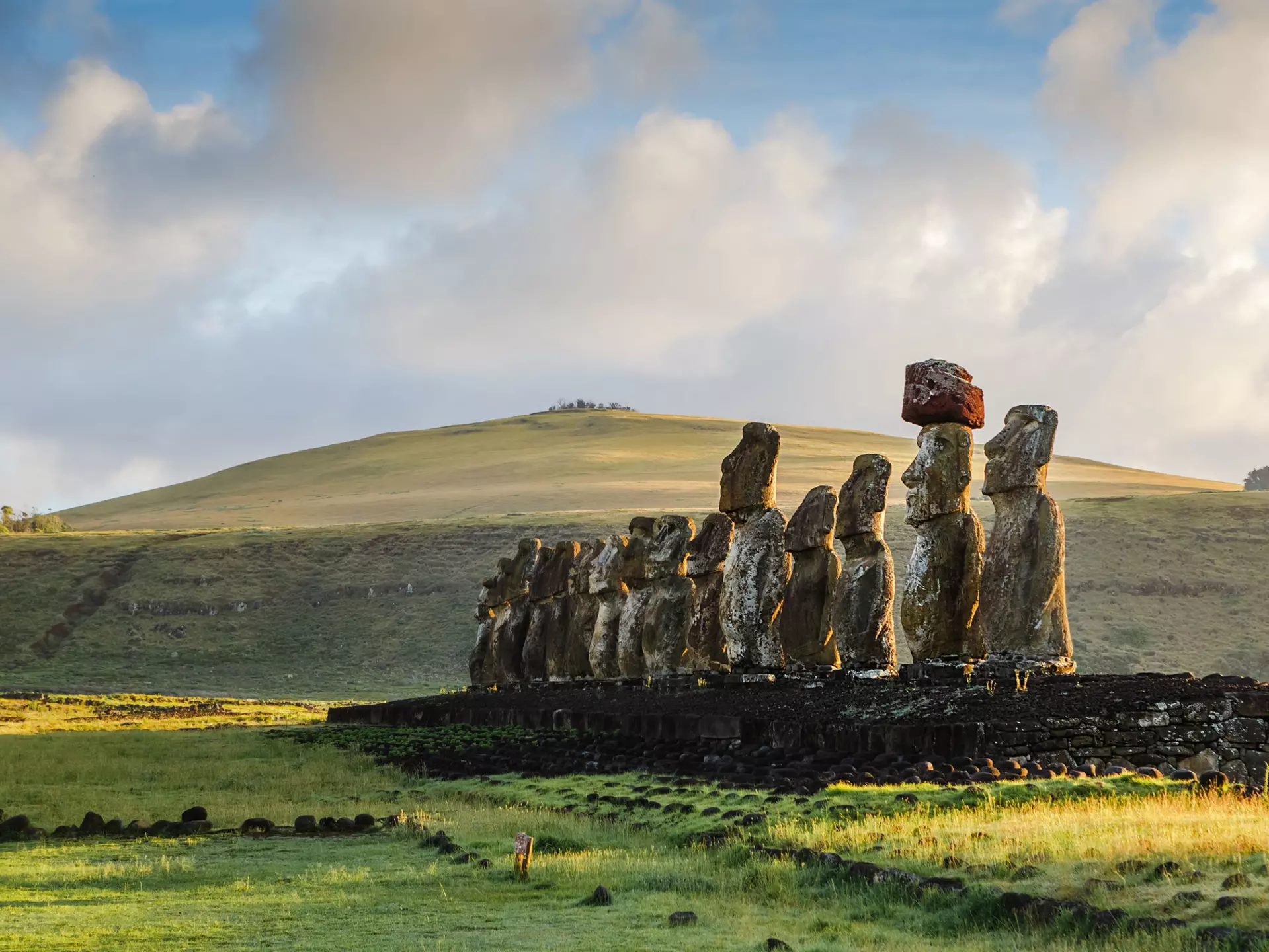
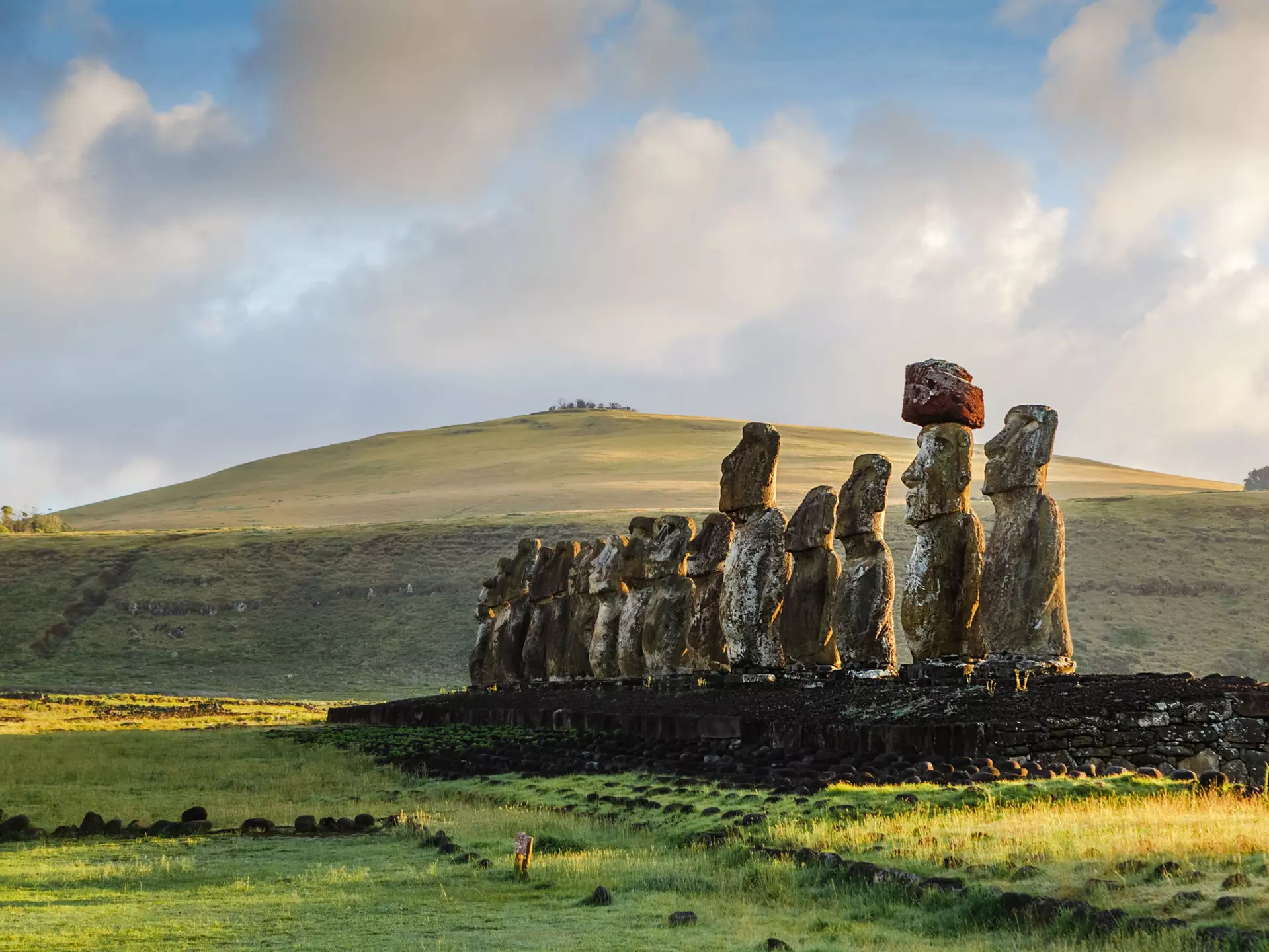
The moai are monumental human figures carved from compressed volcanic ash, known as tuff, at the quarry of Rano Raraku, a volcanic crater on the eastern side of the island. There are 887 documented moai, though the true number is likely slightly higher as some remain partially buried or undocumented. The largest standing moai, at Ahu Te Pito Kura, is 9.8 metres tall and weighs an estimated 82 tonnes. The largest moai ever carved, still lying unfinished in the quarry, is over 21 metres long and would have weighed close to 200 tonnes had it been completed and erected.
The moai were carved between roughly 1250 and 1500 CE, representing deified ancestors. They were placed on stone platforms called ahu, typically facing inland to watch over the villages they protected. The carving, transport, and erection of the statues required extraordinary engineering skill and social organisation. The leading theory is that the statues were moved upright using ropes and a rocking, walking motion, not rolled on logs as earlier researchers proposed. Archaeologists Terry Hunt and Carl Lipo demonstrated this method experimentally in 2011, and it remains the most widely accepted transport explanation today.
At some point, moai carving stopped. The quarry at Rano Raraku was abandoned with statues in various stages of completion still embedded in the rock. The reason for this abrupt halt is at the centre of the island’s most contested historical debate.
Moai Sites Compared: What to Prioritise
If you are visiting Easter Island, you cannot see every ahu. There are over 300 ceremonial platforms scattered across the island. These are the sites that matter most, with honest notes on when to visit each one.
A Timeline of Easter Island’s History
The dense, citation-heavy narrative of the Wikipedia entry can be difficult to extract a clear sequence from. Here is the simplified timeline.
Settlement (c. 1200 CE)
Polynesian voyagers arrived on the island, likely from the Marquesas or Gambier Islands. The exact date is debated, but radiocarbon evidence increasingly points to around 1200 CE rather than earlier estimates. The settlers brought crops, chickens, and the cultural framework that would produce the moai.
Peak Moai Period (c. 1250–1500 CE)
The population grew, clans formed, and moai carving reached its peak. The statues became larger and more elaborate over time, with the largest examples dating to the later stages of this period. The island’s forests, particularly the large palm trees, were progressively cleared for agriculture and statue transport.
European Contact (1722)
Dutch explorer Jacob Roggeveen arrived on Easter Sunday and named the island. His crew reported a functioning society with standing moai. Subsequent European visitors, including Captain Cook in 1774, reported fewer standing statues and a population under visible stress.
Devastation (1860s)
Peruvian slave raiders abducted roughly 1,500 Rapa Nui people, including the royal lineage and the educated class. Disease, introduced livestock, and missionisation further disrupted the society. By 1877, only 111 native Rapa Nui remained on the island, a population collapse driven by external contact, not internal ecological failure.
Chilean Annexation (1888) to Present
Chile annexed the island in 1888. The Rapa Nui people were largely confined to the settlement of Hanga Roa, while the rest of the island was leased for sheep ranching. This arrangement lasted until the mid-20th century. Today, the island is a Chilean special territory with a growing population, a tourism-based economy, and an ongoing cultural revival of the Rapa Nui language and traditions.
Did Easter Island Collapse? The Real Debate
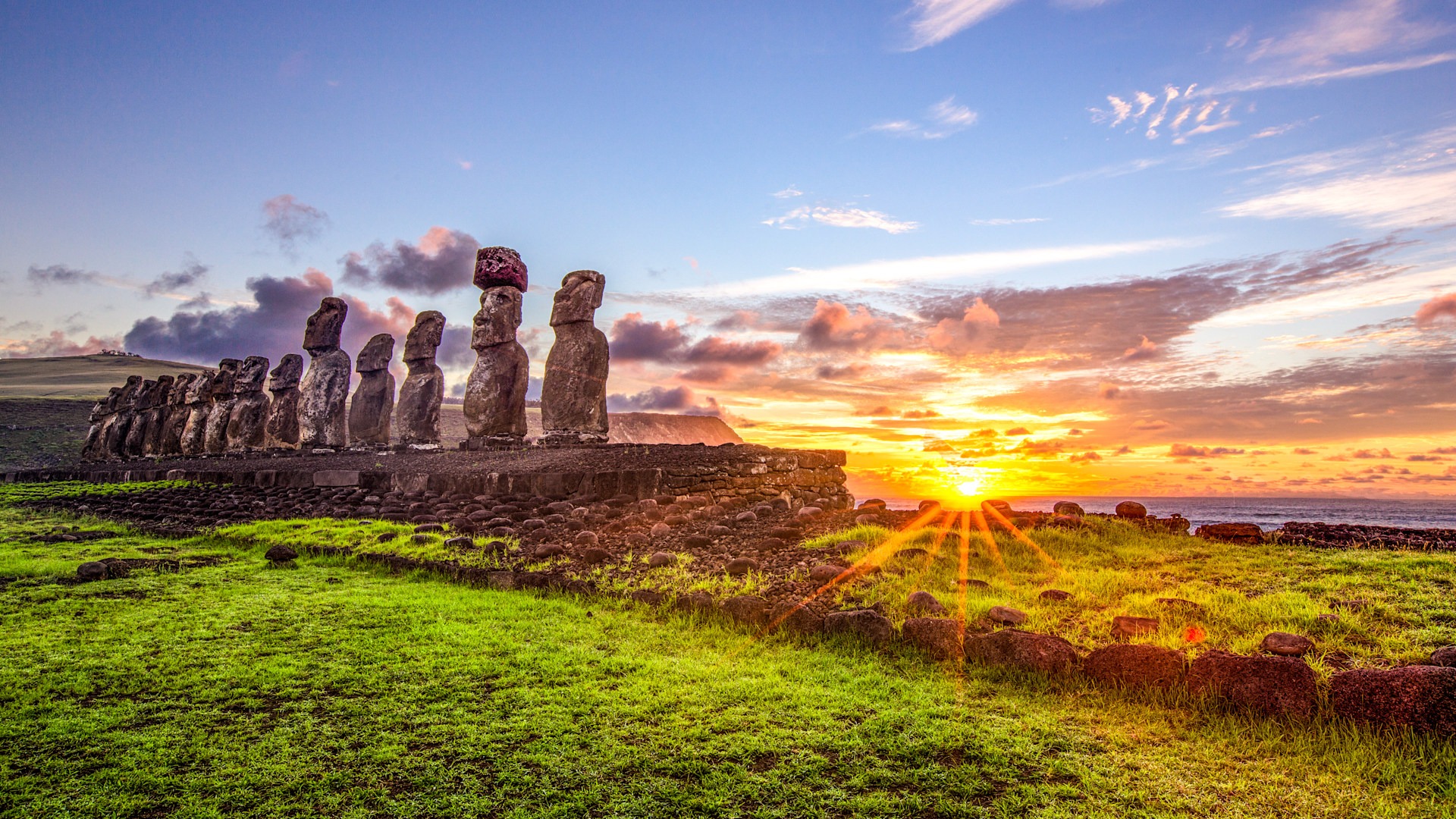
This is the single most contested question in Pacific archaeology, and the answer has shifted significantly in the last two decades. The popular version, most famously advanced by Jared Diamond in his 2005 book Collapse, argues that the Rapa Nui people deforested their island to transport moai, triggering soil erosion, agricultural collapse, famine, and a descent into violent civil war. In this narrative, the moai themselves are a symbol of a society that destroyed its own ecological foundation in pursuit of status competition between rival clans.
The counterargument, advanced most prominently by archaeologists Terry Hunt and Carl Lipo, is that the deforestation narrative has been overstated and the real cause of population decline was external. Their research suggests that the island’s palm forests were already in decline before human arrival, that the Rapa Nui adapted ingeniously to their changing environment through stone mulching and other agricultural techniques, and that the catastrophic population crash in the late 19th century was caused almost entirely by Peruvian slave raids and introduced European diseases, not by an earlier internal collapse. The moai transport, in their account, was accomplished not by rolling logs but by walking the statues upright with ropes, a method that required far fewer trees and aligns with oral traditions describing the statues as “walking” to their platforms.
A 2024 genetic study published in Nature found no evidence of a pre-European population bottleneck, supporting the view that the Rapa Nui population was stable before contact. A separate 2025 study documented a prolonged megadrought on the island between roughly 1500 and 1700 CE, suggesting that climate stress, not just human action, played a significant role in environmental change. The honest current consensus is that both ecological pressure and external devastation contributed, that Diamond’s account oversimplified the evidence and understated the resilience of the Rapa Nui people, and that the full story is still being written.
Planning a Visit to Easter Island
Easter Island is not a destination you stumble upon. It is a destination you decide to reach. The logistics are specific and the costs are higher than most travellers expect, but the experience of standing specific,ongariki at sunrise, with the moai stravelers against the Pacific, is unlike anything else accessible by a commercial flight.
Getting There
- Only LATAM Airlines flies to Easter Island. Flights depart from Santiago, Chile, roughly five and a half hours each way. There are typically one to two flights per day, varying by season. A seasonal flight from Papeete, Tahiti, has operated intermittently but is not reliable year-round.
- Round-trip fares from Santiago typically range from $400 to $800 USD when booked in advance and significantly more during peak periods or at short notice. Use Kayak to set fare alerts.
Entry Requirements & Fees
- Rapa Nui National Park entry fee: $80 USD for foreign adults, payable on arrival at the airport or at CONAF offices in Hanga Roa. The ticket covers entry to all major archaeological sites and is valid for 10 days.
- Accommodation: Hanga Roa has hotels, guesthouses, and hostels ranging from $60 to $400+ USD per night. Book well ahead for the high season, roughly December through February.
- Days needed: A minimum of 3 full days to see the major moai sites without rushing. 4 to 5 days allows a more relaxed pace and time for the beach, the museum, and revisiting sites in different light.
Entry fees and flight routes are subject to change. Always verify current requirements on the official CONAF Chile and LATAM Airlines websites before booking. For accommodation, Booking.com lists most properties in Hanga Roa.
Frequently asked questions about Easter Island
Is Easter Island part of Chile?
Yes. Easter Island has been a special territory of Chile since 1888. The island is governed under Chilean law, and its residents are Chilean citizens. The local Rapa Nui people also maintain their own distinct Polynesian cultural identity and language.
How do people get to Easter Island?
The only commercial airline serving Easter Island is LATAM, with flights from Santiago, Chile. The flight takes roughly five and a half hours. There is no regular ferry or passenger ship service. Private vessels can dock at Hanga Roa with prior permission.
Can you still see the moai statues?
Yes. All 887 documented moai are still on the island. The largest and most famous group is at Ahu Tongariki, where 15 statues stand restored on their platform. Hundreds more are visible at the Rano Raraku quarry. The statues are protected within Rapa Nui National Park and can be visited with an entry ticket.
Why did they stop building moai statues?
The reasons are debated. The traditional explanation is that deforestation and resource depletion led to social collapse and the abandonment of the moai cult. More recent research suggests that European contact, disease, and slave raids in the 19th century devastated the population, and the birdman cult at Orongo replaced moai construction as the dominant religious practice.
Is Easter Island expensive to visit?
Yes, relative to mainland Chile. The flight from Santiago is the largest single cost. Accommodation and food on the island are more expensive than on the mainland because almost everything is imported. Budget roughly $150 to $300 USD per day per person for mid-range travel, excluding the flight and park entry fee.
What is the best time of year to visit Easter Island?
The shoulder seasons, October to November and March to April, offer the best balance of decent weather, manageable crowds, and lower accommodation prices. The high season is December through February, which is the warmest and busiest window. The island is visitable year-round, but winter months, June to August, are cooler and windier.
Plan your trip: booking resources for Easter Island
We do not process bookings ourselves. These are the platforms we recommend for researching and booking travel to Easter Island.
Best for setting fare alerts and comparing LATAM flight prices from Santiago to Easter Island.
It’s best for comparing hotels and guesthouses in Hanga Roa with verified traveler reviews.
Best for booking guided tours of the major moai sites with local Rapa Nui guides.