advertisement
Gadisar Lake is an 850-year-old artificial water reservoir located 1.5 kilometers from Jaisalmer Fort in Rajasthan. Built in 1156 AD and later reconstructed in 1367 AD, the lake remains filled year-round thanks to the Indira Gandhi Canal. As of early this year, entry to the lake is free, but boating and camera fees apply separately.
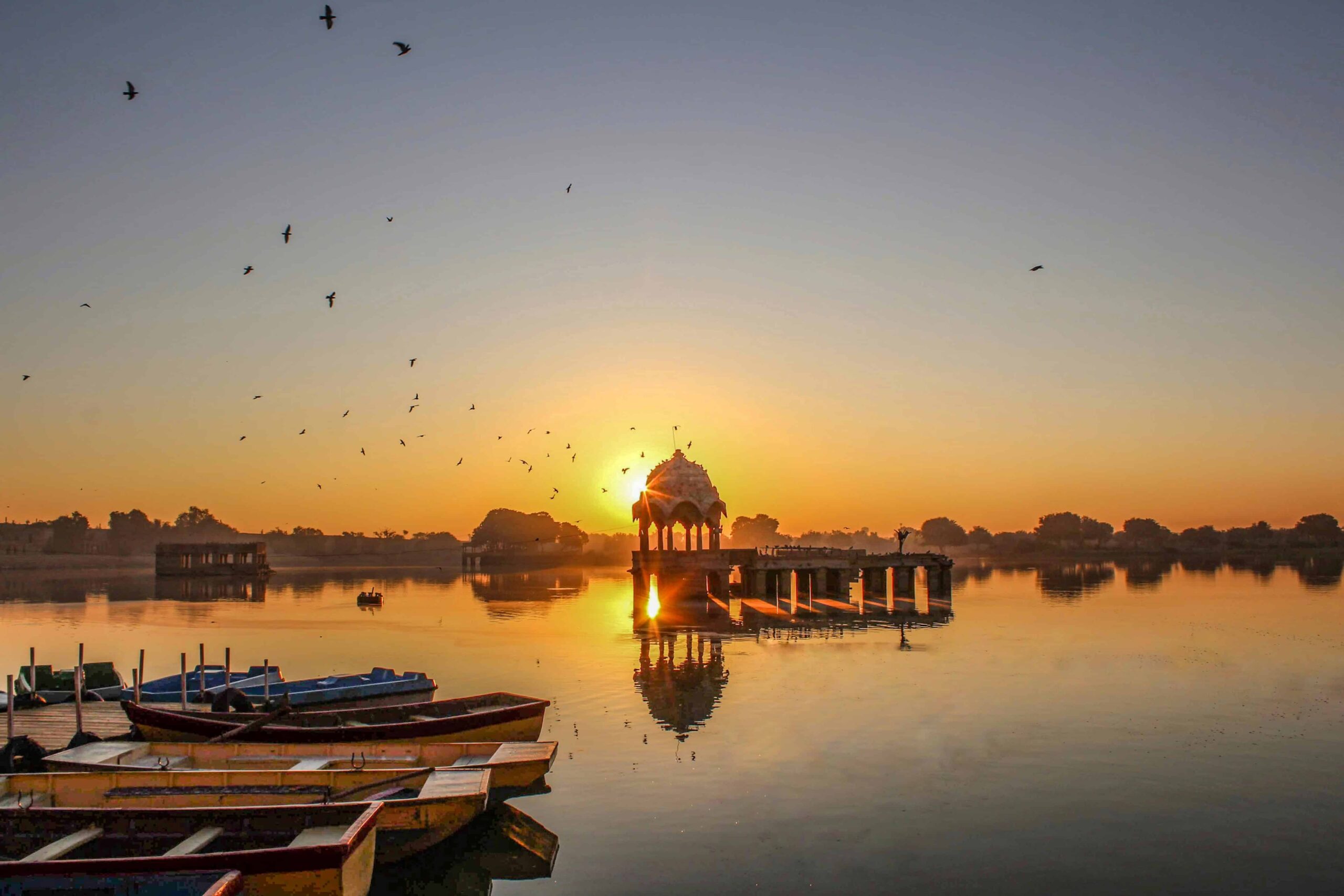
I first walked down to Gadisar Lake at dawn, half asleep from an overnight bus ride into Jaisalmer. The chhatris were still half in shadow, and a boatman was quietly untying his paddleboat. Chidi, our team member who mapped this guide, told me later: “Most tourists rush the lake in the harsh 11 a.m. light and complain it’s too crowded. You saw it the right way.”
This guide blends that hard-won, boots-on-the-ground timing logic with the historical depth of an 800-year-old water miracle, so you get the encyclopedia facts and the visitor planning details all in one spot.
Jump to: Overview | History | How to Reach | Timings & Fees | Best Time to Visit | Nearby Attractions | FAQs
Key takeaways
- Gadisar Lake is an artificial lake originally excavated in 1156 AD by Rawal Jaisal, the founder of Jaisalmer.
- The name comes from Rawal Gadsi Bhati, who rebuilt and expanded the lake around 1367 AD.
- Entry to the lake complex is free, but boating costs and a small camera fee may apply depending on current rules.
- Sunrise and sunset offer the best light for photography; winter months (October to February) provide pleasant daytime temperatures.
- The Indira Gandhi Canal keeps the lake from drying up in Rajasthan’s desert climate.
- Combine your visit with Jaisalmer Fort and Patwon Ki Haveli for a practical half-day sightseeing loop.
What Is Gadisar Lake and Why Is It So Famous?
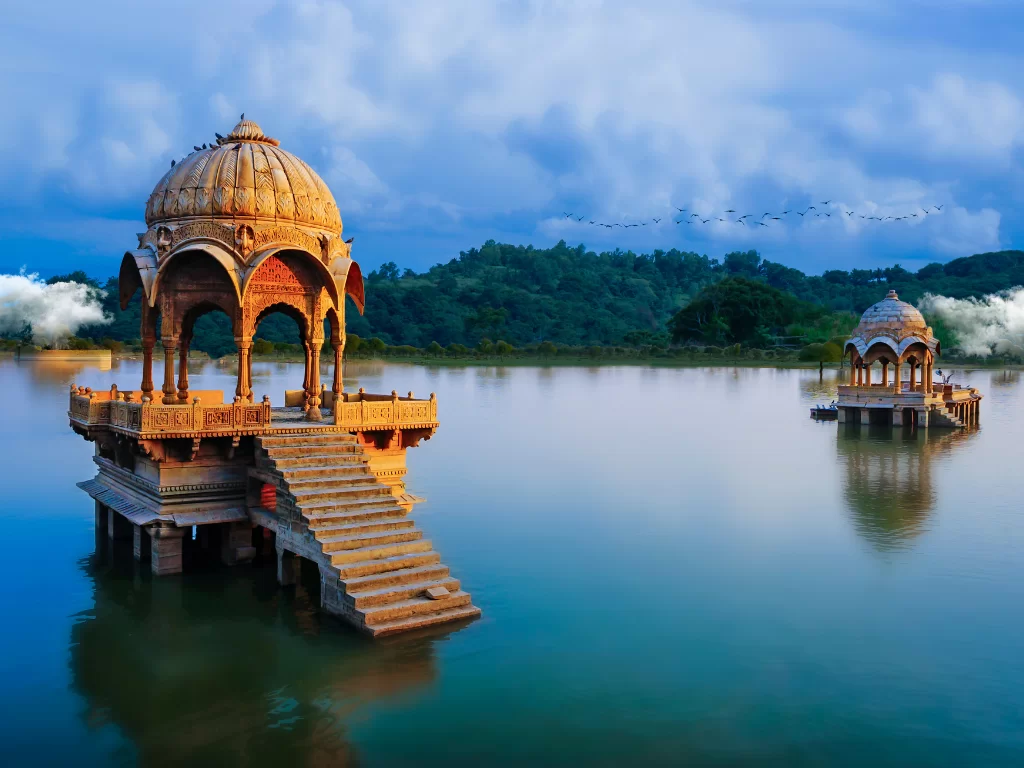
Gadisar Lake is not a natural oasis. It is a meticulously engineered conservation tank that has sustained Jaisalmer’s population through centuries of desert drought. Located just south of the fort, the rectangular waterbody is ringed by carved sandstone chhatris, temple steps leading down to the water, and a weathered gateway that frames the lake perfectly for a photograph.
What separates Gadisar from other heritage lakes in Rajasthan is its survival instinct. While other ancient tanks silted up or went dry, Gadisar adapted. The connection to the Indira Gandhi Canal turned it from a seasonal rain-fed pond into a permanent waterbody, preserving both its ecological function and its tourism value.
For visitors today, it functions as both a serene sightseeing stop and a working community space where locals still feed the catfish swarming near the ghats. You will see everything from saffron-robed sadhus to wedding photographers jostling for the best angle before 9 a.m.
Chidi’s honest take: “Don’t skip the small shrine complex near the main gate. Everyone fixates on the water, but the carved idol of Varuna, the Vedic god of water, tucked into the gate shrine is the spiritual anchor of the whole lake. It’s easily missed if you walk straight to the boats.”
History and Origins of Gadisar Lake
The lake’s origin story is tied directly to the founding of Jaisalmer itself. In 1156 AD, Rawal Jaisal Bhati, the Bhati Rajput ruler, shifted his capital from Lodhruva to the Trikuta Hill and began constructing the fort. A reliable water source was critical for the new settlement. He ordered the excavation of a large tank to collect monsoon runoff, and this original reservoir became the seed of what we now call Gadisar Lake.
By the mid-14th century, the tank had deteriorated. Rawal Gadsi Bhati, a later ruler of the Bhati dynasty, undertook a massive reconstruction and expansion project around 1367 AD. He reinforced the embankments, built the steps that still line the ghats, and added the aesthetic sandstone elements that make the lake photogenic. In recognition of his work, the lake was renamed Gadisar, combining “Gadsi” with “sar,” a Sanskrit-derived word meaning “lake” or “waterbody.”
For centuries, the lake served as Jaisalmer’s primary rainwater harvesting system. The ghats and chhatris were later additions by successive rulers and wealthy merchants who commissioned the decorative domed pavilions that now stand on the lake’s banks. Even today, the lake functions as a backup water source for the city, though the Indira Gandhi Canal now provides the main supply.
Key historical markers
- 1156 AD: Original excavation ordered by Rawal Jaisal Bhati.
- 1367 AD: Major reconstruction and expansion by Rawal Gadsi Bhati.
- Post-1960s: Indira Gandhi Canal connection ensures permanent water supply.
Architectural highlights
- Chhatris: Domed sandstone pavilions built by merchants and courtiers.
- Tilon Ki Pol: The ornate arched gateway at the entrance.
- Shrines: Small Hindu temples dedicated to Shiva, Ganesh, and Varuna near the ghats.
How to Reach Gadisar Lake from Jaisalmer City?
Gadisar Lake sits about 1.5 kilometers from Jaisalmer Fort and less than 2 kilometers from the main market area. The short distance makes it walkable for most visitors, but the desert heat can turn a pleasant stroll into a sweaty ordeal by midday.
From Jaisalmer Railway Station, the lake is roughly 3.5 kilometers away. An auto-rickshaw should take 15 minutes and cost around 150 to 200 Indian rupees depending on your bargaining skills. From the bus stand near the fort, auto-rickshaws and cycle rickshaws are readily available and rarely charge more than 100 Rupees for the short hop.
If you are driving or taking a taxi from Jaisalmer Airport, which sits about 15 kilometers from the city center, allocate 25 to 30 minutes for the journey. The road passes through flat desert terrain with clear signage pointing toward the fort; the lake is well-marked on most navigation apps as “Gadisar Lake” or “Gadisagar Lake.” Parking is available near the main gate, though spaces fill quickly during the winter tourist season.
@arun.m21 Gadisar lake #rajasthan #travelblogger #traveltok #malayali #india
Lena’s honest take: “I walked from the fort at 6 a.m. and it took under 20 minutes. By 10 a.m., the same route felt twice as long under the sun. If you’re not a morning person, just take a rickshaw. The 150 rupees are well spent.”
Gadisar Lake Timings, Entry Fee, and Boating Charges
Unlike Jaisalmer Fort, which charges an entry fee for the palace museum, Gadisar Lake itself does not have a mandatory entry ticket. The complex is open to the public from early morning until late evening. As of early this year, visitors can access the ghats and the shoreline without paying an entry fee, though some gate staff may check bags for prohibited items.
Boating operates on a private contractor basis, so charges are subject to change and negotiation. Paddle boats cost less than motor boats, and a standard 30-minute paddle boat ride typically falls in the 100 to 200 Rupees per person range. Row boats with a boatman are also available for those who prefer not to steer themselves. If you carry a professional camera or a DSLR with a large lens, expect a small still-camera surcharge, usually between 50 and 100 Rupees, collected informally at the boat jetty.
Standard fees (indicative, early this year)
- Entry fee: Free for pedestrians.
- Paddle boat (30 mins): ~100–150 INR per person.
- Motor boat (15 mins): ~200–300 INR per person.
- Camera fee: 50–100 INR for DSLRs.
Operating hours
- Lake access: 8:00 AM to 8:00 PM daily.
- Boating: 9:00 AM to 6:30 PM, shorter in summer heat.
- Best window: Arrive by 7:30 AM for sunrise photography.
We always advise checking the current boating prices directly with the boat operator on the day of your visit, as seasonal demand and fuel costs can shift rates without notice. For curated Jaisalmer boat-ride packages and pre-booked sightseeing tours, you can compare verified listings on GetYourGuide.
What Is the Best Time to Visit Gadisar Lake?
The ideal season to visit Jaisalmer, and by extension Gadisar Lake, runs from October to February. Daytime temperatures hover between 15°C and 28°C, making it comfortable to sit by the ghats or take a paddle boat out without sweating through your clothes. The Jaisalmer Desert Festival, usually held in February, brings extra cultural energy to the area, though the lake gets busier during that window.
Within a single day, the lake transforms dramatically with the light. Sunrise, between 6:30 and 7:15 AM depending on the season, bathes the eastern-facing chhatris in soft gold. This is when you will encounter serious photographers and very few tourists. The hour before sunset, roughly 4:30 to 5:45 PM in winter, casts a warm glow on the western bank and draws a larger crowd of locals and families. Midday, between 11 a.m. and 3 p.m., delivers harsh flat light and direct desert heat; the lake looks washed out and the boating feels less scenic.
I made the mistake of arriving at 1 p.m. on my first visit. The light was so harsh I couldn’t capture a single usable photo of the Tilon Ki Pol gate without harsh shadows. Chidi went back the next morning at 6:45 a.m., and the difference was staggering: the water was glassy, the chhatris glowed, and catfish swirled near the steps in the cool morning air. That 45-minute window is worth rearranging your whole Jaisalmer itinerary for.
Why Doesn’t Gadisar Lake Dry Up in the Thar Desert?
For centuries, Gadisar Lake relied entirely on monsoon rainfall and runoff from the surrounding rocky catchment. During drought years, the water level would drop significantly, exposing mud flats and stranding the catfish population. That changed in the 1960s and 1970s with the construction of the Indira Gandhi Canal, a massive irrigation project that diverts water from the Sutlej and Beas rivers into Rajasthan’s desert districts.
The canal feeds the lake through a managed inlet channel, transforming Gadisar from a seasonal tank into a permanent waterbody. This engineering intervention is the single reason the lake remains full year-round even during consecutive weak monsoons. It also stabilizes the groundwater table around Jaisalmer, which has knock-on benefits for the fort’s structural foundations and the city’s drinking water supply.
Environmentalists have raised concerns about the lake’s ecology. The catfish population has exploded due to constant water levels and regular feeding by visitors, and some argue that the lake has shifted from a natural conservation tank to an artificial pond. Still, for a traveler, the constant water level means the lake looks photogenic in every season, something few other desert waterbodies can claim.
What Nearby Attractions Can You Combine With Gadisar Lake?
Gadisar Lake works best as the opening or closing stop on a Jaisalmer sightseeing circuit, not as a standalone half-day activity. Since the lake sits less than 2 kilometers from Jaisalmer Fort, you can easily walk between the two and hit multiple landmarks without wasting time in transport.
A logical morning route starts at Gadisar Lake for sunrise photography, followed by a walk or short rickshaw ride up to Jaisalmer Fort. Enter through the main gate and spend two hours exploring the Maharaja’s Palace Museum, the Jain temples, and the narrow stone lanes lined with blue-painted merchant houses. From the fort, descend into the old city and walk 10 minutes to Patwon Ki Haveli, the largest and most intricately carved haveli complex in Jaisalmer.
If you still have energy, Nathmal Ki Haveli and Salim Singh Ki Haveli sit within a 5-minute radius of Patwon Ki Haveli. By late afternoon, you can circle back to the lake for a closing boat ride at sunset, or head to the Sam Sand Dunes, 40 kilometers west of the city, for a desert camel safari and cultural show. This sequence covers the city’s core heritage hits in a single efficient day without crisscrossing the map.
Chidi’s suggested half-day loop: “Start at Gadisar Lake at 7 a.m., walk up to the fort by 8:30 a.m., explore the palace and Jain temples until 11 a.m., then hit Patwon Ki Haveli before the midday heat peaks. Three landmarks, zero transport costs, and you are done by lunch.”
To book a combined desert safari that slots neatly after your lake and fort exploration, check TripAdvisor for verified tour operators with recent review activity.
What Mistakes Should You Avoid at Gadisar Lake?
The lake is straightforward to visit, but a few missteps can sour the experience or cost you unnecessary rupees.
- Arriving in the harsh midday window. The light flattens out, the heat spikes, and boat operators are less willing to negotiate during peak sun hours.
- Paying the first boating price quoted. Boat operators often inflate the rate by 30-50% for tourists. Politely counter with the local rate and agree on a price before stepping into the boat.
- Forgetting to check for the camera surcharge. Some boatmen collect an extra 50 rupees for phones and DSLRs at the jetty. Clarify this upfront to avoid an awkward payment demand mid-lake.
- Skipping the gate shrine. Most visitors rush straight to the boats and miss the beautifully carved Varuna deity near the entrance.
- Underestimating desert dehydration. There is limited shade near the lake. Carry a filled water bottle even if you plan a short 30-minute stop.
- Ignoring the catfish feeding rules. Throwing bread or puffed rice into the water is common, but large food scraps pollute the lake and attract aggressive fish behavior.
- Missing Jaisalmer Fort in the same outing. The two landmarks are neighbors. Splitting them across different days wastes time and transport money.
Frequently asked questions
Is Gadisar Lake man-made or natural?
Gadisar Lake is an artificial reservoir. It was excavated in 1156 AD on the orders of Rawal Jaisal Bhati, the founder of Jaisalmer, specifically to capture monsoon rainfall for the new hilltop settlement. Subsequent rulers expanded and reinforced it, but it has always been a human-engineered water conservation tank.
Why is it called Gadisar Lake?
The name combines “Gadsi,” referring to Rawal Gadsi Bhati, the 14th-century ruler who rebuilt and expanded the lake around 1367 AD, with “sar,” a Sanskrit-derived word meaning lake or waterbody. Before Gadsi Bhati’s reconstruction, the tank was simply known as the Jaisalmer tank or the fort reservoir.
Is there an entry fee for Gadisar Lake?
No, entry to the lake complex and the ghats is free for pedestrians as of early this year. A separate fee applies for boating, and a small camera surcharge of 50 to 100 rupees is sometimes collected at the boat jetty for DSLR cameras. The gate does not charge a mandatory entry ticket.
How far is Gadisar Lake from Jaisalmer Fort?
The lake is approximately 1.5 kilometers from the main entrance of Jaisalmer Fort. Walking takes 15 to 20 minutes at a relaxed pace. Auto-rickshaws and cycle rickshaws are available outside the fort and charge a small fare for the short distance.
Can you swim in Gadisar Lake?
No, swimming is not permitted. The lake is primarily a conservation reservoir and boating attraction. The ghats are designed for access to boats, not for bathing. Water quality, while suitable for the catfish population, is not monitored for human swimming.
What is the best time of day for photography at Gadisar Lake?
Sunrise, roughly between 6:30 and 7:15 AM, delivers the best light for photographing the eastern-facing chhatris and the Tilon Ki Pol gate. Sunset casts a warm glow on the western bank and offers dramatic silhouettes. Midday light is harsh and washes out the sandstone colors.
Plan your Jaisalmer trip: booking platforms we trust
Our team uses these platforms to arrange desert safaris, Jaisalmer accommodation, and flight comparisons for Rajasthan itineraries.
Compare haveli guesthouses and desert camps.
Pre-book Jaisalmer city tours and camel safaris.
Find the cheapest flights to Jaisalmer Airport.
Read recent reviews of lake tours and desert safaris.