advertisement
Glacier National Park: The Complete Trip-Planning Guide
Fact-Checked By Maya Whitfield, Senior Travel Editor at WakaAbuja
Glacier National Park in Montana is best planned around a 3-day minimum to see the Going-to-the-Sun Road, Many Glacier, and at least one major hike. Entrance costs $35 per vehicle, but the real challenges are the 2026 shuttle reservation rules, timed vehicle entry requirements, and lodging that books out months in advance.
This guide consolidates the scattered official details into one place with real costs, section comparisons, and honest first-timer advice.
The official National Park Service website for Glacier is trustworthy, but it is also a maze. Fees, permits, shuttle rules, lodging, and hiking recommendations live on at least eight separate pages. I have driven the Going-to-the-Sun Road twice, missed a shuttle reservation window once, and learned the hard way that Many Glacier has its own parking nightmare. This guide puts everything I wish I had known in one place, updated for the current season’s rules.
Jump to: Quick Facts | Which Section to Visit | How Many Days | What It Costs | FAQs | Plan Your Trip
Key takeaways
- Glacier National Park is not one unified area. Going-to-the-Sun Road, Many Glacier, Two Medicine, and the North Fork are separate sections with different access rules and driving times between them.
- Most first-time visitors need at least three full days to see the highlights without spending the entire trip in the car.
- The 2026 shuttle system along Going-to-the-Sun Road changed significantly. You need to know the new reservation requirements before you arrive.
- Entrance fees are $35 per vehicle, but backcountry permits, lodging, and shuttle reservations add significant costs that catch people off guard.
- Many Glacier and Logan Pass parking lots fill by sunrise during peak summer months. Arrival time matters more than any other planning decision.
- Bear spray is not optional. The park has one of the highest grizzly bear densities in the lower 48 states.
- Cell service is nearly nonexistent inside the park. Download offline maps and save your reservation confirmations before you enter.
What are the quick facts about Glacier National Park?
Glacier sits in northwest Montana along the Canadian border, paired with Waterton Lakes National Park across the line in Alberta. The nearest major airport is Glacier Park International Airport in Kalispell, about 30 miles from the West Entrance. Missoula and Great Falls are further options with more flight choices.
The park covers over 1 million acres with more than 700 miles of hiking trails. The Going-to-the-Sun Road runs 50 miles across the park from West Glacier to St. Mary, crossing the Continental Divide at Logan Pass. That road is the single most important piece of logistics for any trip.
According to the official NPS fee page, the standard entrance fee is $35 per vehicle for seven days. An annual Glacier pass costs $70. Interagency passes like the America the Beautiful pass also work here.
Nearest airport
Glacier Park International Airport (FCA) in Kalispell, Montana. About 30 minutes to the West Entrance.
Best season
July through mid-September for full road access. June can work, but snow may still close Logan Pass. Fall colors peak in late September.
Entrance fee
$35 per vehicle for 7 days. $30 per motorcycle. $20 per person on foot or bicycle. Annual pass $70.
Which part of Glacier National Park should you visit?

This is the question the NPS website does not answer in one place, and it is the first thing every first-time visitor asks. The park is really four separate regions, and you cannot reasonably see all of them in one day. I made the mistake of trying to do Many Glacier and Lake McDonald in the same morning and spent more time driving than hiking.
The Going-to-the-Sun Road corridor is the most famous. Many Glacier is the most dramatic for hiking. Two Medicine is the quiet alternative. The North Fork is remote and rugged. Here is how I break them down.
Going-to-the-Sun Road Corridor
This is the classic Glacier experience. Lake McDonald, Logan Pass, and the iconic alpine views are all here. The road itself is an engineering marvel. Expect the heaviest crowds and the strictest timed-entry rules. This section is best for first-time visitors who want the iconic stops.
Best for: First visit, scenic driving, photography, easy access to trailheads.
Skip if you hate traffic and want solitude.
Many Glacier
This is the hiking heart of the park. Trails to Grinnell Glacier, Iceberg Lake, and Cracker Lake start here. The valley feels like the Alps. Parking is the worst in the entire park, and the road in is narrow. If you want to hike here, arrive before 6 a.m. or take the shuttle.
Best for: Serious day hikers, photographers, wildlife viewing.
Skip if you are not willing to wake up very early or wait for the shuttle.
Two Medicine
This is the quiet sibling. The lake, the boat tour, and the trail to Upper Two Medicine Lake are all beautiful without the crowds. I have hiked here in July and seen fewer than ten people on the trail. The drive from St. Mary is about 30 minutes.
Best for: Families, picnics, easy lakeside walks, people who want Glacier without the stress.
Skip if you only have one day and want the most iconic views. Go to Logan Pass instead.
North Fork / Polebridge
This is the remote northwest corner. The road is unpaved and rough. Polebridge Mercantile sells famous huckleberry bear claws. The area burned in past fires, so the landscape is open and stark. Good for river access and solitude, but not where most first-timers should start.
Best for: adventure seekers, repeat visitors, and huckleberry pastries.
Skip if you are driving a rental car you care about. The washboard road is rough on vehicles.
How many days do you need in Glacier National Park?
Three full days is the minimum for a first visit that does not feel rushed. You can see one section in a day, but you cannot see the best of the park in less than three. Here is the direct answer I give everyone who asks.
If you only have one day, drive the Going-to-the-Sun Road from West to East, stop at Logan Pass, and do the short walk to Hidden Lake Overlook. That is a full day. If you have three days, add a full day in Many Glacier for a long hike and a third day for Two Medicine or the Avalanche Lake trail.
1-Day Itinerary
This is a driving day, not a hiking day. Start at West Glacier at sunrise. Drive Going-to-the-Sun Road east, stopping at Lake McDonald, The Loop, and Logan Pass. Do the 2.7-mile Hidden Lake hike. Overlook trail from the visitor center. Continue east to St. Mary. Return the same way or loop back on Highway 2 if the road is open both directions. This is 8 to 10 hours in the car with stops.
Maya’s honest take: “A one-day Glacier trip is a scenic drive, not a park visit. It is better than skipping the park, but you will leave wanting to come back.”
3-Day Itinerary
Day one: Drive Going-to-the-Sun Road and do Hidden Lake Overlook. Day two: Spend the full day in Many Glacier. Hike to Grinnell Glacier or Iceberg Lake. Start very early. Day three: Hike Avalanche Lake in the morning, then relax at Lake McDonald or drive to Two Medicine for a boat tour and a short walk. This is a solid introduction.
Best for: First-time visitors who want the highlights without deep backcountry camping.
5+ Day Itinerary
Add a backcountry overnight or a long day hike in Two Medicine. Hike to Dawson Pass or Pitamakan Pass. Spend a second day in Many Glacier doing a different trail. Add a day in the North Fork for a change of scenery and a stop at Polebridge. This is the pace that actually lets you experience the park instead of checking boxes.
Best for: Hikers, photographers, and anyone who wants to slow down.
What changed with Glacier’s 2026 shuttle and reservation system?
The big story this year is the shuttle system overhaul. The park has moved to a timed-entry system for Going-to-the-Sun Road and Many Glacier during peak season. You need a vehicle reservation in addition to your park entrance pass. I watched a ranger turn away a family at the West Entrance because they had a park pass but no vehicle reservation.
According to the official NPS vehicle reservation page, reservations are released in advance on Recreation.gov. Some are available months ahead, and a smaller batch is released the day before. The exact dates and windows change each year, so check the official page. Do not rely on third-party summaries, including mine, for the current season’s exact dates.
The shuttle itself runs from Apgar to Logan Pass and St. Mary on the east side. It is free with your park pass, but parking at shuttle stops fills early. The old system of just showing up and hopping on is gone. You need to plan your shuttle day in advance.
Maya’s honest take: “The single most common mistake in 2026 is showing up with a park pass but no vehicle reservation. The second is showing up at 10 a.m. expecting to park at Logan Pass. Neither works.”
What does a trip to Glacier National Park actually cost?
The NPS fee page tells you the entrance fee, but it does not tell you the total trip cost. Here is what I have actually spent on two trips, broken down so you can budget realistically. Prices change, but these ranges hold for the current season.
Entrance and passes
- Vehicle entrance: $35 for 7 days
- Annual Glacier pass: $70
- Vehicle reservation: $2 per day (if required)
- Backcountry permit: $7 per night plus $4 per person per night
Lodging per night
- In-park lodge (historic): $200 to $450
- Gateway motel (West Glacier): $150 to $300
- Campground (park): $20 to $35
- Backcountry site: under $20 per person
Other costs
- Bear spray rental or purchase: $30 to $50
- Boat tour (Many Glacier or Two Medicine): $35 to $60 per adult
- Food for a day hiker: $20 to $40 per person
- Gas for a week of driving in and around park: $60 to $120
For a 3-day trip for two people staying in a gateway motel, budget roughly $800 to $1,200 including food, gas, passes, and one boat tour. This does not include flights to Kalispell. If you are flying in, a flight comparison on Kayak is the fastest way to check costs from your home airport.
Should you stay inside Glacier or in a gateway town?
Staying inside the park saves you hours of driving, but the historic lodges book out a year in advance for peak summer dates. Many Glacier Hotel, Lake McDonald Lodge, and Rising Sun Motor Inn are the main in-park options. If you did not book early, you are staying outside the park. That is not a disaster, but it changes your daily schedule.
West Glacier and Columbia Falls are the most convenient gateway towns for the west side. St. Mary and Babb serve the east side and Many Glacier. Whitefish is a larger town with more restaurants and a real grocery store, but it is 30 to 45 minutes from the West Entrance. I have stayed in all of these and prefer the east side for hiking access, but the west side for services.
For booking gateway lodging, Booking.com has the broadest selection for small Montana motels and cabins. For in-park lodges, you must book through the official concessioner, not a third-party site. Check the NPS lodging page for the current operator.
What are the best hikes in Glacier by skill level?
Glacier has over 700 miles of trails, from paved wheelchair-accessible paths to multi-day backcountry routes. Here are the ones I recommend most often, grouped by what you are actually willing to do.
Easy hikes
- Trail of the Cedars: 1-mile loop, flat, accessible. Good for families and anyone who wants an easy forest walk.
- Hidden Lake Overlook: 2.7 miles out and back from Logan Pass. Boardwalk and alpine views. Can be snowy into July.
- Running Eagle Falls: Short walk in Two Medicine. The waterfall flows from the top and the bottom in spring.
Moderate hikes
- Avalanche Lake: 4.6 miles round trip from Trail of the Cedars. Steady climb to a stunning lake basin.
- Iceberg Lake: 9 miles round trip from Many Glacier. Gradual climb with one steeper section. Icebergs float in the lake even in August.
- St. Mary and Virginia Falls: 3.6 miles round trip on the east side. Two waterfalls and a good trail for most hikers.
Strenuous hikes
- Grinnell Glacier: 10.6 miles round trip from Many Glacier or shorter if you take the boat. Big climb, big payoff. The glacier is retreating fast.
- Highline Trail: 11.8 miles one way from Logan Pass to The Loop. Exposed cliffs, bighorn sheep, and the Granite Park Chalet.
- Dawson-Pitamakan Loop: 18.8-mile loop in Two Medicine. A long day for strong hikers only.
What does NPS not tell you before you visit Glacier?
The official site gives you the rules, but it does not tell you how those rules actually play out on the ground. Here is what I learned the hard way.
Parking is the real problem. Logan Pass fills by 8 a.m. in July. Many Glacier fills by 6 a.m. The shuttle helps, but the shuttle lots also fill. If you are not at the trailhead by sunrise, you may not hike that trail at all.
Cell service is essentially zero inside the park. Your phone will not work at Logan Pass or on most trails. Download offline maps before you enter. Save your reservation confirmations as screenshots because the gate rangers will ask for them, and you may not have a signal to pull up an email.
Weather changes fast. I have started a hike in warm sun at Many Glacier and finished in sleet two hours later. Bring layers even in August. The NPS weather page gives the averages, but the real condition is always more extreme than the number suggests.
Bear spray is mandatory, not optional. This is grizzly country. Carry it where you can reach it, not buried in your pack. Make noise on blind corners. Hike in groups when possible. The NPS bear safety page has the full protocol.
What wildlife and safety rules do you need to know?
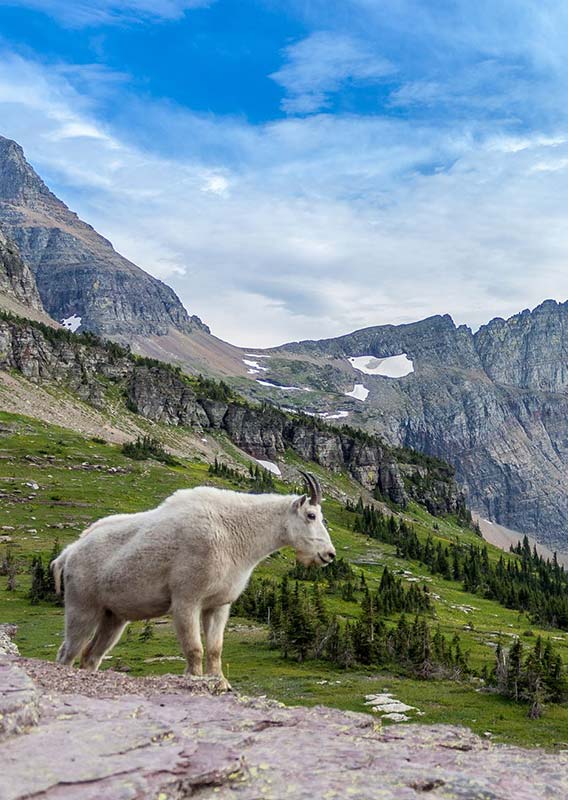
Glacier has grizzly bears, black bears, moose, mountain goats, bighorn sheep, and mountain lions. The animals are not props. Maintain at least 100 yards from bears and wolves and 25 yards from all other wildlife. That is the official rule, and it is enforced.
Do not leave food in your car. Bears in Glacier have learned to break into vehicles. Use the food storage boxes at trailheads and campgrounds. Do not approach any animal, even for a photo. A moose can kill you faster than a bear can.
If you are hiking alone, tell someone your route and expected return time. There is no reliable rescue service response inside the backcountry. You are responsible for your own safety. I carry a satellite communicator on any hike over five miles in this park.
What is the Native American history of Glacier National Park?
This land is the ancestral homeland of the Blackfeet Nation on the east side and the Salish and Kootenai peoples on the west side. The Blackfeet call the area “the Backbone of the World.” The park’s relationship with these tribes is complex, including a history of displacement when the park was created in 1910.
The NPS runs a “Native America Speaks” program where tribal members give talks and cultural presentations inside the park. I attended one at the St. Mary Visitor Center, and it was the most memorable hour of my first trip. These programs are free and open to the public. Check the current schedule on the NPS Native America Speaks page.
When you visit, remember you are a guest on land with deep cultural significance. Treat the landscape and the stories with respect. Do not remove artifacts, rocks, or plants. Stay on trails in culturally sensitive areas.
What is the final planning checklist for Glacier?
Before you leave, go through this list. I run through it every time, and it catches something every single trip.
- Confirm your vehicle reservation dates and times on Recreation.gov.
- Download offline maps for the entire park region in your mapping app.
- Screenshot every reservation confirmation and save it to your photos.
- Check the current road status and trail closures on the NPS conditions page.
- Buy or rent bear spray before you enter the park.
- Pack layers, rain gear, and sturdy hiking shoes even for short walks.
- Fill your gas tank. There are no gas stations inside the park.
- Confirm your lodging or campground reservation is still active.
- Tell someone at home your daily hiking plans.
- Bring more water than you think you need. Dry mountain air dehydrates you fast.
Frequently asked questions
Do you need a reservation to enter Glacier National Park?
Yes, during peak season you need both an entrance pass and a separate vehicle reservation for Going-to-the-Sun Road and Many Glacier. The entrance pass costs $35 per vehicle. The vehicle reservation costs around $2 and is booked through Recreation.gov. Check the official NPS page for current season dates and windows.
Is Glacier National Park dog-friendly?
Dogs are allowed in developed areas like campgrounds, picnic areas, and along roads, but they are not allowed on any park trails. This is a strict rule to protect both wildlife and pets. If you are traveling with a dog, plan to stick to roadside viewpoints or use a boarding service in a gateway town.
How many days should you spend in Glacier?
Three full days is the minimum for a first visit that includes the Going-to-the-Sun Road, one major hike in Many Glacier, and a visit to either Two Medicine or Avalanche Lake. Five days or more allows for longer hikes, a boat tour, and some downtime. One day only gives you a scenic drive.
When is the best month to visit Glacier National Park?
July is the most reliable month for full road access and snow-free hiking. August is also good but can be smoky from wildfires. September brings fall colors and fewer crowds, but some services close mid-month. June is a gamble because Logan Pass may still be snow-covered.
Can you drive through Glacier without a reservation?
You can drive on the Going-to-the-Sun Road before 6 a.m. or after 3 p.m. without a vehicle reservation in most years, but the exact hours change. The road is also open without a reservation on the far west and east edges. Check the official NPS vehicle reservation page for the current season’s rules before assuming.
Is Glacier National Park worth visiting if you only have one day?
Yes, but only if you accept that you will see a fraction of the park. The Going-to-the-Sun Road drive alone is world-class. If you have one day, start early, drive the full road, stop at Logan Pass, and do the short Hidden Lake Overlook trail. You will want to come back.
What is the closest airport to Glacier National Park?
Glacier Park International Airport in Kalispell, Montana, is about 30 minutes from the West Entrance. It has direct flights from several major hubs. Missoula and Great Falls are alternative airports about 2.5 to 3 hours away, sometimes with cheaper fares.
Are there grizzly bears in Glacier National Park?
Yes. Glacier has one of the largest grizzly bear populations in the lower 48 states. Bear spray is strongly recommended for all hikers. Make noise on the trail, hike in groups, and do not leave food in your car. Follow all park bear-safety rules.
Plan your trip: booking platforms we trust
Glacier is a trip that requires booking several things at once: flights, lodging, vehicle reservations, and possibly a boat tour. Here are the platforms I use most often for this specific park.
Best for comparing flights into Kalispell from your home airport.
Best for gateway motels and cabins in West Glacier, Columbia Falls, and St. Mary.
Best for family vacation rentals if you are staying a week or more.
Useful for guided tours and shuttle packages if you do not want to drive.
Best for recent reviews of in-park lodges and gateway restaurants.