advertisement
Hawaiʻi Volcanoes National Park: What to Know Before You Go While Kīlauea Is Still Erupting
Fact-Checked By: Maya Whitfield, Senior Travel Editor at WakaAbuja — Senior Travel Editor at WakaAbuja
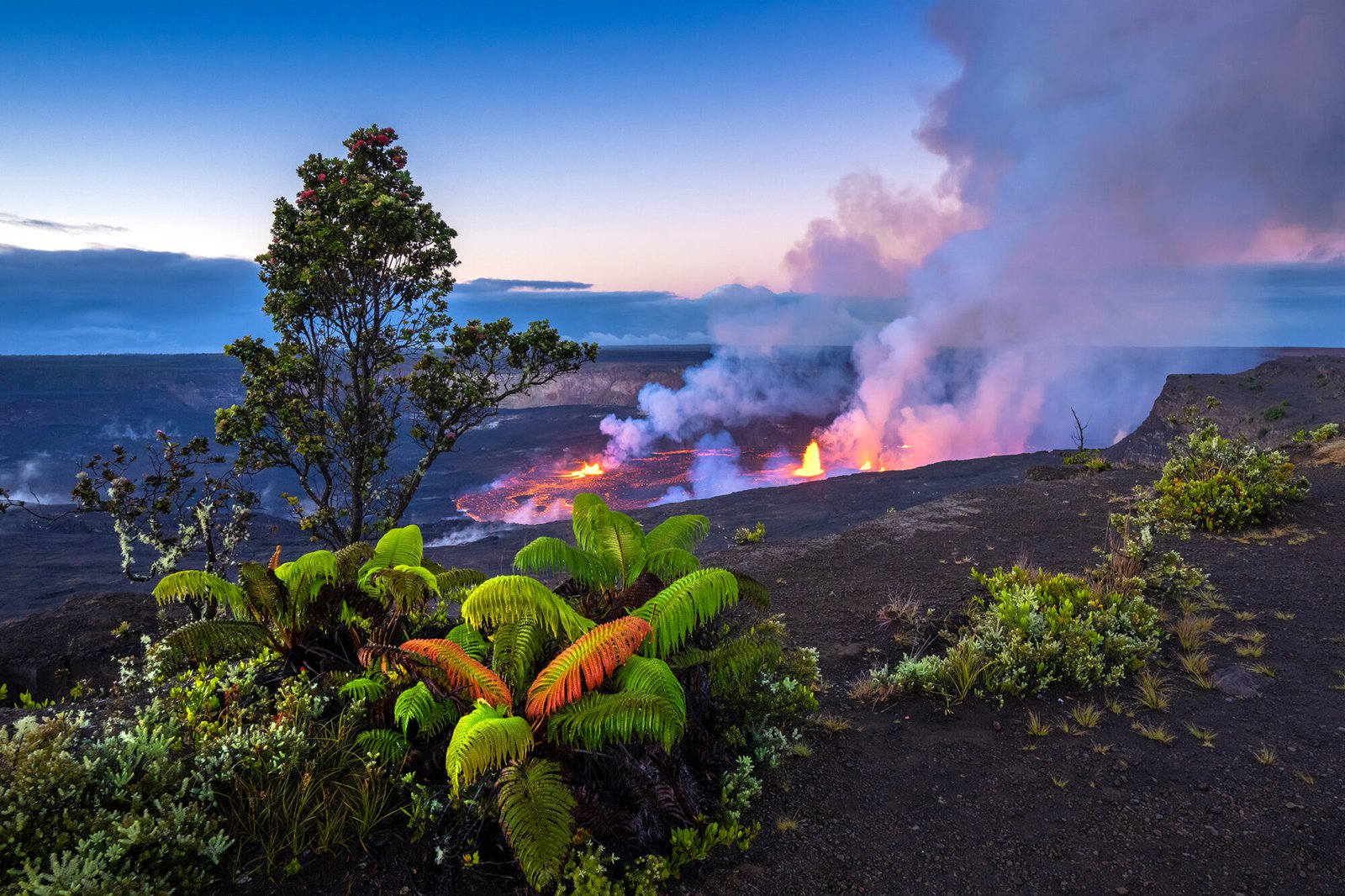
Hawaiʻi Volcanoes National Park is open, but Kīlauea is actively erupting as of late September 2026, with intermittent lava fountaining from vents inside the Halemaʻumaʻu crater and a shallow magma intrusion that triggered nearly 100 earthquakes in 24 hours. The Hōlei Sea Arch collapsed on September 27, 2026, and coastal cliff areas remain closed. Most summit areas and the Kahuku Unit have reopened after Hurricane Nolo, but Hilina Pali Road past Mauna Iki trailhead, Mauna Loa Road past the second cattleguard, Kīpukapuaulu Trail, and Sulphur Banks Bridge remain closed. Entrance fees are $30 per private vehicle or $15 per person and are valid for seven days (confirm current rates on the NPS site).
I have been watching Kīlauea from afar for years, refreshing the USGS webcams at odd hours and texting friends on the Big Island for real-time updates. The park is one of the most dynamic places on Earth, and that dynamism is exactly why it is tricky to plan for. A trail that was open last week may be closed today because a new fissure opened or a sea arch crumbled into the ocean.
This guide is built around that reality: what is open right now, what you can realistically see in a day, and the cultural context that most rushed itineraries skip entirely.
Jump to: Current Status | Getting There | One-Day Route | Kahuku Unit | Cultural Context | Safety | FAQ
Key takeaways
- Kīlauea remains at USGS Alert Level ORANGE/WATCH with intermittent eruptions from Halemaʻumaʻu, and conditions can change rapidly.
- The Hōlei Sea Arch, a 90-foot coastal landmark, collapsed between September 23 and 27, 2026; visitors are urged to stay away from unstable cliff edges.
- Entrance is $30 per private vehicle or $15 per person, valid for seven days (confirm current rates on the NPS site).
- Kahuku Unit operates Thursday through Sunday, 8 a.m. to 4 p.m., and is 42 miles south of the main park entrance.
- The Kīlauea Iki Trail is a 3.3-mile moderate loop that takes 2 to 3 hours from the overlook, but parking there is extremely limited.
- The park entrance is cashless; bring a credit or debit card or purchase a digital pass in advance .
- Cultural respect matters here. This is Pele’s home, and Kanaka Maoli stewardship practices are part of the visitor experience, not a footnote.
Is Hawaiʻi Volcanoes National Park open right now, and is lava visible?
The park is open, but not all of it. As of late September 2026, most areas along the Kīlauea summit and the Kahuku Unit have reopened following Hurricane Nolo. Several specific areas remain closed: Hilina Pali Road past the Mauna Iki trailhead, Mauna Loa Road past the second cattleguard, Kīpukapuaulu Trail, and the Sulphur Banks Bridge.
Lava is visible when the volcano is actively fountaining. Kīlauea has erupted more than 50 times since December 2024, with activity concentrated in the Halemaʻumaʻu crater. The eruption is episodic, meaning it pauses for days or weeks and then resumes. On September 30, 2026, USGS recorded a shallow magma intrusion beneath the summit, with 98 earthquakes in 24 hours and rapid ground deformation. By the morning of October 1, intrusive activity appeared to have quieted, but the summit remains highly pressurized, and a new fountaining episode is possible.
The single most important thing you can do before driving to the park is check the USGS Kīlauea daily update and the NPS current conditions page. I know that sounds obvious, but the difference between a glorious lava-fountain night and a foggy, empty caldera is often just a few hours. The park itself advises visitors to check webcams and the USGS update before visiting.
Maya’s honest take: “The best lava viewing I have ever experienced was not at the famous overlook. It was from Kūpinaʻi Pali, a short walk from the Devastation Trailhead parking area. Almost nobody was there. The glow reflected off the crater walls, and the silence was broken only by the crackle of cooling rock. Check current closures before you go, but if it is open, that is where I would head.”
How do I get to Hawaiʻi Volcanoes National Park, and what does it cost?
The park entrance is on Highway 11, about 45 minutes south of Hilo and roughly two hours from Kailua-Kona. If you are coming from Hilo, the Hele-On Bus Route 11 Red Line runs to the park and collects the $15 per-person entrance fee directly from passengers (verify current schedule and fares with the operator).
Entrance fees are $30 per private vehicle, $25 per motorcycle, or $15 per person arriving on foot or bicycle. All passes are valid for seven days . The park is cashless, so bring a credit or debit card or purchase a digital pass through Recreation.gov before you arrive . If you plan to visit Haleakalā and Puʻuhonua o Hōnaunau as well, the Hawaiʻi Tri-Park Annual Pass at $55 is the better value (confirm current pricing on the NPS site) .
Start at the Kīlauea Visitor Center or the Welcome Center just beyond the entrance station. Rangers there can tell you which trails are open, where lava is currently visible, and what the weather is doing on the summit. I have saved myself two wasted hours by simply asking a ranger which overlook had the clearest view that day. The answer changes with wind direction and fog.
What is the best one-day route through Hawaiʻi Volcanoes National Park?
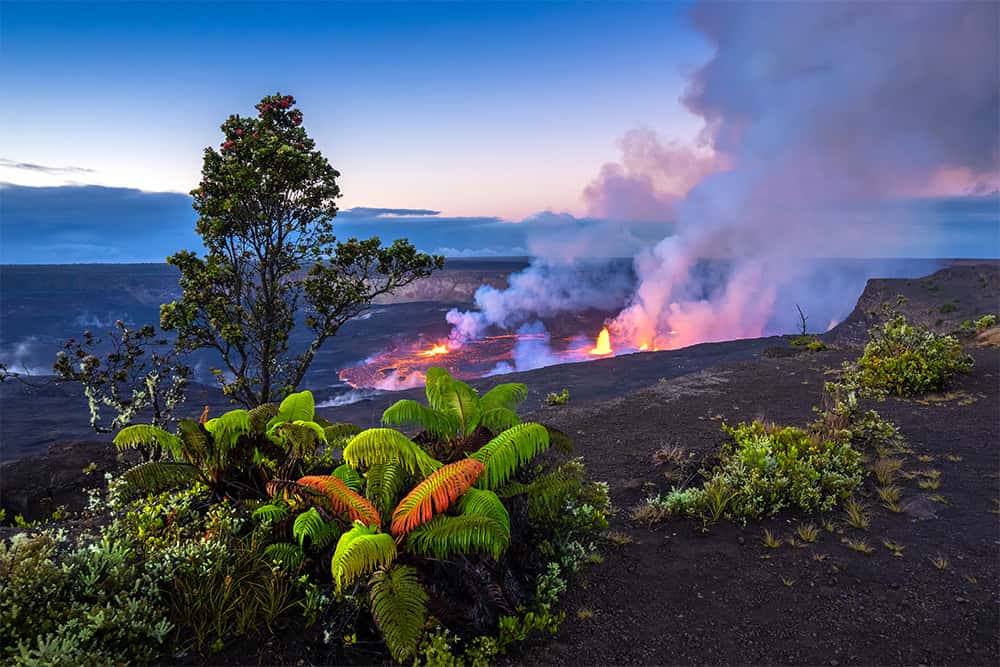
You cannot see everything in one day, and trying to will ruin the experience. Here is the route I would take if I had exactly one day and wanted the fullest possible picture of the park without sprinting between stops.
Morning: Kīlauea Iki Trail and Nāhuku Lava Tube
Start early. The Kīlauea Iki Overlook parking lot fills fast, and the NPS itself says parking there is extremely limited. If you can snag a spot, the 3.3-mile loop takes 2 to 3 hours and descends 400 feet through rainforest to the solidified lava lake floor. The contrast between the lush rim and the barren crater interior is the single best introduction to what this park actually is. Add Nāhuku (Thurston Lava Tube) on the same outing if you have the energy; it is a short walk from the Kīlauea Iki trailhead area.
Midday: Crater Rim Drive and eruption viewing
After the hike, drive Crater Rim Drive West to Uēkahuna and Kīlauea Overlook. These two spots have the most reliable parking and the best accessible views into Halemaʻumaʻu. Uēkahuna is at the end of Crater Rim Drive West, about 2.8 miles from the entrance station, and typically has rangers on site . Kīlauea Overlook is 2.5 miles from the entrance and offers unobstructed views of the crater floor during eruptions. If you have time, the short walk from the Welcome Center toward the Steam Vents also offers a quieter caldera view with a gentle 26-foot descent.
Afternoon: Chain of Craters Road
Chain of Craters Road descends 3,700 feet over 18 miles to the coast. The drive itself is the attraction: you pass lava flows from different eruptions, each with its own texture and color. At the end, the road is stopped by a lava flow from the 2003 eruption. The Hōlei Sea Arch used to be the turnaround highlight, but it collapsed on September 27, 2026, and the coastal area near it is now hazardous and closed. Do not walk past barriers to see where it used to stand. The cliffs are unstable, and people have already been photographed ignoring the closures.
Best for first-time visitors
- Kīlauea Iki Trail for the crater floor experience
- Uēkahuna for reliable parking and eruption views
- Nāhuku Lava Tube for an easy, family-friendly stop
- Chain of Craters Road for the scale of the lava fields
Worth considering
- Kūpinaʻi Pali for quiet eruption viewing away from crowds
- Wahinekapu (Steam Vents) for the first overlook most people see
- Keanakākoʻi if you want a closer view and are willing to hike 2 miles round trip
What is the Kahuku Unit, and is it worth the drive?
The Kahuku Unit is the part of Hawaiʻi Volcanoes National Park that most visitors never see. It is 42 miles south of the main entrance, roughly an hour drive, and it has a separate entrance on Highway 11 between mile markers 70 and 71 . It is open Thursday through Sunday from 8 a.m. to 4 p.m. and closed Monday through Wednesday .
What is there? Open ranchland, native forest, and trails that climb through some of the oldest lava flows on the island. The terrain is gentler than the summit area, the crowds are thinner, and the experience is more about walking through a landscape than standing at a railing to watch a spectacle. A site management plan is currently in progress to expand access and recreational opportunities, including a day-use permit system for Kahuku-Pōhue .
Is it worth the drive? If you are a hiker who wants solitude and a different perspective on the park, yes. If you are on a tight schedule and came specifically for lava and craters, skip it and spend that time at the summit. I have done both, and the Kahuku Unit feels like a separate park entirely. It is not a substitute for the Halemaʻumaʻu experience.
Maya’s honest take: “The Kahuku Unit is where I go when I want to remember that this park is not just a volcano. It is a whole ecosystem shaped by eruptions and recovery. The trails are quiet, the birdlife is surprising, and you will likely have the place mostly to yourself on a weekday. That is a different kind of magic.”
Why does cultural respect matter at Hawaiʻi Volcanoes National Park?
This is not just a national park. It is Pele’s home. Halemaʻumaʻu is the dwelling place of the volcano goddess in Native Hawaiian tradition, and Kaluapele, the summit caldera, is a sacred landscape that Kanaka Maoli have stewarded for generations.
That context shapes how you should behave here. Do not take rocks. Do not leave offerings unless you understand what they mean. Do not fly drones, which are prohibited in the park and especially disrespectful in sacred areas. The NPS works with Native Hawaiian cultural practitioners on interpretation and land management, and the Kahuku Unit management plan explicitly incorporates community input from Kaʻū.
The practical takeaway is simple: treat this place with the reverence you would bring to a cathedral or a memorial. The lava is not an attraction in the theme-park sense. It is an active geological and spiritual force, and the people who live here have a relationship with it that predates the park by centuries.
What should I know about sulfur dioxide, weather, and safety?
Sulfur dioxide (SO₂) and volcanic gas
Volcanic gas is a real hazard at Kīlauea. During inter-episode pauses, the summit SO₂ emission rate typically varies between 1,000 and 5,000 tonnes per day. People with asthma, heart conditions, or respiratory sensitivities should check current air quality and wind direction before visiting. The park posts gas advisories when levels spike. If you smell strong sulfur and feel your throat tightening, move away from the vents and toward your car.
Weather and temperature
The summit sits at around 4,000 feet elevation. It is cool, windy, and often rainy. The NPS recommends bringing shoes, rain gear, jackets, hats, water, and snacks if you plan to leave your car at viewpoints. I was cold at Kīlauea in July. Do not assume Hawaii means warm at elevation.
Cliff edges and closed areas
The Hōlei Sea Arch collapse is a stark reminder that this coastline is unstable. Stay behind barriers. Do not walk on cracked ground near cliff edges. The park is actively managing closures for good reason, and ignoring them puts both you and first responders at risk.
Earthquakes
Kīlauea experiences frequent small earthquakes. The September 30, 2026, swarm included a magnitude 3.4 quake felt by residents. If you feel shaking, move away from cliff edges and unstable ground. There is no tsunami threat from typical summit earthquakes, but the 1975 Kalapana earthquake generated a deadly local tsunami, so the risk is not zero.
Frequently asked questions
Is Hawaiʻi Volcanoes National Park open today?
The park is generally open, but certain areas close depending on volcanic activity and weather. As of late September 2026, most summit areas and the Kahuku Unit are open after Hurricane Nolo, but Hilina Pali Road past Mauna Iki trailhead, Mauna Loa Road past the second cattleguard, Kīpukapuaulu Trail, and Sulphur Banks Bridge remain closed. Always check the NPS current conditions page before you drive out.
Can I see lava right now at Kīlauea?
Lava is visible when the volcano is actively fountaining. Kīlauea has been erupting intermittently since December 2024, with activity concentrated in the Halemaʻumaʻu crater. During pauses, you may see a faint glow from previously erupted lava but no active fountains. Check the USGS daily update and the park webcams for current conditions before visiting.
How long does it take to drive Crater Rim Drive and Chain of Craters Road?
Crater Rim Drive West to Uēkahuna is about 2.8 miles, roughly 7 minutes from the entrance station. Chain of Craters Road is 18 miles one way and descends 3,700 feet to the coast. Plan at least 2 to 3 hours for the full Chain of Craters drive with stops, more if you hike or linger at viewpoints.
Is the Kīlauea Iki Trail difficult?
It is rated moderate to challenging, with a 400-foot descent and ascent through steep, rocky terrain. The loop from Kīlauea Iki Overlook is 3.3 miles and takes 2 to 3 hours. Parking at the overlook is extremely limited, so consider starting from Kīlauea Visitor Center or Devastation Trailhead for a longer but easier-to-park option.
How much does it cost to enter Hawaiʻi Volcanoes National Park?
Entrance is $30 per private vehicle, $25 per motorcycle, or $15 per person arriving on foot or bicycle. Passes are valid for seven days. The park is cashless, so bring a credit or debit card or purchase a digital pass in advance. The Hawaiʻi Tri-Park Annual Pass is $55 and covers Haleakalā and Puʻuhonua o Hōnaunau as well (confirm current pricing on the NPS site).
What is the Kahuku Unit, and when is it open?
The Kahuku Unit is a separate section of the park 42 miles south of the main entrance on Highway 11 between mile markers 70 and 71. It is open Thursday through Sunday from 8 a.m. to 4 p.m. and closed Monday through Wednesday. It offers quieter trails through ranchland and native forest, with a different landscape than the summit area.
Is it safe to visit during an eruption?
Yes, if you follow park closures and stay in designated viewing areas. The eruption area itself is closed due to hazards including volcanic gas, unstable cliffs, ground cracks, and falling tephra. Viewpoints along Crater Rim Drive are safe and offer excellent views. People with respiratory conditions should check SO₂ levels before visiting.
Plan your trip: booking platforms we trust
Hawaiʻi is an expensive destination, and the difference between a stressful trip and a smooth one often comes down to how you book. I use Kayak for comparing flights into Hilo or Kona, Booking.com and Agoda for lodging near the park, and GetYourGuide for tours that include transport from Kailua-Kona. If you are bringing a family or group, Vrbo often beats hotel rates for stays of three nights or more.
WakaAbuja does its best to keep all information accurate at the time of publishing. Prices, policies, and availability change regularly. Always verify with official sources before you travel. We are not liable for errors caused by outdated information. Travel insurance is strongly recommended.