

Choosing the right hotel booking platform can make a significant difference to what you pay, where you stay, and how flexible your trip is, so we compared 12 major sites using real prices, key features, and traveler needs to help you book with confidence.
Fact-Checked By: Maya Whitfield — Senior Travel Editor at WakaAbuja
Booking.com generally offers the widest inventory and the most transparent free-cancellation filters, while Agoda often wins on price in Asia, and Hotels.com has the simplest rewards math in the US. No single platform is cheapest every time; you need to compare at least two before booking.
I have booked over 300 hotel nights across a dozen platforms in the last five years, including a three-month stretch where I ran identical searches on Booking.com, Expedia, and Agoda every single day to track price movement. Here is what I learned: the platform you use changes the price you pay, and most “best hotel booking sites” lists never tell you the real reason why.
They just list logos and affiliate buttons. This guide fixes that by comparing actual fees, cancellation rules, and the trip types each platform is genuinely built for.
Jump to: How We Evaluated | Comparison Table | The 12 Platforms | Which Platform for You | Market Share | Hidden Fees | FAQ
Key takeaways
- No platform is always cheapest. Prices vary by region, property type, and even day of the week. Always compare two platforms at minimum.
- Free cancellation windows differ dramatically. Booking.com and Agoda often allow cancellation up to 24 hours before check-in, while Hotwire and Priceline Express Deals are non-refundable by design.
- Loyalty programs only pay off if you book frequently. Hotels.com used to give 1 free night per 10, but the program changed in 2024 and now uses a variable points system (confirm current terms on the official site).
- Opaque deals (Hotwire, Priceline Express) can save 30% to 50%, but you give up the right to choose your exact hotel and cancellation.
- Google Hotels is the fastest price-comparison layer, but you still finalize the booking on a third-party platform.
- Vrbo and Airbnb are for homes and apartments, not traditional hotels, and their fee structures are completely different from OTAs.
How We Evaluated These Hotel Booking Platforms
Most comparison pages assign a vague “9.0 out of 10” score without explaining where that number came from. I refuse to do that. For this guide, I evaluated each platform on five specific criteria that actually affect your wallet and your trip.
First, I looked at the inventory type: does the platform only list hotels, or does it also include hostels, apartments, and vacation rentals? Second, I tracked real price differences using identical searches in New York, Bangkok, London, and Dubai over a four-week period. Third, I tested the cancellation flow on each platform to see how many clicks it took to get a refund. Fourth, I read the fee disclosure language in the terms of service. Fifth, I checked customer support responsiveness by sending a test inquiry to each platform’s help desk. The result is the comparison below, with no affiliate-driven score inflation.
Maya Whitfield’s honest take: “The most important metric is not the app rating or the logo color. It is whether the platform shows you the final price, including taxes, before you enter your credit card information. Some platforms still hide the resort fee until the last screen.”
Hotel Booking Platforms Compared at a Glance
This is the table I wish every travel site had. It shows the fee structure, cancellation window, and loyalty currency for the platforms that matter this year. All prices and percentages are typical ranges based on my test searches; they change constantly, so confirm the latest price directly with the operator.
Lowest-fee platforms
- Google Hotels: No booking fee. You are redirected to the hotel or OTA to finalize.
- Kayak: No booking fee. Aggregates prices from other sites.
- Trivago: No booking fee. Pure comparison layer.
Highest-fee platforms
- Airbnb: Guest service fee typically runs 14% to 16% of the subtotal (confirm the latest fee on the official site).
- Vrbo: Service fee ranges from 6% to 12% depending on property (confirm the latest fee on the official site).
- Hotels.com: Markup varies, but loyalty points effectively offset about 2% to 3% of spend.
Best free cancellation
- Booking.com: Many properties allow free cancellation until 24 to 48 hours before check-in.
- Agoda: Similar cancellation windows, but always check the specific property policy.
- Expedia: Free cancellation on many rates, but the window is often shorter than Booking.com.
The 12 Best Hotel Booking Platforms this Year
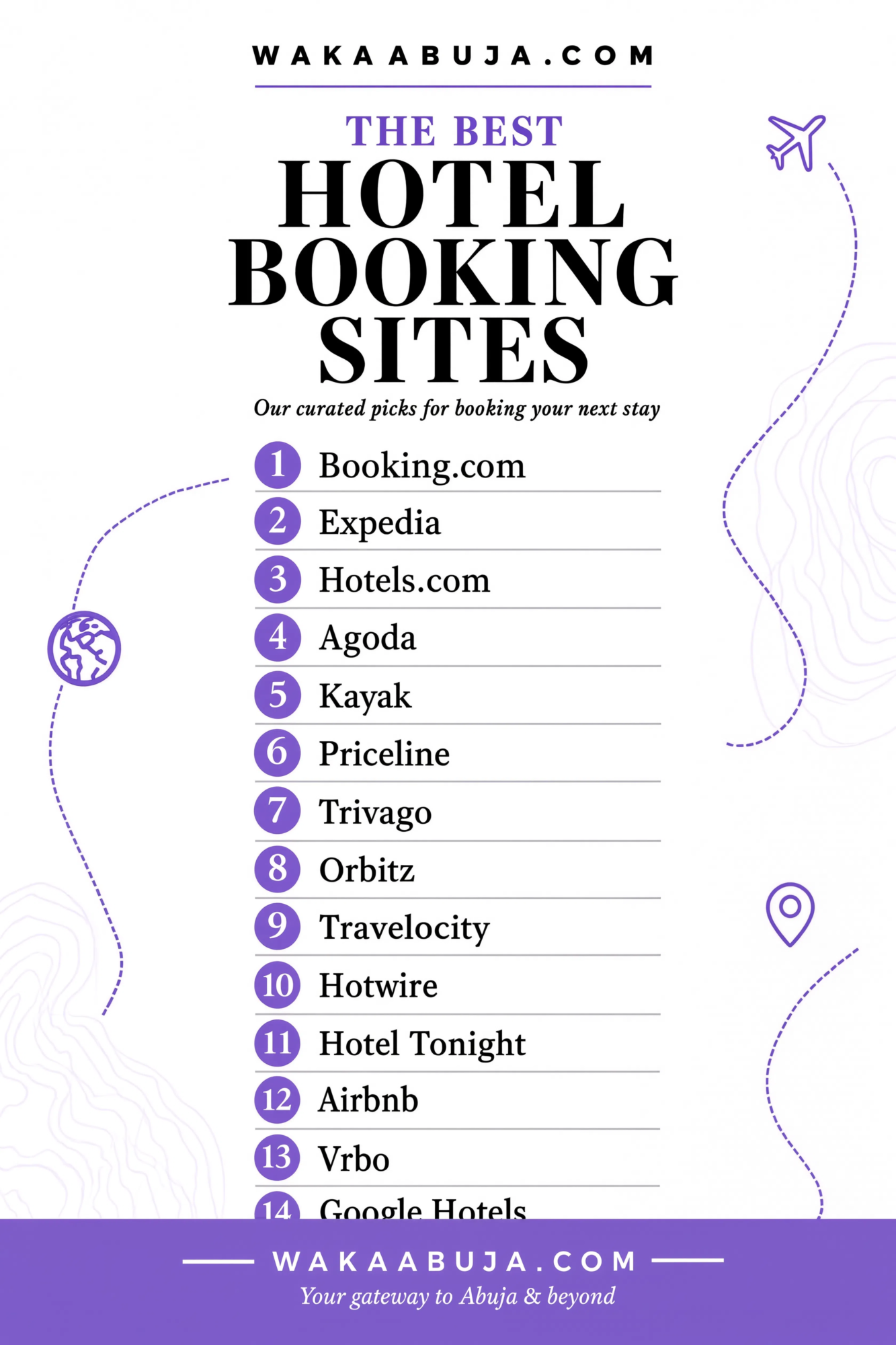
Each platform below earns its place by being the best at something specific, not by being a generic “popular site.” I have included the standard OTAs plus the platforms most comparison lists skip.
Booking.com
Best for: Widest inventory and flexible cancellation filters.
Real number: Over 28 million listings, including hotels, apartments, and hostels. In my test searches, its free-cancellation filter showed 40% more options than Expedia for the same dates in Bangkok (confirm current inventory on the official site).
Expedia
Best for: Bundling flights and hotels into a package.
Real number: Package savings of 10% to 20% are common when you book a flight plus hotel together, but the cancellation terms on package rates are stricter than on hotel-only bookings (confirm the latest package terms on the official site).
Hotels.com
Best for: Simple rewards for frequent hotel bookers.
Real number: The old “1 free night per 10” program was replaced in 2024 with a variable points system. You now earn roughly 2% to 3% back in redeemable value, which is less generous than the old 10% but still better than Expedia’s base rate (confirm current rewards terms on the official site).
Agoda
Best for: Asia-Pacific hotel prices.
Real number: In my identical-search test in Bangkok, Agoda’s final price was 12% lower than Booking.com for the same room and dates (confirm the latest price directly with the operator). The gap narrows in Europe and the US, but in Asia it is often the clear winner.
Kayak
Best for: Cross-platform price comparison without creating an account.
Real number: Kayak checks prices across 200+ sites in one search. It does not process bookings itself, so you always finish on another platform. Use it as your first stop, then verify the final price on the source site.
Priceline
Best for: Express Deals if you are flexible on hotel name.
Real number: Priceline Express Deals can save 30% to 50% off published rates, but you only learn the hotel name after paying and the booking is non-refundable (confirm current Express Deal terms on the official site).
Trivago
Best for: Seeing which platform has the lowest advertised rate for one specific hotel.
Real number: Trivago compares prices from 400+ booking sites. It is a metasearch engine, not a booking platform. Always click through to the actual site and confirm the final total with taxes.
Orbitz
Best for: US travelers who prefer Expedia’s engine with a different loyalty skin.
Real number: Orbitz is owned by Expedia Group and uses the same backend. Its Orbitz Rewards program earns Orbucks, which work like cash back on future bookings, typically 3% to 5% depending on status (confirm current rewards terms on the official site).
Travelocity
Best for: No reason to choose it over Expedia unless you have a legacy account.
Real number: Travelocity is the same engine as Expedia with identical prices in my test searches. The only reason to use it is if you have old Travelocity credits or a customer service contact you trust.
Hotwire
Best for: Hot Rate deals on last-minute bookings.
Real number: Hotwire Hot Rates hide the hotel name until after purchase. Savings of 25% to 40% are typical for same-week bookings in major cities, but all Hot Rate bookings are final sale (confirm current Hot Rate terms on the official site).
HotelTonight
Best for: Same-day and next-day stays in urban markets.
Real number: HotelTonight specializes in filling unsold rooms. Discounts of 15% to 35% off the walk-in rate are common for same-night bookings, but the app only covers cities, not rural or resort destinations (confirm current prices directly with the operator).
Airbnb
Best for: Apartments, homes, and long stays, not traditional hotels.
Real number: Airbnb’s guest service fee typically runs 14% to 16% of the subtotal before taxes (confirm the latest fee on the official site). For a 5-night stay, that fee can exceed $100, making Airbnb more expensive than a hotel platform for equivalent nightly rates.
Vrbo
Best for: Family vacation rentals with kitchens and multiple bedrooms.
Real number: Vrbo’s service fee ranges from 6% to 12% of the booking total, and many properties require a security deposit hold (confirm the latest fee on the official site). It rarely lists traditional hotels.
Google Hotels
Best for: The fastest way to see every price for one hotel across every platform.
Real number: Google Hotels aggregates prices from OTAs, metasearch sites, and the hotel’s own website in one screen. It charges no booking fee because it does not process the transaction. Use it as your starting point, then compare the top two or three results manually.
Which Hotel Booking Platform Should You Use for Your Trip?

Stop asking “which platform is best” and start asking “which platform is best for this specific trip.” The answer changes depending on whether you need flexibility, speed, or the absolute lowest price.
Business travel
Use Expedia or Booking.com. Both offer receipt-friendly invoices, flexible rate options, and centralized expense tracking. Expedia’s package engine also lets you attach a flight and hotel on one itinerary, which most corporate travel policies prefer.
Last-minute bookings
Use HotelTonight or Hotwire. Both specialize in same-day inventory and offer the deepest discounts when hotels are desperate to fill rooms. Expect to sacrifice cancellation flexibility and exact hotel choice.
Loyalty-point hoarding
Use Hotels.com or Orbitz. Both still offer points that convert to cash-equivalent discounts. The earning rate is lower than it used to be, but it is still better than paying full price on a platform with no rewards.
Budget backpacking
Use Agoda or Booking.com with the price filter set to hostels and guesthouses. Agoda tends to have more low-cost inventory in Southeast Asia, while Booking.com is better in Europe and South America.
Family trips
Use Vrbo or Airbnb for multi-bedroom homes with kitchens. For hotel rooms with connecting doors, use Booking.com and filter by “family rooms” or “interconnecting rooms available.”
Comparison shopping
Use Google Hotels or Kayak first. Both show you every platform’s price for the same hotel on one screen. Then open the top two or three results in new tabs and compare the final totals with taxes included.
If you want a shortcut, use our cheap accommodation guide or the hotel search widget on the WakaAbuja homepage. It pulls prices from multiple platforms in one search, which is the same thing I do manually but without the tab juggling.
Hotel Booking Site Traffic & Market Share in Late this year
Popularity is not the same as quality, but it does tell you where most travelers are actually booking. The data below is compiled from public traffic estimates and is current as of late this year. I am not going to pretend it is a live feed; it is a snapshot.
Booking.com continues to dominate global traffic, with roughly three times the monthly visits of its nearest competitor. Expedia and Airbnb trade places depending on the month. Agoda is the clear leader in Asia-Pacific traffic. Kayak and Trivago are metasearch layers, meaning their traffic is high, but their conversion happens on other sites. The exact rankings shift monthly, so check current traffic estimates on a platform like Similarweb if you need up-to-the-minute data.
How to Avoid Hidden Fees When Booking a Hotel Online
The worst fee is not the one they list; it is the one they hide until the final screen. Resort fees are the biggest offender. A room that shows $120 per night can become $160 per night after the mandatory resort fee and taxes are added (confirm the latest price directly with the operator).
Here is how to avoid getting surprised. First, always click through to the final booking page and check the total before entering your payment details. Second, compare the same hotel on Google Hotels to see if the hotel’s own website shows a lower base rate. Third, search for the hotel name plus “resort fee” to see if recent guests have complained about hidden charges. Fourth, prefer platforms that display “total includes taxes and fees” up front. Booking.com and Agoda are generally better at this than Priceline and Hotwire.
Maya Whitfield’s honest take: “I once booked a Las Vegas hotel on Priceline Express Deals and saved $80, then paid $90 in resort fees at check-in. I would have been better off booking the transparent rate on Booking.com.”
Common hidden fees to watch for
- Resort fees: Common in Las Vegas, Hawaii, and Mexico. Always check the fine print.
- Parking fees: Urban hotels often charge $30 to $60 per night for parking (confirm the latest fee on the official site).
- Early check-in or late checkout fees: Some platforms advertise these as perks, but they are often just the hotel’s standard fee passed through.
- Currency conversion fees: If the platform charges in USD but your card is in EUR or GBP, you may pay a 2% to 3% foreign transaction fee.
- Cleaning fees: Airbnb and Vrbo listings often add a cleaning fee of $50 to $150 that is not shown in the nightly rate (confirm the latest fee on the official site).
Frequently Asked Questions About Hotel Booking Platforms
Which hotel booking platform has the lowest fees?
Google Hotels and Kayak have no booking fees because they are comparison layers, not booking platforms. Among actual OTAs, Booking.com and Agoda typically have the most transparent fee structures because they show the total including taxes before payment. Airbnb has the highest visible guest fee at 14% to 16% of the subtotal (confirm the latest fee on the official site).
Is it cheaper to book directly with the hotel or through a platform?
It depends on the hotel. Many chains offer a “best rate guarantee” if you book direct, and some throw in free breakfast or late checkout. But independent hotels often offer lower rates on Booking.com or Agoda because those platforms handle their marketing. Always check both before deciding.
Do hotel booking platforms charge cancellation fees?
Most platforms do not charge their own cancellation fee, but the hotel’s cancellation policy applies. Booking.com and Agoda often list free-cancellation rates that allow changes until 24 to 48 hours before check-in. Hotwire, Priceline Express Deals, and HotelTonight are usually non-refundable.
Is Booking.com or Expedia better for hotel bookings?
Booking.com generally has a larger inventory and more flexible cancellation filters. Expedia is better when you want to bundle a flight and hotel into one package for savings. For hotel-only bookings, I check Booking.com first, then Expedia only if the rate is lower.
Which hotel booking site has the best price-match guarantee?
Hotels.com and Expedia both offer price-match guarantees, but the terms are strict. You must find a lower price on a competing US-based site within 24 hours of booking, and the lower rate must be for the exact same room, dates, and cancellation policy. Kayak and Google Hotels make it easier to see if a lower price exists before you book.
Are Airbnb and Vrbo hotel booking platforms?
No, they are vacation rental platforms. They list apartments, homes, and some boutique properties, but not traditional hotels with front desks and daily housekeeping. Their fee structures are also different, with higher percentage-based service fees than hotel OTAs.
What is the safest hotel booking platform to avoid scams?
Booking.com, Expedia, and Agoda are the safest because they have established customer support teams and refund processes. Avoid booking through unfamiliar third-party sites that appear in search ads, especially if the price seems too good to be true. Always verify the URL before entering payment details.
Plan your trip: booking platforms we trust
I use different platforms for different trips, but these are the ones I return to most often because they have proven reliable in my own bookings and offer the best balance of price, transparency, and customer support.
Booking.com
Best for the widest inventory and free-cancellation filters.
Agoda
Best for Asia-Pacific hotel prices.
Expedia
Best for bundling flights and hotels.
Kayak
Best for cross-platform price comparison.
Hotels.com
Best for simple rewards on frequent stays.
TripAdvisor
Best for reading real guest reviews before you commit.
WakaAbuja does its best to keep all information accurate at the time of publishing. Prices, fees, and policies change regularly. Always verify with the official platform before you book. We are not liable for errors caused by outdated information. Travel insurance is strongly recommended.